Sign Up My Profile
Prayers

Psalm 32: Blessed is he whose transgression is forgiven

A psalm of David on the misery of hiding a sin. When he confessed his wrongs to the LORD, God forgave him.

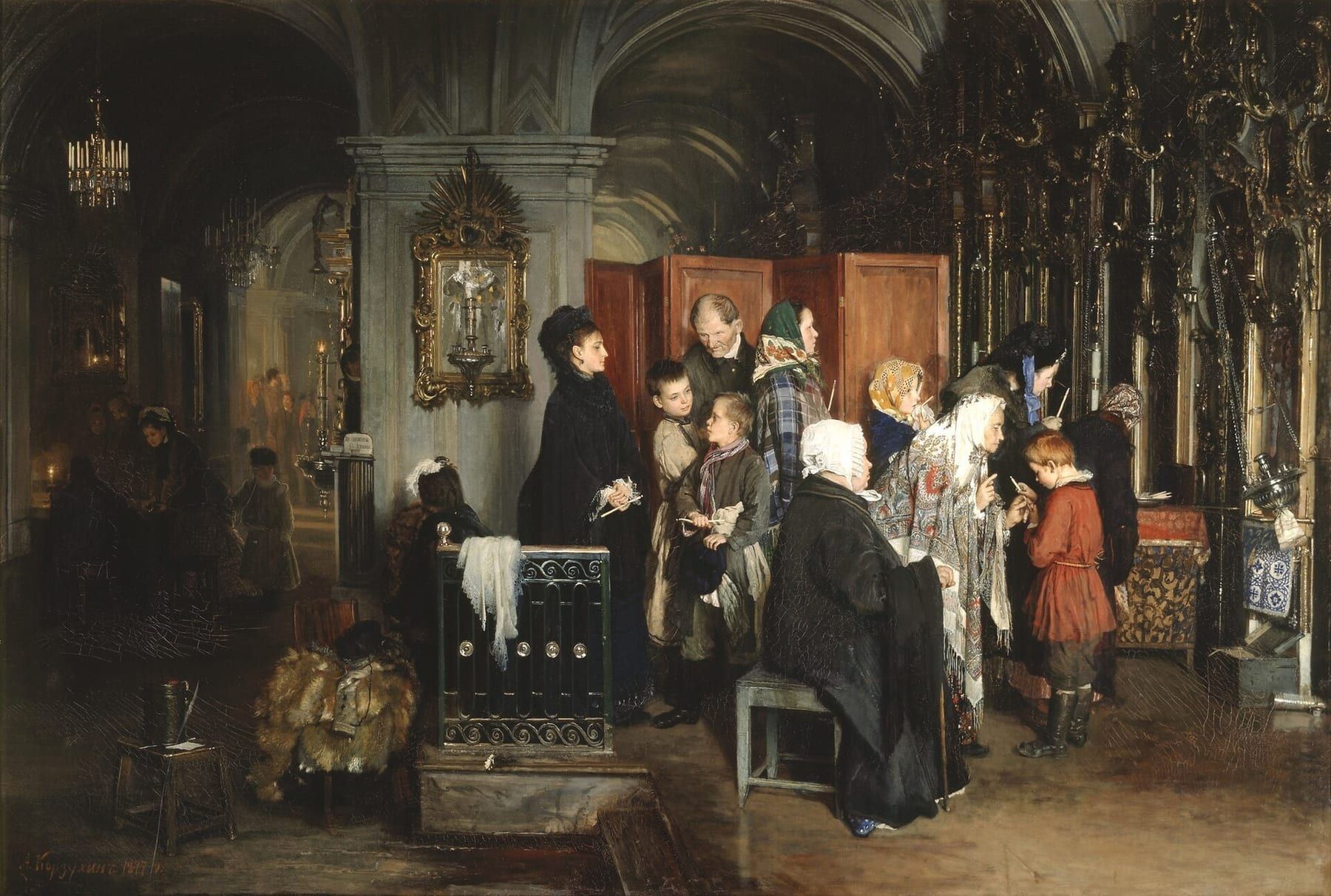
Picture: Alexei Korzukhin, Before Confession, 1877

The words of the prayer

Plain English

Blessed is the one whose wrongdoing is forgiven,whose sin is covered.Blessed is the one whose guilt the LORD does not count,and in whose spirit there is no deceit.

When I kept silent, my bones wasted awaythrough my groaning all day long.For day and night Your hand was heavy on me;my strength dried up as in the heat of summer.

I made my sin known to Youand did not cover up my guilt.I said, “I will confess my wrongs to the LORD,”and You forgave the guilt of my sin.

Therefore let everyone who is faithful pray to Youwhile You may be found.Surely, when the great waters rush in,they will not reach him.

You are my hiding place;You keep me from trouble;You surround me with songs of deliverance.

Traditional wording, 1611

Blessed is he whose transgression is forgiven,whose sin is covered.Blessed is the man unto whom the LORD imputeth not iniquity,and in whose spirit there is no guile.

When I kept silence, my bones waxed oldthrough my roaring all the day long.For day and night Thy hand was heavy upon me:my moisture is turned into the drought of summer.

I acknowledged my sin unto Thee,and mine iniquity have I not hid.I said, I will confess my transgressions unto the LORD;and Thou forgavest the iniquity of my sin.

For this shall every one that is godly pray unto Theein a time when Thou mayest be found:surely in the floods of great watersthey shall not come nigh unto him.

Thou art my hiding place;Thou shalt preserve me from trouble;Thou shalt compass me about with songs of deliverance.

Plain English by Wiser Walk, from the Hebrew (verses 1 to 7), with the King James Version beside it. How the wording is made. Traditional wording: The King James translators, The King James Version, 1611.

When it is said

In the Orthodox service of baptism, the priest sings it with the people right after the baptism, while he washes his hands.

Before confession, it gives words for the step the whole psalm turns on, from hiding a sin to telling it.

Stop at the line “I will confess my wrongs to the LORD” and take it as your own.

Where it comes from

Author by tradition

A psalm of David

The Hebrew heading calls it a maskil of David, a word the margin of the King James Version explains as a psalm “giving instruction.” In the Greek Bible (the Septuagint) it is Psalm 31.

The Hebrew Bible, on Mechon Mamre; The King James Version, with its margin, on eBible; Brenton’s translation of the Septuagint, on eBible

Paul quotes it

Paul quotes the first two verses in Romans 4:7-8. He reads them as David’s picture of the blessing of the person whom God counts righteous apart from works (Romans 4:6).

The King James Version, on eBible

The Scripture in it

Blessed is he whose transgressions are forgiven, whose sins are covered. Blessed is the man whose iniquity the LORD does not count against him, in whose spirit there is no deceit. When I kept silent, my bones became brittle from my groaning all day long. For day and night Your hand was heavy upon me; my strength was drained as in the summer heat. Selah Then I acknowledged my sin to You and did not hide my iniquity. I said, “I will confess my transgressions to the LORD,” and You forgave the guilt of my sin. Selah Therefore let all the godly pray to You while You may be found. Surely when great waters rise, they will not come near. You are my hiding place. You protect me from trouble; You surround me with songs of deliverance. Selah

Psalm 32:1-7 Quoted The psalm itself, up to the verse where God begins to answer.

Bible text: Berean Standard Bible, public domain.

Close to this

All prayers

Suggest a correction

Berean Standard Bible