
When it is said
The odes are nine songs from the Bible, sung at Matins, the morning service.
The ninth is Mary’s song, the Magnificat, with this song after it.
A service book of 1906 notes that these songs are usually left out, all but the Magnificat.
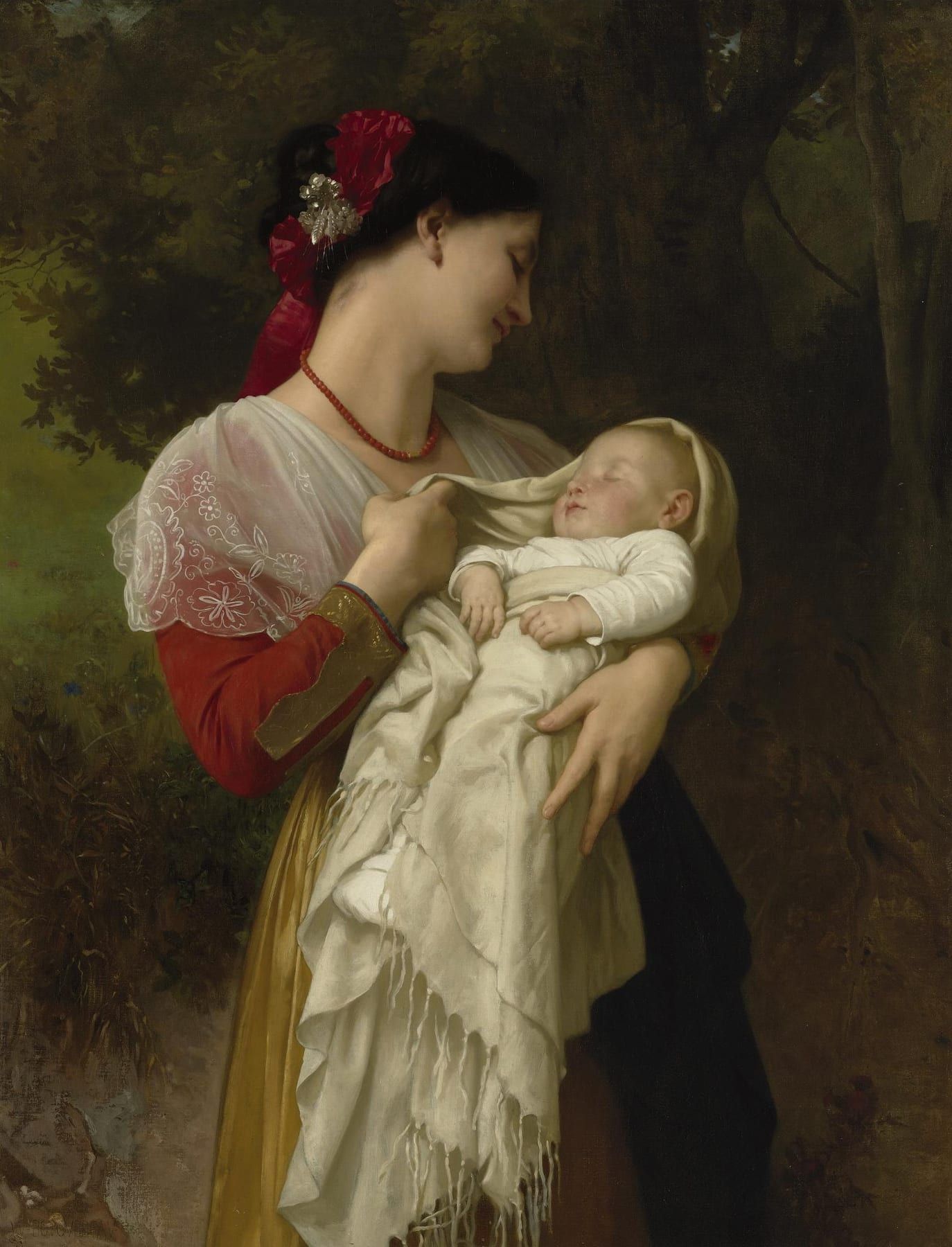
At home a parent may pray it in thanks for a new baby.
Where it comes from
Author known
Zechariah and the angel
The priest Zechariah and his wife Elizabeth had grown old without a child. While he served in the Temple, an angel told him his prayer was heard and Elizabeth would bear a son named John. Zechariah asked how he could be sure of this, since they were both old. The angel said that because he had not believed, he would not be able to speak until it came true.
Luke 1:5-20
The eighth day
On the baby’s eighth day, the family came to circumcise him and give him his name. They wanted to call him Zechariah after his father, but Elizabeth said he would be called John. When they made signs to Zechariah to ask what he wanted, he asked for a writing tablet and wrote, “His name is John.” At once he could speak again, and filled with the Holy Spirit he praised God in this song.
Luke 1:59-67
What the words mean
Who is “you, child”?
In the song’s last part, Zechariah turns from praising God to speak to his son. Before the baby was born, the angel had said that John would go before the Lord in the spirit and power of Elijah, to make a people ready for Him. Zechariah now speaks that same calling over the child on his eighth day.
Luke 1:17; Luke 1:76
Who is the Dawn from on high?
The Church reads the Dawn from on high as Christ. Its Christmas hymn gives Him the same title in the old word “Dayspring”, which means the dawn. It sings that at His birth, those who served the stars were taught by a star “to worship Thee, the Sun of righteousness, and to know Thee, the Dayspring from on high.”
G. V. Shann, Euchology (1891): the troparion of the Nativity, 25 December
The Scripture in it
“Blessed be the Lord, the God of Israel, because He has visited and redeemed His people. He has raised up a horn of salvation for us in the house of His servant David, as He spoke through His holy prophets, those of ages past, salvation from our enemies and from the hand of all who hate us, to show mercy to our fathers and to remember His holy covenant, the oath He swore to our father Abraham, to grant us deliverance from hostile hands, that we may serve Him without fear, in holiness and righteousness before Him all the days of our lives. And you, child, will be called a prophet of the Most High; for you will go on before the Lord to prepare the way for Him, to give to His people the knowledge of salvation through the forgiveness of their sins, because of the tender mercy of our God, by which the Dawn will visit us from on high, to shine on those who live in darkness and in the shadow of death, to guide our feet into the path of peace.”
“Behold, I will send My messenger, who will prepare the way before Me. Then the Lord Whom you seek will suddenly come to His temple—the Messenger of the covenant, in Whom you delight—see, He is coming,” says the LORD of Hosts.
The people walking in darkness have seen a great light; on those living in the land of the shadow of death, a light has dawned.
Bible text: Berean Standard Bible, public domain.
In Greek
Εὐλογητὸς Κύριος, ὁ Θεὸς τοῦ Ἰσραήλ, ὅτι ἐπεσκέψατο καὶ ἐποίησε λύτρωσιν τῷ λαῷ αὐτοῦ,
καὶ ἤγειρε κέρας σωτηρίας ἡμῖν ἐν τῷ οἴκῳ Δαυῒδ τοῦ παιδὸς αὐτοῦ,
καθὼς ἐλάλησε διὰ στόματος τῶν ἁγίων τῶν ἀπ᾿ αἰῶνος προφητῶν αὐτοῦ,
σωτηρίαν ἐξ ἐχθρῶν ἡμῶν καὶ ἐκ χειρὸς πάντων τῶν μισούντων ἡμᾶς,
ποιῆσαι ἔλεος μετὰ τῶν πατέρων ἡμῶν καὶ μνησθῆναι διαθήκης ἁγίας αὐτοῦ,
ὅρκον ὃν ὤμοσε πρὸς Ἀβραὰμ τὸν πατέρα ἡμῶν, τοῦ δοῦναι ἡμῖν
ἀφόβως, ἐκ χειρὸς τῶν ἐχθρῶν ἡμῶν ρυσθέντας, λατρεύειν αὐτῷ
ἐν ὁσιότητι καὶ δικαιοσύνῃ ἐνώπιον αὐτοῦ πάσας τὰς ἡμέρας τῆς ζωῆς ἡμῶν.
καὶ σύ, παιδίον, προφήτης ὑψίστου κληθήσῃ· προπορεύσῃ γὰρ πρὸ προσώπου Κυρίου ἑτοιμάσαι ὁδοὺς αὐτοῦ,
τοῦ δοῦναι γνῶσιν σωτηρίας τῷ λαῷ αὐτοῦ, ἐν ἀφέσει ἁμαρτιῶν αὐτῶν
διὰ σπλάγχνα ἐλέους Θεοῦ ἡμῶν, ἐν οἷς ἐπεσκέψατο ἡμᾶς ἀνατολὴ ἐξ ὕψους
ἐπιφᾶναι τοῖς ἐν σκότει καὶ σκιᾷ θανάτου καθημένοις, τοῦ κατευθῦναι τοὺς πόδας ἡμῶν εἰς ὁδὸν εἰρήνης.
From Luke’s Gospel in the Patriarchal Greek text of 1904, on Elpenor (ellopos.net).