
When it is said
At Matins, the Orthodox morning service, it is sung near the end, before the ninth ode of the canon, a long hymn in nine parts. The deacon censes the icon of the Mother of God and calls all to honour her in song.
The choir answers each verse with a refrain, except on the greatest feasts of the Lord and of the Mother of God, when the Magnificat is not sung at all.
Western churches sing it at Vespers, the evening service, and Anglicans at Evensong.
Where it comes from
Author known
Mary’s song
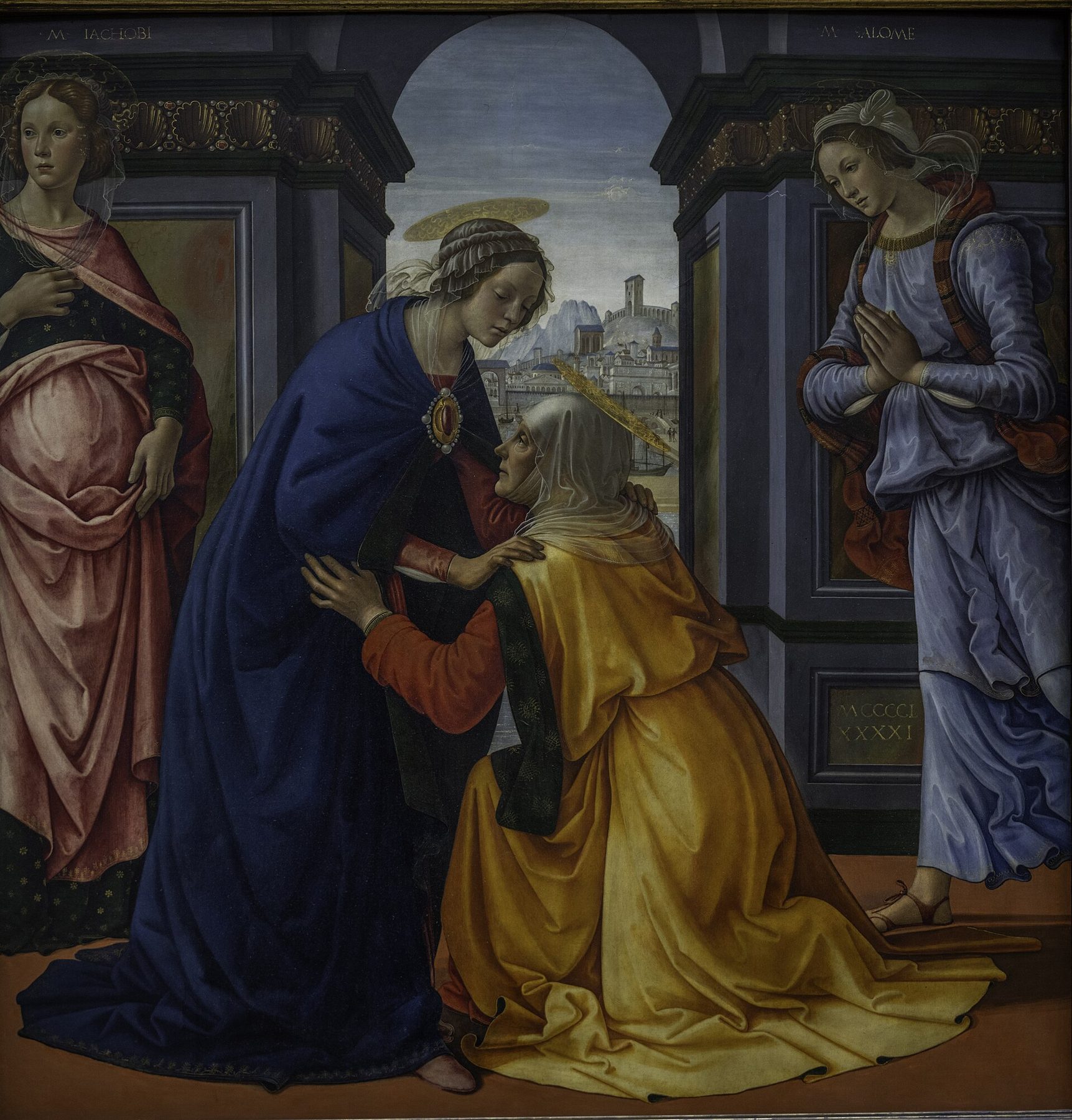
Luke’s Gospel tells how Mary, soon after the angel’s message, went to visit her cousin Elizabeth. Elizabeth greeted her as “the mother of my Lord”, and Mary answered with this song. Many of its lines echo the song of Hannah, the mother of the prophet Samuel, in the Old Testament.
Luke 1:39-56; Catholic Encyclopedia (1910), Magnificat
First sung in the morning
The oldest record of the Church singing it is the Rule of St Caesarius of Arles, in Gaul, written before AD 502. He set it at the morning service. The Greek Churches still sing it in the morning, while the West later came to sing it in the evening. It has probably been set to music more often than any other hymn.
Mary or Elizabeth?
Three old Latin copies of Luke read “And Elizabeth said”, and around 1900 a few scholars argued the song was Elizabeth’s. But the early writer Tertullian and every Greek and Syriac text give it to Mary, as do almost all copies of the Gospel and the Fathers of the Church.
What the words mean
“Lowliness”, not humility
Mary says God looked on her “lowliness”. Some translations say “humility”. But the word most likely means her low estate in the world, not the virtue of humility. Later in the song God lifts up “the lowly”, a word from the same Greek root.
The Scripture in it
Then Mary said: “My soul magnifies the Lord, and my spirit rejoices in God my Savior! For He has looked with favor on the humble state of His servant. From now on all generations will call me blessed. For the Mighty One has done great things for me. Holy is His name. His mercy extends to those who fear Him, from generation to generation. He has performed mighty deeds with His arm; He has scattered those who are proud in the thoughts of their hearts. He has brought down rulers from their thrones, but has exalted the humble. He has filled the hungry with good things, but has sent the rich away empty. He has helped His servant Israel, remembering to be merciful, as He promised to our fathers, to Abraham and his descendants forever.”
At that time Hannah prayed: “My heart rejoices in the LORD; my horn is exalted in the LORD. My mouth speaks boldly against my enemies, for I rejoice in Your salvation. There is no one holy like the LORD. Indeed, there is no one besides You! And there is no Rock like our God. Do not boast so proudly, or let arrogance come from your mouth, for the LORD is a God Who knows, and by Him actions are weighed. The bows of the mighty are broken, but the feeble are equipped with strength. The well-fed hire themselves out for food, but the starving hunger no more. The barren woman gives birth to seven, but she who has many sons pines away. The LORD brings death and gives life; He brings down to Sheol and raises up. The LORD sends poverty and wealth; He humbles and He exalts. He raises the poor from the dust and lifts the needy from the ash heap. He seats them among princes and bestows on them a throne of honor. For the foundations of the earth are the LORD’s, and upon them He has set the world. He guards the steps of His faithful ones, but the wicked perish in darkness; for by his own strength shall no man prevail. Those who oppose the LORD will be shattered. He will thunder from heaven against them. The LORD will judge the ends of the earth and will give power to His king. He will exalt the horn of His anointed.”
But from everlasting to everlasting the loving devotion of the LORD extends to those who fear Him, and His righteousness to their children’s children—
But God replied, “Your wife Sarah will indeed bear you a son, and you are to name him Isaac. I will establish My covenant with him as an everlasting covenant for his descendants after him.”
Bible text: Berean Standard Bible, public domain.
In Greek
Μεγαλύνει ἡ ψυχή μου τὸν Κύριον, καὶ ἠγαλλίασε τὸ πνεῦμά μου ἐπὶ τῷ Θεῷ τῷ Σωτῆρί μου.
Ὅτι ἐπέβλεψεν ἐπὶ τὴν ταπείνωσιν τῆς δούλης Αὐτοῦ· ἰδού γάρ, ἀπὸ τοῦ νῦν μακαριοῦσί με πᾶσαι αἱ γενεαί.
Ὅτι ἐποίησέ μοι μεγαλεῖα ὁ Δυνατός, καὶ ἅγιον τὸ ὄνομα Αὐτοῦ, καὶ τὸ ἔλεος Αὐτοῦ εἰς γενεάν, καὶ γενεὰν τοῖς φοβουμένοις Αὐτόν.
Ἐποίησε Κράτος ἐν βραχίονι Αὐτοῦ, διεσκόρπισεν ὑπερηφάνους διανοίᾳ καρδίας αὐτῶν.
Καθεῖλε δυνάστας ἀπὸ θρόνων, καὶ ὕψωσε ταπεινούς, πεινῶντας ἐνέπλησεν ἀγαθῶν, καὶ πλουτοῦντας ἐξαπέστειλε κενούς.
Ἀντελάβετο Ἰσραὴλ παιδὸς Αὐτοῦ, μνησθῆναι ἐλέους, καθὼς ἐλάλησε πρὸς τοὺς Πατέρας ἡμῶν, τῷ Ἀβραάμ, καὶ τῷ σπέρματι αὐτοῦ ἕως αἰῶνος.