
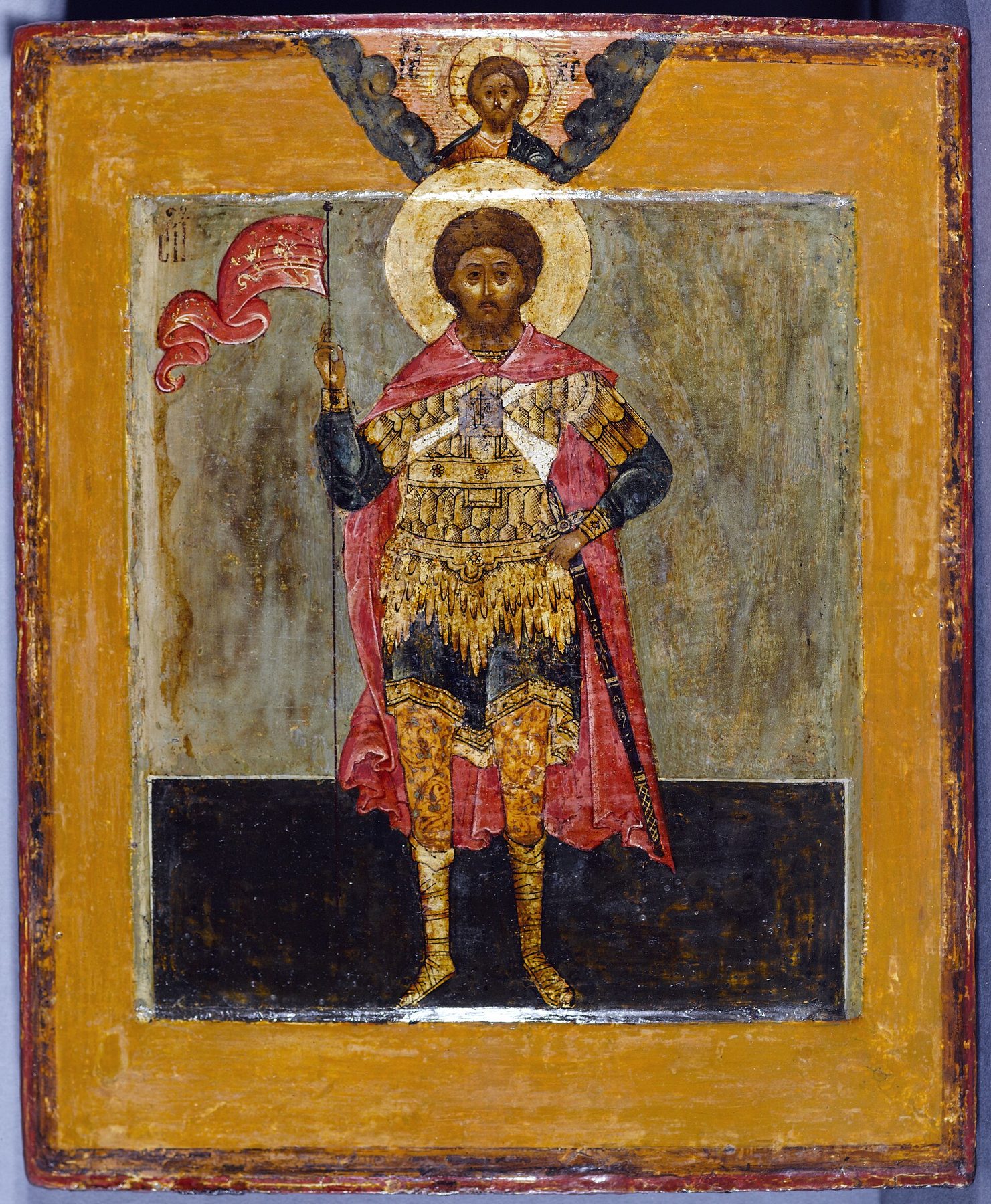
Why people ask St John the Warrior
Lost things
In the AD 900s, the book of saints’ lives read in the churches of Constantinople already said he was known above all for revealing stolen goods and bringing thieves to light. Another hymn of his feast, sung at Vespers, calls him a “revealer of lost and hidden things”.
Synaxarion of the Church of Constantinople, 30 July, ed. Hippolyte Delehaye, 1902, columns 855 to 856; Menaion, July, 30 July, Vespers, translated by Isaac Lambertsen, 2000; Martyr John the Soldier at Constantinople, Orthodox Church in America
His feast days
29 July: His feast in the Greek churches. Those on the old calendar keep it on 11 August.
30 July: His feast in the Slavic churches on the new calendar. The Russian, Serbian and other churches on the old calendar keep it on 12 August.
When it is said
The Church sings it on his feast, at Vespers and twice at Matins.
A family might also pray it at home for someone who is serving in the forces.
Where it comes from
No author known
A soldier who saved Christians
John served in the Roman army under the emperor Julian (AD 361 to 363). Julian had denied Christ, and John was sent with other soldiers to hunt down and kill Christians. John seemed to persecute them but was secretly a Christian himself. He freed believers who had been arrested, warned others of the danger and helped them escape, until Julian found out and had him put in prison in Constantinople.
Orthodox Church in America, “Martyr John the Soldier at Constantinople”
Mercy for anyone in need
After Julian was killed fighting the Persians in 363, John was set free. He spent the rest of his long life serving anyone in need, not only Christians. He visited the sick and comforted the grieving.
Orthodox Church in America, “Martyr John the Soldier at Constantinople”
Protector of soldiers
The Russian Church honours John as the protector of soldiers. A hymn sung at Vespers on his feast calls him a “revealer of lost and hidden things” for those who ask his help. People also ask his prayers to recover things that have been stolen.
Orthodox Church in America, “Martyr John the Soldier at Constantinople”; Menaion, July, tr. Isaac Lambertsen (2000), 30 July, Vespers
The Scripture in it
I have fought the good fight, I have finished the race, I have kept the faith.
And lead us not into temptation, but deliver us from the evil one.’
Bible text: Berean Standard Bible, public domain.
In Church Slavonic
Всеблагаго Бога и Царя
благоверный раб и воин явился еси, Иоанне чудодетелю,
пострадав бо ради веры мужески,
блаженно же скончав течение,
зриши Всетворца Господа в Небесех светлейше.
От Негоже прием дарование чудес,
страждущим человеком во всяких напастех помогаеши,
укрепляеши воины в ратех,
от врагов пленения, ран же и внезапных смертей и от бед лютых изымаеши.
Темже моли Владыку Христа, приснопамятне,
да во всяком обстоянии сотворит нам милость,
и не введет нас во искушения,
но спасет души наша, яко Человеколюбец.
From the troparion in Tone 4 for the martyr John the Warrior, on azbyka.ru.