
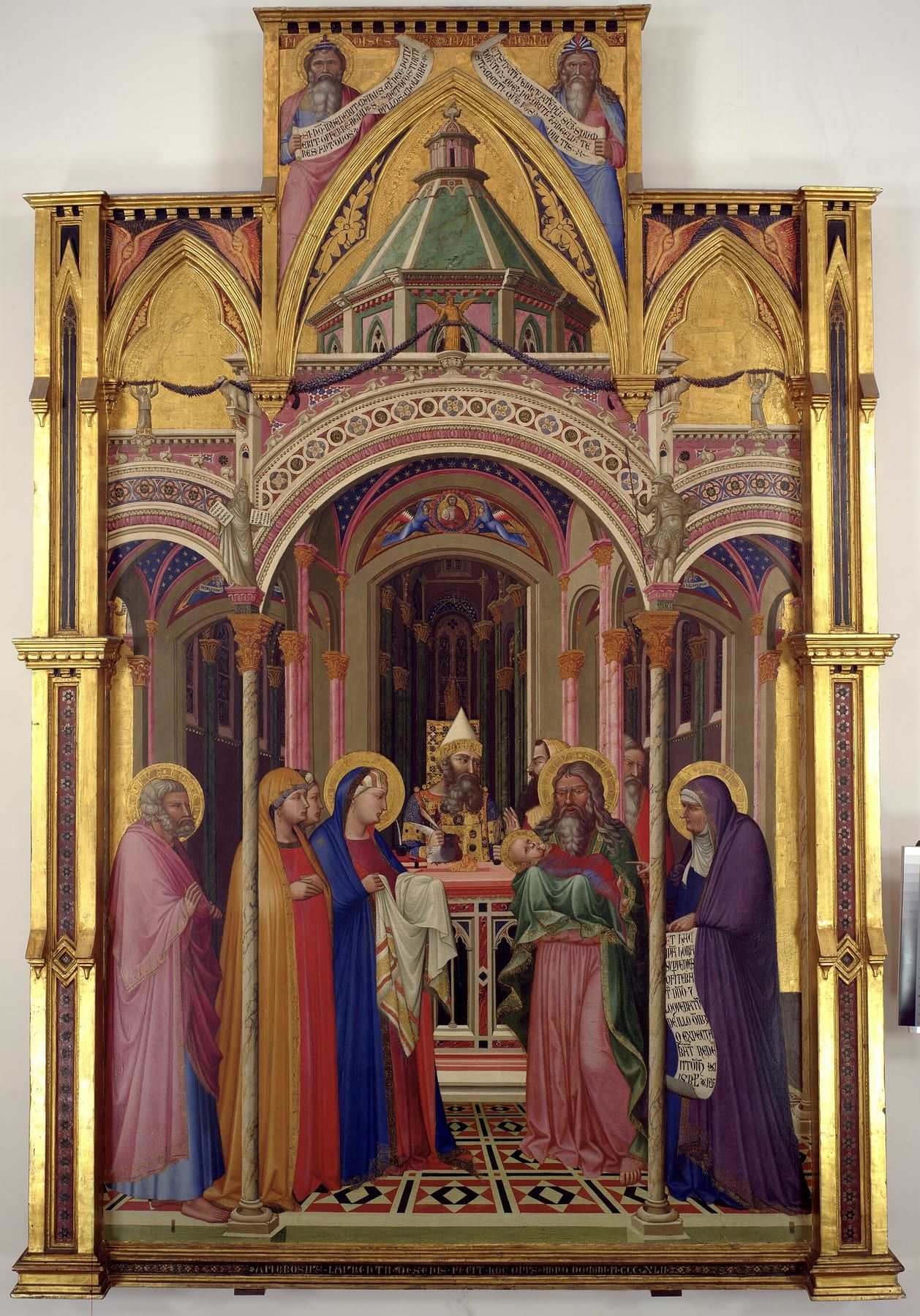
When it is said
It is the troparion of the feast of the Meeting of the Lord on 2 February (15 February on the old calendar), sung at Vespers on the eve and again in the Liturgy.
A family might also say it at home on the day they bring a new baby to church.
Where it comes from
No author known
Where it comes from
It is the main hymn of the feast in the Menaion, the book of hymns for each day of the year, and the service books name no writer for it. In the Greek service book, the priest ends the 40-day blessing of a mother and baby with this feast’s closing blessing, which names Christ held in Simeon’s arms.
The Greek Menaion for 2 February on Azbyka.ru; The Slavonic Book of Needs on Azbyka.ru, with the Greek ending in a note
A second name
Isabel Hapgood’s service book of 1906 gives the feast a second name, the Purification of the Mother of God. Luke tells that Mary and Joseph brought Jesus to the Temple once the days of purification under the Law of Moses were over (Luke 2:22).
Isabel F. Hapgood, Service Book (1906), The Meeting of the Lord
What the words mean
Why it greets Simeon
The hymn first greets Mary as the angel did (Luke 1:28). Then it rejoices with Simeon as he holds the Child. The Holy Spirit had told Simeon that he would not die before he saw the Messiah (Luke 2:25-28).
The Scripture in it
The angel appeared to her and said, “Greetings, you who are highly favored! The Lord is with you.”
“But for you who fear My name, the sun of righteousness will rise with healing in its wings, and you will go out and leap like calves from the stall.”
Simeon took Him in his arms and blessed God, saying …
Bible text: Berean Standard Bible, public domain.
In Greek
Χαῖρε κεχαριτωμένη Θεοτόκε Παρθένε·
ἐκ σοῦ γὰρ ἀνέτειλεν ὁ Ἥλιος τῆς δικαιοσύνης,
Χριστὸς ὁ Θεὸς ἡμῶν, φωτίζων τοὺς ἐν σκότει.
Εὐφραίνου καὶ σὺ Πρεσβύτα δίκαιε,
δεξάμενος ἐν ἀγκάλαις τὸν ἐλευθερωτὴν τῶν ψυχῶν ἡμῶν,
χαριζόμενον ἡμῖν καὶ τὴν Ἀνάστασιν.