
Greed
Avarice: wanting more than you need, and measuring yourself by what you have gathered.
- AvaritiaIn Latin
- GenerosityIts opposite
- Terrace 5Dante’s Purgatory
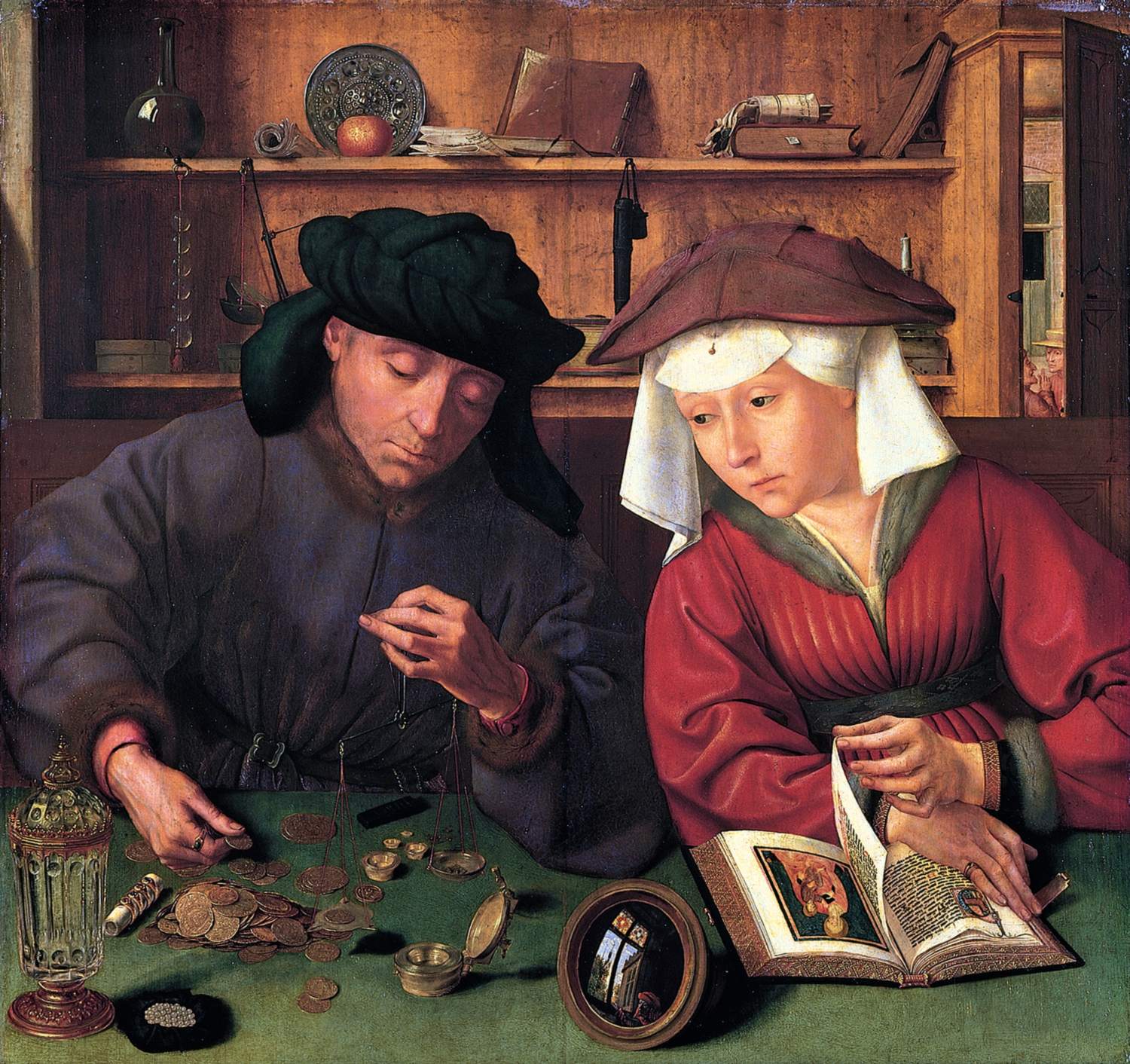
Picture: The Moneylender and His Wife, Quentin Matsys, 1514. Louvre, Paris.
From your result on . See your result
- Greed
A short bar is a pull your answers barely found. That is a description of your answers, not a certificate.
What is greed, as one of the seven deadly sins?
Greed is wanting more than you need and measuring yourself by what you have gathered. It is not earning, saving or owning things, which the Bible takes for granted, but the grip: money and possessions as the score of your life, and the difficulty of letting any of it go.
Why it matters
Greed hides well in a culture that admires it. The questions do not ask how much you have; they ask whether you keep score by it, and whether giving comes easily or has to be asked for twice. Jesus warned about it more often than about almost anything else.
Where does the Bible name it?
-
And He said to them, “Watch out! Guard yourselves against every form of greed, for one’s life does not consist in the abundance of his possessions.”
Luke 12:15
-
For the love of money is the root of all kinds of evil. By craving it, some have wandered away from the faith and pierced themselves with many sorrows.
1 Timothy 6:10
Berean Standard Bible
Did you know?
-
Paul calls greed idolatry, which is the old writers’ point in one word: greed treats a possession as if it could do what only God does. Dante put the hoarders and the spendthrifts in the same circle of hell, rolling great weights against each other for ever, because both had made money the measure of a life.
Colossians 3:5; Dante, Inferno, canto VII
-
Basil the Great preached on the rich fool who pulled down his barns to build bigger ones. The bread you keep, he told his hearers, belongs to the hungry, and the shoes rotting in your cupboard to the barefoot.
Basil the Great, homily on Luke 12:18, I Will Pull Down My Barns
-
In the painting at the top of this page the moneylender’s wife has her prayer book open, but her eyes have left the page for the coins on the table.
Quentin Matsys, The Moneylender and His Wife, 1514