
The word of knowledge
- 3Statements
- 3Passages
- 17Gifts
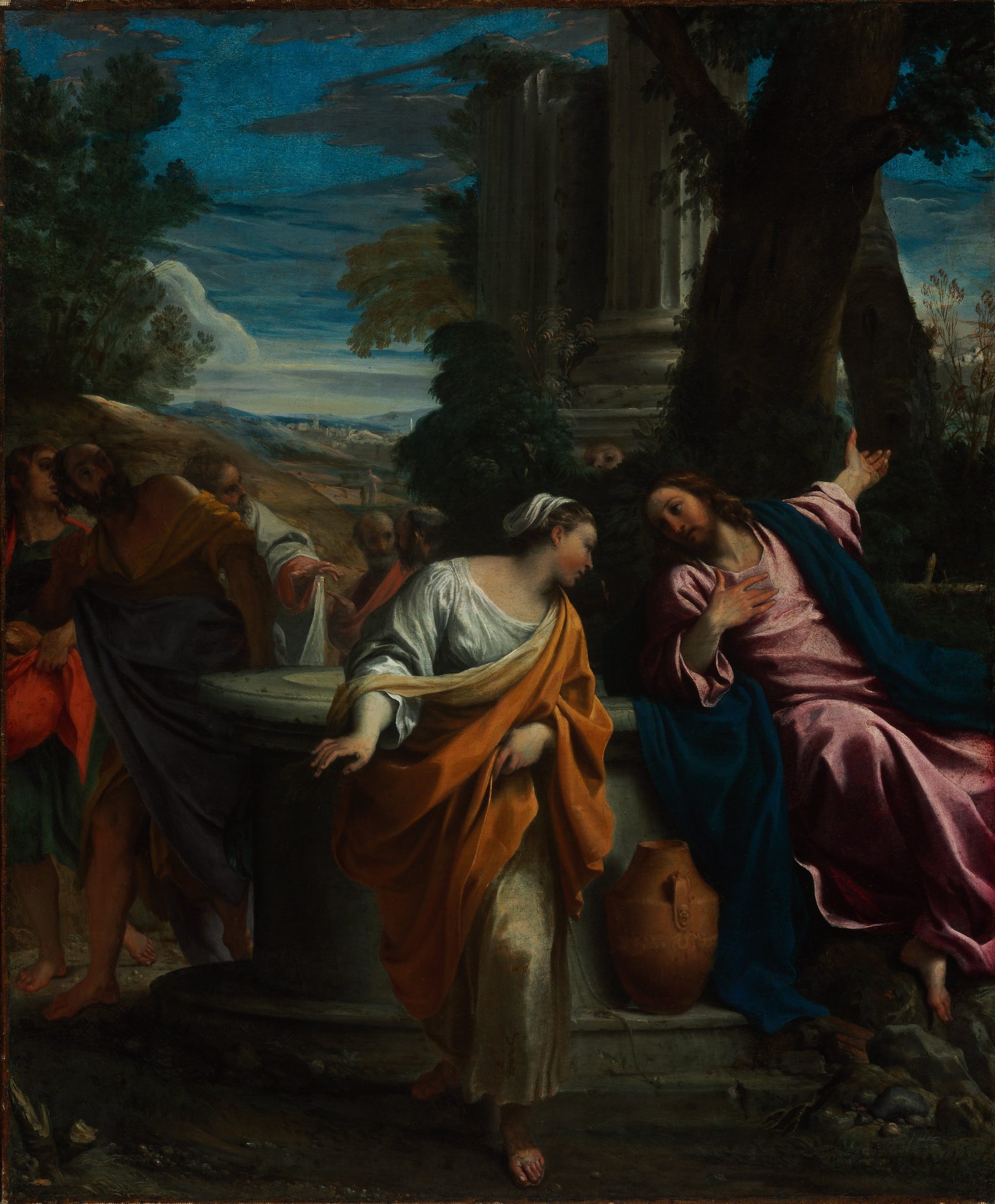
Picture: Christ and the Samaritan Woman, Annibale Carracci, about 1595–97. Museum of Fine Arts, Budapest.
From your result on . See your result
- The word of knowledge
A low row is something these statements did not find, not a verdict on you.
What is the word of knowledge?
The word of knowledge is named once, in 1 Corinthians 12:8, and never explained. Christians read it in two ways: having what Scripture and Christian teaching say ready at the moment it is needed, and knowing something about a person that nobody had told you.
Why it matters
How a church reads this one decides who gets listened to. Read the first way it puts weight on people who have done the reading; read the second it puts weight on people who say they have been given something. Paul, who lists the gift, spends a chapter telling a church that prized it that knowledge without love comes to nothing.
Where does the Bible name it?
-
and to another the word of knowledge according to the same Spirit
1 Corinthians 12:8
World English Bible British Edition
What does the word of knowledge look like in a church?
The passage names a word of knowledge, something said, and nowhere explains it, and Christians read it in more than one way. These statements ask about two things: having what the Bible and Christian teaching say ready when people need it, and knowing a fact about someone that nobody had told you. Two of the three ask about the first, so a reader with only the second will see this row fill less.
They cannot see how you came to know anything. The New Testament calls no recorded act a word of knowledge, so the passages below are not acts: they are three places where Paul writes of knowledge in a church. Whether what happened was this gift is for your church and those who lead it to say, not this page. Many Christians believe God still gives this gift today; many believe He gave it only for the time of the apostles.
In an ordinary week the first reading looks like the person a group turns to when it is groping for a passage: they can say where it is, and what it meant where it stood. The second looks like a sentence said to somebody who had told you nothing, which turns out to be true of them. These statements ask about both and can see how neither came about.
It is most often confused with teaching and with the word of wisdom. Teaching hands material over so that another person can hold it and pass it on; a word of knowledge is something said at a moment. Wisdom answers what should be done, and knowledge answers what is so. Corinth prized this one enough for Paul to give it the flattest line in the letter: “Knowledge puffs up, but love builds up” (1 Corinthians 8:1).
Did you know?
-
Paul thanks God for the Corinthians because “in Him you have been enriched in every way, in all speech and all knowledge”, and twelve chapters later tells the same church that knowing all mysteries and all knowledge without love makes a person nothing.
1 Corinthians 1:5, Berean Standard Bible; 1 Corinthians 13:2
-
“Knowledge puffs up, but love builds up” is Paul answering the Corinthians on their own favourite subject, four chapters before he lists it as a gift.
1 Corinthians 8:1, World English Bible British Edition
-
The New Testament calls no recorded act a word of knowledge. Every passage on this page is Paul writing about knowledge in a church, not Luke describing somebody using it.
1 Corinthians 12:8; 1 Corinthians 14:6; Romans 15:14
What Paul writes about it
-
1 Corinthians 1:4-7
Paul writes that he always thanks his God for the grace of God given to the Corinthians in Christ Jesus: that in everything they were enriched in Him, in all speech and all knowledge, even as the testimony of Christ was confirmed in them, so that they come behind in no gift, waiting for the revelation of our Lord Jesus Christ.
-
1 Corinthians 14:6
Paul asks what he would profit them if he came speaking with other languages, unless he spoke to them by way of revelation, or of knowledge, or of prophesying, or of teaching.
-
Romans 15:14
Paul writes that he is persuaded the Christians at Rome are full of goodness, filled with all knowledge, and able also to admonish others.
Suggest a correction. Corrections that are applied are recorded in the public changelog.