
The gift of prophecy
- 4Recorded acts
- 12Gifts
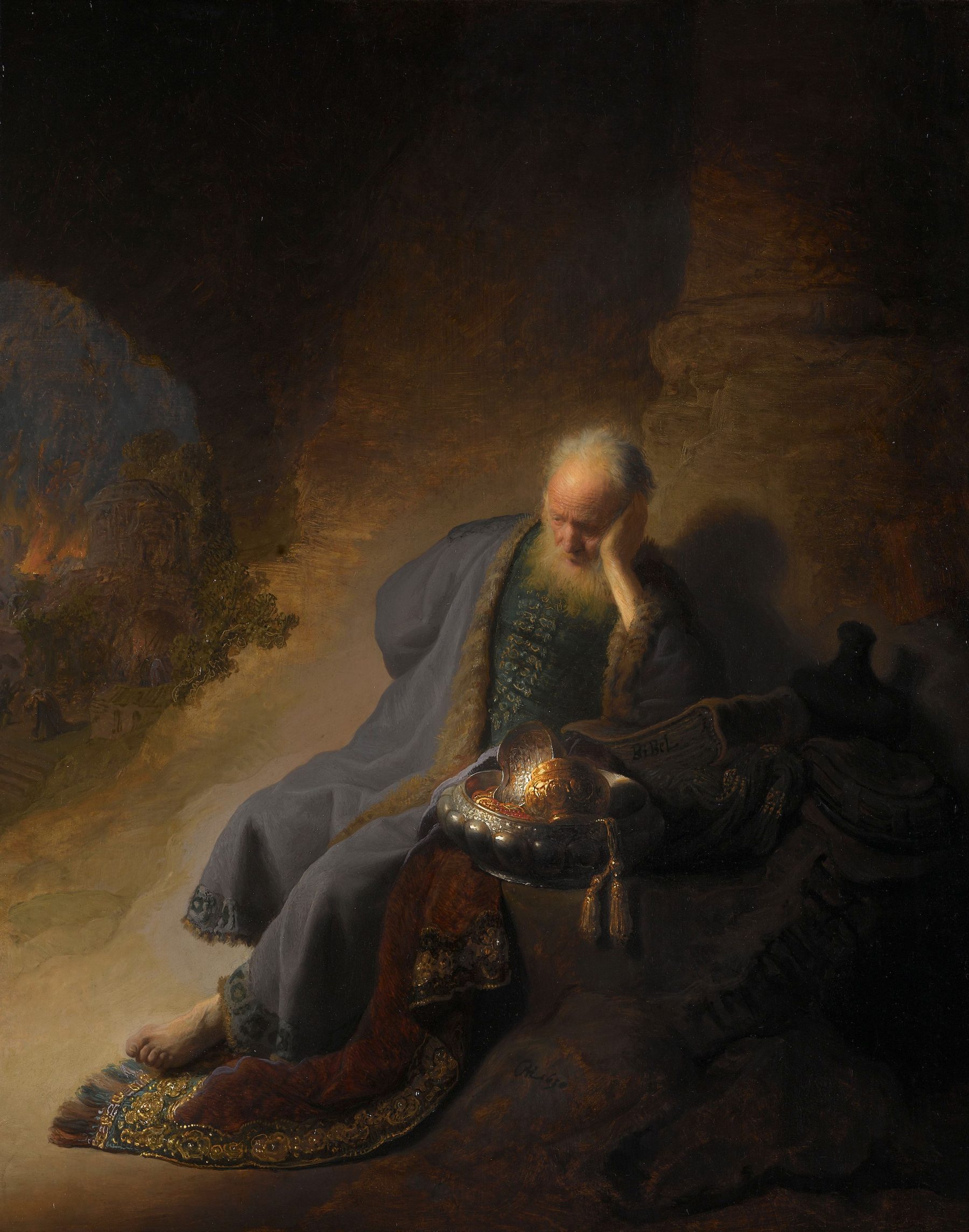
Picture: Jeremiah Lamenting the Destruction of Jerusalem, Rembrandt, 1630. Rijksmuseum, Amsterdam.
From your result on . See your result
- Prophecy
A low row is something these questions did not find, not a verdict on you.
What is the spiritual gift of prophecy?
Prophecy is named in Romans 12:6 and 1 Corinthians 12:10, and Paul says what it is for: speaking to people for their building up, encouragement and comfort (1 Corinthians 14:3). Christians disagree about whether it is given today, and about how much weight it carries where it is.
Why it matters
This is the gift that decides what a church service can contain. Where it is believed to continue there is room for somebody to stand up and say something, and rules about who weighs it. Where it is believed to have ceased the same care shows up as careful preaching from a text anyone can check. Paul’s instructions assume both the speaking and the weighing.
Where does the Bible name it?
-
To one there is given through the Spirit the message of wisdom, to another the message of knowledge by the same Spirit, to another faith by the same Spirit, to another gifts of healing by that one Spirit, to another the working of miracles, to another prophecy, to another distinguishing between spirits, to another speaking in various tongues, and to still another the interpretation of tongues.
1 Corinthians 12:8-10
-
We have different gifts according to the grace given us. If one’s gift is prophecy, let him use it in proportion to his faith; if it is serving, let him serve; if it is teaching, let him teach; if it is encouraging, let him encourage; if it is giving, let him give generously; if it is leading, let him lead with diligence; if it is showing mercy, let him do it cheerfully.
Romans 12:6-8
Berean Standard Bible
What does the gift of prophecy look like in a church?
Paul says what it is for: “he who prophesies speaks to men for their edification, encouragement, and comfort” (1 Corinthians 14:3), where edification means building them up. He also writes, “the others should weigh carefully what is said”, and, “if a revelation comes to someone who is seated, the first speaker should stop” (1 Corinthians 14:29-30). These statements ask whether you have said what you believed God gave you to say, and what people said afterwards.
A preacher can agree with them, and so can a friend whose advice came at the right time; the statements cannot see more than that. 1 Corinthians 12:28 and Ephesians 4:11 also name prophets among the people given to the church; a result here names a pattern and says nothing about whether anybody is a prophet. Whether what happened was this gift is for your church and those who lead it to say, not this page. Many Christians believe God still gives this gift today; many believe He gave it only for the time of the apostles.
Did you know?
-
Paul’s rule is that a prophet can be interrupted: “if a revelation comes to someone who is seated, the first speaker should stop”. Nobody in the room holds the floor by right.
1 Corinthians 14:30, Berean Standard Bible
-
Luke names four women as prophesying in a single sentence and quotes none of them: Philip the evangelist “had four unmarried daughters who prophesied”.
Acts 21:9, Berean Standard Bible
-
Paul ends the argument with both halves of it in one line: “be eager to prophesy, and do not forbid speaking in tongues”.
1 Corinthians 14:39, Berean Standard Bible
Who did this in the Bible?
-
Acts 11:27-30
Prophets came down from Jerusalem to Antioch, and one of them, Agabus, stood up and indicated by the Spirit that there would be a great famine all over the world, which Luke says happened in the days of Claudius; the disciples, each as he had plenty, determined to send relief to the brothers in Judea, and sent it to the elders by Barnabas and Saul.
-
Acts 13:1-3
In the church at Antioch there were prophets and teachers; as they served the Lord and fasted, the Holy Spirit said to separate Barnabas and Saul for the work to which He had called them, and when they had fasted and prayed and laid their hands on them, they sent them away.
-
Acts 21:8-14
At Caesarea Paul’s company stayed in the house of Philip the evangelist, one of the seven, who had four virgin daughters who prophesied; a prophet named Agabus came down from Judea, bound his own feet and hands with Paul’s belt, and said that the Holy Spirit says the Jews at Jerusalem will bind the man who owns the belt in this way and deliver him into the hands of the Gentiles; the company and the people of that place begged Paul not to go up to Jerusalem, he answered that he was ready not only to be bound but to die there for the name of the Lord Jesus, and when he would not be persuaded they ceased, saying that the Lord’s will be done.
-
1 Timothy 1:18
Paul commits his instruction to Timothy according to the prophecies which were given to him before, so that by them he may wage the good warfare.