Sign Up My Profile
Prayers

Orthodox prayers for contentment

Prayers to be content with what you have, and to stop always wanting more.

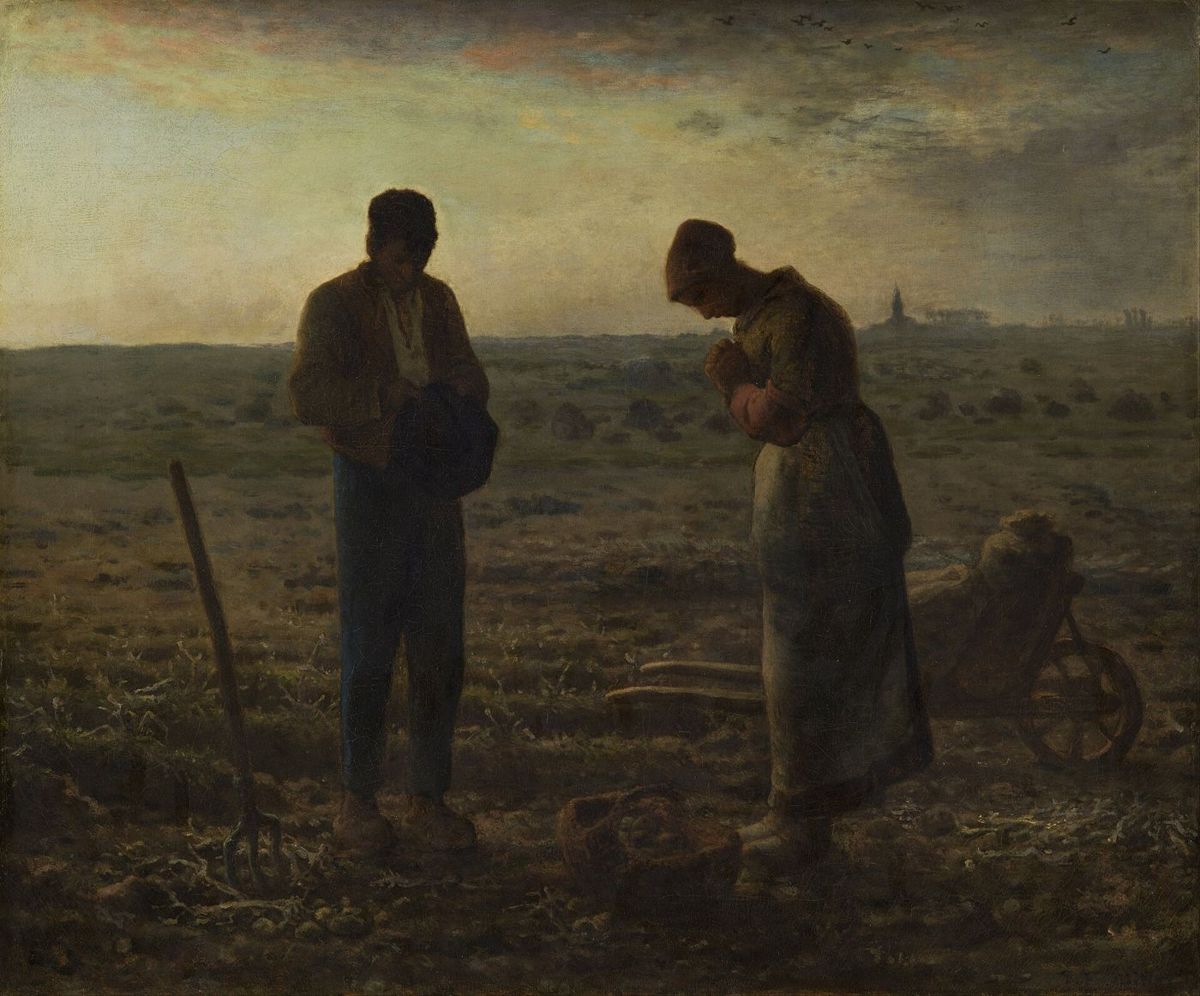
Picture: Jean-François Millet, The Angelus, 1857–59

3 prayers

A prayer for enough

Prayer of Agur

Two things I ask of You;do not take Your favour away from mebefore I die.

Keep empty words and lies far from me.Give me neither riches nor poverty,but give me what I need,and what is enough.

Or else, when I have my fill,I may turn to lies and say, “Who sees me?”Or I may grow poor and steal,and swear falsely by the name of God.

Traditional wording, 1844

Two things I ask of Thee; take not favour from me before I die.

Remove far from me vanity and falsehood:and give me not wealth or poverty;but appoint me what is needful and sufficient:

lest I be filled and become false, and say, Who sees me?or be poor and steal, and swear vainly by the name of God.

Agur asks God for neither riches nor poverty, only what is enough. In the Greek Bible its word for “enough” is the one Paul uses when he says he has learned to be content (Philippians 4:11).

Plain English by Wiser Walk, from the Greek Old Testament (the Septuagint), with Brenton’s 1844 translation beside it. How the wording is made. Traditional wording: Lancelot C. L. Brenton, The Septuagint Version of the Old Testament, 1844.

Brenton’s “take not favour from me” is read here as asking God not to refuse the two things.

Where it comes from, and the Greek

When you keep wanting more

Where true joys are found

O God, You make the minds of the faithfulto be of one will.

Grant that Your people may love what You commandand desire what You promise,so that among the changes of this worldour hearts may be fixedwhere true joys are found.

Through Jesus Christ our Lord.

Traditional wording, 1662

O Almighty God, Who alone canst order the unruly wills and affections of sinful men;

Grant unto Thy people, that they may love the thing which Thou commandest,and desire that which Thou dost promise;that so, among the sundry and manifold changes of the world,our hearts may surely there be fixed, where true joys are to be found;

through Jesus Christ our Lord.

From an old Roman service book. It asks God to turn our desire to what He promises, so that among all the changes of this world our hearts rest where true joys are found.

Plain English by Wiser Walk, from the Latin of the Old Gelasian book (Wilson’s 1894 edition), with the 1662 Book of Common Prayer’s English beside it. How the wording is made. Traditional wording: The Church of England, The Book of Common Prayer, 1662.

William Bright dates the Prayer Book’s opening, “Who alone canst order the unruly wills and affections of sinful men”, to a change made in 1661. The Latin and the plain wording open with God making the minds of the faithful one in will.

Where it comes from, and the Latin

With the Lord as your shepherd

The Lord is my shepherd (Psalm 23)

The LORD is my shepherd;I lack nothing.He makes me lie down in green pastures;He leads me beside quiet waters.He restores my soul.He guides me in paths of righteousnessfor the sake of His name.

Even though I walkthrough the valley of the shadow of death,I will fear no evil,for You are with me;Your rod and Your staff, they comfort me.

You prepare a table before mein the presence of my enemies.You anoint my head with oil;my cup overflows.

Surely goodness and mercy will follow meall the days of my life,and I will dwell in the house of the LORDfor ever.

Traditional wording, 1611

The LORD is my shepherd; I shall not want.He maketh me to lie down in green pastures: He leadeth me beside the still waters.He restoreth my soul: He leadeth me in the paths of righteousness for His name’s sake.

Yea, though I walk through the valley of the shadow of death, I will fear no evil:for Thou art with me; Thy rod and Thy staff they comfort me.

Thou preparest a table before me in the presence of mine enemies:Thou anointest my head with oil; my cup runneth over.

Surely goodness and mercy shall follow me all the days of my life:and I will dwell in the house of the LORD for ever.

The LORD is David’s shepherd, so he lacks nothing. St Athanasius advised singing this psalm whenever you see the Lord shepherding and guiding you.

Plain English by Wiser Walk, from the Hebrew, with the King James Version beside it. How the wording is made. Traditional wording: The King James translators, The King James Version, 1611.

Where it comes from, and the original

Scripture for this

11I am not saying this out of need, for I have learned to be content regardless of my circumstances. 12I know how to live humbly, and I know how to abound. In any and every situation I have learned the secret of being filled and being hungry, of having plenty and having need. 13I can do all things through Christ Who gives me strength.

Philippians 4:11-13 Paul learned to be content with little or with plenty, through Christ Who gives him strength.

6Of course, godliness with contentment is great gain. 7For we brought nothing into the world, so we cannot carry anything out of it. 8But if we have food and clothing, we will be content with these.

1 Timothy 6:6-8 Godliness with contentment is great gain. We brought nothing into the world, and we can take nothing out.

And He said to them, “Watch out! Guard yourselves against every form of greed, for one’s life does not consist in the abundance of his possessions.”

Luke 12:15 Jesus warns against every kind of greed, because a person’s life does not consist in what he owns.

Keep your lives free from the love of money and be content with what you have, for God has said: “Never will I leave you, never will I forsake you.”

Hebrews 13:5 Be content with what you have, because God has said He will never leave you or forsake you.

Better one handful with tranquility than two handfuls with toil and pursuit of the wind.

Ecclesiastes 4:6 Better one handful with rest than two handfuls with toil and chasing the wind.

Bible text: Berean Standard Bible, public domain.

A psalm for this

The lines of my boundary have fallen in pleasant places; surely my inheritance is delightful.

Psalm 16:6

The LORD is David’s chosen portion and his cup (Psalm 16:5). With God as his share, he can say that the lines of his boundary have fallen in pleasant places.

Close to this

All prayers

Quiz What prayer do you need right now? A few honest taps about where you are, and a prayer of the Church for exactly that. 8 questions, about 3 minutes. Start

Suggest a correction

Berean Standard Bible