Sign Up My Profile
Prayers

Orthodox prayers for money and provision

These prayers are for when money will not stretch or work never lets up. They ask God for what you need, and leave the rest to Him.

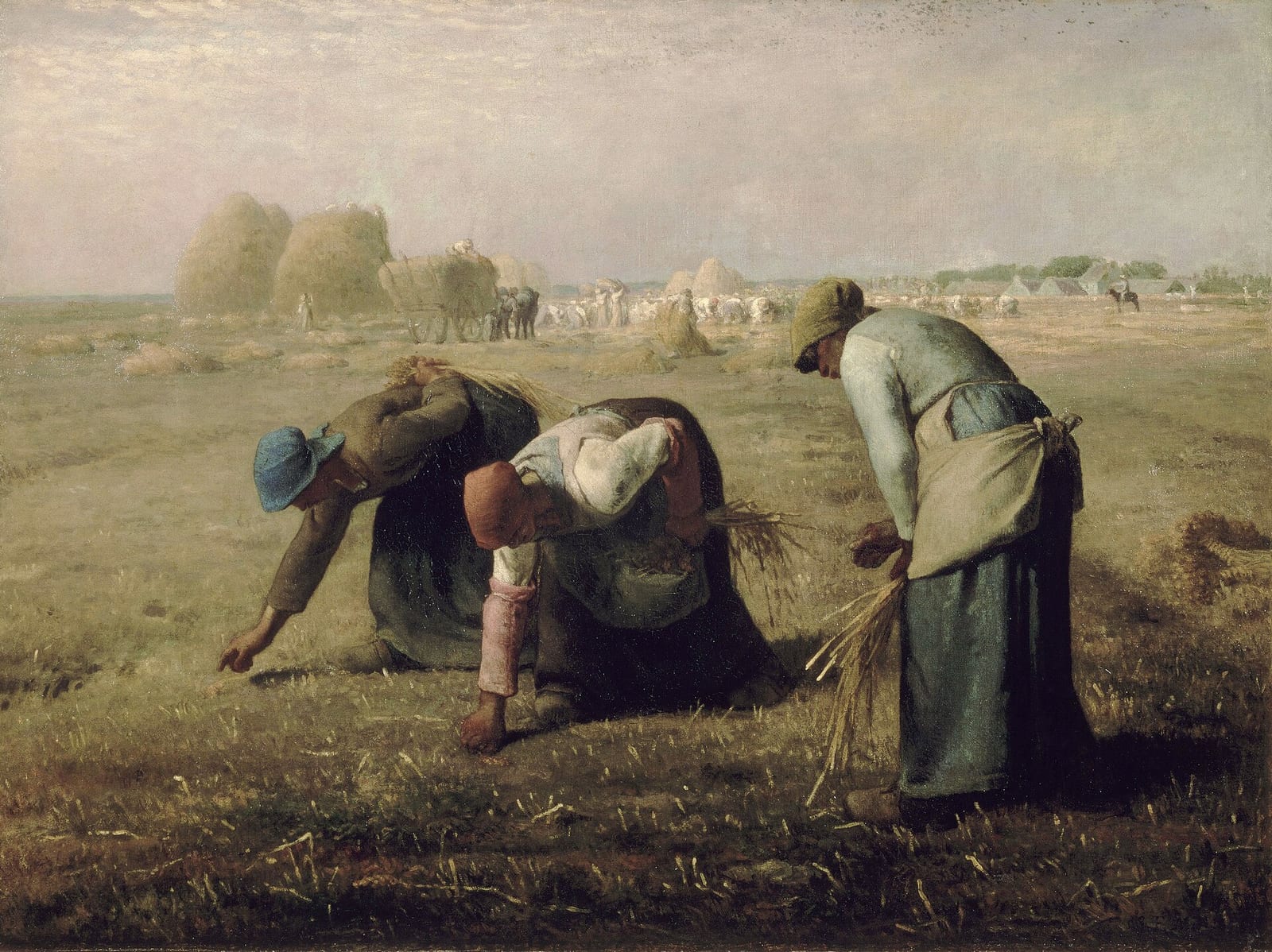
Picture: Jean-François Millet, The Gleaners, 1857

3 prayers and 2 to the saints

When money worries crowd in

Prayer for daily needs

Grant us, Lord, we pray,always to seek Your kingdom and Your righteousness,so that in Your kindness You may give us plentyof whatever You see we lack.

Through Jesus Christ our Lord.

O God, You have forbidden usto be anxious about what we need for this life.

Grant, we pray,that as we devoutly pursue the things that are Yours,all that is good for us may be given to us.

Through Jesus Christ our Lord.

Traditional wording, 1864

Grant us, O Lord, we beseech Thee,always to seek Thy kingdom and righteousness;and of whatsoever Thou seest us to stand in need,mercifully grant us an abundant portion;through Jesus Christ our Lord.

O God, Who hast forbidden usto be anxious about supplies for this life;grant, we beseech Thee,that we may devotedly follow after what belongeth to Thee,and that all things salutary may be granted to us;through Jesus Christ our Lord.

Two short prayers from an old Roman service book, copied about AD 750. They turn Jesus’ teaching on worry into words we can pray.

Plain English by Wiser Walk, from the Latin of the Old Gelasian book (Wilson’s 1894 edition), with William Bright’s 1864 translation beside it. How the wording is made. Traditional wording: William Bright, Ancient Collects, 1864.

Where it comes from, and the Latin

For what is enough

Prayer of Agur

Two things I ask of You;do not take Your favour away from mebefore I die.

Keep empty words and lies far from me.Give me neither riches nor poverty,but give me what I need,and what is enough.

Or else, when I have my fill,I may turn to lies and say, “Who sees me?”Or I may grow poor and steal,and swear falsely by the name of God.

Traditional wording, 1844

Two things I ask of Thee; take not favour from me before I die.

Remove far from me vanity and falsehood:and give me not wealth or poverty;but appoint me what is needful and sufficient:

lest I be filled and become false, and say, Who sees me?or be poor and steal, and swear vainly by the name of God.

In this prayer from the Book of Proverbs, Agur asks for enough and no more. He fears that either plenty or want could lead him away from God.

Plain English by Wiser Walk, from the Greek Old Testament (the Septuagint), with Brenton’s 1844 translation beside it. How the wording is made. Traditional wording: Lancelot C. L. Brenton, The Septuagint Version of the Old Testament, 1844.

Brenton’s “take not favour from me” is read here as asking God not to refuse the two things.

Where it comes from, and the Greek

When work never ends

Psalm 127

Unless the LORD builds the house,its builders labour in vain.Unless the LORD guards the city,the watchman stays awake in vain.

In vain you rise up earlyand stay up late,eating the bread of anxious toil,for He gives sleep to the one He loves.

Indeed, children are a heritage from the LORD,and the fruit of the womb is a reward.

Like arrows in the hand of a warriorare the children born in one’s youth.

Blessed is the manwhose quiver is full of them.They will not be put to shamewhen they speak with their enemies at the gate.

Traditional wording, 1611

Except the LORD build the house, they labour in vain that build it:except the LORD keep the city, the watchman waketh but in vain.

It is vain for you to rise up early, to sit up late, to eat the bread of sorrows:for so He giveth His beloved sleep.

Lo, children are an heritage of the LORD:and the fruit of the womb is His reward.

As arrows are in the hand of a mighty man;so are children of the youth.

Happy is the man that hath his quiver full of them:they shall not be ashamed, but they shall speak with the enemies in the gate.

Pray it in weeks when worry about money keeps you at work from early morning to late at night. The psalm says such anxious toil is in vain without God, Who gives sleep to the one He loves.

Plain English by Wiser Walk, from the Hebrew, with the King James Version beside it. How the wording is made. Traditional wording: The King James translators, The King James Version, 1611.

Where it comes from, and the original

To a saint · To St Nicholas, helper of the poor

Troparion of St Nicholas

The truth of things showed you to your flockas a rule of faith, an image of meeknessand a teacher of self-control.So by humility you gained the heights,and by poverty, riches.Father Nicholas, holy bishop,pray to Christ our Godthat our souls may be saved.

Traditional wording, 1891

The Truth hath made thee a standard of faith,a pattern of meekness, and a teacher of temperance to thy flock.

Thus didst thou, O holy priestly Father Nicolas,by humiliation acquire greatness, by thy poverty, riches.

Pray Christ our God to save our souls.

St Nicholas secretly threw gold through the window of a once-rich man who had grown so poor that he was about to sell his three daughters into a life of shame. The Orthodox still ask his prayers in poverty or any misfortune.

Plain English by Wiser Walk, from the Church Slavonic, with Shann’s 1891 translation beside it. How the wording is made. Traditional wording: G. V. Shann, Euchology: A Manual of Prayers of the Holy Orthodox Church, 1891.

Shann’s “humiliation” is humility, as the Slavonic says.

Where it comes from, and the Church Slavonic

To a saint · To St Spyridon, who lent freely

Troparion of St Spyridon

You were shown to be the champion of the First Counciland a wonderworker, Spyridon, our God-bearing father.And so you called to a dead woman in her grave,and you changed a snake into gold.And as you sang your holy prayers,you had angels serving with you, most holy one.

Glory to Him Who glorified you!Glory to Him Who crowned you!Glory to Him Who works healing for all through you!

Traditional wording

At the First Council you appeared as a champion of Truth and a Wonderworker, O our God-bearing Father Spyridon.For you spoke to one dead in her grave, and transformed a serpent into gold;while chanting your holy prayersyou had Angels serving with you, most holy one.

Glory to Him Who glorified you.Glory to Him Who crowned you.Glory to Him Who, through you, grants healing to all.

St Spyridon was a shepherd who became a bishop on Cyprus. He lent from his harvest by showing borrowers the storehouse, and let them take what they needed and put it back themselves.

Plain English by Wiser Walk, from the Greek, with the Orthodox Church in America’s translation beside it. How the wording is made. Traditional wording: Orthodox Church in America, Troparion and Kontakion of St Spyridon, on its website.

The Greek calls him the champion of the First Council. The OCA’s English adds “of Truth”.

Where it comes from, and the Greek

Scripture for this

31Therefore do not worry, saying, ‘What shall we eat?’ or ‘What shall we drink?’ or ‘What shall we wear?’ 32For the Gentiles strive after all these things, and your heavenly Father knows that you need them. 33But seek first the kingdom of God and His righteousness, and all these things will be added unto you.

Matthew 6:31-33 Jesus warns against worry about food and clothes. Your Father knows you need them and gives them to those who seek His kingdom first.

And my God will supply all your needs according to His glorious riches in Christ Jesus.

Philippians 4:19 Paul thanks the Philippians for the gift they sent him, and promises that God will supply all their needs from His riches in Christ Jesus.

I once was young and now am old, yet never have I seen the righteous abandoned or their children begging for bread.

Psalm 37:25 Looking back as an old man, David has never seen the righteous forsaken or their children begging for bread.

1Now the wife of one of the sons of the prophets cried out to Elisha, “Your servant, my husband, is dead, and you know that your servant feared the LORD. And now his creditor is coming to take my two children as his slaves!” 2“How can I help you?” asked Elisha. “Tell me, what do you have in the house?” She answered, “Your servant has nothing in the house but a jar of oil.” 3“Go,” said Elisha, “borrow empty jars from all your neighbors. Do not gather just a few. 4Then go inside, shut the door behind you and your sons, and pour oil into all these jars, setting the full ones aside.” 5So she left him, and after she had shut the door behind her and her sons, they kept bringing jars to her, and she kept pouring. 6When all the jars were full, she said to her son, “Bring me another.” But he replied, “There are no more jars.” Then the oil stopped flowing. 7She went and told the man of God, and he said, “Go, sell the oil, and pay your debt. Then you and your sons can live on the remainder.”

2 Kings 4:1-7 A creditor was coming to enslave a widow’s sons. At Elisha’s word, her one jar of oil filled every borrowed jar and paid the debt.

22For what does a man get for all the toil and striving with which he labors under the sun? 23Indeed, all his days are filled with grief, and his task is sorrowful; even at night, his mind does not rest. This too is futile. 24Nothing is better for a man than to eat and drink and enjoy his work. I have also seen that this is from the hand of God.

Ecclesiastes 2:22-24 The writer of Ecclesiastes knows days of toil and nights when the mind will not rest. Even satisfaction in work comes from God’s hand.

Bible text: Berean Standard Bible, public domain.

Close to this

All prayers

Quiz What prayer do you need right now? A few honest taps about where you are, and a prayer of the Church for exactly that. 8 questions, about 3 minutes. Start

Suggest a correction

Berean Standard Bible