
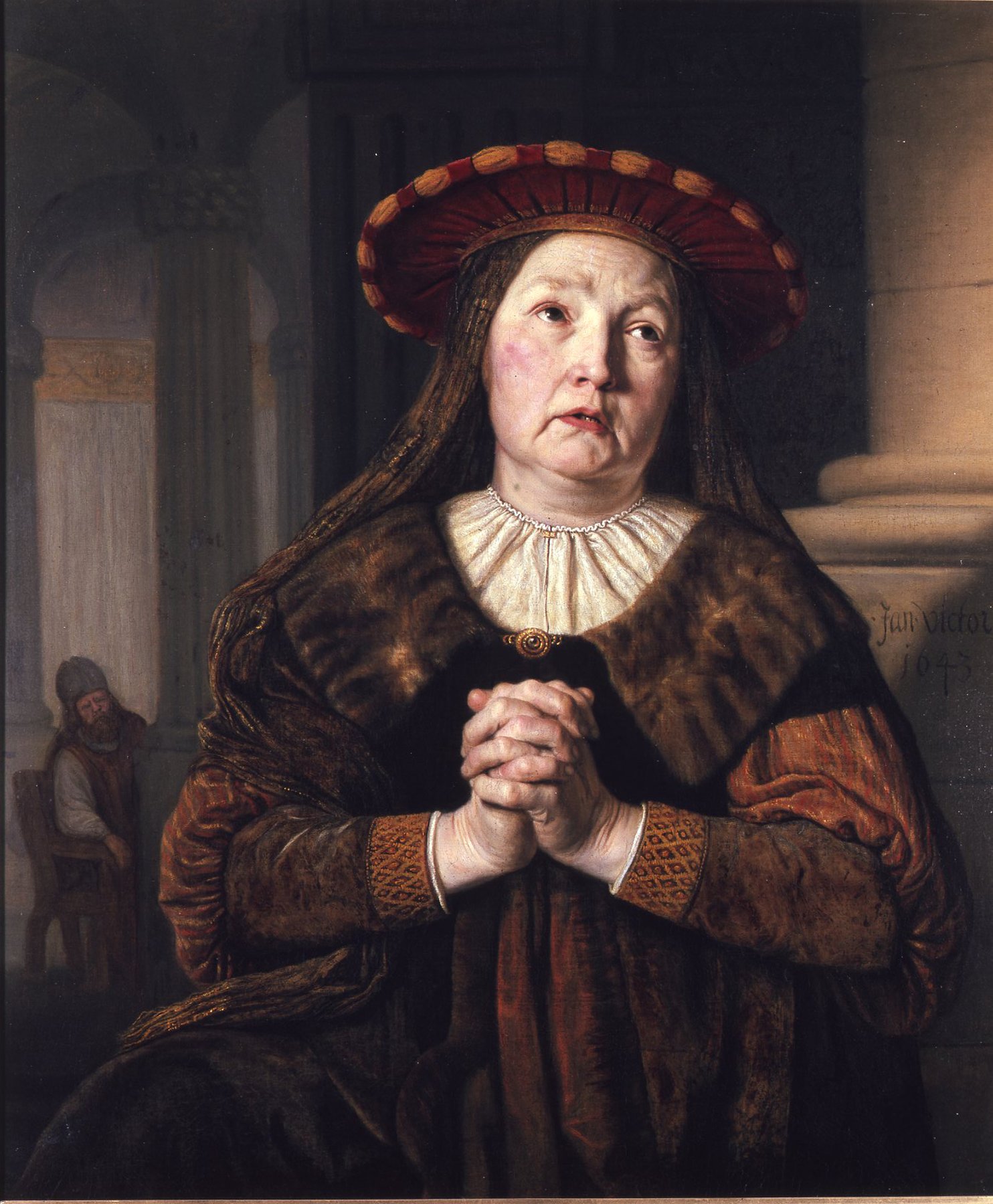
When it is said
Hannah prayed these words silently at the house of the Lord in Shiloh, where her family went to worship every year.
Anyone who longs for a child can pray Hannah’s words, at home or in church.
Where it comes from
Author known
Years of waiting
Hannah was one of the two wives of a man named Elkanah. Elkanah’s other wife Peninnah had sons and daughters, but Hannah had none. The family went up to Shiloh every year to worship, and year after year Peninnah taunted Hannah there until she wept and would not eat. Elkanah tried to comfort her by asking, “Am I not better to you than ten sons?”
1 Samuel 1:2-8
Her prayer at Shiloh
One year at Shiloh, Hannah got up to pray after the family had eaten. Weeping in her bitter distress, she made this vow. The priest Eli saw her lips moving without a sound and thought she was drunk. She told him she had been pouring out her soul before the Lord. Eli sent her away in peace and asked God to grant her request. Hannah went her way and ate again, her face no longer downcast.
1 Samuel 1:9-18
Samuel
In time Hannah conceived and gave birth to a son. She named him Samuel, “because I have asked for him from the LORD.” Once he was weaned, she brought him to Eli at Shiloh to keep her vow and said, “I prayed for this boy, and since the LORD has granted me what I asked of Him, I now dedicate the boy to the LORD.”
1 Samuel 1:20-28
What the words mean
The wine and the razor
Hannah promised more than to give her son back to God. No razor would touch his head, and in the Greek he would also drink no wine or strong drink. In the Law of Moses those were the marks of a Nazirite, a person set apart for God by a vow. Most English Bibles follow the Hebrew text, which has the razor but not the wine and adds “not forgetting Your maidservant.”
Numbers 6:3-5; Lancelot C. L. Brenton, The Septuagint (1844), 1 Kings 1:11
The Scripture in it
And she made a vow, saying, “O LORD of Hosts, if only You will look upon the affliction of Your maidservant and remember me, not forgetting Your maidservant but giving her a son, then I will dedicate him to the LORD all the days of his life, and no razor shall ever touch his head.”
… he is to abstain from wine and strong drink. He must not drink vinegar made from wine or strong drink, and he must not drink any grape juice or eat fresh grapes or raisins. All the days of his separation, he is not to eat anything that comes from the grapevine, not even the seeds or skins. For the entire period of his vow of separation, no razor shall touch his head. He must be holy until the time of his separation to the LORD is complete; he must let the hair of his head grow long.
Bible text: Berean Standard Bible, public domain.
In Greek
Ἀδωναῒ Κύριε ἐλωὲ σαβαὼθ,
ἐὰν ἐπιβλέπων ἐπιβλέψῃς ἐπὶ τὴν ταπείνωσιν τῆς δούλης σου,
καὶ μνησθῇς μου,
καὶ δῷς τῇ δούλῃ σου σπέρμα ἀνδρῶν,
καὶ δώσω αὐτὸν ἐνώπιόν σου δοτὸν ἕως ἡμέρας θανάτου αὐτοῦ,
καὶ οἶνον καὶ μέθυσμα οὐ πίεται,
καὶ σίδηρος οὐκ ἀναβήσεται ἐπὶ τὴν κεφαλὴν αὐτοῦ.
From the Greek Old Testament (the Septuagint), 1 Kingdoms 1:11, in Brenton’s edition, on eBible.org.