
When it is said
The Orthodox sing it at Matins, the morning service, as the third of the nine odes. These are the Bible’s songs on which the canon, a long hymn in nine parts, is built.
Its refrain is “Holy are You, O Lord, and my spirit sings to You.” A service book of 1894 gives the rule: on days that are not Sundays or feasts, the odes are read with the canons.
At home it suits any mother’s or father’s thanks for a child prayed for and given.
Where it comes from
Author known
Hannah’s story
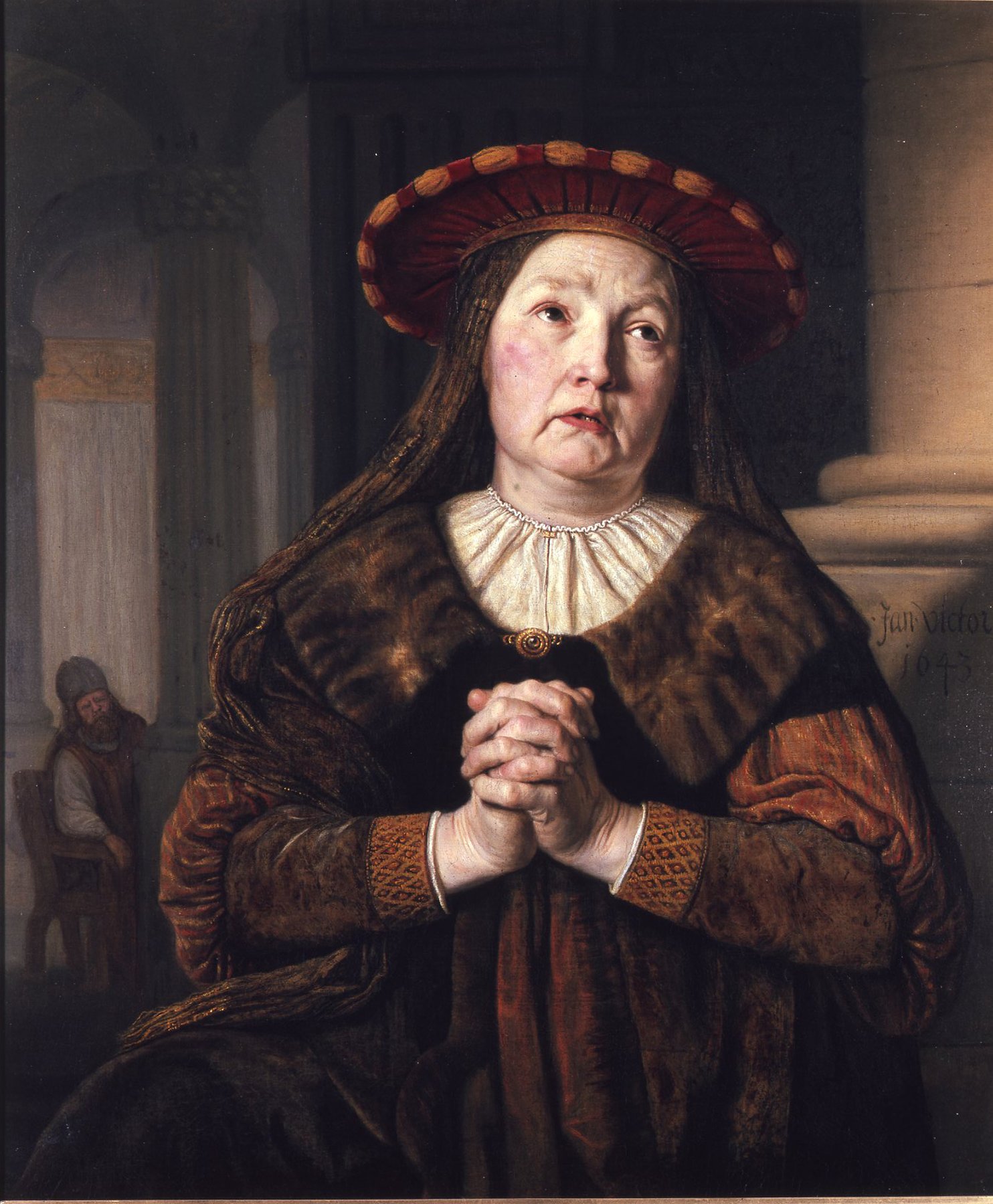
Hannah had no children. At the house of the Lord in Shiloh she wept and prayed for a son, and vowed to give him back to God. God gave her Samuel. Once he was weaned, she brought him to the priest Eli and said: “I prayed for this boy, and the Lord has granted me what I asked.” Then she prayed this prayer.
1 Samuel 1:10-11; 1 Samuel 1:24-28
And God gave her more
Hannah sings that the barren woman “has borne seven”. Her own story goes on after the song. The Lord visited her again, and she had three more sons and two daughters. And the boy Samuel grew up in the presence of the Lord.
1 Samuel 2:21
The third ode
The first of the nine odes is the song Moses sang after crossing the Red Sea. Hannah’s prayer is the third. G. V. Shann’s English prayer book of 1891 lists it as “The Prayer of Anna”: Anna is the Greek form of Hannah.
G. V. Shann, Euchology (1891); J. N. W. B. Robertson, The Divine Liturgies (1894); Exodus 15:1
What the words mean
Longer in the Greek
The Greek Old Testament, which the Orthodox sing, is longer here than most English Bibles. It adds three lines: let not the wise boast in wisdom, nor the mighty in might, nor the rich in riches, but in knowing the Lord. The prophet Jeremiah has the same words. Brenton’s note points there.
Lancelot C. L. Brenton, The Septuagint (1844), note on 1 Kings 2:10; Jeremiah 9:23-24
The Scripture in it
At that time Hannah prayed: “My heart rejoices in the LORD; my horn is exalted in the LORD. My mouth speaks boldly against my enemies, for I rejoice in Your salvation. There is no one holy like the LORD. Indeed, there is no one besides You! And there is no Rock like our God. Do not boast so proudly, or let arrogance come from your mouth, for the LORD is a God Who knows, and by Him actions are weighed. The bows of the mighty are broken, but the feeble are equipped with strength. The well-fed hire themselves out for food, but the starving hunger no more. The barren woman gives birth to seven, but she who has many sons pines away. The LORD brings death and gives life; He brings down to Sheol and raises up. The LORD sends poverty and wealth; He humbles and He exalts. He raises the poor from the dust and lifts the needy from the ash heap. He seats them among princes and bestows on them a throne of honor. For the foundations of the earth are the LORD’s, and upon them He has set the world. He guards the steps of His faithful ones, but the wicked perish in darkness; for by his own strength shall no man prevail. Those who oppose the LORD will be shattered. He will thunder from heaven against them. The LORD will judge the ends of the earth and will give power to His king. He will exalt the horn of His anointed.”
This is what the LORD says: “Let not the wise man boast in his wisdom, nor the strong man in his strength, nor the wealthy man in his riches. But let him who boasts boast in this, that he understands and knows Me, that I am the LORD, Who exercises loving devotion, justice and righteousness on the earth—for I delight in these things,” declares the LORD.
He raises the poor from the dust and lifts the needy from the dump to seat them with nobles, with the princes of His people. He settles the barren woman in her home as a joyful mother to her children. Hallelujah!
Bible text: Berean Standard Bible, public domain.
In Greek
Ἐστερέωθη ἡ καρδία μου ἐν Κυρίῳ, ὑψώθη κέρας μου ἐν Θεῷ μου, ἐπλατύνθη ἐπʼ ἐχθρούς μου τὸ στόμα μου, εὐφράνθην ἐν σωτηρίᾳ Σου. Ὅτι οὐκ ἔστιν ἅγιος ὡς Κύριος, καὶ οὐκ ἔστι δίκαιος ὡς ὁ Θεὸς ἡμῶν, οὐκ ἔστιν ἅγιος πλήν Σου.
Μὴ καυχᾶσθε, καὶ μὴ λαλεῖτε ὑψηλά· μὴ ἐξελθέτω μεγαλοῤῥημοσύνη ἐκ τοῦ στόματος ὑμῶν, ὅτι Θεὸς γνώσεων Κύριος, καὶ Θεὸς ἑτοιμάζων ἐπιτηδεύματα Αὐτοῦ. Τόξον δυνατῶν ἠσθένησε, καὶ ἀσθενοῦντες περιεζώσαντο δυνάμιν. Πλήρεις ἄρτων ἠλαττώθησαν, καὶ οἱ πεινῶντες παρῆκαν γῆν· ὅτι στεῖρα ἔτεκεν ἑπτὰ, καὶ ἡ πολλὴ ἐν τέκνοις ἠσθένησε.
Κύριος θανατοῖ καὶ ζωογονεῖ, κατάγει εἰς ᾅδου καὶ ἀνάγει. Κύριος πτωχίζει καὶ πλουτίζει, ταπεινοῖ καὶ ἀνυψοῖ. Ἀνιστᾷ ἀπὸ γῆς πένητα, καὶ ἀπὸ κοπρίας ἐγείρει πτωχὸν, καθίσαι μετὰ δυναστῶν λαοῦ, καὶ θρόνον δόξης κατακληρονομῶν αὐτοῖς, διδοὺς εὐχὴν τῷ εὐχομένῳ· καὶ εὐλόγησεν ἔτη δικαίου, ὅτι οὐκ ἐν ἰσχύϊ δυνατὸς ἀνήρ.
Κύριος ἀσθενῆ ποιήσει ἀντίδικον Αὐτοῦ, Κύριος ἅγιος· μὴ καυχάσθω ὁ φρόνιμος ἐν τῇ φρονήσει αὐτοῦ, καὶ μὴ καυχάσθω ὁ δυνατὸς ἐν τῇ δυνάμει αὐτοῦ, καὶ μὴ καυχάσθω ὁ πλούσιος ἐν τῷ πλούτῳ αὐτοῦ· ἀλλʼ ἐν τούτῳ καυχάσθω ὁ καυχώμενος, συνιεῖν καὶ γινώσκειν τὸν Κύριον, καὶ ποιεῖν κρίμα καὶ δικαιοσύνην ἐν μέσῳ τῆς γῆς. Κύριος ἀνέβη εἰς οὐρανοὺς, καὶ ἐβρόντησεν· Αὐτὸς κρινεῖ ἄκρα γῆς, καὶ δίδωσιν ἰσχὺν τοῖς βασιλεῦσιν ἡμῶν, καὶ ὑψώσει κέρας χριστοῦ Αὐτοῦ.
From the Greek Old Testament (the Septuagint), 1 Kingdoms 2:1-10, in Brenton’s edition, on eBible.org.