Sign Up My Profile
Prayers

The prayer of thanksgiving

The prayer of the Orthodox service of thanksgiving, held when God has answered a prayer. The priest reads it aloud near the end.

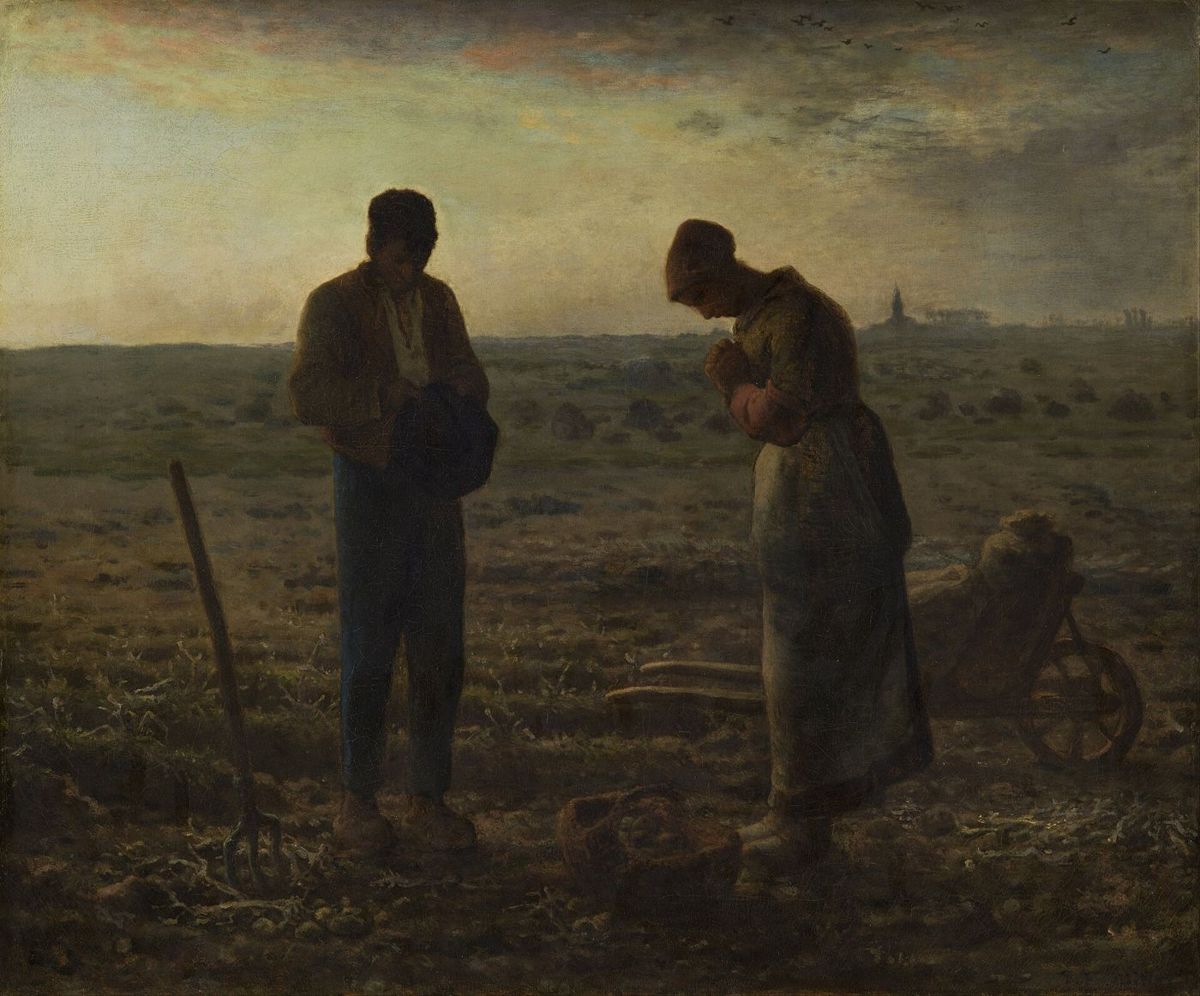
Picture: Jean-François Millet, The Angelus, 1857–59

The words of the prayer

Plain English

O Lord Jesus Christ our God,God of all mercy and compassion,Whose mercy is beyond measureand Whose love for mankind is a depth past searching out:

falling down before Your majestywith fear and trembling, as unworthy servants,we now humbly thank You, kind Lord,for the blessings You have given Your servant (name).We glorify You, praise You, sing to You and magnify Youas our Lord, Master and Benefactor.Falling down again, we thank You,and humbly beg for Your boundless mercy, beyond all words.

As You have now been pleasedto accept the prayers of Your servantsand in mercy to fulfil them,so from now on grant that all Your faithful,growing in love for You and for their neighbourand in every virtue,may receive Your blessings.

Deliver Your holy Church and this cityfrom every evil that besets them,and give them peace and calm.

And make us worthy always to give thanks to You,with Your Father, Who is without beginning,and Your all-holy and good Spirit, one in essence with You:one God, glorified in one essence.Make us worthy to speak of Your great goodness, and to sing:

Glory to You, O God our Benefactor,for ever and ever.

Traditional wording, 1906

O Lord Jesus Christ our God, the God of all mercies and bounties,Whose mercy is immeasurable, and Whose love for mankind is an unfathomable deep:

falling down in adoration before Thy majesty, with fear and trembling, as unprofitable servants,and now humbly rendering thanks unto Thy loving-kindnessfor Thy benefits bestowed upon Thy servants, NN. (or upon Thy servant, N.),we glorify Thee, we praise Thee, we sing Thee, and we magnify Theeas our Lord, and Master, and Benefactor;and again falling down before Thee, and we humbly thank Thee,supplicating Thy boundless and inexpressible mercy.

And in that Thou hast now graciously vouchsafed to accept the petitions of Thy servants and to fulfil them,so also henceforth grant that Thy holy Church and this city may be delivered from every hostile assault,and may be vouchsafed peace and tranquillity,and that increasing in true love of Thee, and of all virtues,all Thy faithful people may receive all Thy benefits;

and that we may ever offer thanksgiving unto Thee,together with Thy Father Who is from everlasting,and Thine all-holy, and good, and life-giving Spirit,God glorified in one Person;and that we may say exceeding good things, and sing:

Glory to Thee, O God our Benefactor, unto ages of ages.

Plain English by Wiser Walk, from the Church Slavonic, with Hapgood’s 1906 translation beside it. How the wording is made. Traditional wording: Isabel F. Hapgood, Service Book of the Holy Orthodox-Catholic Apostolic Church, 1906.

Two places part company with the Slavonic. Hapgood’s “true love of Thee” is, in the Slavonic, love for God and for one’s neighbour. Her “God glorified in one Person” stands for words that mean one God in one essence: the Father, the Son and the Holy Spirit are one God in three Persons.

When it is said

It belongs to the service of thanksgiving, a short service of prayer that Russians call a moleben. The service is held to thank God for an answered prayer, or for any of His gifts.

The service reads Paul’s call to give thanks always, for all things, and the Gospel of the ten lepers. Later the priest reads this prayer aloud. After it comes the Great Doxology, “Glory to God in the highest”. Russian books allow the Te Deum, “We praise You, O God”, instead.

Isabel Hapgood’s 1906 service book says every Orthodox Christian should know how to give thanks, “either privately in his own chamber or publicly in church”.

Where it comes from

No author known

A service just for thanks

Hapgood’s English translation gives the service its full name: a service “for an answer to prayer, and for every favour from God”. It opens with Psalm 118: “O give thanks unto the Lord, for He is gracious.”

Isabel F. Hapgood, Service Book of the Holy Orthodox-Catholic Apostolic Church (1906), A Service of Thanksgiving

The one who came back

The service’s Gospel tells of ten lepers whom Jesus healed. Only one came back, a Samaritan. He fell on his face at Jesus’s feet and thanked Him. Jesus asked: “Were there not ten cleansed? But where are the nine?” Like him, this prayer falls down before Christ to give thanks.

Isabel F. Hapgood, Service Book of the Holy Orthodox-Catholic Apostolic Church (1906), A Service of Thanksgiving

What the words mean

“Unworthy servants”

The prayer gives thanks “as unworthy servants”. These are the words Jesus told His disciples to use of themselves, in the same chapter of Luke as the ten lepers. Hapgood’s older English has “unprofitable servants”.

The Scripture in it

“So you also, when you have done everything commanded of you, should say, ‘We are unworthy servants; we have only done our duty.’”

Luke 17:10 Echoed Jesus taught His disciples to call themselves “unworthy servants”. The prayer gives thanks in the same words.

Bible text: Berean Standard Bible, public domain.

In Church Slavonic

Господи Иисусе Христе Боже наш, Боже всякаго милосердия и щедрот, Егоже милость безмерна и человеколюбия неизследимая пучина!

Ко Твоему величеству припадающе со страхом и трепетом, яко раби недостойнии, благодарение Твоему благосердию о Твоих благодеяниих, на рабех Твоих бывших, ныне смиренно приносяще, яко Господа, Владыку и Благодетеля славим, хвалим, поем и величаем, и припадающе паки благодарим, Твое безмерное и неизреченное милосердие смиренно моляще:

да якоже ныне моления рабов Твоих прияти и милостивно исполнити сподобил еси, и во предняя в Твоей и искренняго любви и во всех добродетелей преспевающих, Твоя благодеяния всех верных Твоих получити,

Церковь Твою святую и град сей от всякаго злаго обстояния избавляя и мир и безмятежие тем даруя,

Тебе со безначальным Твоим Отцем, и Пресвятым и Благим и Единосущным Твоим Духом, во едином существе славимому Богу, всегда благодарение приносити и преблагая глаголати и воспети сподобиши.

Слава Тебе Богу, Благодетелю нашему, во веки веков.

From the Synodal book of prayers read at molebens (Petrograd, 1915), in Church Slavonic, as printed by Azbyka.ru’s Orthodox prayer book.

Close to this

All prayers

Suggest a correction

Berean Standard Bible