
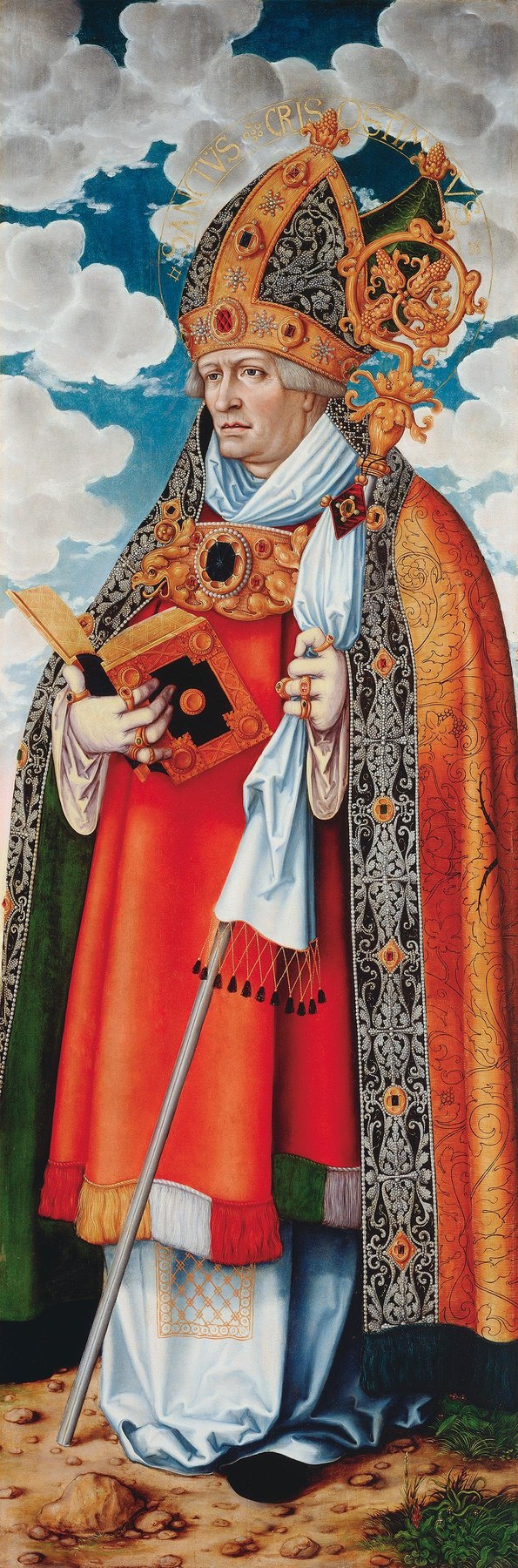
When it is said
It is a short prayer anyone may say at any moment, as St John Chrysostom did.
He taught that thanks counts most in hard times: in sickness, in poverty, in distress.
Russian Orthodox Christians also know the words as the title of a long hymn of thanks, the Akathist “Glory to God for all things”.
Where it comes from
Author known
His last words
St John Chrysostom had been archbishop of Constantinople. He died in exile in AD 407, at Comana in Pontus. His guards were marching him further into exile when he fell gravely ill on the road, and he was brought back to a martyr’s shrine they had passed. He put on white clothes, received Communion and prayed. His friend Palladius, a bishop, says he used “his customary formula”: “Glory to God for all things.” At the last Amen he crossed himself and died.
Thanks in hard times
St John Chrysostom once preached on Paul’s words “giving thanks always for all things”. Are we to give thanks for everything that befalls us? “Yes; be it even disease, be it even penury,” he answered. Thanks in comfort is nothing great, he said. What is required is to give thanks “in afflictions, in anguish, in discouragements.”
A hymn with the same name
That akathist was written in Russia in the early 1900s. Unusually for a church hymn, it is in Russian, not Church Slavonic. A 2017 study from Moscow’s Sretensky Theological Academy credits it to Metropolitan Tryphon (Turkestanov), who died in 1934. Some old copies name another priest, Archpriest Gregory Petrov.
The Scripture in it
… always giving thanks to God the Father for everything in the name of our Lord Jesus Christ.
Give thanks in every circumstance, for this is God’s will for you in Christ Jesus.
Bible text: Berean Standard Bible, public domain.
In Greek
Δόξα τῷ Θεῷ πάντων ἕνεκεν.