
When it is said
On Easter night it is sung at Matins, right after the sixth song of the canon.
Through Easter week it comes again in the Hours, the short services of psalms and hymns.
In Russian practice it is sung at the First Hour every day from Thomas Sunday, a week after Easter, until the Ascension.
Where it comes from
No author known
From the grave to Easter morning
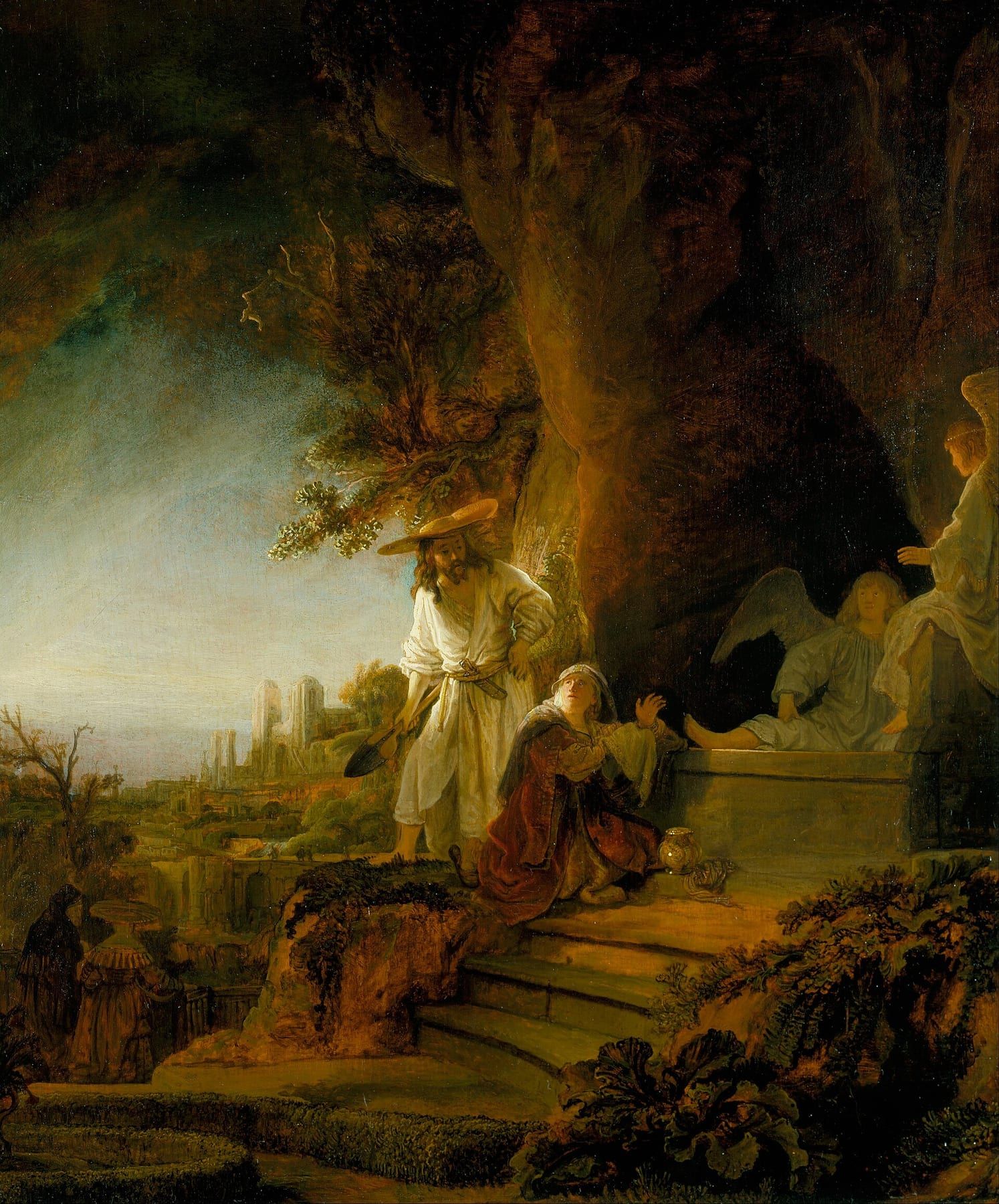
The hymn begins among the dead, where Christ goes down into the grave as the One Who cannot die and breaks the power of Hades. Then it moves to the first Easter Day, when He met the women hurrying from the tomb (Matthew 28:9). That evening He stood among His disciples behind locked doors and gave them peace (John 20:19).
The verse that follows it
At Matins a longer verse, the ikos, comes straight after it. In Isabel Hapgood’s English the women “forestalled the dawn”, setting out before sunrise to look for “the Sun which had once set in the tomb” and calling to one another to come and anoint His body with spices.
What the words mean
“Rejoice!”
Jesus greets the women in Matthew’s Greek with the single word chairete. It means “rejoice” and was also used to say hello. The King James Version gives it as “All hail” and the Berean Standard Bible as “Greetings!” (Matthew 28:9), while the hymn keeps the first meaning.
Matthew 28:9 in the King James Version; Matthew 28:9 in Greek, on Elpenor (ellopos.net)
Hades
Hades is the place of the dead. The canon of Pascha sings of Christ going down there and setting free the souls held there. In Revelation the risen Christ says, “I hold the keys of Death and of Hades” (Revelation 1:18).
Fr Michael Zheltov, “A short commentary on the canon of Pascha”, Azbuka Very (in Russian)
The Scripture in it
Suddenly Jesus met them and said, “Greetings!” They came to Him, grasped His feet, and worshiped Him.
It was the first day of the week, and that very evening, while the disciples were together with the doors locked for fear of the Jews, Jesus came and stood among them. “Peace be with you!” He said to them.
Bible text: Berean Standard Bible, public domain.
In Greek
Εἰ καὶ ἐν τάφῳ κατῆλθες ἀθάνατε,
ἀλλὰ τοῦ ᾍδου καθεῖλες τὴν δύναμιν,
καὶ ἀνέστης ὡς νικητής, Χριστὲ ὁ Θεός,
γυναιξὶ Μυροφόροις φθεγξάμενος. Χαίρετε,
καὶ τοῖς σοῖς Ἀποστόλοις εἰρήνην δωρούμενος
ὁ τοῖς πεσοῦσι παρέχων ἀνάστασιν.