
When it is said
On Easter night the priest begins the canon of Pascha with its first verse.
All sing “Christ is risen from the dead!” between its verses. The choir sings the first verse again to close the song, then “Christ is risen” three times.
In Russian practice the whole canon is sung again at Matins on four later Sundays of the Easter season.
Where it comes from
Author by tradition
St John of Damascus and St Gregory
The service books credit the canon of Pascha to St John of Damascus. In a short commentary on the canon, Fr Michael Zheltov notes that it quotes St Gregory the Theologian’s Easter sermons word for word in several places. Its very first words match the opening of the sermon Gregory preached on Easter Day in AD 362: “It is the Day of the Resurrection.”
Fr Michael Zheltov, “A short commentary on the canon of Pascha”, Azbuka Very (in Russian); St Gregory Nazianzen, Oration 1, in the Nicene and Post-Nicene Fathers, second series, volume 7 (1894)
The English hymn
The Easter hymn “The Day of Resurrection! Earth, tell it out abroad” is the canon’s first song in English verse. The English Hymnal of 1906 prints it as St John of Damascus’s, about AD 750, in John Mason Neale’s translation. Its three verses follow the song’s three stanzas.
What the words mean
Pascha and the crossing
Pascha is the Passover, the night Israel left Egypt (Exodus 12:11). It is also the Orthodox name for Easter. In a canon, the opening verse of each song usually looks back to a song of the Bible. This one recalls the song Israel sang after crossing the Red Sea (Exodus 15:1). As Israel was brought across the sea, Christ has brought us across from death to life (John 5:24).
Fr Michael Zheltov, “A short commentary on the canon of Pascha”, Azbuka Very (in Russian)
The Scripture in it
Then Moses and the Israelites sang this song to the LORD: “I will sing to the LORD, for He is highly exalted. The horse and rider He has thrown into the sea.”
This is how you are to eat it: You must be fully dressed for travel, with your sandals on your feet and your staff in your hand. You are to eat in haste; it is the LORD’s Passover.
Truly, truly, I tell you, whoever hears My word and believes Him Who sent Me has eternal life and will not come under judgment. Indeed, he has crossed over from death to life.
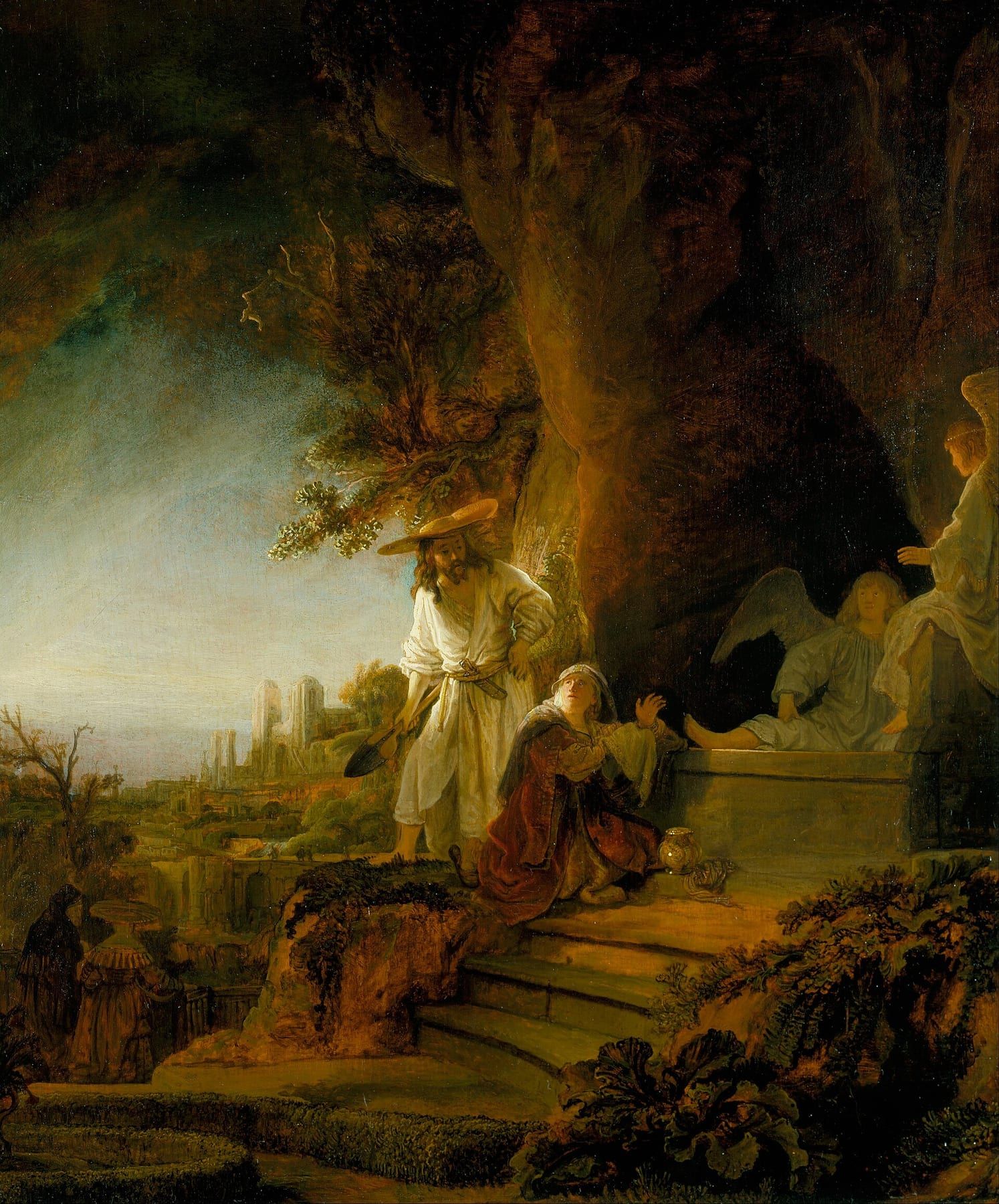
Suddenly Jesus met them and said, “Greetings!” They came to Him, grasped His feet, and worshiped Him.
Let the heavens be glad and the earth rejoice; let the sea resound, and all that fills it.
Bible text: Berean Standard Bible, public domain.
In Greek
Ἀναστάσεως ἡμέρα λαμπρυνθῶμεν Λαοί,
Πάσχα Κυρίου, Πάσχα·
ἐκ γὰρ θανάτου πρὸς ζωήν, καὶ ἐκ γῆς πρὸς οὐρανόν,
Χριστὸς ὁ Θεός, ἡμᾶς διεβίβασεν,
ἐπινίκιον ᾄδοντας.
Καθαρθῶμεν τὰς αἰσθήσεις, καὶ ὀψόμεθα, τῷ ἀπροσίτῳ φωτὶ τῆς ἀναστάσεως, Χριστὸν ἐξαστράπτοντα, καί, Χαίρετε, φάσκοντα, τρανῶς ἀκουσόμεθα, ἐπινίκιον ᾄδοντες.
Οὐρανοὶ μὲν ἐπαξίως εὐφραινέσθωσαν, γῆ δὲ ἀγαλλιάσθω, ἑορταζέτω δὲ κόσμος, ὁρατός τε ἅπας καὶ ἀόρατος· Χριστὸς γὰρ ἐγήγερται, εὐφροσύνη αἰώνιος.