
When it is said
It is sung at the morning service of the feast, as the kontakion (one of the feast’s short hymns). At the evening service the day before, the reading is 1 Kings 17, where the drought begins.
In a dry season a farmer might say it at home to ask for Elijah’s prayers.
Where it comes from
No author known
The story it remembers
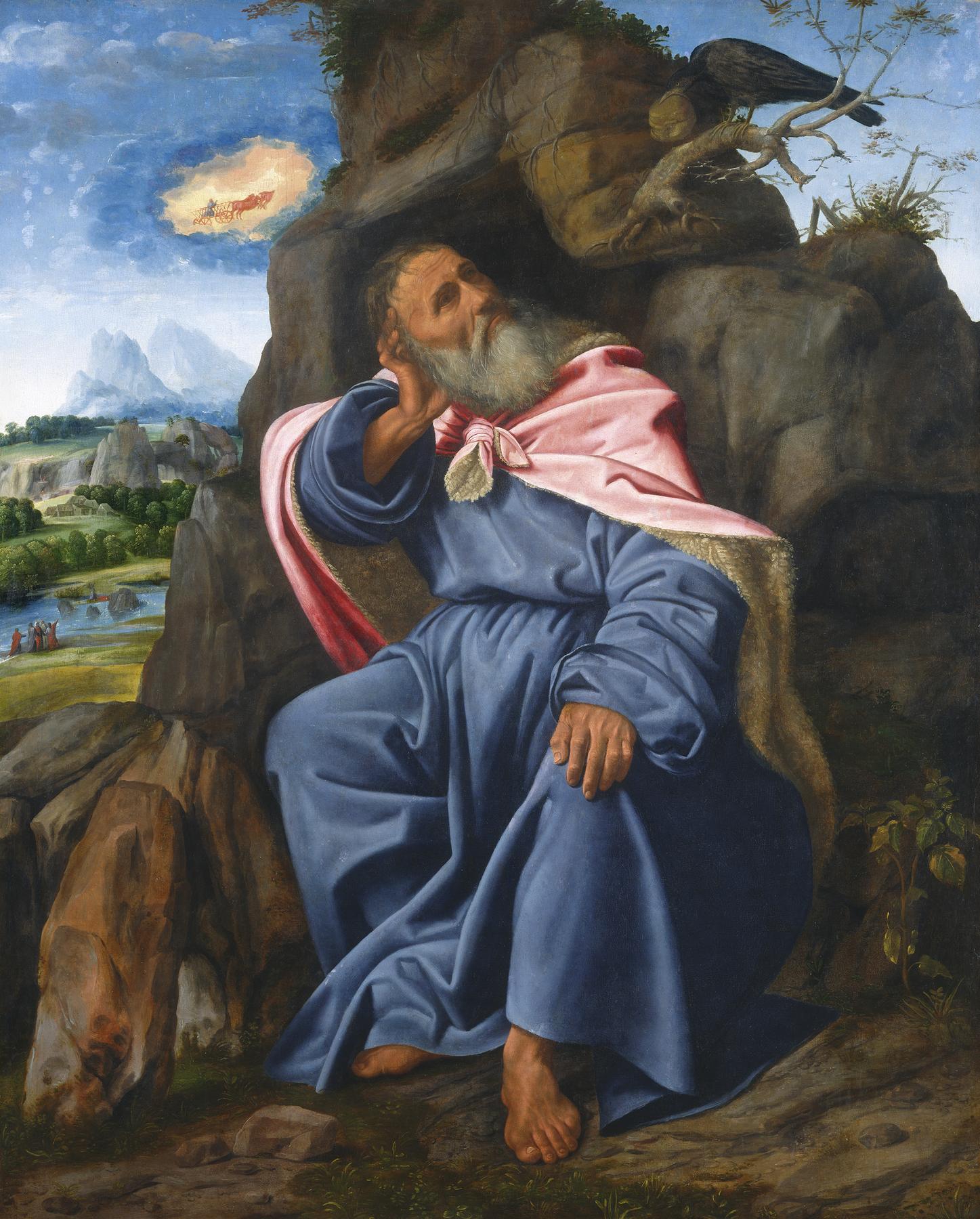
King Ahab of Israel served the god Baal (1 Kings 16:31). Elijah swore to him by the LORD that no dew or rain would fall except at his word (1 Kings 17:1). In the third year of the drought the people on Mount Carmel fell on their faces and cried, “The LORD, He is God!” (1 Kings 18:39). Elijah prayed at the top of the mountain until heavy rain fell (1 Kings 18:42-45).
A man just like us
The letter of James holds Elijah up as a man just like us. He prayed that it would not rain, and none fell for three and a half years. Then he prayed again, and the sky gave rain (James 5:17-18). The kontakion asks the same prophet to pray for us now.
The Scripture in it
Now Elijah the Tishbite, who was among the settlers of Gilead, said to Ahab, “As surely as the LORD, the God of Israel, lives, before Whom I stand, there will be neither dew nor rain in these years except at my word!”
Elijah was a man just like us. He prayed earnestly that it would not rain, and it did not rain on the land for three and a half years. Again he prayed, and the heavens gave rain, and the earth yielded its crops.
Bible text: Berean Standard Bible, public domain.
In Greek
Προφῆτα καὶ προόπτα τῶν μεγαλουργιῶν τοῦ Θεοῦ,
Ἠλία μεγαλώνυμε,
ὁ τῷ φθέγματί σου στήσας τὰ ὑδατόρρυτα νέφη,
πρέσβευε ὑπὲρ ἡμῶν,
τὸν μόνον φιλάνθρωπον.
From the Menaion for 20 July, on the Greek Orthodox Archdiocese of America’s site of Greek service texts.