
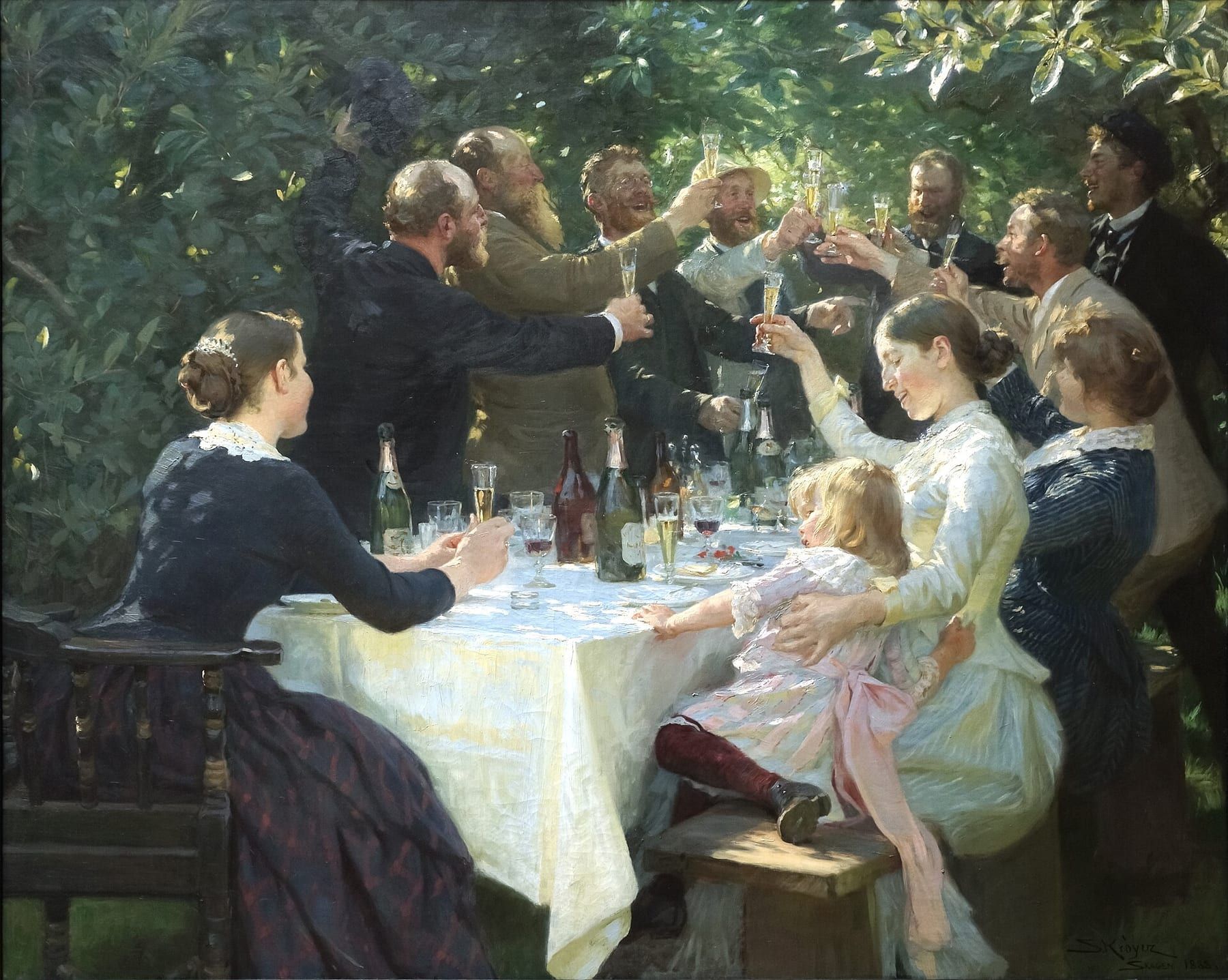
When it is said
In the Gelasian Sacramentary the priest prays it after Communion, at a Mass for someone’s birthday.
Anyone may pray it for a son, a daughter or a friend on their birthday, or for themselves on their own birthday.
Where it comes from
No author known
Where does it come from?
The prayer comes from the Gelasian Sacramentary, a Latin book of the prayers a priest says at Mass. Its one manuscript was copied near Paris about the year 750, from older Roman prayers, and is kept in the Vatican Library. Only one older book of the Western Church’s services survives. Its name comes from Pope Gelasius, whom writers of the 800s credited with an old Roman book of Mass prayers.
The Cult of Saints, University of Oxford, record E07005; The Gelasian Sacramentary, ed. H. A. Wilson (1894), introduction
A Mass for a birthday
This is the last prayer of a whole Mass for someone’s birthday. Earlier in the same Mass the priest asks God to add years to the person’s life. He prays that for many years to come they may joyfully bring God the same birthday thanks, reach the old age they long for, and bless Him all the days of their life.
The Gelasian Sacramentary, ed. H. A. Wilson (1894), Book III, LIII
What the words mean
What is a “natural birthday”?
The Latin heading is “Oratio in Natale genuinum”, a prayer for someone’s own birthday. The same book uses “birthday” for a saint’s feast day, as with St Stephen’s day, and for the anniversary of a priest’s ordination. The day a person was born is set apart as the “natural birthday”, a phrase the translator William Bright kept in his English of 1857.
The Gelasian Sacramentary, ed. H. A. Wilson (1894); William Bright, Ancient Collects (1857), p. 94
In Latin
Deus, vita fidelium, timentium te salvator et custos,
qui famulum tuum N. ad hanc diem natalis sui genuini,
exemto anno, perducere dignatus es,
gratiam in eo vitae protectoris augmenta,
et dies eius annorum numerositate multiplica, ut te annuente,
per felicem provectus aetatem,
ad principatum caelestium gaudiorum pervenire mereatur. Per.
From the Gelasian Sacramentary, ed. H. A. Wilson (Oxford, 1894), on archive.org.