
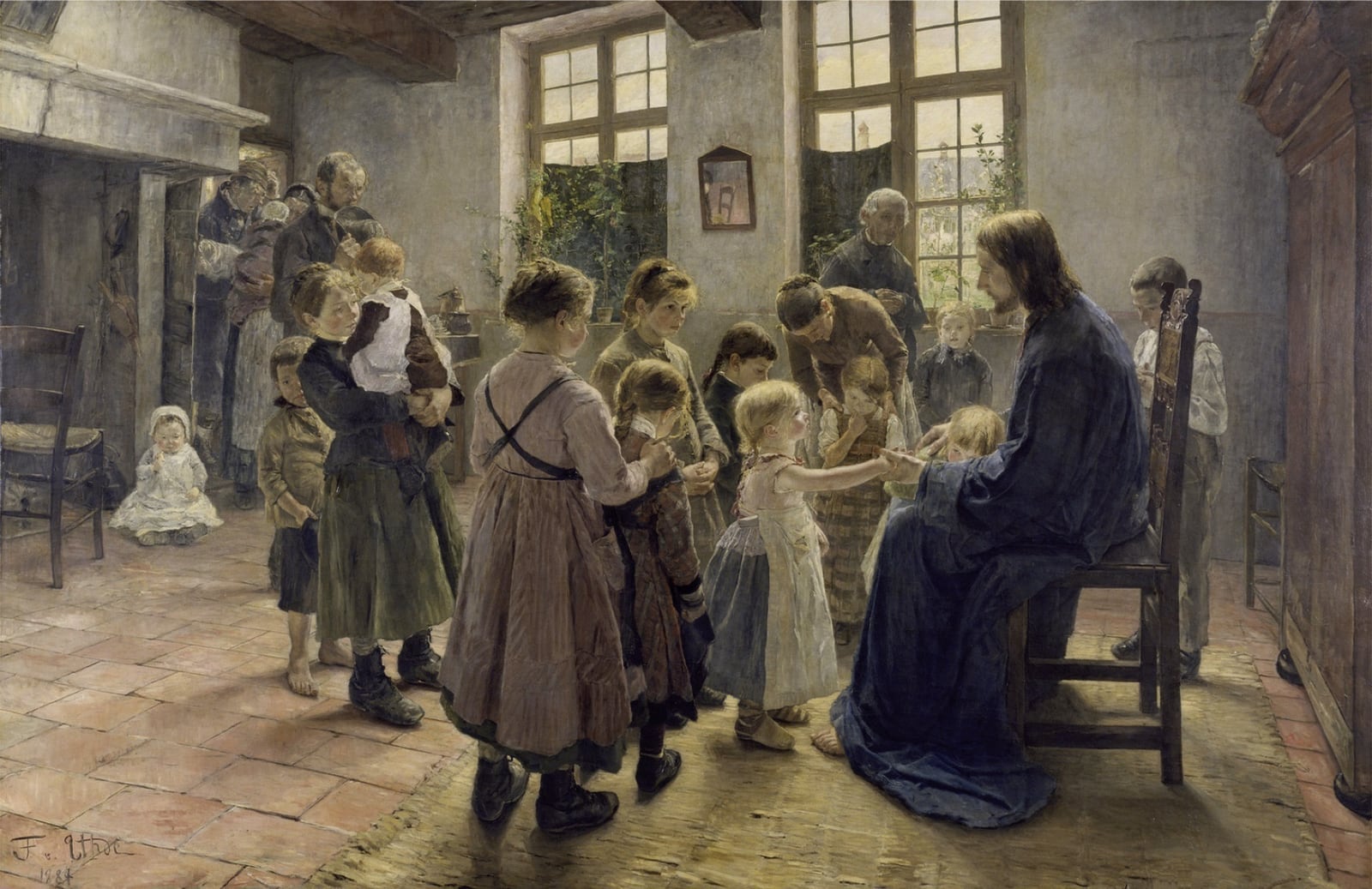
When it is said
A priest says it at the very end of the Orthodox funeral for a child. First “Memory eternal” is sung three times, with the child’s name. Then comes this prayer, and the child is carried to the grave.
Parents and family may also pray it at home, with the child’s name.
Where it comes from
No author known
A funeral of its own
The Russian service book gives children under seven a funeral of their own. Isabel Hapgood, who put the Russian services into English in 1906, gave the reason in a note: it is sung over children who are innocent and without sin. Its hymns call the child spotless. They remind Christ that He promised His kingdom to children, and ask Him to number this child in it.
Isabel F. Hapgood, Service Book (1906), the Order for the Burial of a Child; Azbyka.ru, the Orthodox funeral (in Russian)
It prays for the parents too
The same funeral makes room for grief. One of its hymns calls the child’s going a true cause of grief and tears. Another turns to Christ, Who looked with pity on His own mother’s sorrow at the Cross. It asks Him to ease the sadness and sore grief of the child’s father and mother.
Isabel F. Hapgood, Service Book (1906), the Order for the Burial of a Child
What the words mean
“Abraham’s bosom”
The words come from a story Jesus told. A poor man named Lazarus lay at a rich man’s gate. When he died, the angels carried him to Abraham’s side, and there he was comforted. The prayer asks that place of comfort for the child.
Luke 16:22-25
The Scripture in it
But Jesus said, “Let the little children come to Me, and do not hinder them! For the kingdom of heaven belongs to such as these.”
One day the beggar died and was carried by the angels to Abraham’s side. And the rich man also died and was buried.
Bible text: Berean Standard Bible, public domain.
In Church Slavonic
Храняй младенцы Господи, в нынешнем житии, в будущем же веце уготовавый им пространство, Авраамово лоно, и по чистоте ангельская светообразная места, в нихже водворяются праведных дуси:
Ты Сам, Владыко Христе, душу раба Твоего младенца, имярек, приими с миром. Ты бо рекл еси: оставите дети приити ко Мне, таковых бо есть Царство Небесное.
Тебе бо подобает всякая слава, честь и поклонение, со Отцем и Святым Духом, ныне и присно и во веки веков. Аминь.