Sign Up My Profile
Prayers

The prayer of St Arsenius

A cry of St Arsenius, a desert monk in Egypt who died about AD 450. He asks God not to forsake him and to let him make a beginning.

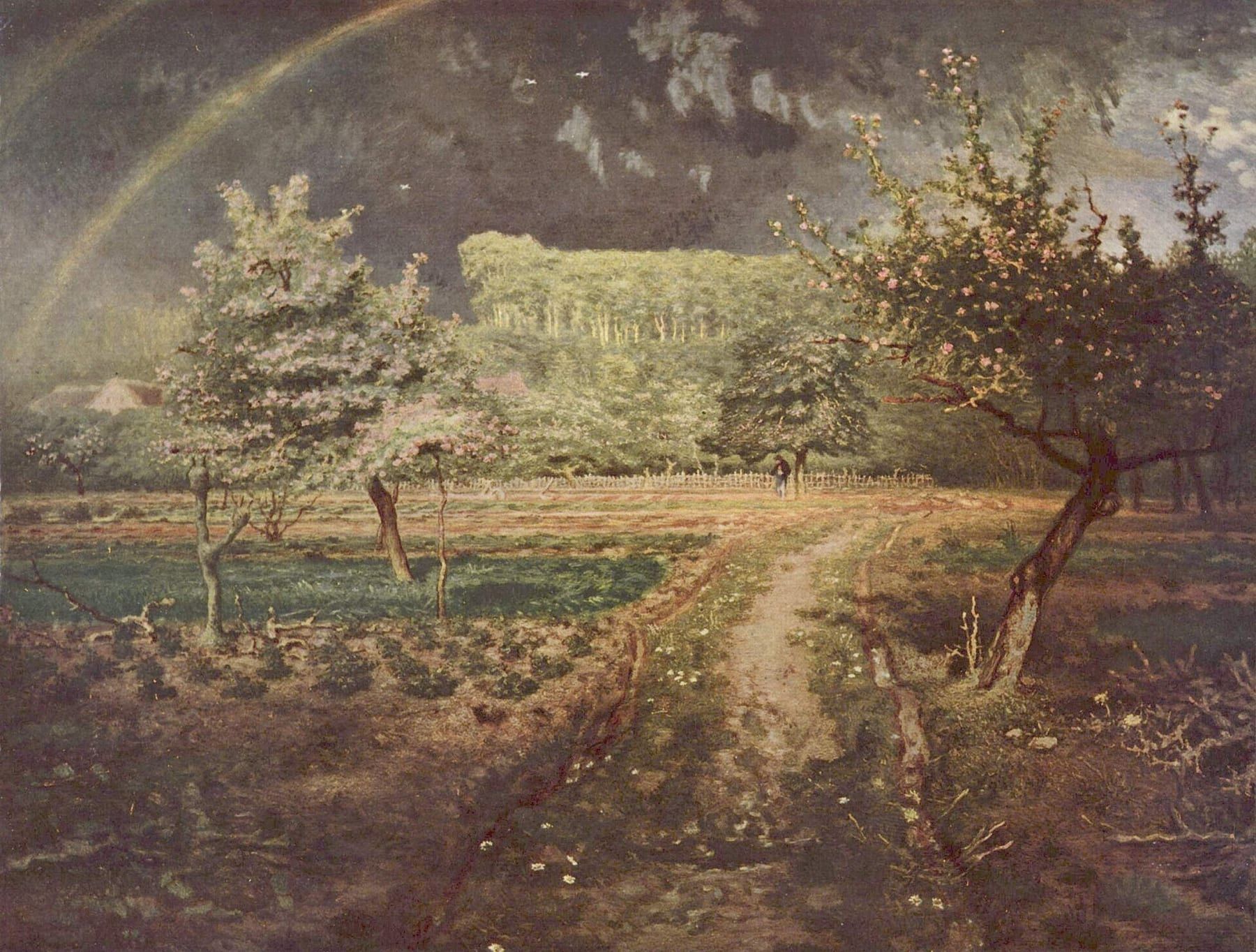
Picture: Jean-François Millet, Spring, 1868–73

The words of the prayer

Plain English

O God, do not forsake me.I have done nothing good in Your sight.But in Your kindness, grant that I may make a beginning.

Traditional wording, 1907

O God, forsake me not.I have never done before Thee anything which is good,but grant, O Lord, according to Thy grace,that I may begin in the way.

Plain English by Wiser Walk, from the Greek, with Budge’s 1907 translation of the Syriac beside it. How the wording is made. Traditional wording: E. A. Wallis Budge, The Paradise or Garden of the Holy Fathers, 1907.

Budge translates a Syriac version of about AD 600, which adds “O Lord” and ends “that I may begin in the way”. The plain English follows the Greek.

When it is said

It is a private prayer, short enough to say at any moment.

It suits any fresh start with God, at the beginning of a day or after a failure.

Where it comes from

Author by tradition

Who was Arsenius?

Arsenius was born in Rome in AD 354 and taught the sons of the emperor Theodosius. He left the palace in secret, sailed for Alexandria and made his way to Scetis, a monastery in the Egyptian desert. He lived as a monk for 55 years and died nearly 100 years old, in AD 449 or 450.

Orthodox Church in America, “Venerable Arsenius the Great” (8 May)

Where the prayer comes from

The prayer comes from the Sayings of the Desert Fathers. Evil spirits were tormenting Arsenius in his hut, and the men who served him came and stood outside. They heard him crying out to God in these words.

Sayings of the Desert Fathers, Arsenius 3 (Migne, Patrologia Graeca 65, column 88)

The Scripture in it

Do not forsake me, O LORD; be not far from me, O my God.

Psalm 38:21 Echoed David’s cry, “Do not forsake me, O LORD,” which the first line echoes.

Bible text: Berean Standard Bible, public domain.

In Greek

Ὁ Θεός, μὴ ἐγκαταλίπῃς με·

οὐδὲν ἐποίησα ἐνώπιόν σου ἀγαθόν·

ἀλλὰ δός μοι κατὰ τὴν χρηστότητά σου βαλεῖν ἀρχήν.

From the Sayings of the Desert Fathers (alphabetical collection), Arsenius 3, in Migne’s Patrologia Graeca 65 (Paris, 1858), column 88.

Close to this

All prayers

Suggest a correction

Berean Standard Bible