Sign Up My Profile
Prayers

Orthodox prayers for new beginnings

These prayers ask God for a new beginning in life, and for a blessed new year on 1 January or on 1 September, when the Church’s year begins.

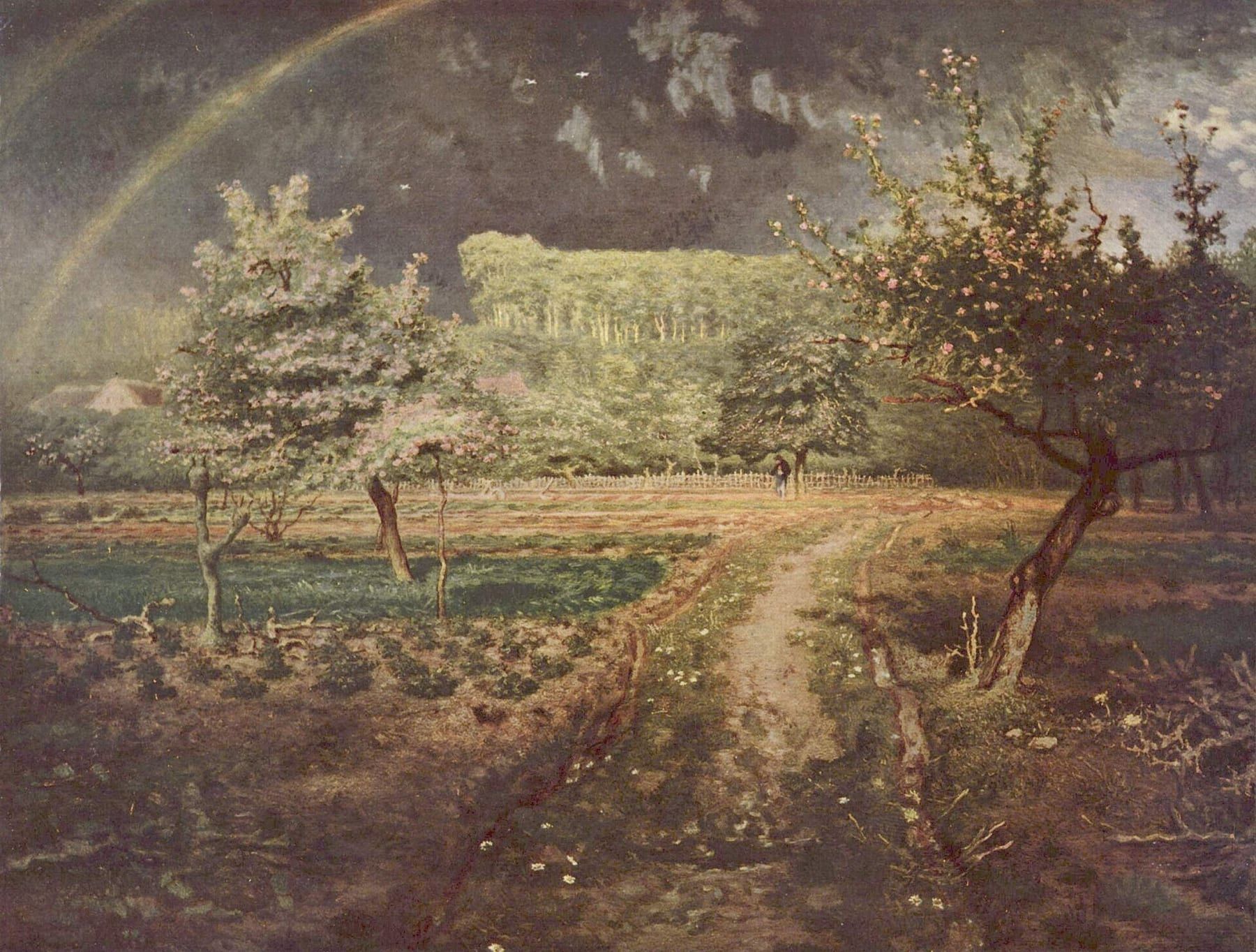
Picture: Jean-François Millet, Spring, 1868–73

3 prayers

When you need a fresh start

Prayer of St Arsenius

O God, do not forsake me.I have done nothing good in Your sight.But in Your kindness, grant that I may make a beginning.

Traditional wording, 1907

O God, forsake me not.I have never done before Thee anything which is good,but grant, O Lord, according to Thy grace,that I may begin in the way.

St Arsenius lived as a monk in the Egyptian desert. In three short lines he admits he has done nothing good in God’s sight and asks only for the grace to make a beginning.

Plain English by Wiser Walk, from the Greek, with Budge’s 1907 translation of the Syriac beside it. How the wording is made. Traditional wording: E. A. Wallis Budge, The Paradise or Garden of the Holy Fathers, 1907.

Budge translates a Syriac version of about AD 600, which adds “O Lord” and ends “that I may begin in the way”. The plain English follows the Greek.
Where it comes from, and the Greek

For the Church’s new year

Troparion of the Church New Year

O Maker of all creation,You set the times and seasonsby Your own authority.Bless the crown of the year with Your goodness, O Lord.Keep in peace the rulers and Your city,through the prayers of the Mother of God,and save us.

Traditional wording, 1906

O Thou Author of all created things,Who hast set the seasons and the years in Thy power,bless Thou the crown of the year with Thy goodness, O Lord,preserving in peace the Emperor and Thy city,through the prayers of the Birth-giver of God;and save us.

The Orthodox Church sings this hymn on 1 September, when its year begins, and the Russian service book also gives it for a service of thanks on 1 January. It asks the Maker of all creation to bless the crown of the year with His goodness.

Plain English by Wiser Walk, from the Greek, with Hapgood’s 1906 translation beside it. How the wording is made. Traditional wording: Isabel F. Hapgood, Service Book of the Holy Orthodox-Catholic Apostolic Church, 1906.

Hapgood’s Russian book prays for “the Emperor”, where the Greek says “the kings”.

Where it comes from, and the Greek

For New Year’s Day

Prayer for the New Year

May Christ, the Head and Lordof every power and every beginning,grant us to pass through the coming yearwith faithful hearts,so that in all things we may be worthyto please His loving eyes.

O God, You remain the same,and Your years will never end.Grant us to spend this yearserving You with a devotion that pleases You.

And fill the earth with fruit.Free our bodies from sicknessand our souls from sin.Take away all that makes us stumble,and drive far from our bordersevery misfortune that would harm us.

Through our Lord Jesus Christ, Your Son.

Traditional wording, 1864

May Christ our Lord, Who is the Head of every beginning,grant us so to pass through the coming year with faithful hearts,that we may be able in all things to please His loving eyes.

O God, Who art the Self-same, Whose years shall not fail,grant us to spend this year as Thy devoted servants,according to Thy good pleasure.

Fill the earth with fruit,grant our bodies to be free from disease, our souls from offences;take away scandals,and keep far from our borders all manner of calamitous events;through Jesus Christ Thy Son our Lord.

The Church in Spain prayed it at a Mass on 1 January before AD 600, while East and West were still one Church. It names Christ the Head of every beginning and asks for a faithful year, with bodies free from sickness and souls free from sin.

Plain English by Wiser Walk, from the Latin, as Marius Férotin printed the Old Spanish book of prayers for the Mass in 1912, with William Bright’s 1864 English beside it. How the wording is made. Traditional wording: William Bright, Ancient Collects, 1864.

Where it comes from, and the Latin

Scripture for this

18“Do not call to mind the former things; pay no attention to the things of old. 19Behold, I am about to do something new; even now it is coming. Do you not see it? Indeed, I will make a way in the wilderness and streams in the desert.”

Isaiah 43:18-19 Through Isaiah, God tells His people not to dwell on the past. “Behold, I am about to do something new.”

22Because of the loving devotion of the LORD we are not consumed, for His mercies never fail. 23They are new every morning; great is Your faithfulness!

Lamentations 3:22-23 Even amid ruin, the Lord’s mercies never fail and are new every morning.

Therefore if anyone is in Christ, he is a new creation. The old has passed away. Behold, the new has come!

2 Corinthians 5:17 Anyone in Christ is a new creation. The old has passed away; the new has come.

13Brothers, I do not consider myself yet to have taken hold of it. But one thing I do: Forgetting what is behind and straining toward what is ahead, 14I press on toward the goal to win the prize of God’s heavenly calling in Christ Jesus.

Philippians 3:13-14 Paul forgets what is behind and strains toward what is ahead, pressing on toward the goal.

18“The Spirit of the Lord is on Me, because He has anointed Me to preach good news to the poor. He has sent Me to proclaim liberty to the captives and recovery of sight to the blind, to release the oppressed, 19to proclaim the year of the Lord’s favor.”

Luke 4:18-19 Jesus began His work by reading Isaiah on the year of the Lord’s favour. Church tradition places it on 1 September, the Church’s new year.

You crown the year with Your bounty, and Your paths overflow with plenty.

Psalm 65:11 The Russian service of thanks for the new year opens with this psalm of God crowning the year with His bounty.

Bible text: Berean Standard Bible, public domain.

Close to this

All prayers

Quiz What prayer do you need right now? A few honest taps about where you are, and a prayer of the Church for exactly that. 8 questions, about 3 minutes. Start

Suggest a correction

Berean Standard Bible