Sign Up My Profile
Prayers

St Augustine’s prayer for a mind that will not stop

St Augustine asks God to free him from the many words inside him, and never to let his thoughts rule what he does.

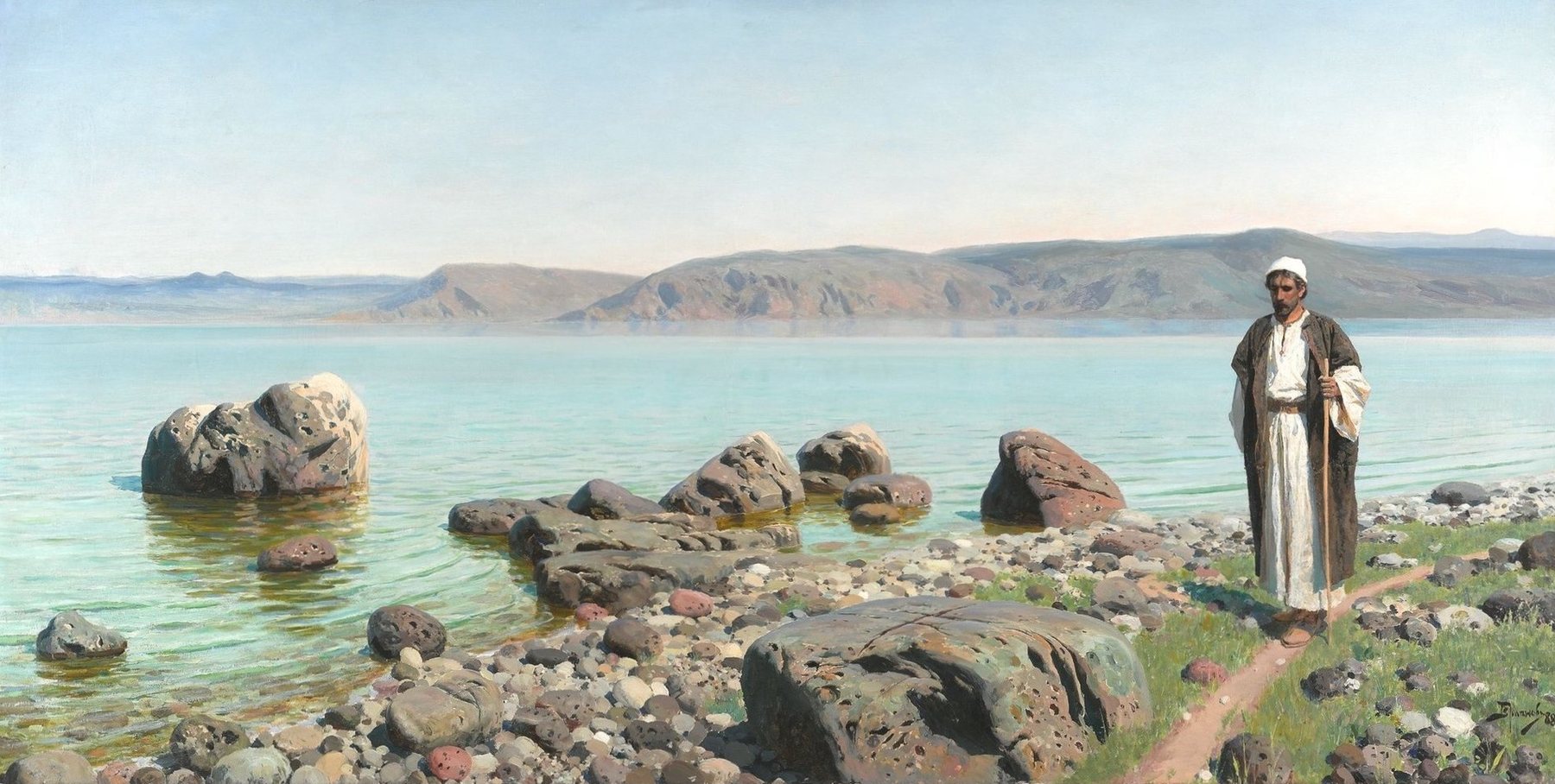
Picture: Vasily Polenov, On the Sea of Galilee, 1888

The words of the prayer

Plain English

Set me free, my God,from the many words I suffer within my soul.My soul is wretched in Your sightand runs to Your mercy for refuge.For I am not silent in my thoughts,even when my voice is silent.

If I thought nothing but what pleases You,I would not ask You to free me from these many words.But my thoughts are many,and You know what they are:the thoughts of men, which are empty.

Grant that I do not consent to them.If they ever please me,let me still condemn themand not linger in them as if I were dozing.Do not let them have such power over methat anything I do comes from them.But at least keep my judgment and my consciencesafe from them, under Your protection.

Traditional wording, 1890

Set me free, O God, from that multitude of speech which I suffer inwardly in my soul,wretched as it is in Thy sight, and flying for refuge to Thy mercy;for I am not silent in thoughts, even when silent in words.

And if, indeed, I thought of nothing save what pleased Thee,certainly I would not ask Thee to set me free from such multitude of speech.But many are my thoughts, such as Thou knowest,“thoughts of man, since they are vain.”

Grant to me not to consent to them;and if ever they delight me, nevertheless to condemn them,and not to dwell in them, as though I slumbered.Nor let them so prevail in me, as that anything in my acts should proceed from them;but at least let my opinions, let my conscience, be safe from them, under Thy protection.

Plain English by Wiser Walk, from the Latin, with Haddan’s English beside it. How the wording is made. Traditional wording: Arthur West Haddan, revised by W. G. T. Shedd, Nicene and Post-Nicene Fathers, first series, vol. 3, 1890.

When it is said

The prayer that closes Augustine’s book begins by confessing faith in the Father, the Son and the Holy Spirit and asking for strength to keep seeking God. These lines come later in it. After them Augustine looks ahead to the day we come to God, when all these words will cease and we will praise Him without end.

It is not an Orthodox service prayer. A Latin book of psalms and prayers for daily needs, printed among the works of Alcuin, copies the whole prayer. Anyone can pray it when thoughts will not be still.

Where it comes from

Author known

The end of a long book

Augustine had been bishop of Hippo for about four years when he began On the Trinity around AD 400. He worked on it for many years. A quotation in its last book shows he was still writing in AD 417 or later. He ended the whole work with a prayer to God.

W. G. T. Shedd, introduction to On the Holy Trinity, Nicene and Post-Nicene Fathers, first series, vol. 3

Too many words

Just before these lines Augustine remembers the proverb that warns against too many words, because sin is never far from them (Proverbs 10:19). He wishes he spoke only to preach God’s word and to praise Him. Then he turns to the words he could not stop, the ones running on inside him.

Augustine, On the Trinity, Book 15, chapter 28 (NPNF)

The Scripture in it

The LORD knows the thoughts of man, that they are futile.

Psalm 94:11 Quoted The LORD knows the thoughts of man, and that they are empty.

Bible text: Berean Standard Bible, public domain.

In Latin

Libera me, Deus meus, a multiloquio quod patior intus in anima mea,

misera in conspectu tuo, et confugiente ad misericordiam tuam.

Non enim cogitationibus taceo, etiam tacens vocibus.

Et si quidem non cogitarem nisi quod placeret tibi,

non utique rogarem ut me ab hoc multiloquio liberares.

Sed multae sunt cogitationes meae, tales quales nosti,

cogitationes hominum, quoniam vanae sunt.

Dona mihi non eis consentire,

et si quando me delectant, eas nihilominus improbare,

nec in eis velut dormitando immorari.

Nec in tantum valeant apud me, ut aliquid in opera mea procedat ex illis;

sed ab eis mea saltem sit tuta sententia, tuta conscientia, te tuente.

From On the Trinity (De Trinitate), Book 15, from the closing prayer, as printed by Augustinus.it.

Close to this

All prayers

Suggest a correction

Berean Standard Bible