
When it is said
Anyone may pray these verses at any time.
They suit the days after a husband or wife has died, and any day you feel alone.
Where it comes from
Author by tradition
Who wrote it?
The Hebrew heading is “For the Leader. A Psalm of David, a Song.” The psalm runs to 35 verses. In the Greek Septuagint it is numbered 67, under a heading that also names David.
Mechon Mamre, the Hebrew Bible with the Jewish Publication Society’s English of 1917; Brenton’s English Septuagint
The whole psalm
The whole psalm is a song of God going out before His people through the wilderness and into His sanctuary. It opens with “Let God arise, let His enemies be scattered.” At midnight on Easter the priest sings those first verses before the closed doors of the church, and after each one the choir answers “Christ is risen from the dead”.
The King James Version; Isabel F. Hapgood, Service Book of the Holy Orthodox-Catholic Apostolic Church (1906), Easter Matins
What the words mean
Judge or defender?
In the King James Version God is “a judge of the widows”. The Hebrew word is a judge’s title, and Strong’s concordance gives its sense as “a judge or advocate”. A judge who takes up the widow’s case is her defender, so the plain wording has “a defender of widows”.
Burden or benefits?
In the King James Version the Lord “daily loadeth us with benefits”. The Hebrew verb means to carry a load, here one that God carries for His people. The Jewish Publication Society’s English of 1917 has “day by day He beareth our burden”, which the plain wording follows.
Brown-Driver-Briggs Hebrew lexicon, amas (Bible Hub); Mechon Mamre, the Hebrew Bible with the Jewish Publication Society’s English of 1917
The Scripture in it
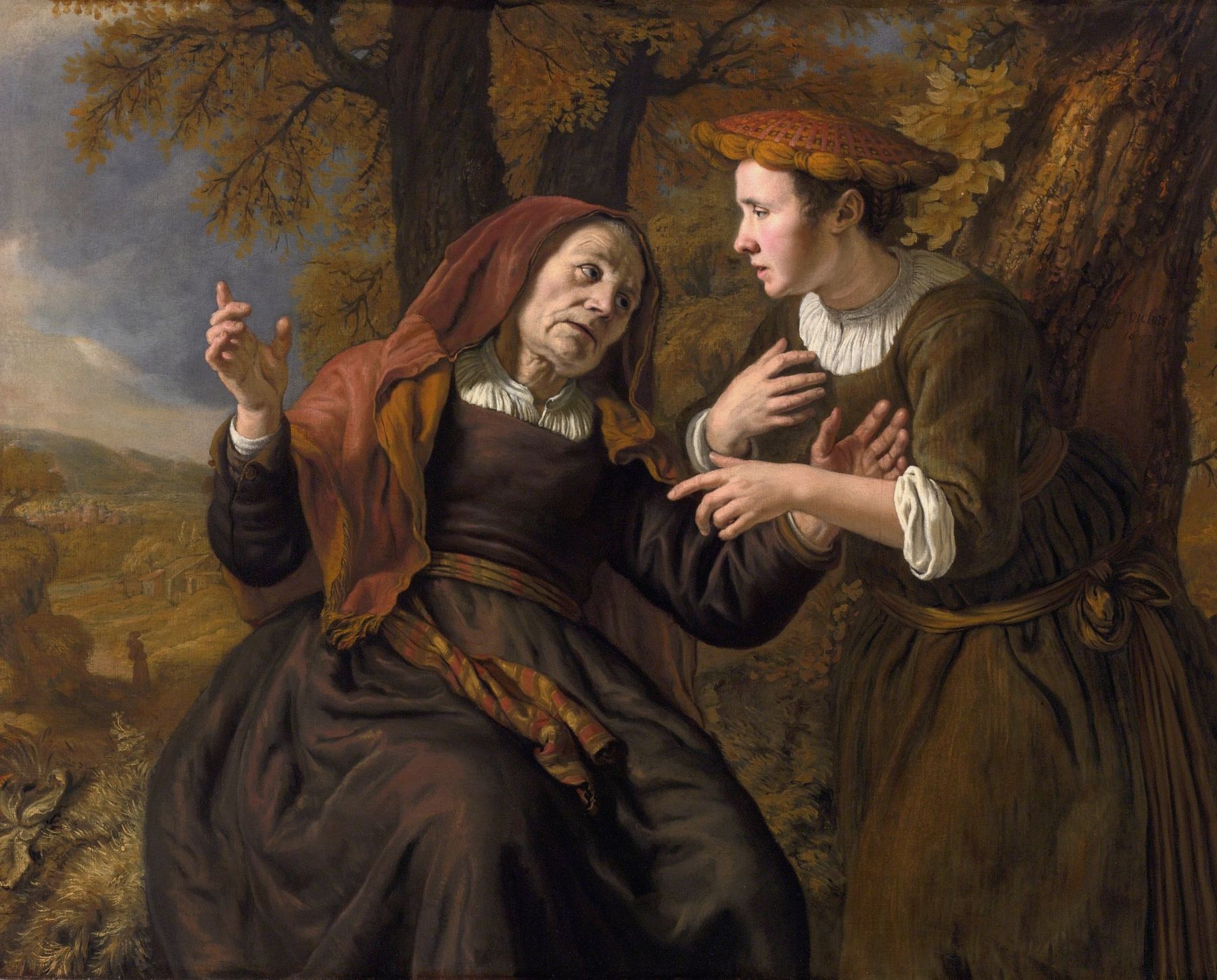
A father of the fatherless and a defender of widows is God in His holy habitation. God settles the lonely in families; He leads the prisoners out to prosperity, but the rebellious dwell in a sun-scorched land.
Blessed be the Lord, Who daily bears our burden, the God of our salvation. Selah
Bible text: Berean Standard Bible, public domain.