Sign Up My Profile
Prayers

Orthodox prayers for widows and widowers

Prayers for a woman whose husband has died and for a man whose wife has died. They bring God the grief of parting and pray for the one you married.

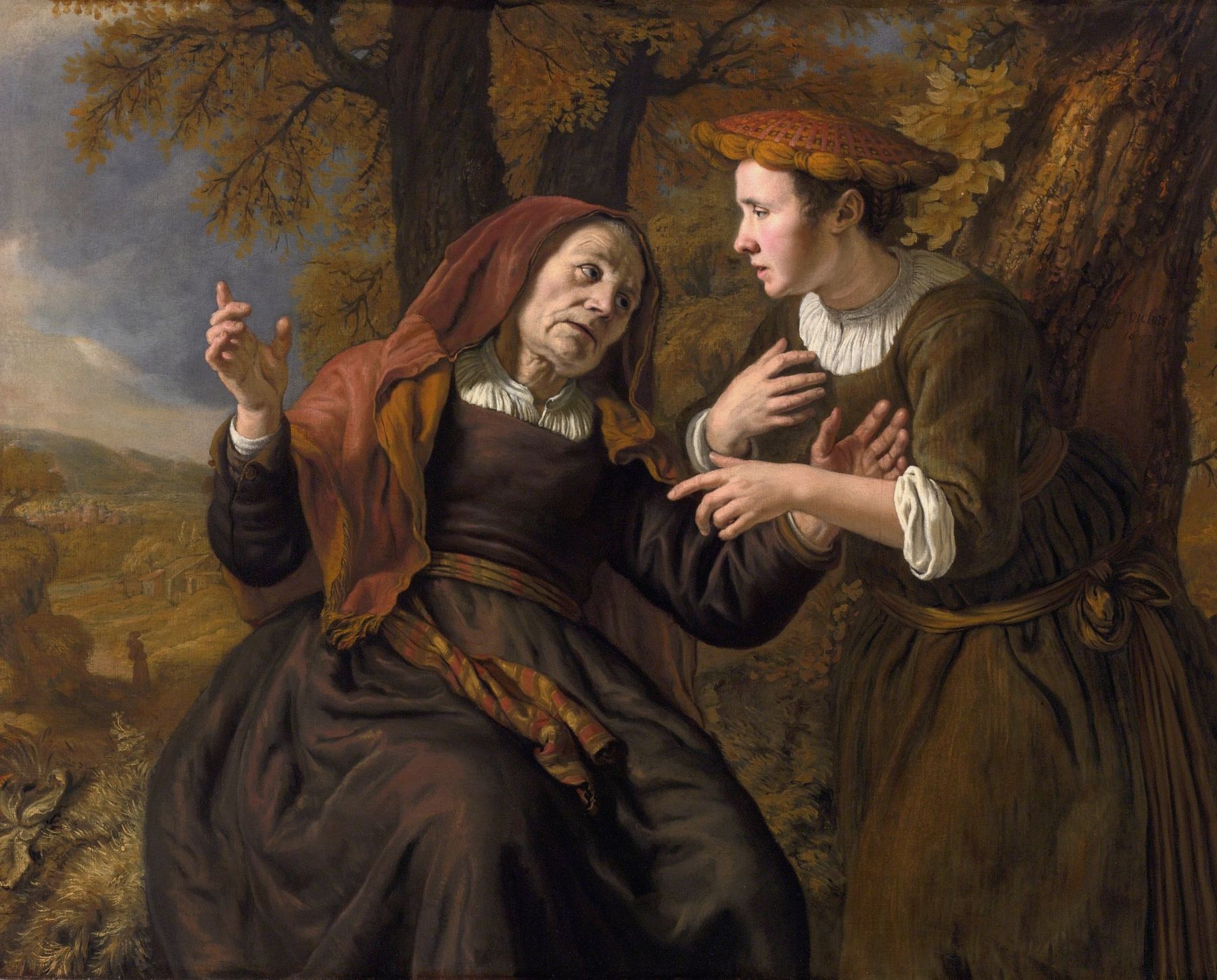
Picture: Jan Victors, Ruth Swearing Her Allegiance to Naomi, 1653

4 prayers

For a widow

Prayer of a widow

Plain English only: no traditional English wording is given for this prayer

O Christ Jesus, Lord and Almighty,You are the comfort of those who weep,the protector of orphans and widows.You have said: Call on Me in the day of your sorrow,and I will deliver you.

In the days of my sorrow I run to You,and I pray to You:do not turn Your face away from me,and hear the prayer I bring You with tears.

You, O Lord, Master of all,were pleased to join me to one of Your servants,so that we might be one body and one spirit.You gave me this servant of Yoursas my companion and protector.And it has pleased Your good and all-wise willto take this servant of Yours from meand to leave me alone.

I bow before this will of Yours,and I run to You in the days of my sorrow.Ease my grief at parting from Your servant, my friend.If You have taken him from me,do not take Your mercy from me.As You once accepted the widow’s two small coins,so accept this prayer of mine.

Remember, O Lord, the soul of Your departed servant (name).Forgive him all his sins, willing and unwilling,in word or in deed, in knowledge or in ignorance.Do not let him perish in his sins,and do not hand him over to eternal torment.But in Your great mercyand the abundance of Your compassion,pardon and forgive all his sins,and give him a place with Your saints,where there is no pain, no sorrow and no sighing,but life without end.

I pray and I ask You, O Lord:grant me, all the days of my life,never to stop praying for Your departed servant,and until my own departureto ask You, the Judge of all the world,to forgive all his sinsand to give him a home in the heavenly dwellingsthat You have prepared for those who love You.

For though he sinned,he did not turn away from You.Without doubting, he confessed the Father, the Son and the Holy Spiritin the Orthodox faith, to his last breath.So count his faith in You in place of works.For there is no one who lives and does not sin.You alone are without sin,and Your righteousness is righteousness for ever.

I believe, O Lord, and I confessthat You will hear my prayerand will not turn Your face away from me.When You saw a widow weeping bitterly,You had compassion on her,and raised her son as he was carried out to be buried.Have compassion in the same way,and quiet my sorrow too.

You opened the doors of Your mercyto Your servant Theophilus after he had departed to You.You forgave his sins at the prayers of Your holy Church,heeding the prayers and the almsgiving of his wife.So I too pray to You:accept my prayer for Your servant,and bring him into eternal life.

For You are our hope.You are God, Who has mercy and saves,and to You we give glory,with the Father and the Holy Spirit.Amen.

A widow asks Christ to ease her grief at parting from her husband. She prays that He forgive his sins and bring him into eternal life.

Plain English by Wiser Walk, from the Church Slavonic of the Russian prayer books. How the wording is made.
Where it comes from, and the Church Slavonic

For a widower

Prayer of a widower

Plain English only: no traditional English wording is given for this prayer

O Christ Jesus, Lord and Almighty,with a broken and tender heart I pray to You:give rest, O Lord, to the soul of Your departed servant (name)in Your heavenly Kingdom.

O Master Almighty,You looked with favour on the union of husband and wifewhen You said: It is not good for the man to be alone;let Us make him a helper suited to him.You made this union holy,as an image of the spiritual union of Christ and the Church.

I believe, O Lord, and I confessthat You blessed me tooto be joined in this holy union with one of Your servants.And it has pleased Your good and all-wise willto take from me this servant of Yours,whom You gave me as my helperand my companion through life.

I bow before this will of Yours,and I pray to You with all my heart:accept this prayer of mine for Your servant (name),and forgive her if she sinnedin word, in deed or in thought,knowingly or unknowingly;if she loved the things of earth more than the things of heaven;if she cared more for clothing and adorning her bodythan for the brightness of her soul’s garment;or if she neglected her children;if she grieved anyone by a word or a deed;if she grumbled in her heart against her neighbour,or judged anyone,or did any other wrong of this kind.

Forgive her all these things,for You are good and love mankind,and there is no one who lives and does not sin.Do not enter into judgment with Your servant,for she is Your creation.Do not condemn her to eternal torment for her sins,but spare her and have mercy on herin Your great mercy.

I pray and I ask You, O Lord:give me strength all the days of my lifenever to stop praying for Your departed servant,and until the end of my own lifeto ask You, the Judge of all the world,to forgive her sins.

O God, as You set on her heada crown of precious stonewhen You crowned her here on earth,so crown her with Your eternal gloryin Your heavenly Kingdom,with all the saints who rejoice there,so that together with them she may sing for everof Your all-holy name,and of the Father and the Holy Spirit.Amen.

A widower remembers the wife God gave him as his helper and companion through life. He prays for her forgiveness and asks for strength to keep praying for her for the rest of his life.

Plain English by Wiser Walk, from the Church Slavonic of the Russian prayer books. How the wording is made.

Where it comes from, and the Church Slavonic

For your wife

St Ephrem’s hymn on the death of a woman

There are tears in the eyes,the sound of weeping in the ears,wailing in the mouthand sadness in the heart.Comfort me, O Lord!

This day partsa woman from her home,and the house bows down and falls,its order lost.Let Your light set it in order!

This day has dressedthis house in mourningand hung its wallswith sorrow and sadness.Let Your comfort give it light!

On the day she was born, she became mortal.There was trouble in her life,and the day of her death brought mourningto all her friends.Glory to Him Who has taken her away!

In the grave that has swallowedthe dead of every generation,her body decaysand becomes nothing but dust.Let Your resurrection raise her up!

Death has come in and snatched her away.It has taken her out of her homeand laid her downin the house of the tombuntil the day she rises.

Her soul has gone away,as Your command decreed.See, she has become dust,as Your command decreed.Lord, make her live again!

Traditional wording, 1853

Tears are in the eyes,In the ears are sounds of woe,In the mouth is wailing,And sadness in the heart:—Comfort me, oh Lord!

This day separatesA woman from her house,And it bows down and falls prostrate,Having lost its order:—Let it be arranged by Thy light!

This day hath clothedThis house in mourning,And hung upon its wallsAffliction and sadness:—Let Thy consolation give it light!

In the day of her birth she became mortal;In her life there was trouble;The day of her death caused mourningTo the company of her friends:—Glory to Him Who hath taken her away!

In the grave which hath swallowed upThe dead of all generations,Her body sees corruption,And becomes but dust:—Let Thy resurrection raise her up!

Death hath entered—hath snatched her away,And put her forth from her dwelling,And in the habitation of the tombHath deposited her:—Till the day of her rising.

Her soul hath gone away,As Thy command hath decreed;Behold! she hath become dust,As Thy command hath decreed:—Lord, make her live anew!

This funeral hymn, credited to St Ephrem the Syrian, weeps for a woman who has died and asks God to comfort her home. Even in the grief it gives Him glory, and it ends by asking Him to make her live again.

Plain English by Wiser Walk, from the English that Henry Burgess made from the Syriac in 1853, checked line by line against the Russian translation of St Ephrem’s works. How the wording is made. Traditional wording: Henry Burgess, Select Metrical Hymns and Homilies of Ephraem Syrus, 1853.

Where it comes from, and the original

When you feel alone

A defender of widows

A father to the fatherlessand a defender of widowsis God in His holy dwelling.

God settles the lonely in a home;He leads the prisoners out to prosperity,but the rebellious live in a parched land.

Blessed be the Lord,Who carries our burden day by day,the God Who saves us.

Traditional wording, 1611

A father of the fatherless, and a judge of the widows,is God in His holy habitation.

God setteth the solitary in families:He bringeth out those which are bound with chains:but the rebellious dwell in a dry land.

Blessed be the Lord,Who daily loadeth us with benefits,even the God of our salvation.

These verses call God a father to the fatherless and a defender of widows, Who gives the lonely a home. They end by blessing Him for carrying our burden day by day.

Plain English by Wiser Walk, from the Hebrew (verses 5, 6 and 19), with the King James Version beside it. How the wording is made. Traditional wording: The King James translators, The King James Version, 1611.

Where the King James Version has “in families” and “bound with chains”, the plain wording follows the Hebrew as the Jewish Publication Society read it in 1917, with “in a house” and “the prisoners into prosperity”.

Where it comes from, and the original

Scripture for this

He executes justice for the fatherless and widow, and He loves the foreigner, giving him food and clothing.

Deuteronomy 10:18 Moses tells Israel that God Himself defends the fatherless and the widow.

She died in Kiriath-arba (that is, Hebron) in the land of Canaan, and Abraham went out to mourn and to weep for her.

Genesis 23:2 Even Abraham mourned and wept when his wife Sarah died.

16But Ruth replied: “Do not urge me to leave you or to turn from following you. For wherever you go, I will go, and wherever you live, I will live; your people will be my people, and your God will be my God. 17Where you die, I will die, and there I will be buried. May the LORD punish me, and ever so severely, if anything but death separates you and me.”

Ruth 1:16-17 Naomi’s widowed daughter-in-law Ruth refused to leave her and promised to go wherever she went.

12But she replied, “As surely as the LORD your God lives, I have no bread—only a handful of flour in a jar and a little oil in a jug. Look, I am gathering a couple of sticks to take home and prepare a meal for myself and my son, so that we may eat it and die.” 13“Do not be afraid,” Elijah said to her. “Go and do as you have said. But first make me a small cake of bread from what you have, and bring it out to me. Afterward, make some for yourself and your son, 14for this is what the LORD, the God of Israel, says: ‘The jar of flour will not be exhausted and the jug of oil will not run dry until the day the LORD sends rain upon the face of the earth.’” 15So she went and did according to the word of Elijah, and there was food every day for Elijah and the woman and her household. 16The jar of flour was not exhausted and the jug of oil did not run dry, according to the word that the LORD had spoken through Elijah.

1 Kings 17:12-16 In a famine God sent Elijah to a widow with a handful of flour left, and her flour and oil did not run out.

36There was also a prophetess named Anna, the daughter of Phanuel, of the tribe of Asher, who was well along in years. She had been married for seven years, 37and then was a widow to the age of eighty-four. She never left the temple, but worshiped night and day, fasting and praying. 38Coming forward at that moment, she gave thanks to God and spoke about the Child to all who were waiting for the redemption of Jerusalem.

Luke 2:36-38 The widow Anna served God in the temple for most of her long life. She gave thanks when she saw the child Jesus.

The widow who is truly in need and left all alone puts her hope in God and continues night and day in her petitions and prayers.

1 Timothy 5:5 Paul honours the widow left on her own who puts her hope in God and prays night and day.

Bible text: Berean Standard Bible, public domain.

A psalm for this

The LORD protects foreigners; He sustains the fatherless and the widow, but the ways of the wicked He frustrates.

Psalm 146:9

The psalm names the widow among the people the Lord Himself holds up.

Close to this

All prayers

Quiz What prayer do you need right now? A few honest taps about where you are, and a prayer of the Church for exactly that. 8 questions, about 3 minutes. Start

Suggest a correction

Berean Standard Bible