
Sign Up My Profile
Prayers

Orthodox prayers for grief and loss

When someone you love has died, these prayers bring your grief to God. They ask Him for comfort in the hope of the resurrection.

Picture: Jan Victors, Ruth Swearing Her Allegiance to Naomi, 1653

5 prayers

For anyone who mourns

Prayer for those who mourn

O Lord of hosts,You are the joy of the sorrowing,the comfort of those who weepand the help of all who lose heart.

In Your tender mercy, comfort thosewho are overcome with tears for the one who has fallen asleep,and heal every pain that lies in their hearts.

Give rest in Abraham’s bosomto Your servant (name),who has fallen asleepin the hope of the resurrection to eternal life.

For You are the Resurrection, the Lifeand the Rest of Your servant (name),O Christ our God.To You we give glory,with Your Father, Who has no beginning,and Your all-holy, good and life-giving Spirit,now and always, and for ever and ever. Amen.

Traditional wording, 1894

O Lord of hosts, Who art the joy of the afflicted, the consolation of mourners,and the aid of all them that are faint-hearted;

do Thou in Thy tenderness console them that are constrained with grief for him that hath fallen asleep,and heal every distress that lieth in their hearts,

and rest Thy servant, N., who hath fallen asleep in hope of the resurrection of eternal life,in the bosom of Abraham.

For Thou art the Resurrection, the Life, and the Repose of Thy servant, N., O Christ our God,and to Thee we ascribe glory, with Thine unbeginning Father,and with Thy most holy, and good, and life-creating Spirit,now and ever, and to ages of ages. Amen.

It is found in a Greek prayer book copied in the 8th century. It names Christ as the comfort of those who weep and asks Him to heal every pain that lies in a mourner’s heart.

Plain English by Wiser Walk, from the Church Slavonic, with Shann’s 1894 translation beside it. How the wording is made. Traditional wording: G. V. Shann, Book of Needs of the Holy Orthodox Church, 1894.

Where it comes from, and the Church Slavonic

In the first hours

Prayer when a loved one has died

Plain English only: no traditional English wording is given for this prayer

Stunned by a cruel wound that is still fresh,and wounded, as it were, in our hearts,with weeping voices we beg Your mercy,Redeemer of the world.

Receive gently and tenderlythe soul of our dear (name),returning to You, the One Who gave it.

If it picked up any stainswhile it lived here in the body,O God, in the goodness that is Yours by nature,blot them out in Your mercy,forgive them in Your love,and let them be forgotten for ever.

Command that this soulbe gathered into the company of Your saints.With them it will praise You,and one day it will return to its body.

Through our Lord Jesus Christ. Amen.

The early Roman Church prayed it soon after a death, in the mourners’ own voice. Stunned by a wound that is still fresh, they ask God to receive their dear one gently and tenderly.

Plain English by Wiser Walk, from our own English from the Latin of H. A. Wilson’s 1894 edition. How the wording is made.

Where it comes from, and the Latin

When you need comfort

The God of all comfort

Blessed be the God and Fatherof our Lord Jesus Christ,the Father of merciesand the God of all comfort,

Who comforts us in all our troubles,so that we can comfort those in any troublewith the comfort we ourselves receive from God.

Traditional wording, 1611

Blessed be God, even the Father of our Lord Jesus Christ,the Father of mercies, and the God of all comfort;

Who comforteth us in all our tribulation,that we may be able to comfort them which are in any trouble,by the comfort wherewith we ourselves are comforted of God.

Paul blesses the Father of mercies and the God of all comfort, Who comforts us in every trouble. He wrote it after a burden so heavy that he despaired even of life (2 Corinthians 1:8).

Plain English by Wiser Walk, from the Greek of 2 Corinthians 1:3-4, with the King James wording beside it. How the wording is made. Traditional wording: The King James translators, The King James Version, 1611.

Where it comes from, and the Greek

When your heart is broken

He heals the brokenhearted

Praise the Lord!It is good to sing praise to our God.It is pleasant, and praise is fitting.The Lord builds up Jerusalem;He gathers the outcasts of Israel.He heals the brokenheartedand binds up their wounds.

He counts the number of the stars;He calls each one of them by name.Great is our Lord, and mighty in power;His understanding is beyond measure.The Lord lifts up the humble;He brings the wicked down to the ground.

Sing to the Lord with thanksgiving;make music to our God on the harp.He covers the sky with clouds;He prepares rain for the earthand makes grass grow on the mountains.He gives the animals their food,and feeds the young ravens when they cry.

He takes no delight in the strength of the horse,no pleasure in the legs of a man.The Lord takes pleasure in those who fear Him,in those who hope in His mercy.

Traditional wording, 1611

Praise ye the LORD: for it is good to sing praises unto our God; for it is pleasant; and praise is comely.The LORD doth build up Jerusalem: He gathereth together the outcasts of Israel.He healeth the broken in heart, and bindeth up their wounds.

He telleth the number of the stars; He calleth them all by their names.Great is our Lord, and of great power: His understanding is infinite.The LORD lifteth up the meek: He casteth the wicked down to the ground.

Sing unto the LORD with thanksgiving; sing praise upon the harp unto our God:Who covereth the heaven with clouds, Who prepareth rain for the earth, Who maketh grass to grow upon the mountains.He giveth to the beast his food, and to the young ravens which cry.

He delighteth not in the strength of the horse: He taketh not pleasure in the legs of a man.The LORD taketh pleasure in them that fear Him, in those that hope in His mercy.

Psalm 147 praises God, Who heals the brokenhearted and binds up their wounds, and Who calls every star by name.

Plain English by Wiser Walk, from the Hebrew, with the King James Version beside it. How the wording is made. Traditional wording: The King James translators, The King James Version, 1611.

Where it comes from, and the original

When you ask why

Lord, if You had been here

Lord, if You had been here,my brother would not have died.But even now I knowthat whatever You ask of God,God will give You.

I know that he will rise againin the resurrection on the last day.

Yes, Lord, I believe that You are the Christ,the Son of God,Who was to come into the world.

Traditional wording, 1611

Lord, if Thou hadst been here, my brother had not died.But I know, that even now, whatsoever Thou wilt ask of God, God will give it Thee.

I know that he shall rise again in the resurrection at the last day.

Yea, Lord: I believe that Thou art the Christ, the Son of God, which should come into the world.

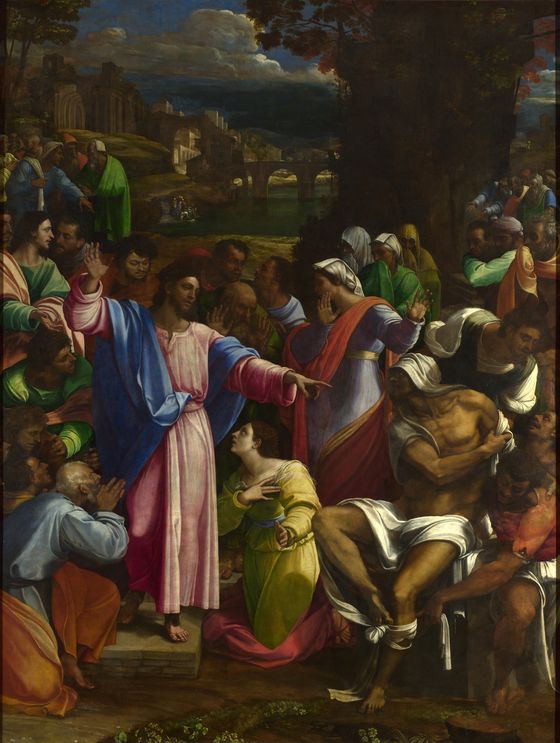
Four days after her brother Lazarus was buried, Martha told Jesus that he would have lived if Jesus had been there. Yet she still trusted Him, and she said she believed He was the Christ.

Plain English by Wiser Walk, from the Greek of John 11, with the King James wording beside it. How the wording is made. Traditional wording: The King James translators, The King James Version, 1611.

Where it comes from, and the Greek

Scripture for this

Blessed are those who mourn, for they will be comforted.

Matthew 5:4 Jesus blessed those who mourn, because they will be comforted. The Orthodox funeral sings this among the Beatitudes.

You have taken account of my wanderings. Put my tears in Your bottle—are they not in Your book?

Psalm 56:8 David asks God to put his tears in His bottle and trusts that they are written in His book.

… to console the mourners in Zion—to give them a crown of beauty for ashes, the oil of joy for mourning, and a garment of praise for a spirit of despair. So they will be called oaks of righteousness, the planting of the LORD, that He may be glorified.

Isaiah 61:3 Isaiah promises those who mourn a crown of beauty for ashes and the oil of joy for mourning.

12As He approached the town gate, He saw a dead man being carried out, the only son of his mother, and she was a widow. And a large crowd from the town was with her. 13When the Lord saw her, He had compassion on her and said, “Do not weep.” 14Then He went up and touched the coffin, and those carrying it stood still. “Young man,” He said, “I tell you, get up!” 15And the dead man sat up and began to speak! Then Jesus gave him back to his mother.

Luke 7:12-15 Jesus had compassion on a widow at her only son’s funeral. “Do not weep,” He told her, and He gave her son back to her.

37Everyone the Father gives Me will come to Me, and the one who comes to Me I will never drive away. 38For I have come down from heaven, not to do My own will, but to do the will of Him Who sent Me. 39And this is the will of Him Who sent Me, that I shall lose none of those He has given Me, but raise them up at the last day.

John 6:37-39 Christ will lose none of those the Father has given Him, but will raise them up at the last day.

He will swallow up death forever. The Lord GOD will wipe away the tears from every face and remove the disgrace of His people from the whole earth. For the LORD has spoken.

Isaiah 25:8 God will swallow up death for ever and wipe away the tears from every face.

Bible text: Berean Standard Bible, public domain.

Article · 5 min read What to say when someone dies: Orthodox words of comfort What to say or write when someone dies, from the Bible and the Church Fathers, with the words Orthodox Christians use, such as Memory eternal. Read

Close to this

All prayers

Quiz What prayer do you need right now? A few honest taps about where you are, and a prayer of the Church for exactly that. 8 questions, about 3 minutes. Start

Suggest a correction

Berean Standard Bible