Sign Up My Profile
Prayers

Orthodox prayers for the departed

Orthodox Christians go on praying for the souls of the departed, in the hope of Christ’s resurrection. These prayers ask God to forgive them and give them rest.

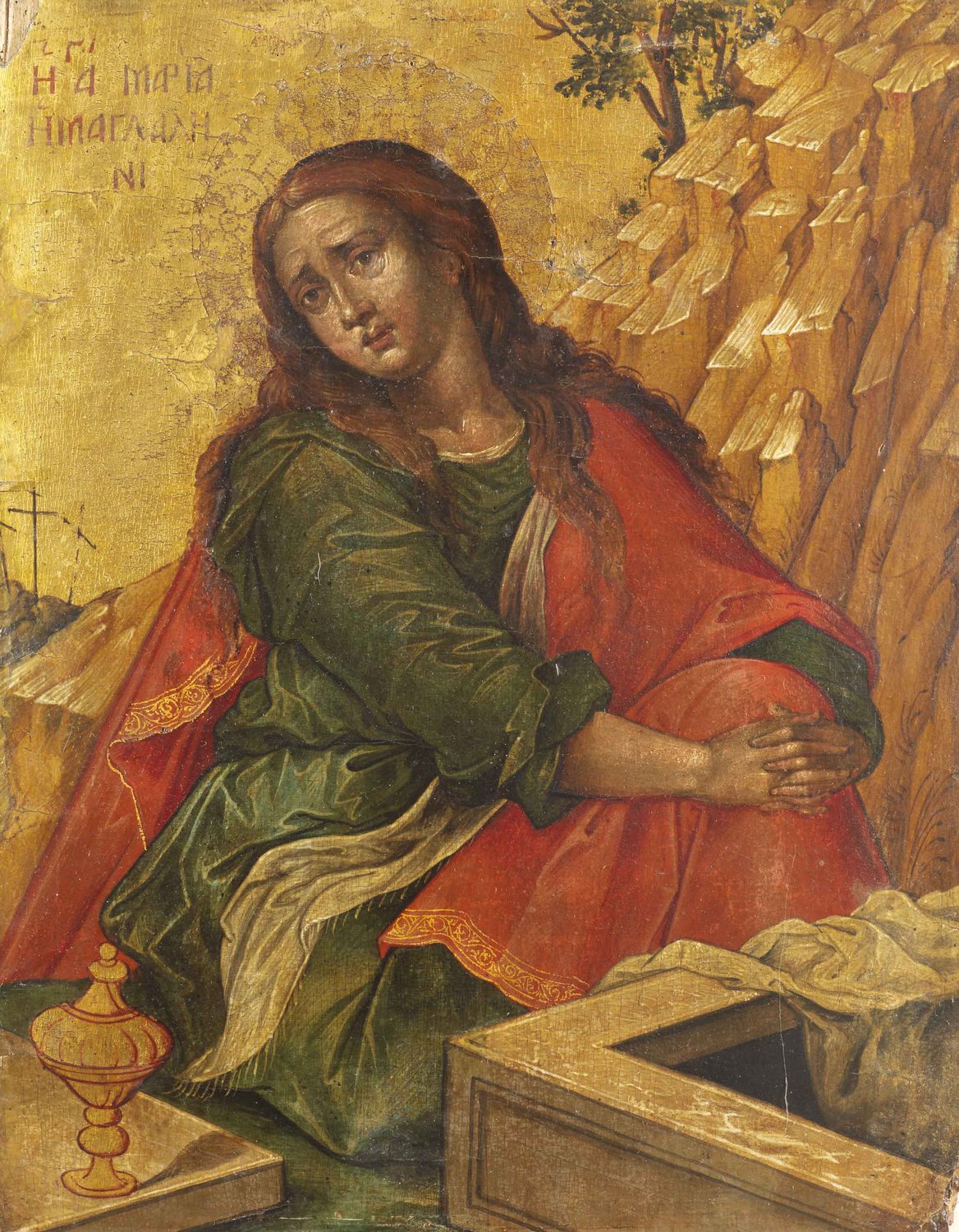
Picture: Konstantinos Tzanes, Mary Magdalene at the empty tomb, 17th century

5 prayers

The prayer for the departed

O God of spirits

O God of spirits and of all flesh,You trampled down death,overthrew the deviland gave life to Your world.O Lord, give rest Yourself to the soulof Your servant (name), who has fallen asleep.Give it rest in a place of light,a place of green pasture,a place of refreshment,where pain, sorrow and sighing have fled away.

Forgive every sin they committedin word, or deed, or thought,as a good God and the Lover of mankind.For there is no one who lives and does not sin.You alone are without sin.Your righteousness is everlasting,and Your law is truth.

For You are the Resurrection, the Lifeand the Rest of Your servant (name),who has fallen asleep, O Christ our God.To You we give glory,with Your Father, Who has no beginning,and Your all-holy, good and life-giving Spirit,now and always, and for ever and ever. Amen.

Traditional wording, 1906

O God of spirits, and of all flesh,Who hast trampled down Death, and overthrown the devil,and given life unto Thy world:Do Thou, the same Lord, give rest to the soul of Thy departed servant, N.,in a place of brightness, a place of verdure, a place of repose,whence all sickness, sorrow and sighing have fled away.

Pardon every transgression which he (she) hath committed,whether by word, or deed, or thought.For Thou art a good God, and lovest mankind;because there is no man who liveth and sinneth not:for Thou only art without sin,and Thy righteousness is to all eternity, and Thy word is true.

For Thou art the Resurrection, and the Life,and the Repose of Thy departed servant, N., O Christ our God,and unto Thee we ascribe glory,together with Thy Father Who is from everlasting,and Thine all-holy, and good, and life-giving Spirit,now, and ever, and unto ages of ages. Amen.

The priest says it at every funeral and memorial service, and anyone may pray it at home with the person’s name. It asks rest in a place where pain, sorrow and sighing have fled away.

Plain English by Wiser Walk, from the Greek, with Hapgood’s 1906 translation beside it. How the wording is made. Traditional wording: Isabel F. Hapgood, Service Book of the Holy Orthodox-Catholic Apostolic Church, 1906.

Hapgood translated the Russian service book. Its three places are brightness, verdure and repose, where the Greek has light, green pasture and refreshment. It ends “Thy word is true”, where the Greek has “Your law is truth”.
Where it comes from, and the Greek

Every morning, by name

Commemoration of the departed

Remember, O Lord, the souls of Your departed servants:my parents and my relatives, (name),all those close to my family,and my friends.Forgive them all their sins,both deliberate and unintended,and grant them the Kingdom of Heaven,a share in Your eternal blessingsand the delight of Your endless and blessed life.Bow

Remember also, O Lord, all who have fallen asleepin the hope of resurrection and eternal life:our fathers, brothers and sisters,and the Orthodox Christians laid to rest here and everywhere.Let them dwell with Your saints,where the light of Your face shines,and have mercy on us,for You are good and You love mankind. Amen.Bow

Grant, O Lord, forgiveness of sinsto all who have gone before usin faith and in the hope of resurrection,our fathers, brothers and sisters,and make their memory eternal.Three times, with a bow

Traditional wording, 1891

Remember, O Lord, the souls of Thy departed servants,my parents, NN., and all my kinsmen in flesh;and forgive them all their sins, voluntary and involuntary,granting unto them the kingdom and communion of Thine eternal blessings,and the enjoyment of Thine everlasting, infinite, and blissful life.

Remember also, O Lord, all our fathers, brethren and sisters,who have fallen asleep in the hope of resurrection and life eternal,and all orthodox Christians, here or elsewhere lying,and make them dwell with Thy Saintswhere the light of Thy countenance shineth,and have mercy upon us; for Thou art good and lovest mankind. Amen.

Grant, O Lord, remission of sins to all our fathers, brethren and sisters,who have before departed in faith and in the hope of resurrection,and render unto them, Everlasting remembrance.

The Russian prayer book ends its morning prayers with a commemoration of the living and the departed, and these are its last petitions. You name your own family and friends, then pray for every Orthodox Christian who has fallen asleep.

Plain English by Wiser Walk, from the Church Slavonic, with G. V. Shann’s 1891 translation beside it. How the wording is made. Traditional wording: G. V. Shann, Euchology: A Manual of Prayers of the Holy Orthodox Church, 1891.

Shann’s English names only “my parents” and “all my kinsmen in flesh”. The Slavonic printed today adds those close to the family, and friends, so the plain wording lets you name a friend too.

Where it comes from, and the Church Slavonic

A hymn of hope

With the saints give rest

With the saints give rest, O Christ,to the soul of Your servant,where there is no pain, no sorrow,no sighing,but life without end.

Then its ikos, the stanza that follows itYou alone are immortal.You created and fashioned man.We mortals were made from the earth,and to the same earth we shall go,as You commanded,when You made me and said to me:“You are earth, and to earth you shall return.”To the earth all of us shall go,making our weeping at the grave a song:Alleluia, alleluia, alleluia.

Traditional wording, 1906

With the Saints give rest, O Christ, to the soul of Thy servant,where there is neither sickness, nor sorrow, nor sighing,but life everlasting.

Thou only art immortal, Who hast created and fashioned man.For out of the earth were we mortals made,and unto the earth shall we return again,as Thou didst command when Thou madest me, saying unto me:For earth thou art, and unto the earth shalt thou return.Whither, also, all we mortals wend our way,making of our funeral dirge the song: Alleluia.

Sung at Orthodox funerals, it asks Christ to give rest with the saints, where there is life without end. In the verse sung after it, called the ikos, even our weeping at the grave becomes a song: Alleluia.

Plain English by Wiser Walk, from the Church Slavonic, with Hapgood’s 1906 translation beside it. How the wording is made. Traditional wording: Isabel F. Hapgood, Service Book of the Holy Orthodox-Catholic Apostolic Church, 1906.

Hapgood’s ikos ends with one “Alleluia”; the Slavonic sings it three times.

Where it comes from, and the Church Slavonic

For all the faithful departed

Prayer for the departed, Liturgy of St James

Remember, O Lord, God of spirits and of all flesh,those we have named and those we have not named,who held the true faith,from righteous Abel to this day.Give them rest Yourself, there in the land of the living,in Your kingdom, in the delight of paradise,at the side of Abraham, Isaac and Jacob, our holy fathers,where pain, sorrow and sighing have fled away,where the light of Your face watches over themand shines on them always.

And guide the end of our lives, O Lord, O Lord,so that it is Christian, pleasing to You,blameless and in peace.Gather us at the feet of Your chosen oneswhen You will and as You will,only without shame and without wrongdoing,through Your only Son,our Lord, God and Saviour Jesus Christ.For He alone has appeared on earth without sin.

Traditional wording, 1886

Remember, O Lord God, the spirits and all flesh,of whom we have made mention, and of whom we have not made mention,who are of the true faith, from righteous Abel unto this day:unto them do Thou give rest there in the land of the living,in Thy kingdom, in the joy of paradise,in the bosom of Abraham, and of Isaac, and of Jacob, our holy fathers;whence pain, and grief, and lamentation have fled:there the light of Thy countenance looks upon them, and enlightens them for ever.

Make the end of our lives Christian, acceptable, blameless, and peaceful, O Lord,gathering us together, O Lord, under the feet of Thine elect,when Thou wilt, and as Thou wilt; only without shame and transgressions,through Thy only-begotten Son, our Lord and God and Saviour Jesus Christ:for He is the only sinless one Who hath appeared on the earth.

The priest says it in the Liturgy of St James. It remembers everyone who died in the faith from righteous Abel to this day, named or not, and asks a Christian end to our own lives.

Plain English by Wiser Walk, from the Greek, with William Macdonald’s 1886 translation beside it. How the wording is made. Traditional wording: William Macdonald, Ante-Nicene Fathers, vol. 7, 1886.

Macdonald reads the opening as “Remember, O Lord God, the spirits and all flesh”. The Greek calls God “the God of spirits and of all flesh” and asks Him to remember the departed, as the plain wording does.

Where it comes from, and the Greek

The last words

Memory eternal

O Lord, grant Your departed servant (name)eternal restin blessed sleep,and make their memory eternal.

Memory eternal!Three times

Traditional wording, 1906

Give rest eternal in blessed falling asleep, O Lord,to the soul of Thy servant N., departed this life;and make his (her) memory to be eternal.

Memory Eternal!

Every funeral and memorial service ends with “Memory eternal”, sung three times. In the Russian memorial service a short prayer comes just before it, asking God to give the one who has died eternal rest.

Plain English by Wiser Walk, from the Church Slavonic, with Hapgood’s 1906 translation beside it. How the wording is made. Traditional wording: Isabel F. Hapgood, Service Book of the Holy Orthodox-Catholic Apostolic Church, 1906.

Hapgood’s words are the deacon’s, from the memorial service in church. The choir answers “Memory eternal” three times.

Where it comes from, and the Church Slavonic

Scripture for this

25Jesus said to her, “I am the resurrection and the life. Whoever believes in Me will live, even though he dies. 26And everyone who lives and believes in Me will never die. Do you believe this?”

John 11:25-26 Jesus said this to Martha on the way to her brother Lazarus’s tomb. The funeral prayer “O God of spirits” ends with His words.

Jesus wept.

John 11:35 Jesus wept at His friend’s tomb, though He was about to raise him. Grief is not a lack of faith.

13Brothers, we do not want you to be uninformed about those who sleep in death, so that you will not grieve like the rest, who are without hope. 14For since we believe that Jesus died and rose again, we also believe that God will bring with Jesus those who have fallen asleep in Him.

1 Thessalonians 4:13-14 Read at Orthodox funerals. Christians grieve, but not without hope: God will bring with Jesus those who have fallen asleep.

Truly, truly, I tell you, the hour is coming and has now come when the dead will hear the voice of the Son of God, and those who hear will live.

John 5:25 The Gospel at an Orthodox funeral promises that the dead will hear the voice of the Son of God, and those who hear will live.

8If we live, we live to the Lord, and if we die, we die to the Lord. So whether we live or die, we belong to the Lord. 9For this reason Christ died and returned to life, that He might be the Lord of both the dead and the living.

Romans 14:8-9 Whether we live or die, we belong to the Lord. Christ is Lord of both the dead and the living.

“‘He will wipe away every tear from their eyes,’ and there will be no more death or mourning or crying or pain, for the former things have passed away.”

Revelation 21:4 The hope these prayers name: God will wipe away every tear, and there will be no more death or pain.

Bible text: Berean Standard Bible, public domain.

A psalm for this

He who dwells in the shelter of the Most High will abide in the shadow of the Almighty.

Psalm 91:1

This psalm is read near the start of the Panikhida, the Russian memorial service for the departed.

Psalm 91 Read the whole psalm, with St Athanasius’s advice on when to pray it.
Article · 5 min read What happens at an Orthodox funeral: a guide for first-timers What to expect at an Orthodox funeral: the open coffin, the hymns, the last kiss, what to wear, flowers, the meal afterwards and cremation. Read

Close to this

All prayers

Quiz What prayer do you need right now? A few honest taps about where you are, and a prayer of the Church for exactly that. 8 questions, about 3 minutes. Start

Suggest a correction

Berean Standard Bible