Sign Up My Profile
Prayers

Orthodox prayers for the anniversary of a death

The Orthodox pray for the departed on the third, ninth and 40th days after a death and on each anniversary.

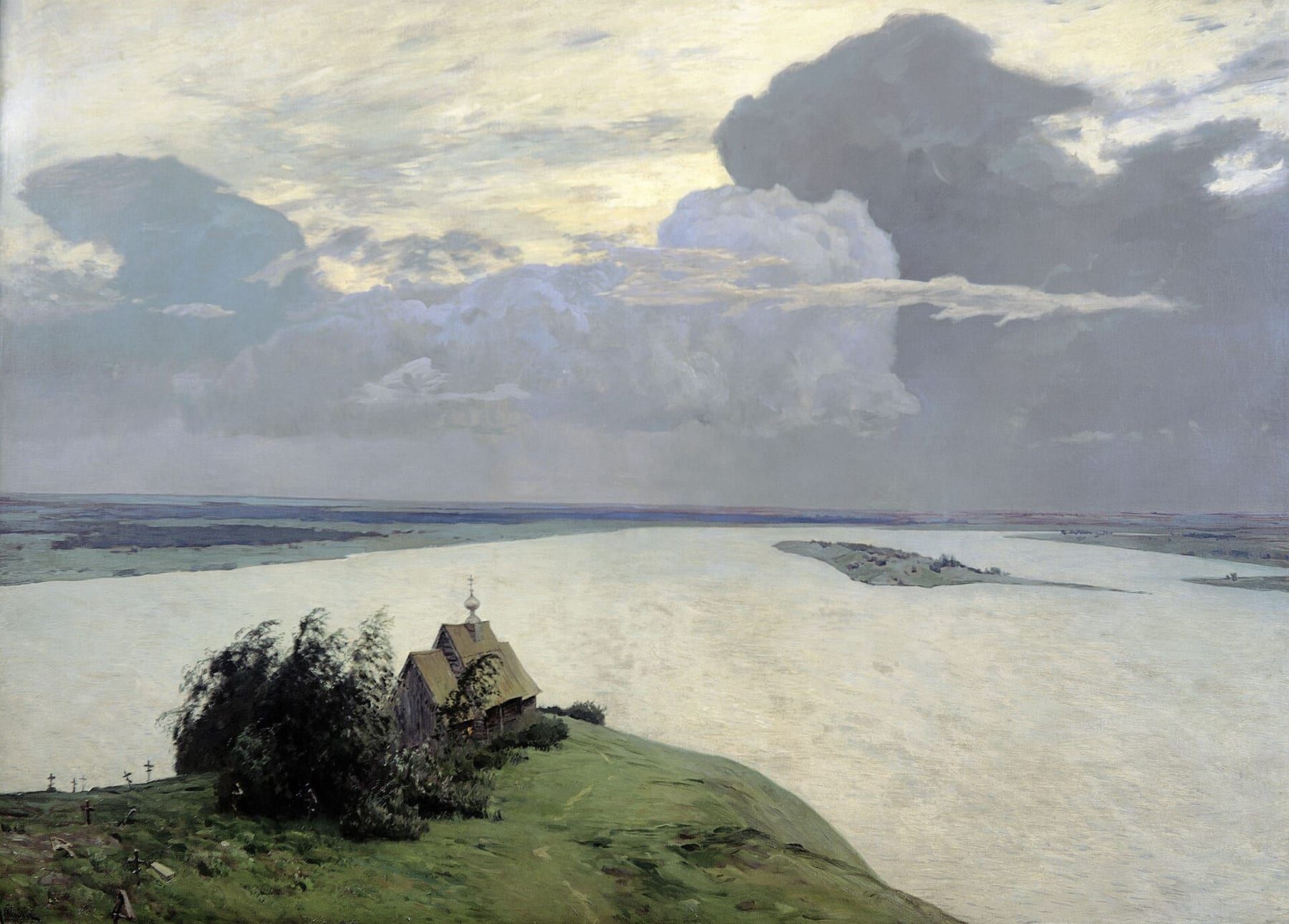
Picture: Isaac Levitan, Above Eternal Peace, 1894

3 prayers

On the anniversary itself

Prayer for the anniversary of a death

O God, Lord of forgiveness,as we keep the anniversary of the dayYour servant (name) was laid to rest,grant them a place of refreshment,the blessedness of restand the brightness of light.Through our Lord Jesus Christ. Amen.

Traditional wording, 1825

O Lord, the God of pardon,give to the souls of Thy servants,men and women departed,whose anniversary day of departure we commemorate,the seat of refreshment,the happiness of rest,and the brightness of eternal light.

Written for this very day, in a Roman service book copied about AD 750. Say it with the name of the one you remember.

Plain English by Wiser Walk, from our own English from the Latin of H. A. Wilson’s 1894 edition, with an English translation of 1825 beside it. How the wording is made. Traditional wording: an unnamed translator, The Office and the Masses for the Dead, 1825.

This English is the later Roman Missal’s form of the prayer, for several souls at once, while the Gelasian book prays for one person. The word “eternal” before “light” is the translator’s own.

Where it comes from, and the Latin

At the memorial service

Troparion for the departed

In the depth of Your wisdomYou order all things with love for mankindand give to all what is good for them,O only Creator.Give rest, O Lord, to the soul of Your servant (name),for they set their hope on You,our Maker, the One Who formed us, and our God.

Traditional wording, 1906

O Thou Who, with wisdom profound, mercifully orderest all things,and givest that which is expedient unto all men, Thou Only Creator:Give rest, O Lord, to the soul of Thy servant, N., who hath fallen asleep;For he (she) hath set his (her) hope on Thee,our Maker, the Author of our being, and our God.

The memorial service sung on the 40th day and on each anniversary opens its hymns with this one. It asks rest for someone who set their hope on God.

Plain English by Wiser Walk, from the Greek, with Hapgood’s 1906 translation beside it, in the form for one person that the memorial service uses. How the wording is made. Traditional wording: Isabel F. Hapgood, Service Book of the Holy Orthodox-Catholic Apostolic Church, 1906.

Hapgood’s words are the memorial service’s form for one person. The Greek printed here is the Saturday form for all the departed: “the souls of Your servants”.

Where it comes from, and the Greek

To close

Memory eternal

O Lord, grant Your departed servant (name)eternal restin blessed sleep,and make their memory eternal.

Memory eternal!Three times

Traditional wording, 1906

Give rest eternal in blessed falling asleep, O Lord,to the soul of Thy servant N., departed this life;and make his (her) memory to be eternal.

Memory Eternal!

Every memorial service ends with these words, sung three times. They ask that the one who died be remembered for ever in God’s kingdom.

Plain English by Wiser Walk, from the Church Slavonic, with Hapgood’s 1906 translation beside it. How the wording is made. Traditional wording: Isabel F. Hapgood, Service Book of the Holy Orthodox-Catholic Apostolic Church, 1906.

Hapgood’s words are the deacon’s, from the memorial service in church. The choir answers “Memory eternal” three times.

Where it comes from, and the Church Slavonic

Scripture for this

6“He is not here; He has risen! Remember how He told you while He was still in Galilee: 7‘The Son of Man must be delivered into the hands of sinful men, and be crucified, and on the third day rise again.’”

Luke 24:6-7 The early Church kept the third day after a death in honor of Christ, Who rose on the third day.

After His suffering, He presented Himself to them with many convincing proofs that He was alive. He appeared to them over a span of forty days and spoke about the kingdom of God.

Acts 1:3 The risen Christ appeared to His disciples over 40 days. Greek and Romanian writers tie the 40th day for the departed to His Ascension.

37“Even Moses demonstrates that the dead are raised, in the passage about the burning bush. For he calls the Lord ‘the God of Abraham, the God of Isaac, and the God of Jacob.’ 38He is not the God of the dead, but of the living, for to Him all are alive.”

Luke 20:37-38 Jesus said that God is the God of the living, not of the dead, for to Him all are alive.

38For I am convinced that neither death nor life, neither angels nor principalities, neither the present nor the future, nor any powers, 39neither height nor depth, nor anything else in all creation, will be able to separate us from the love of God that is in Christ Jesus our Lord.

Romans 8:38-39 Not even death can separate us from the love of God in Christ, however many years have passed.

And I heard a voice from heaven telling me to write, “Blessed are the dead—those who die in the Lord from this moment on.” “Yes,” says the Spirit, “they will rest from their labors, for their deeds will follow them.”

Revelation 14:13 Those who die in the Lord are blessed, for they rest from their labors. The memorial prayers ask that same rest.

Bible text: Berean Standard Bible, public domain.

Article · 5 min read 40 days after death: why the Orthodox pray on the 40th day Why Orthodox Christians hold a memorial 40 days after a death, what happens at it, what koliva means, and how the third and ninth days fit in. Read

Close to this

All prayers

Quiz What prayer do you need right now? A few honest taps about where you are, and a prayer of the Church for exactly that. 8 questions, about 3 minutes. Start

Suggest a correction

Berean Standard Bible