Sign Up My Profile
Prayers

Orthodox prayers for the non-Orthodox departed

You may pray at home for a loved one who died outside the Orthodox Church. Ask your priest what can be done in church.

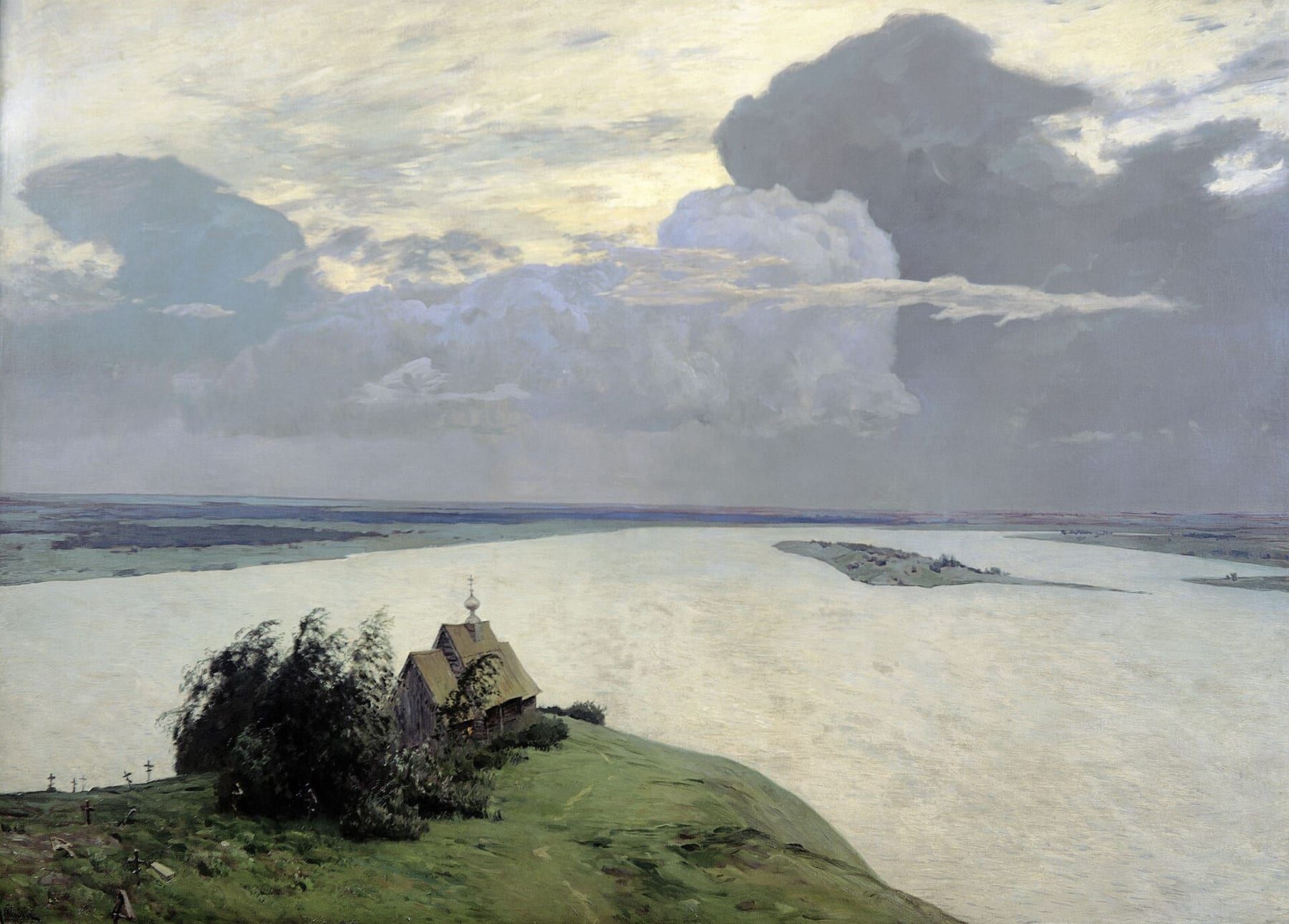
Picture: Isaac Levitan, Above Eternal Peace, 1894

3 prayers

The Church’s prayer for the departed

Kneeling prayer of Pentecost for the departed

Hear us, the lowly and wretched, as we pray to You,and give rest to the souls of Your servantswho have fallen asleep before us,in a place of light, a place of green pasture,a place of refreshment,where all pain, sorrow and sighing have fled away.

Give their spirits a place in the dwellings of the righteous,and count them worthy of peace and relief.

For the dead will not praise You, O Lord,nor are those in hades free to give You thanks;but we, the living, bless You and pray to You,and bring You prayers and sacrificesthat ask Your mercy for their souls.

Traditional wording, 1906

Hear us, Thy humble ones, who make our supplications unto Thee,and give rest to the souls of Thy servants who have fallen asleep,in a place of light, a place of verdure, a place of refreshmentwhence all sickness, sorrow and sighing have fled away:

And speedily establish Thou their souls in the mansions of the Just;and graciously vouchsafe unto them peace and pardon;

for the dead shall not praise Thee,neither shall they who are in Hell make bold to offer unto Thee confession.But we who are living will bless Thee, and will pray,and offer unto Thee propitiatory prayers and sacrifices for their souls.

Everyone kneels at Pentecost Vespers while the priest reads this prayer. Just before these lines it says that on this feast Christ accepts prayers even for those held in hades, the place of the dead, and gives us great hope of relief for them.

Plain English by Wiser Walk, from the Greek of the Pentecost service, with Isabel Hapgood’s 1906 English beside it. How the wording is made. Traditional wording: Isabel F. Hapgood, Service Book of the Holy Orthodox-Catholic Apostolic Church, 1906.

Hapgood translated from the Church Slavonic books rather than the Greek. A few of her words here, such as “speedily” and “pardon”, have nothing matching them in the Greek.

Where it comes from, and the Greek

For praying at home

Prayer of St Leo of Optina

Seek out, O Lord, the lost soul of Your servant (name).If it is possible, have mercy.Your judgments are unsearchable.Do not count this prayer of mine against me as a sin,but let Your holy will be done.

Traditional wording

O Lord, watch over the perished soul of my father,and if it be possible, have mercy upon him.Thy judgments are unfathomable.Do not consider this my prayer to be a sin,but may Thy holy will be done.

Russian Orthodox writers give these words of St Leo of Optina for praying at home for anyone who died outside the Church. They ask God to “seek out” the lost, as Christ came “to seek and to save the lost” (Luke 19:10).

Plain English by Wiser Walk, from the Church Slavonic printed by the Russian Holy Synod in 2011, with an English translation from St Nicholas Orthodox Church in McKinney, Texas, beside it. How the wording is made. Traditional wording: St Nicholas Orthodox Church, McKinney, Gleanings from Orthodox Christian Authors and the Holy Fathers.

This English gives the prayer as St Leo first wrote it, for the disciple’s father. The plain wording follows the form the Russian Church prints, with a place for any name.

Where it comes from, and the Church Slavonic

When you fear for them

You love all things (Wisdom 11)

You love all things that exist,and You loathe nothing You have made,for You would never have made anythingif You had hated it.

How could anything have lastedif You had not willed it?Or how could anything You had not called forthhave been preserved?

You spare all things, because they are Yours,O Master, Lover of all that lives.

Traditional wording, 1611

For Thou lovest all the things that are,and abhorrest nothing which Thou hast made:for never wouldest Thou have made any thing,if Thou hadst hated it.

And how could any thing have endured,if it had not been Thy will?or been preserved, if not called by Thee?

But Thou sparest all: for they are Thine,O Lord, Thou Lover of souls.

These verses from the Book of Wisdom tell God that He loathes nothing He has made and spares all things, because they are His.

Plain English by Wiser Walk, from the Greek of Wisdom 11:24-26, with the King James wording beside it. How the wording is made. Traditional wording: The King James translators, The King James Bible, Apocrypha, 1611.

Where the King James Version reads “lover of souls”, other Bibles read the same Greek word as “lover of life” (the Common English Bible) or “who lovest the living” (the Revised Standard Version).

Where it comes from, and the Greek

Scripture for this

1First of all, then, I urge that petitions, prayers, intercessions, and thanksgiving be offered for everyone— 2for kings and all those in authority—so that we may lead tranquil and quiet lives in all godliness and dignity. 3This is good and pleasing in the sight of God our Savior, 4Who wants everyone to be saved and to come to the knowledge of the truth.

1 Timothy 2:1-4 Paul urges prayers for everyone, because this pleases God, Who wants all people to be saved.

8The LORD is gracious and compassionate, slow to anger and abounding in loving devotion. 9The LORD is good to all; His compassion rests on all He has made.

Psalm 145:8-9 The Lord is good to all, and His compassion rests on everything He has made.

Therefore judge nothing before the appointed time; wait until the Lord comes. He will bring to light what is hidden in darkness and will expose the motives of men’s hearts. At that time each will receive his praise from God.

1 Corinthians 4:5 Paul tells believers to judge nothing before the Lord comes, because He will bring to light what is hidden in each heart.

8“For My thoughts are not your thoughts, neither are your ways My ways,” declares the LORD. 9“For as the heavens are higher than the earth, so My ways are higher than your ways and My thoughts than your thoughts.”

Isaiah 55:8-9 God’s thoughts and ways are higher than ours, as the heavens are higher than the earth.

7Where can I go to escape Your Spirit? Where can I flee from Your presence? 8If I ascend to the heavens, You are there; if I make my bed in Sheol, You are there. 9If I rise on the wings of the dawn, if I settle by the farthest sea, 10even there Your hand will guide me; Your right hand will hold me fast.

Psalm 139:7-10 Even if David made his bed among the dead, God would be there. No place is beyond His reach.

Bible text: Berean Standard Bible, public domain.

Close to this

All prayers

Quiz What prayer do you need right now? A few honest taps about where you are, and a prayer of the Church for exactly that. 8 questions, about 3 minutes. Start

Suggest a correction

Berean Standard Bible