Sign Up My Profile
Prayers

Ten thousand times I promised You

A verse from a canon (a long hymn) to Jesus that Russian Orthodox prayer books print for prayer at home. It admits many broken promises and asks Christ for light.

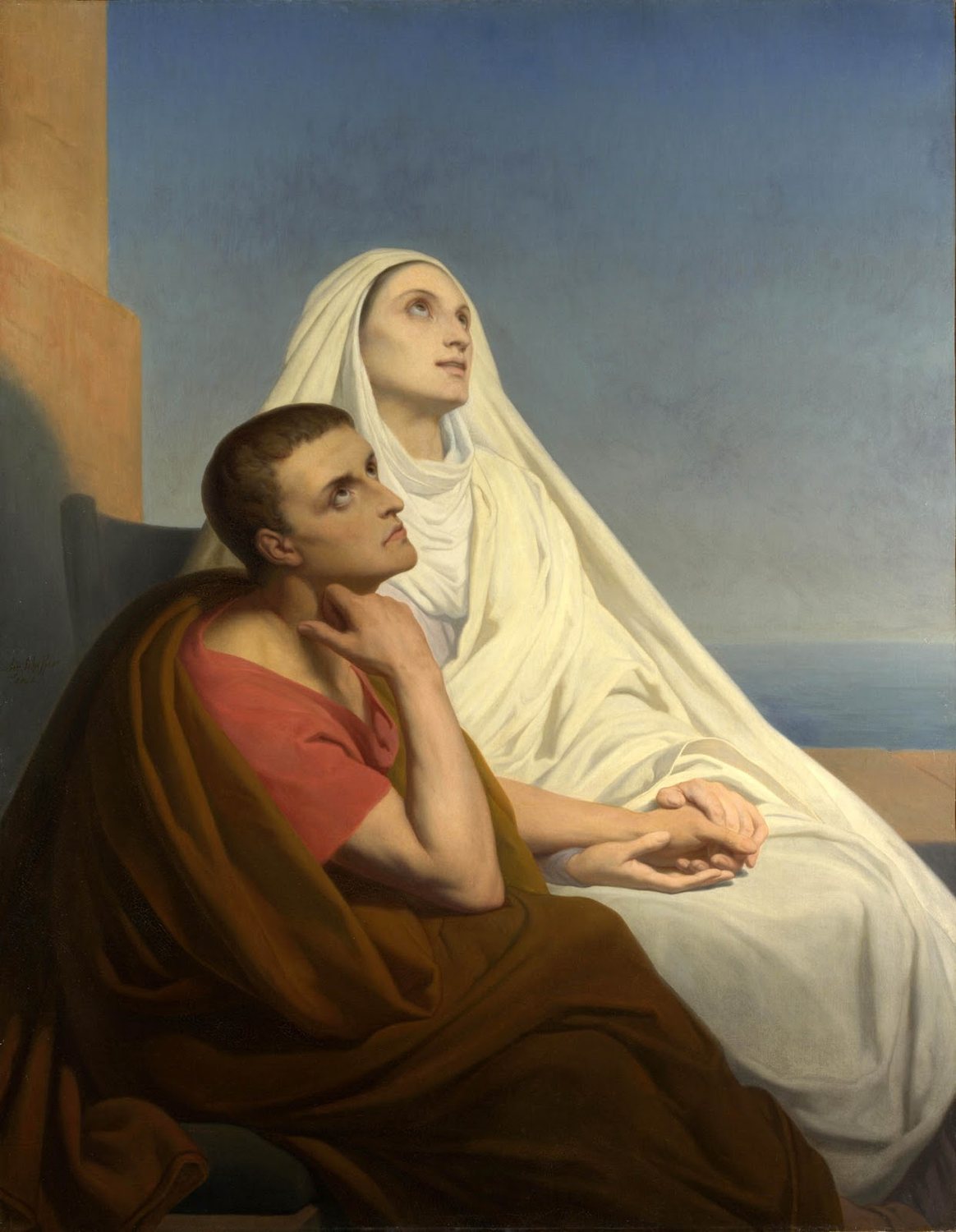
Picture: Ary Scheffer, Saint Augustine and Saint Monica, 1854

The words of the prayer

Plain English

Christ Jesus, my Jesus,I am ruled by my passions.Ten thousand times I promised You that I would repent,but I broke my word, wretch that I am.

So, my Jesus, I cry to You:bring light to my soul, which is still numb, O Christ.God of our fathers, blessed are You.

Traditional wording, 2011

O Christ Jesus, ten thousand times have I, the passionate one,promised Thee repentance, O my Jesus,but wretch that I am, I deceived Thee.

Wherefore, I cry to Thee, my Jesus:Enlighten my soul which remaineth unfeeling;O Christ, the God of our fathers, blessed art Thou.

Plain English by Wiser Walk, from the Church Slavonic of the Kanonnik, with the Jordanville prayer book’s English beside it. How the wording is made. Traditional wording: Holy Trinity Monastery, Jordanville, Prayer Book, 2011.

The Jordanville’s “the passionate one” means someone ruled by passions, not someone eager.

When it is said

It is a verse from the seventh part (ode) of the Canon to the Sweetest Jesus, a long hymn Orthodox Christians read in private prayer.

In the English prayer book of Holy Trinity Monastery in Jordanville, New York, each verse follows the refrain “O sweetest Jesus, save us.”

Prayed by itself, it suits the day after a relapse.

Where it comes from

Author by tradition

Where does it come from?

The verse comes from a long hymn, or canon, that calls on “sweetest Jesus” in nearly every line. It calls on His name so often that it comes close to the Jesus Prayer, and for that reason monks who practised that prayer used it. The Russian book of canons still prints it in Slavonic.

Azbuka Very, the Service to the Sweetest Jesus of St Theoleptos (in Russian)

Who wrote it?

Tradition credits the canon’s first form to St Theoleptos, a monk who became bishop of the Byzantine city of Philadelphia in the 1280s. The canon spread widely, and copyists added to it many times as they wrote it out, so its wording differs from copy to copy.

Azbuka Very, St Theoleptos of Philadelphia (in Russian); Azbuka Very, the Service to the Sweetest Jesus of St Theoleptos (in Russian)

In Church Slavonic

Христе Иисусе,

тмами обещах Тебе, страстный, о Иисусе мой, покаяние,

но солгах окаянный.

Темже, Иисусе мой, вопию Ти:

нечувственне пребывающую душу мою просвети, Христе,

отцев Боже благословен еси.

From the Kanonnik, the Canon to the Sweetest Jesus in tone 2, ode 7, as Azbuka Very prints it in modern Russian letters.

Close to this

All prayers

Suggest a correction

Berean Standard Bible