Sign Up My Profile
Prayers

Orthodox prayers to love others

Prayers to love others, from the people closest to you to the ones who are hard to love.

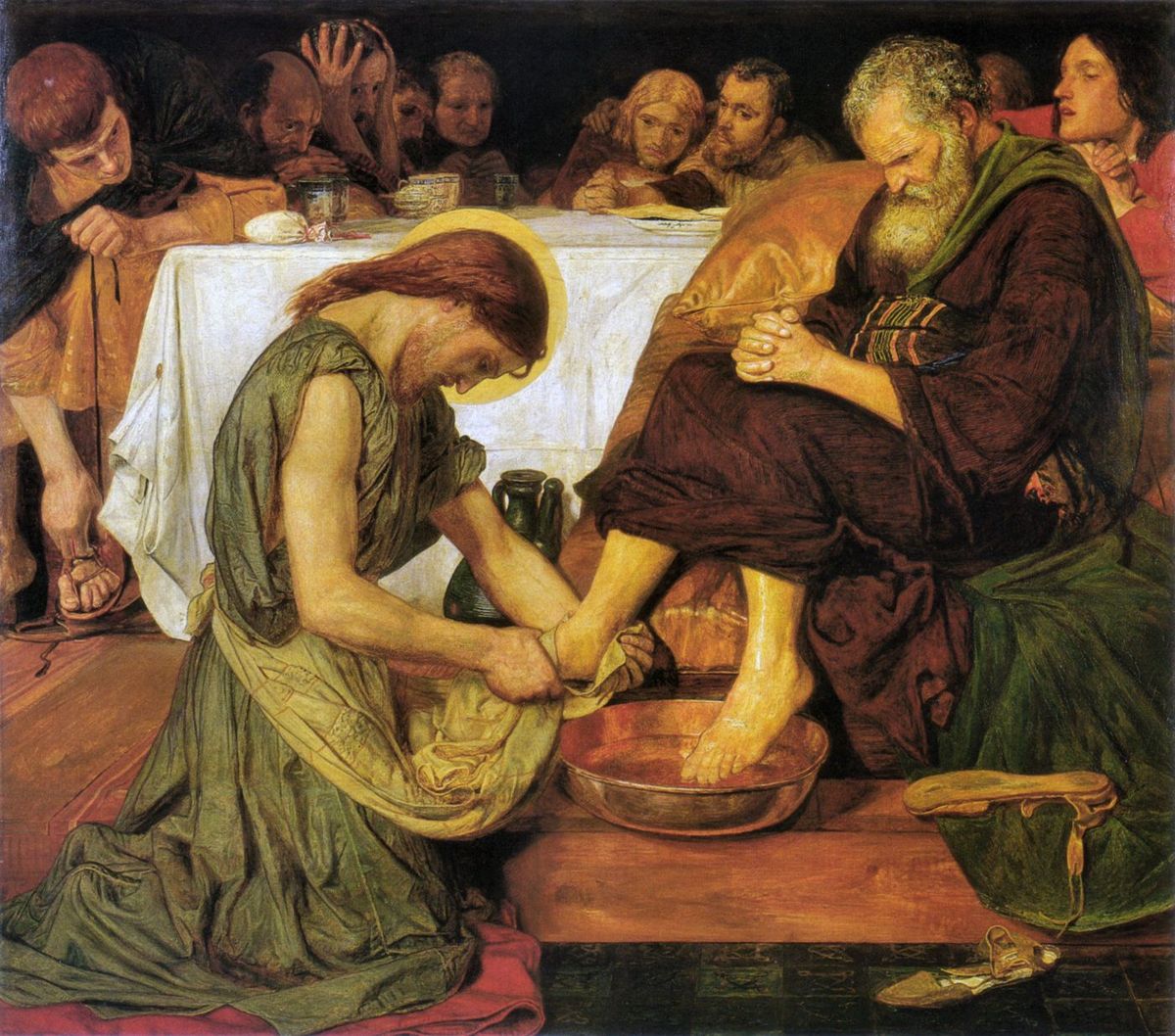
Picture: Ford Madox Brown, Jesus Washing Peter’s Feet, 1852–56

5 prayers

When love has run dry

Prayer to love one another

O Lord Jesus Christ our God,You gave Your disciples a new commandment:to love one another.

Accept this prayerfor the forgiveness of the sins of us all,Your faithful servants.Our love for You and for our brothers has run dry.Renew it by Your Holy Spirit,and plant it firmly in our hearts.

Then, keeping Your commandments through this love,may we not seek our own gain on earth,but be zealous for Your glory,and for building up and saving our neighbours.

Having lived like this in love and peace with allin this life,may we be counted worthy, with all who have pleased You,to glorify You and Your Father, Who has no beginning,and the Holy Spirit,in the dwellings on high,for ever and ever.Amen.

Traditional wording, 1999

O Lord Jesus Christ, our God,Who gavest a new commandment to Thy disciples,that they should love one another:

Accept this offeringfor the remission of all the sins of Thy right-believing servants.And by Thy Holy Spirit renew love for Thy goodness and for neighbor,which has waxed cold in us.Do Thou establish this with strength in our hearts,

that, fulfilling Thy commandments,we seek not on earth our own ends,but that which is to Thy glory,the building up of our neighbor, and for salvation.

The priest reads it near the end of a Russian service of prayer for the increase of love. It asks Christ, Who gave the new commandment, to renew our love for Him and for one another and plant it firmly in our hearts.

Plain English by Wiser Walk, from the Church Slavonic of the Russian book of moleben services. How the wording is made. Traditional wording: St Tikhon’s Monastery, The Great Book of Needs, Volume III, 1999.

St Tikhon’s prints the priest’s form of this prayer, said as he prepares the bread and wine for a liturgy for the increase of love. So it asks God to accept “this offering”, not “this prayer”, and it ends before the last lines, on praising God in heaven.

Where it comes from, and the Church Slavonic

For your neighbour

Prayer to love your neighbour

Grant me, O Lord,always to love every neighbour of mine as myself,never to grow angry with him for any reason,and never to serve the devil.

Grant me to crucify my self-love and pride,my greed and my little faith,and my other passions.

Let “love for one another” be our name.May we believe and trustthat the Lord is everything to all of us.May we not fret or worry about anything.May You, our God, be the only God of our heart,with nothing besides You.

May we be one with each other in love,as is right.And everything that divides us from one anotherand cuts us off from love,may we despise itlike the dust we tread underfoot.So be it! So be it!Amen.

Traditional wording, 1897

Grant, Lord, that I may ever love each of my neighbours as myself,and not be angry with them for any cause,and not serve the devil in this way.

Grant that I may crucify my self-love, pride, covetousness, incredulity, and other passions.

Let mutual love be our name;grant that we may believe and trust that the Lord is everything to us all;that we may not be careful nor anxious for anything;that Thou, our God, may truly be the sole God of our heartand nothing besides Thee.

Let there be union of love between us as there ought to be,and let everything that divides us from each other,and prevents us from loving one another,be despised by us, like the dust trampled under foot.So be it! So be it!

The Russian priest St John of Kronstadt wrote it in his diary. He asks to love everyone around him as himself, never to grow angry with anyone, and to crucify his own self-love and pride.

Plain English by Wiser Walk, from the Russian of the prayer book, with Goulaeff’s English of 1897 beside it. How the wording is made. Traditional wording: E. E. Goulaeff, My Life in Christ, 1897.

Goulaeff’s “incredulity” stands for a Russian word meaning “little faith”, and his “careful” means full of worry. His English follows the diary, which has no Amen.

Where it comes from, and the Russian

For love that grows

May the Lord make your love increase

May our God and Father Himself,and our Lord Jesus Christ,clear the way for us to come to you.

And may the Lord make your love growand overflow for one another and for everyone,just as our love does for you,

so that He may make your hearts strong,blameless and holy before our God and Fatherwhen our Lord Jesus Christ comeswith all His saints.

Traditional wording, 1611

Now God Himself and our Father, and our Lord Jesus Christ,direct our way unto you.

And the Lord make you to increase and abound in love one toward another,and toward all men, even as we do toward you:

To the end He may stablish your hearts unblameable in holiness before God, even our Father,at the coming of our Lord Jesus Christ with all His saints.

St Paul prayed these words for the church at Thessalonica. He asks the Lord to make their love overflow for one another and for everyone else as well.

Plain English by Wiser Walk, from the Greek of 1 Thessalonians 3:11-13, with the King James wording beside it. How the wording is made. Traditional wording: The King James translators, The King James Version, 1611.

Where it comes from, and the Greek

A few lines to learn by heart

Troparion for love

O Christ, You bound Your apostles togetherwith the bond of love.Bind us also, Your faithful servants,firmly to Yourself with it.Make us keep Your commandmentsand love one another sincerely,through the prayers of the Mother of God,O only Lover of mankind.

Traditional wording, 1999

Thou didst bind Thine Apostles in the bonds of love, O Christ,and hast firmly bound us, Thy faithful servants, to Thyself,that we may fulfil Thy commandmentsand have unfeigned love for one another,through the prayers of the Theotokos,O Only Lover of Mankind.

The service for the increase of love sings this short hymn twice. It asks Christ to bind us to Himself with the love that bound His apostles, and to make us love one another sincerely.

Plain English by Wiser Walk, from the Church Slavonic of the Russian book of moleben services. How the wording is made. Traditional wording: St Tikhon’s Monastery, The Great Book of Needs, Volume III, 1999.

In St Tikhon’s wording Christ “hast firmly bound us” to Himself already, while the plain wording asks Him to bind us to Himself.

Where it comes from, and the Church Slavonic

To repay good for evil

Prayers to repay good for evil

Plain English only: no traditional English wording is given for this prayer

O God, You made every creature in love,and You made man for such mercythat You would redeem even him from his ungodly ways.Give Your servants this love,so that Your example may move themto repay good for evil.Through our Lord Jesus Christ.

Deliver us, Lord, from every evil,and graciously grantthat we too may forgive our neighbourswhat we ask You to forgive us.Through our Lord Jesus Christ. Amen.

God made us for such mercy that He redeems us even from our ungodly ways. These two prayers from an early Roman Mass book ask for that same love toward people who wrong us.

Plain English by Wiser Walk, from our own English, from the Latin of H. A. Wilson’s 1894 edition of the Gelasian Sacramentary. How the wording is made.

Where it comes from, and the Latin

Scripture for this

34“A new commandment I give you: Love one another. As I have loved you, so you also must love one another. 35By this everyone will know that you are My disciples, if you love one another.”

John 13:34-35 The night before He died, Jesus gave His disciples a new commandment, to love one another as He had loved them.

37Jesus declared, “‘Love the Lord your God with all your heart and with all your soul and with all your mind.’ 38This is the first and greatest commandment. 39And the second is like it: ‘Love your neighbor as yourself.’”

Matthew 22:37-39 Asked for the greatest commandment, Jesus named two, to love God with all your heart and to love your neighbour as yourself.

4Love is patient, love is kind. It does not envy, it does not boast, it is not proud. 5It is not rude, it is not self-seeking, it is not easily angered, it keeps no account of wrongs. 6Love takes no pleasure in evil, but rejoices in the truth. 7It bears all things, believes all things, hopes all things, endures all things.

1 Corinthians 13:4-7 Paul describes what love looks like in action. It is patient and kind, not proud, and not easily angered.

Above all, love one another deeply, because love covers over a multitude of sins.

1 Peter 4:8 Peter puts deep love for one another above everything, because love covers over a multitude of sins.

Little children, let us love not in word and speech, but in action and truth.

1 John 3:18 John asks us to love in action and truth, not just in word and speech. The service for the increase of love reads this verse.

20If anyone says, “I love God,” but hates his brother, he is a liar. For anyone who does not love his brother, whom he has seen, cannot love God, Whom he has not seen. 21And we have this commandment from Him: Whoever loves God must love his brother as well.

1 John 4:20-21 Whoever does not love the brother he can see cannot love God, Whom he cannot see. The same service reads these verses.

Bible text: Berean Standard Bible, public domain.

A psalm for this

Behold, how good and pleasant it is when brothers live together in harmony!

Psalm 133:1

The Russian service of prayer for the increase of love opens with this psalm.

Psalm 133 Read the whole psalm, with St Athanasius’s advice on when to pray it.

Close to this

All prayers

Quiz What prayer do you need right now? A few honest taps about where you are, and a prayer of the Church for exactly that. 8 questions, about 3 minutes. Start

Suggest a correction

Berean Standard Bible