
When it is said
It is the troparion of Christmas: the short hymn that sums up the feast. It is first sung at the evening service that opens the feast, three times over.
It comes back at Matins, the morning service, and at the Liturgy, where it is sung between the verses of Psalm 110.
It is sung every day of the feast, from 25 to 31 December. Churches on the old calendar keep the same days from 7 to 13 January.
Where it comes from
No author known
Who wrote it?
No one knows. The oldest record of it is the rule book of the Great Church of Constantinople, from the 800s to the 1000s. It sets two hymns for the morning of Christmas Day. They are the same troparion and kontakion that the Church still sings.
Orthodox Encyclopedia (Pravoslavnaya Entsiklopediya), “Rozhdestvo Khristovo”
The whole church sings it
The Russian Orthodox magazine Foma calls it the main hymn of Christmas. In Russian churches it is sung several times at the Christmas service, and the whole church sings it with the choir. The Russian books also have it sung as the bread is blessed at the vigil, the long service on the eve of the feast.
Foma, “Rozhdestvo Tvoe, Khriste Bozhe nash”; Isabel F. Hapgood, Service Book (1906), the Nativity of Christ
What the words mean
Knowledge, or wisdom?
The Greek says Christ’s birth made “the light of knowledge” dawn. The Church Slavonic sung in Russia says “the light of reason”. Isabel Hapgood made her English of 1906 from the Slavonic books, and wrote “wisdom”. G. V. Shann’s English of 1891 says “knowledge”, as the Greek does. The Serbian printed by a Serbian diocese says “the light of the knowledge of God”.
The Greek Menaion, 25 December; Foma, “Rozhdestvo Tvoe, Khriste Bozhe nash”; G. V. Shann, Euchology (1891); Serbian Orthodox Diocese of Timok, on the services of Christmas
The Sun and the Dawn
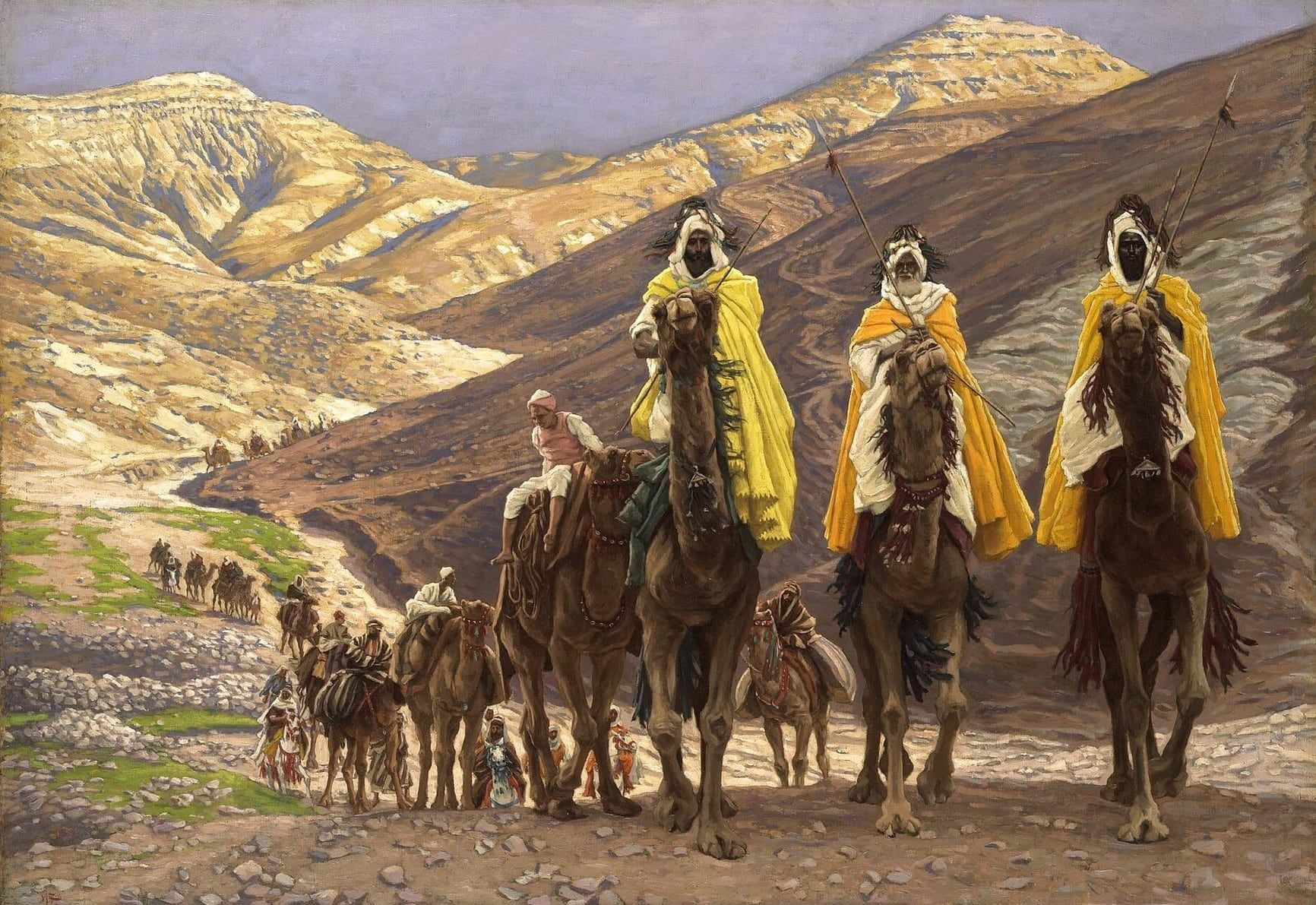
The hymn gives Christ two names from Scripture. The prophet Malachi foretold “the sun of righteousness” rising with healing. John the Baptist’s father Zechariah sang of “the Dawn from on high”. The wise men watched the stars, and a star led them to worship the true Sun.
Malachi 4:2; Luke 1:78; Matthew 2:2
What people get wrong
Orthodox Christmas is not a different day
People are often told that the Orthodox keep Christmas on 7 January. In fact every Orthodox Church keeps it on 25 December. Churches that use the old Julian calendar reach 25 December 13 days later, on 7 January by the everyday calendar. Most Orthodox Christians belong to these Churches, because the Russian Church is so large.
Fr Lawrence Farley, “A Papal Calendar?”, Orthodox Church in America
The Scripture in it
… asking, “Where is the One Who has been born King of the Jews? We saw His star in the east and have come to worship Him.”
“But for you who fear My name, the sun of righteousness will rise with healing in its wings, and you will go out and leap like calves from the stall.”
… because of the tender mercy of our God, by which the Dawn will visit us from on high …
Bible text: Berean Standard Bible, public domain.
In Greek
Ἡ γέννησίς Σου Χριστὲ ὁ Θεὸς ἡμῶν, ἀνέτειλε τῷ κόσμῳ, τὸ φῶς τὸ τῆς γνώσεως·
ἐν αὐτῇ γὰρ οἱ τοῖς ἄστροις λατρεύοντες, ὑπὸ ἀστέρος ἐδιδάσκοντο·
Σὲ προσκυνεῖν, τὸν Ἥλιον τῆς δικαιοσύνης, καὶ Σὲ γινώσκειν ἐξ ὕψους ἀνατολήν,
Κύριε δόξα Σοι.
In Latin letters, to sing it
I gennisis Sou Christe o Theos imon, anetile to kosmo, to fos to tis gnoseos;
en afti gar i tis astris latrevontes, ypo asteros edidaskonto;
Se proskynin, ton Ilion tis dikeosynis, ke Se ginoskin ex ypsous anatolin,
Kyrie doxa Si.
In Church Slavonic
Рождество́ Твое́, Христе́ Бо́же наш,
возсия́ ми́рови свет ра́зума,
в нем бо звезда́м служа́щии,
звездо́ю уча́хуся,
Тебе кла́нятися Со́лнцу Пра́вды,
и Тебе́ ве́дети с высоты́ восто́ка:
Го́споди, сла́ва Тебе́.
In Latin letters, to sing it
Rozhdestvo Tvoye, Khriste Bozhe nash,
vozsiya mirovi svet razuma,
v nem bo zvezdam sluzhashchii,
zvezdoyu uchakhusya,
Tebe klanyatisya Solntsu Pravdy,
i Tebe vedeti s vysoty vostoka:
Gospodi, slava Tebe.
In Serbian
Твојим Рођењем Христе Боже наш,
засија свету светлост Богопознања,
јер се у тој светлости звездом учаху
они који звездама служе,
да се клањају Теби, Сунцу Правде,
и да познају Тебе са висине Истока,
Господе, слава Ти!
In Latin letters, to sing it
Tvojim Rođenjem Hriste Bože naš,
zasija svetu svetlost Bogopoznanja,
jer se u toj svetlosti zvezdom učahu
oni koji zvezdama služe,
da se klanjaju Tebi, Suncu Pravde,
i da poznaju Tebe sa visine Istoka,
Gospode, slava Ti!
From the Serbian Orthodox Diocese of Timok, on the services of Christmas.