
When it is said
It is one of the hymns sung at “Lord, I have cried”, the evening psalms at Vespers on Christmas Eve. On a weekday this Vespers leads into the Liturgy of St Basil. Both come after the Royal Hours of the morning.
It is sung and then sung again after a verse of the psalm, like the hymns around it.
Where it comes from
No author known
Gifts from the Gospels
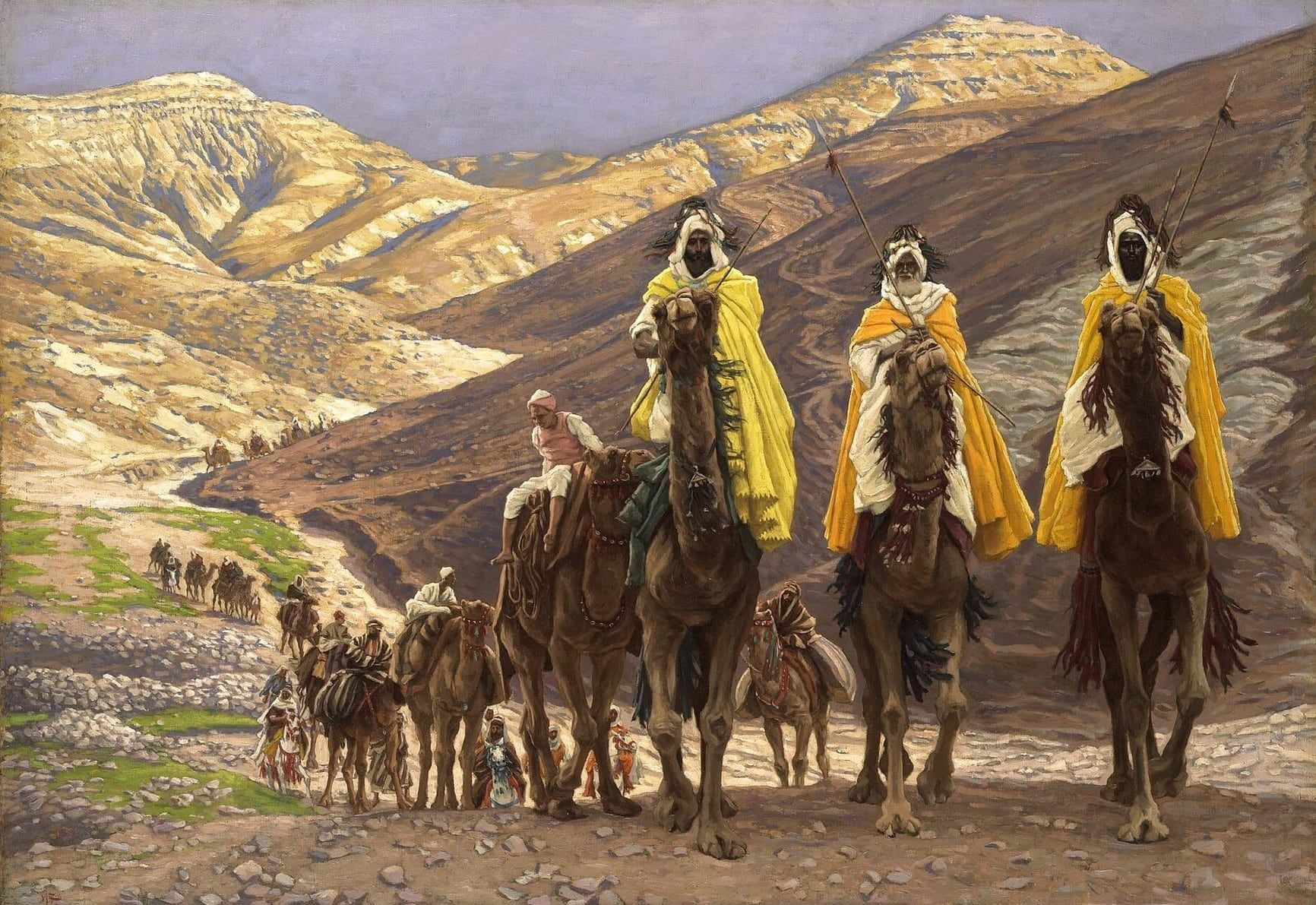
Most of the gifts in the hymn come from the Gospels. Luke tells of the angels’ song, the shepherds and the manger. Matthew tells of the star and the wise men’s gold, frankincense and myrrh.
Luke 2:13-14; Luke 2:7; Matthew 2:9-11
Who wrote it?
No one knows. In the Greek service book the second hymn of the set is signed by Anatolius. The next two carry no name, and this hymn is the second of them. The OCA’s English leaves it unsigned too.
The Greek Menaion, 25 December; Orthodox Church in America, Vespers of the Nativity, service texts
The Scripture in it
And suddenly there appeared with the angel a great multitude of the heavenly host, praising God and saying: “Glory to God in the highest, and on earth peace to men on whom His favor rests!”
After they had heard the king, they went on their way, and the star they had seen in the east went ahead of them until it stood over the place where the Child was. When they saw the star, they rejoiced with great delight. On coming to the house, they saw the Child with His mother Mary, and they fell down and worshiped Him. Then they opened their treasures and presented Him with gifts of gold and frankincense and myrrh.
And she gave birth to her firstborn, a Son. She wrapped Him in swaddling cloths and laid Him in a manger, because there was no room for them in the inn.
Bible text: Berean Standard Bible, public domain.
In Greek
Τὶ Σοι προσενέγκωμεν Χριστέ, ὅτι ὤφθης ἐπὶ γῆς ὡς ἄνθρωπος δι' ἡμᾶς;
ἕκαστον γὰρ τῶν ὑπὸ Σοῦ γενομένων κτισμάτων, τὴν εὐχαριστίαν Σοι προσάγει·
οἱ Ἄγγελοι τὸν ὕμνον, οἱ οὐρανοὶ τὸν Ἀστέρα, οἱ Μάγοι τὰ δῶρα, οἱ Ποιμένες τὸ θαῦμα,
ἡ γῆ τὸ σπήλαιον, ἡ ἔρημος τὴν φάτνην· ἡμεῖς δὲ Μητέρα Παρθένον.
Ὁ πρὸ αἰώνων Θεὸς ἐλέησον ἡμᾶς.