
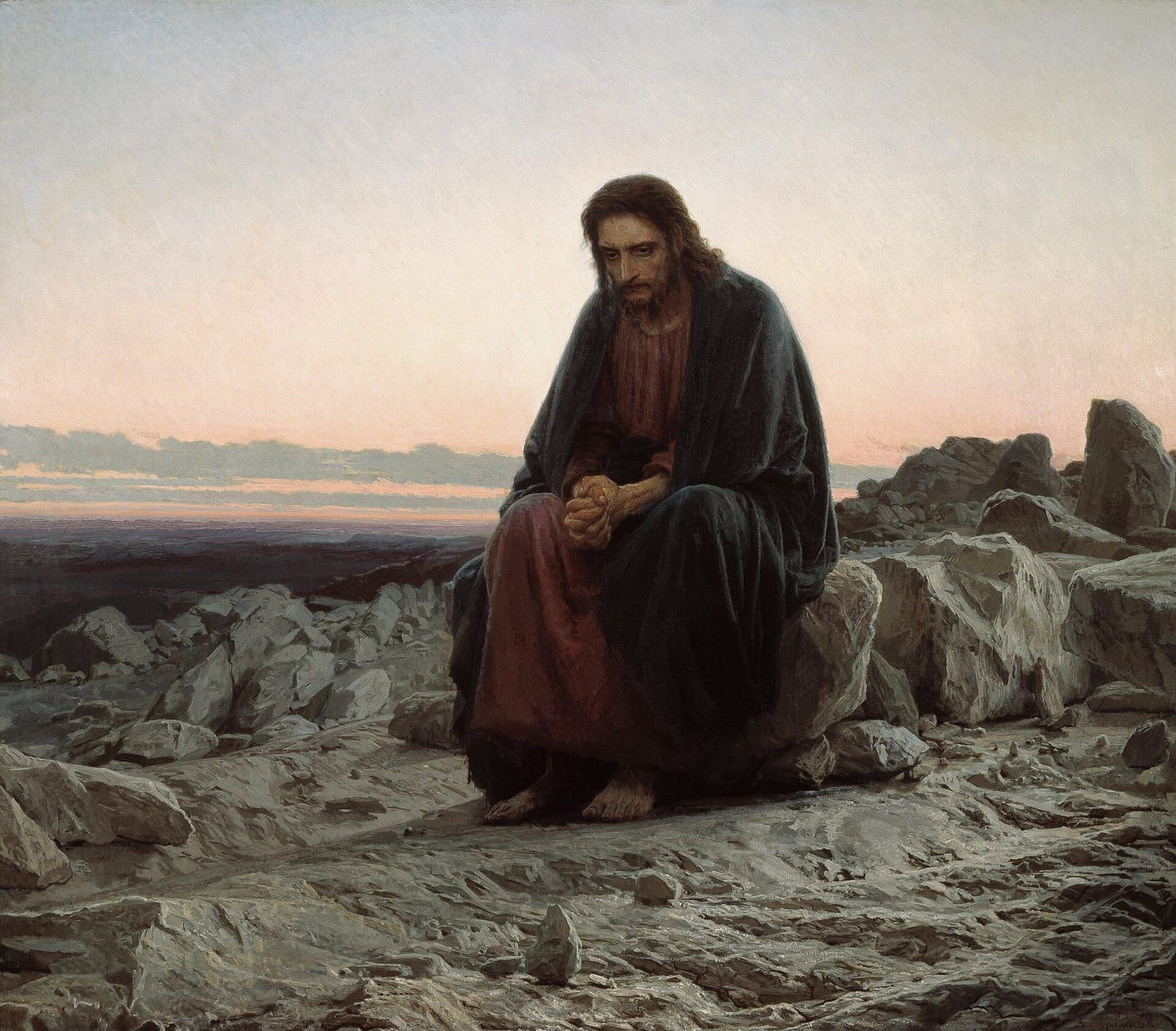
When it is said
The Great Canon is read in four parts at Great Compline on the Monday, Tuesday, Wednesday and Thursday evenings of the first week of Lent. These are its first verses.
On Thursday of the fifth week it is sung again at Matins, with verses to St Mary of Egypt among its own. “Have mercy on me, O God, have mercy on me” comes before every verse.
Where it comes from
Author known
St Andrew of Crete
St Andrew lived from about AD 650 to about 726 and was bishop of Crete. His Great Canon is a long hymn of repentance. Its first verses compare the singer to Adam and Eve in their fall, then to Cain rather than to Abel.
OrthoChristian.com, The Great Canon of Repentance; Greek Orthodox Archdiocese of America, the Triodion, fifth week of Lent (Greek)
Its kontakion
A canon is sung in parts called odes. Between the Great Canon’s sixth and seventh odes comes its kontakion, the short hymn known as “My soul, my soul, arise”. Like the second verse here, it speaks to the soul, but with a warning: wake up, for the end is drawing near.
What the words mean
First fruits
In the Law, the first of each harvest was brought to God (Exodus 23:19). The singer asks what first offering he could bring to his weeping, and ends by asking only for mercy.
The Scripture in it
Have mercy on me, O God, according to Your loving devotion; according to Your great compassion, blot out my transgressions.
Bible text: Berean Standard Bible, public domain.
In Greek
Ἐλέησόν με ὁ Θεός, ἐλέησόν με.
Πόθεν ἄρξομαι θρηνεῖν, τὰς τοῦ ἀθλίου μου βίου πράξεις;
ποίαν ἀπαρχήν, ἐπιθήσω Χριστέ, τῇ νῦν θρηνῳδίᾳ;
ἀλλ' ὡς εὔσπλαγχνός μοι δός, παραπτωμάτων ἄφεσιν.
Ἐλέησόν με ὁ Θεός, ἐλέησόν με.
Δεῦρο τάλαινα ψυχή, σὺν τῇ σαρκί σου τῷ πάντων Κτίστῃ,
ἐξομολογοῦ καὶ ἀπόσχου λοιπόν, τῆς πρὶν ἀλογίας,
καὶ προσάγαγε Θεῷ, ἐν μετανοίᾳ δάκρυα.