Sign Up My Profile
Prayers

Orthodox prayers for Lent and fasting

Great Lent is the fast before Pascha (Easter).

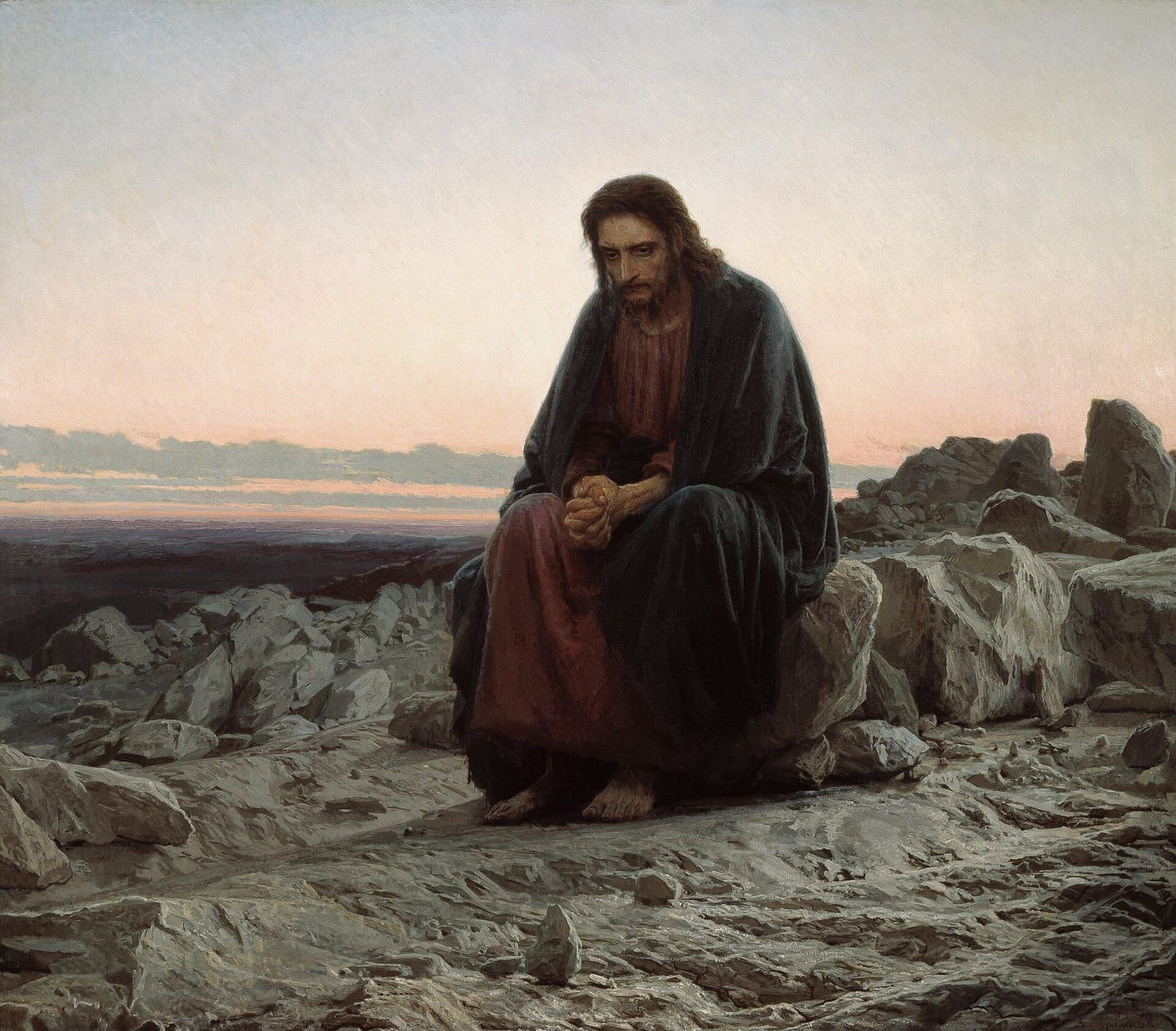
Picture: Ivan Kramskoi, Christ in the Wilderness, 1872

13 prayers and 1 to the saints

Every weekday of the fast

Also called “O Lord and Master of my life”

Prayer of St Ephrem

O Lord and Master of my life,do not give me a spirit of idleness,despondency, love of power and idle talk.Bow to the ground

But grant me, Your servant,a spirit of chastity, humility,patience and love.Bow to the ground

Yes, O Lord and King,let me see my own sinsand not judge my brother,for You are blessed for ever and ever.Amen.Bow to the ground

Traditional wording, 1891

Lord and Master of my life,give me not the spirit of indolence, despair, ambition and vain speaking.

But rather the spirit of chastity, humble-mindedness, patience and lovedo Thou grant unto me, Thy servant.

Yea, O Lord King, let me see my own faults,and let me not judge my brother;for Thou art blessed to ages of ages. Amen.

The best-known prayer of Lent, said with bows to the ground at the services. It asks to be spared idleness and despondency, and to see your own sins instead of judging others.

Plain English by Wiser Walk, from the Church Slavonic, with Shann’s 1891 translation beside it. How the wording is made. Traditional wording: G. V. Shann, Euchology: A Manual of Prayers of the Holy Orthodox Church, 1891.
Where it comes from, and the Church Slavonic

Forgiveness Sunday

Kontakion of Forgiveness Sunday

Guide to wisdom, Giver of good sense,Teacher of the foolishand Defender of the poor,make my heart firm and give it understanding,O Master.

Give me words, O Word of the Father,for see, I will not hold back my lipsfrom crying out to You:Merciful One, have mercy on me,the fallen one.

Traditional wording, 2011

O Thou Guide unto wisdom, Bestower of prudence,Instructor of the foolish and Defender of the poor:Establish and grant understanding unto my heart, O Master.

Grant me speech, O Word of the Father;for behold, I shall not keep my lips from crying unto Thee:O Merciful One, have mercy on me who have fallen.

The hymn of the day, sung at Matins and the Liturgy that morning. On the last day before the fast it asks Christ, the Guide to wisdom, for a firm heart and understanding.

Plain English by Wiser Walk, from the Greek, with the Jordanville Prayer Book’s English beside it. How the wording is made. Traditional wording: Holy Trinity Monastery, Jordanville, Prayer Book, 2011.

Where it comes from, and the Greek

The great prokeimenon of Forgiveness Vespers

Turn not away Your face

Do not turn Your face away from Your child,for I am in distress.Hear me quickly.Turn to my soul and redeem it.Sung again after each verse

May Your salvation, O God, take hold of me.

Let the poor see and be glad.

Seek God, and your soul will live.

Do not turn Your face away from Your child,for I am in distress. Hear me quickly.Turn to my soul and redeem it.

Traditional wording

Turn not away Thy face from Thy servant, for I am afflicted;hear me speedily: hearken unto my soul, and deliver it.

Let Thy salvation, O God, help me.

Let the poor see it and be glad.

Seek God, and your soul shall live.

Turn not away Thy face from Thy servant, for I am afflicted.Hear me speedily: hearken unto my soul, and deliver it.

At Vespers that evening, these verses of Psalm 69 open Lent. As soon as they are sung, the clergy change into dark vestments and the services of the fast begin.

Plain English by Wiser Walk, from the Church Slavonic, with the Greek and St Jonah Orthodox Church’s English beside it. How the wording is made. Traditional wording: St Jonah Orthodox Church, Spring, Texas, Forgiveness Vespers.

Where it comes from, and the Church Slavonic

Forgive me, a sinner

One bows and asks:Forgive me, a sinner.

The other bows and answers:God forgives, and I forgive.Then the second asks forgiveness in the same words, and hears the same answer.

Traditional wording

Forgive me, a sinner.

May God forgive thee. Forgive me.

May God forgive thee.

At the end of the same service, everyone asks forgiveness of the priest and of one another with a bow. These are the words they say, and the answer that names God first.

Plain English by Wiser Walk, from the Russian, with St Jonah Orthodox Church’s English beside it. How the wording is made. Traditional wording: St Jonah Orthodox Church, Spring, Texas, Forgiveness Vespers.

This English gives the exchange between the priest and each person, who answer “May God forgive thee”. The plain wording follows the answer Russian parishes give between people.

Where it comes from, and the Russian

In the first week

Let us keep an acceptable fast

Plain English only: no traditional English wording is given for this prayer

Let us keep a fast that is acceptable,a fast pleasing to the Lord.True fasting is to become a stranger to evil:to hold back the tongue, to keep from anger,to break free of cravings,of slander, lies and false oaths.To go without theseis the fast that is true and acceptable.

Sung at Vespers as the fast begins, the Church’s hymn on fasting names no food at all, only the anger, lies and cravings to give up. For how strictly to fast from food, ask your priest.

Plain English by Wiser Walk, from our own English from the Greek of the Triodion. How the wording is made.

Where it comes from, and the Greek

At Great Compline

God is with us

God is with us!Know it, you nations, and be overcome,for God is with us!

Hear this, to the ends of the earth,for God is with us!

You who are strong, be overcome,for God is with us!

For if you grow strong again, you will be overcome again,for God is with us!

Whatever plan you make, the Lord will scatter it,for God is with us!

Whatever word you speak will not stand among you,for God is with us!

We will not fear your terror, nor will we be troubled,for God is with us!

But we will hold the Lord our God holy, and He will be our fear,for God is with us!

If I put my trust in Him, He will make me holy,for God is with us!

I will trust in Him, and through Him I will be saved,for God is with us!

Here am I and the children God has given me,for God is with us!

The people who walk in darkness have seen a great light,for God is with us!

A light will shine on us who live in the land and the shadow of death,for God is with us!

For a Child is born to us, a Son is given to us,for God is with us!

His rule rests on His shoulder,for God is with us!

There is no limit to His peace,for God is with us!

His name is called the Angel of Great Counsel,for God is with us!

Wonderful Counselor,for God is with us!

Mighty God, Ruler, Prince of Peace,for God is with us!

Father of the age to come,for God is with us!

Glory to the Father, and to the Son, and to the Holy Spirit,for God is with us!

now and ever, and for ever and ever. Amen.For God is with us!

God is with us!Know it, you nations, and be overcome,for God is with us!

Traditional wording, 1891

God is with us. Let the nations know and be discomfited.For God is with us.

Hear ye, even to the ends of the earth.Though ye were strong ye were made weak.And if again ye shall strengthen yourselves, again ye shall be discomfited.And if ye take counsel and devise it, the Lord shall scatter it.And the word which ye shall speak, it shall not stand with you.And we will not be afraid of your terror, neither will we be troubled.But we will hallow the Lord our God, and He shall be our fear.And if I trust in Him, He will be to my sanctification.And I will trust in Him, and I shall be saved by Him.Behold me, and the children that God hath given me.

The people that walked in darkness have seen a great light.To us that dwell in a far country and in the shadow of death light is sprung up.For unto us a Child is born, unto us a Son is given.And the government shall be upon His shoulder.And there shall be no end of His peace.And His name shall be called the Angel of the Great Counsel,The wonderful Counsellor,The mighty God, the Potentate, the Prince of peace,The Father of the world to come.

God is with us. Let the nations know and be discomfited.Glory to the Father, and to the Son, and to the Holy Ghost.God is with us. Let the nations know and be discomfited.Both now, and ever, and to ages of ages. Amen.God is with us. Let the nations know and be discomfited.

Great Compline is the Church’s long service before sleep in Lent. These verses of Isaiah are sung there, each answered by “God is with us!”, just as on Christmas Eve.

Plain English by Wiser Walk, from the Greek, with Shann’s 1891 translation beside it. How the wording is made. Traditional wording: G. V. Shann, Euchology, 1891.

Shann prints “For God is with us” once at the start and asks for it after every verse.

Where it comes from, and the Greek

Compline prayer of St Basil

Lord, Lord, You have saved usfrom every arrow that flies by day;save us also from everythingthat stalks in the darkness.Accept the lifting up of our handsas an evening sacrifice.

Grant that we may pass through this nightwithout blame and without being tempted by evil,and set us free from all the turmoil and fearthat the devil brings upon us.

Give our souls sorrow for sin,and turn our thoughts to the questioningwe will face at Your fearful and just judgment.

Nail down our flesh with the fear of You,and put to death what is earthly in us,so that even in the stillness of sleepwe may be filled with lightby the sight of Your judgments.

Take away from us every unseemly imaginingand every harmful desire.

Raise us up at the time of prayer,firm in the faithand growing in Your commandments,by the good will and the goodnessof Your only-begotten Son,with Whom You are blessed,together with Your all-holy, good and life-giving Spirit,now and always and for ever and ever. Amen.

Traditional wording, 1891

Lord, O Lord, Who savest us from every arrow that flieth by day,save us from every danger that lurketh in darkness.Accept the lifting up of our hands as an evening sacrifice.

Let us pass through the watches of the night without defilement and without temptation,and deliver us from restlessness and fear of the devil.

Let the repentance of our souls and the examination of our intentionsin the light of Thy terrible and righteous judgmentbe pleasing before Thee.

Penetrate our flesh with fear of Thee,and mortify our earthly members,so that in our sleep we may be enlightened with the vision of Thy judgment.

Remove far from us every unseemly imagination and every harmful lust.

And rouse us at the hour of prayer,strengthened in faith and advanced in Thy commandments.Through the satisfaction and goodness of Thine only-begotten Son,with Whom, and with Thy most holy, and good, and life-creating Spirit,Thou art blessed, now and ever, and to ages of ages. Amen.

It closes the first part of Great Compline, after the priest’s blessing. It asks God to keep us without blame through the night and to fill even our sleep with light.

Plain English by Wiser Walk, from the Greek, checked against the Church Slavonic, with Shann’s 1891 English beside it. How the wording is made. Traditional wording: G. V. Shann, Euchology, 1891.

Shann’s English parts from the Greek and the Slavonic in two places. Where they ask God to give our souls sorrow for sin and to turn our thoughts to His judgment, Shann asks that our repentance be pleasing to Him. Where they end “by the good will” of the Son, Shann has “satisfaction”.

Where it comes from, and the Church Slavonic

O Lord of hosts, be with us

O Lord of Hosts, be with us,for in our troubleswe have no other helper but You.O Lord of Hosts, have mercy on us.

Traditional wording, 1906

O Lord of Hosts, be with us,for beside Thee we have no other helper in adversity.Have mercy upon us, O Lord of Hosts.

Later in the service it is sung after each verse of Psalm 150. It asks the Lord of hosts to stay with us, for we have no other helper in our troubles.

Plain English by Wiser Walk, from the Greek, with Hapgood’s 1906 translation beside it. How the wording is made. Traditional wording: Isabel F. Hapgood, Service Book of the Holy Orthodox-Catholic Apostolic Church, 1906.

Where it comes from, and the Greek

The Great Canon of St Andrew

Great Canon of St Andrew

Ode 1: the irmos, sung twiceHe became my helper and protector, to save me.This is my God, and I will glorify Him,my father’s God, and I will exalt Him,for He has been greatly glorified.

Traditional wording

Ode 1: the irmos, sung twiceHe is my Helper and Protector, and hath become my Salvation. This is my God and I will glorify Him, the God of my fathers and I will exalt Him, for gloriously has He been glorified.

Read all of it on its own page

St Andrew, a bishop of Crete who died about AD 726, wrote this long hymn of repentance. It is read in four parts as Lent begins, and whole on Thursday of the fifth week.

Plain English by Wiser Walk, from the Greek of the Triodion, with OrthoChristian’s English beside it. How the wording is made. Traditional wording: OrthoChristian.com, The Great Canon of Repentance.

OrthoChristian’s English leaves out the oikos, the Beatitudes, one verse of the first ode, a repeated verse of the second and the irmos sung again at the end of the third, sixth and eighth odes. It adds a verse to the third ode and one to the seventh, words a verse to St Mary in the seventh ode and the Trinity verse of the ninth differently, and gives two verses of the ninth in the other order. The plain English follows the Greek.

Where it comes from, and the Greek

Where shall I begin to weep?

Have mercy on me, O God, have mercy on me.Where shall I begin to weepover the deeds of my wretched life?What first fruits, O Christ,shall I bring to this lament of mine?But since You are compassionate,grant me forgiveness of my sins.

Have mercy on me, O God, have mercy on me.Come, my wretched soul, with your body,and confess to the Creator of all.From now on turn away from your old foolishness,and bring God tears of repentance.

Traditional wording

Have mercy on me, O God, have mercy on me.Where shall I begin to weep for the actions of my wretched life?What first-fruit shall I offer, O Christ, in this my lamentation?But in Thy compassion grant me forgiveness of sins.

Have mercy on me, O God, have mercy on me.Come, wretched soul, with thy flesh to the Creator of all.Make confession to Him, and abstain henceforth from thy past brutishness;and offer to God tears of repentance.

These are the canon’s first verses, where the singer asks where to begin weeping over his life. He begs Christ for forgiveness and calls his own soul to confess.

Plain English by Wiser Walk, from the Greek of the Triodion, with OrthoChristian’s English beside it. How the wording is made. Traditional wording: OrthoChristian.com, The Great Canon of Repentance.

Where it comes from, and the Greek

The kontakion of the Great Canon

My soul, my soul, arise

My soul, my soul, arise!Why are you sleeping?The end is drawing near,and you will be troubled.So come to your senses,that Christ God may spare you,Who is everywhere presentand fills all things.

Traditional wording, 1891

My soul, my soul, arise! Why sleepest thou?The end draweth near, and thou wilt be troubled.Awake then, that Christ God,Who is everywhere and Who filleth all things,may spare thee.

Sung after the canon’s sixth ode, it calls on your own soul to wake up, for the end is near, so that Christ may spare you.

Plain English by Wiser Walk, from the Greek, with Shann’s 1891 translation beside it. How the wording is made. Traditional wording: G. V. Shann, Euchology: A Manual of Prayers of the Holy Orthodox Church, 1891.

Where it comes from, and the Greek

At the Presanctified Liturgy

Let my prayer arise

Let my prayer arise before You like incense,and let the lifting up of my hands be an evening sacrifice.Sung again after each verse

Lord, I call to You; hear me.Listen to the voice of my prayerwhen I call to You.

Set a guard, Lord, over my mouth,and put a door around my lips to guard them.

Do not turn my heart to evil words,to make excuses for sins.

Let my prayer arise before You like incense,and let the lifting up of my hands be an evening sacrifice.

Traditional wording, 1906

Let my prayer be set forth in Thy sight as the incense,and let the lifting up of my hands be an evening sacrifice.

O Lord, I have cried unto Thee, hear me;give ear unto the voice of my petition, when I cry unto Thee.

Set a watch, O Lord, before my mouth,and a door of enclosure about my lips.

Incline not my heart to the words of wickedness,to contrive excuses for sins.

Let my prayer be set forth in Thy sight as the incense.And let the lifting up of my hands be an evening sacrifice.

The Presanctified Liturgy is the evening service of Lent with Communion, on Wednesdays and Fridays. Everyone kneels while these verses of Psalm 141 offer prayer to God like rising incense.

Plain English by Wiser Walk, from the Church Slavonic, with Hapgood’s 1906 translation beside it. How the wording is made. Traditional wording: Isabel F. Hapgood, Service Book of the Holy Orthodox-Catholic Apostolic Church, 1906.

Where it comes from, and the Church Slavonic

Prayer to finish the race of the fast

O Master Almighty,You made all creation in wisdom.In Your providence beyond words and Your great goodnessYou have brought us to these most holy days,for the cleansing of our souls and bodies,for mastering our passions,for the hope of the resurrection.After forty days You placed in the hands of Your servant Mosesthe tablets, their letters written by God.

Grant to us also, O Good One,to fight the good fight,to finish the race of the fast,to keep the faith undivided,to crush the heads of the unseen dragons,to be shown victors over sin,and to come uncondemnedto worship the holy Resurrection.

For Your most honored and majestic name is blessed and glorified,the name of the Father, the Son and the Holy Spirit,now and always, and for ever and ever. Amen.

Traditional wording, 1894

O Master, Almighty, Who hast made the whole creation in wisdom;Who, by Thine ineffable providence, and great goodness,hast brought us unto these all-venerable days,for purification of our souls and bodies, for restraining of the passions, for hope of the resurrection;Who, during the space of forty days didst give into the hand of Thy servant Moses tables, even letters formed of God;

grant unto us also, O Good One,to fight the good fight, to accomplish the course of the Fast, to keep the Faith inviolate,to crush the heads of the invisible dragons, to be accounted conquerors of sin,and without condemnation to attain to adore the holy Resurrection.

For blessed and glorified is Thine all-honourable and majestic Name,of the Father, and of the Son, and of the Holy Spirit,now, and ever, and unto the ages of the ages.

The priest says it aloud near the end of the same Liturgy, and its words are for all of us. It asks to fight the good fight, finish the race of the fast and reach Pascha uncondemned.

Plain English by Wiser Walk, from the Greek, with J. N. W. B. Robertson’s 1894 translation beside it. How the wording is made. Traditional wording: J. N. W. B. Robertson, The Divine Liturgies of our Fathers among the Saints, 1894.

Where it comes from, and the Greek

To the Mother of God

Akathist hymn

To you, my champion and leader in battle,I, your city, set free from terrors,dedicate songs of victory and of thanks,O Mother of God.But since no one can fight against your might,set me free from every kind of danger,so that I may cry to you:Rejoice, O bride unwedded!

Traditional wording, 1919

To thee, the Champion Leader, do I, thy City, ascribe thank-offerings of victory, for thou, O Mother of God, hast delivered me from terrors; but as thou hast invincible power, do thou free me from every kind of danger, so that to thee I may cry: Hail, thou Bride unwedded.

Read all of it on its own page

The hymn of 24 stanzas sung standing to greet the Mother of God. In the Greek use it is sung in parts on the first four Fridays of Lent, and whole on the fifth.

Plain English by Wiser Walk, from the Greek of the 1919 London edition, with its English beside it. How the wording is made. Traditional wording: an unnamed translator, The Akathist Hymn and Little Compline, 1919.

The 1919 English has “Hail” for the angel’s greeting. The plain wording has “Rejoice”, as the Jordanville prayer book does. It also renders some lines freely. Where Joseph “feared for thee” in its English, the Greek has him suspect that she had been unfaithful.

Where it comes from, and the Greek

Scripture for this

14For if you forgive men their trespasses, your heavenly Father will also forgive you. 15But if you do not forgive men their trespasses, neither will your Father forgive yours. 16When you fast, do not be somber like the hypocrites, for they disfigure their faces to show men they are fasting. Truly I tell you, they already have their full reward. 17But when you fast, anoint your head and wash your face, 18so that your fasting will not be obvious to men, but only to your Father, Who is unseen. And your Father, Who sees what is done in secret, will reward you.

Matthew 6:14-18 Forgive others, and fast in secret for your Father, Who sees. The Church reads these words of Jesus on Forgiveness Sunday, the eve of Lent.

1Then Jesus was led by the Spirit into the wilderness to be tempted by the devil. 2After fasting forty days and forty nights, He was hungry. 3The tempter came to Him and said, “If You are the Son of God, tell these stones to become bread.” 4But Jesus answered, “It is written: ‘Man shall not live on bread alone, but on every word that comes from the mouth of God.’”

Matthew 4:1-4 Jesus fasted 40 days in the wilderness and answered the tempter that man does not live on bread alone.

12“Yet even now,” declares the LORD, “return to Me with all your heart, with fasting, weeping, and mourning.” 13So rend your hearts and not your garments, and return to the LORD your God. For He is gracious and compassionate, slow to anger, abounding in loving devotion. And He relents from sending disaster.

Joel 2:12-13 God calls His people to return with fasting and weeping, tearing their hearts and not their clothes, for He is gracious.

6Isn’t this the fast that I have chosen: to break the chains of wickedness, to untie the cords of the yoke, to set the oppressed free and tear off every yoke? 7Isn’t it to share your bread with the hungry, to bring the poor and homeless into your home, to clothe the naked when you see him, and not to turn away from your own flesh and blood?

Isaiah 58:6-7 The fast God has chosen is to break the chains of wickedness, share bread with the hungry and take the poor into your home.

18Now John’s disciples and the Pharisees were often fasting. So people came to Jesus and asked, “Why don’t Your disciples fast like John’s disciples and those of the Pharisees?” 19Jesus replied, “How can the guests of the bridegroom fast while He is with them? As long as He is with them, they cannot fast. 20But the time will come when the bridegroom will be taken from them; then they will fast.”

Mark 2:18-20 Asked why His disciples did not fast, Jesus said they would fast once the Bridegroom was taken from them.

24Do you not know that in a race all the runners run, but only one receives the prize? Run in such a way as to take the prize. 25Everyone who competes in the games trains with strict discipline. They do it for a crown that is perishable, but we do it for a crown that is imperishable. 26Therefore I do not run aimlessly; I do not fight like I am beating the air. 27No, I discipline my body and make it my slave, so that after I have preached to others, I myself will not be disqualified.

1 Corinthians 9:24-27 Paul runs to win the prize and disciplines his body to do it. The Church’s Lenten prayers call the fast a race to finish.

Bible text: Berean Standard Bible, public domain.

A psalm for this

By the rivers of Babylon we sat and wept when we remembered Zion.

Psalm 137:1

In some churches this psalm is sung during the rite of forgiveness on the evening before Lent begins.

Psalm 137 Read the whole psalm, with St Athanasius’s advice on when to pray it.

Close to this

All prayers

Quiz What prayer do you need right now? A few honest taps about where you are, and a prayer of the Church for exactly that. 8 questions, about 3 minutes. Start

Suggest a correction

Berean Standard Bible