
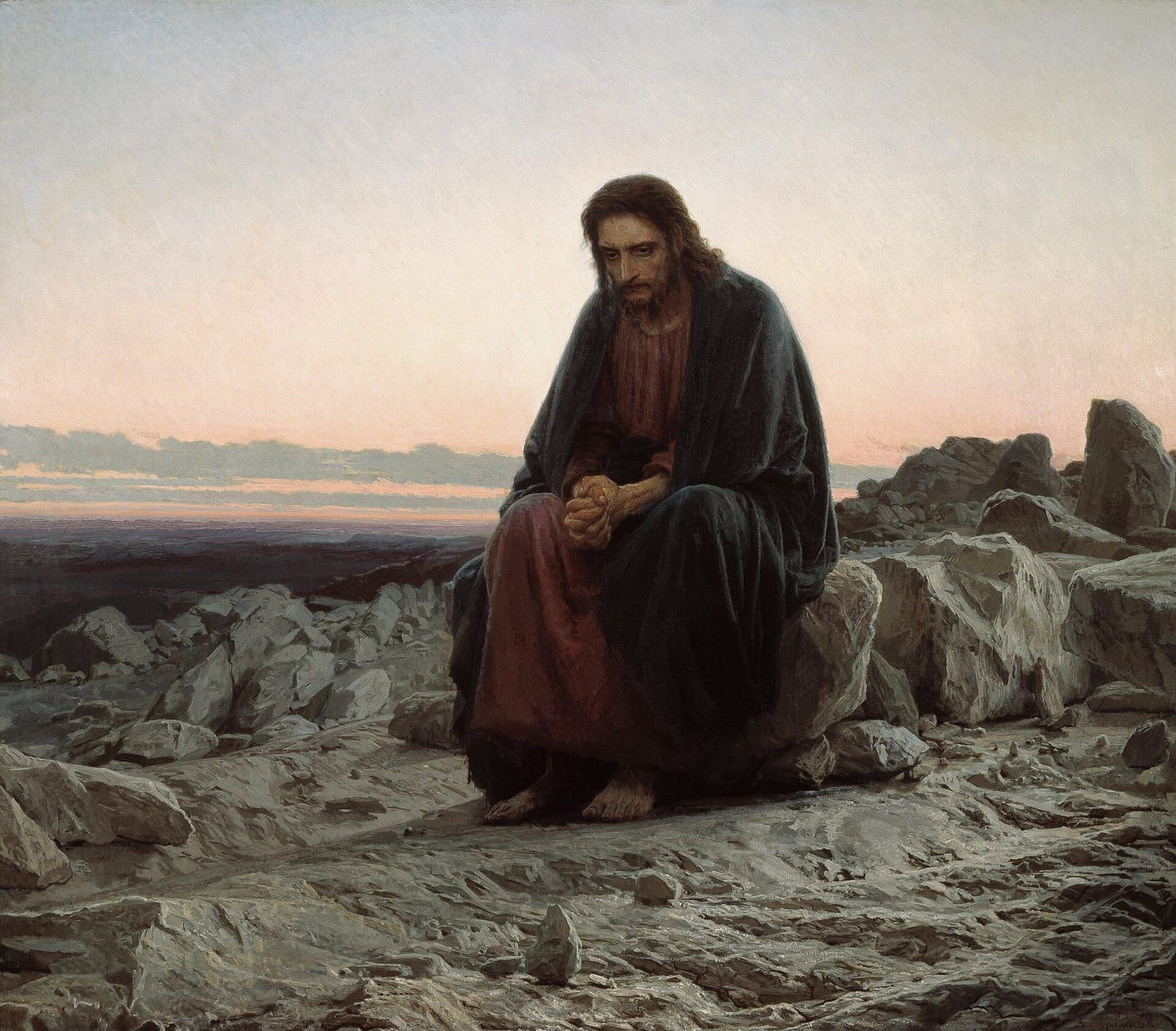
When it is said
The Church sings it at Vespers in the first week of Lent, among the verses near the end of the service. The Greek service book marks it to be sung twice.
Anyone can say it at home as the fast begins, to remember what the fast is for.
Where it comes from
No author known
A fast of the heart
The hymn names no food at all. Orthodox Christians also give up certain foods in Lent, and the translator Isabel Hapgood’s 1906 service book lists meat, cheese, eggs, milk and butter among them. The hymn says what makes that fast true. How strictly to keep it is a question for your priest.
Greek Orthodox Archdiocese of America, the Triodion, first week of Lent (Greek); Isabel F. Hapgood, Service Book of the Holy Orthodox-Catholic Apostolic Church (1906)
Words from Isaiah
The hymn’s “acceptable fast” is the prophet Isaiah’s phrase in the Greek Bible. In Isaiah 58:4-6, God tells people who fast while they quarrel and fight that this is not a fast He accepts. The fast He has chosen is “to break the chains of wickedness” and to set the oppressed free.
The Greek Septuagint (eBible.org); Brenton’s English Septuagint (eBible.org)
The Scripture in it
Is this the fast I have chosen: a day for a man to deny himself, to bow his head like a reed, and to spread out sackcloth and ashes? Will you call this a fast and a day acceptable to the LORD? Isn’t this the fast that I have chosen: to break the chains of wickedness, to untie the cords of the yoke, to set the oppressed free and tear off every yoke?
Bible text: Berean Standard Bible, public domain.
In Greek
Νηστεύσωμεν νηστείαν δεκτήν, εὐάρεστον τῷ Κυρίῳ,
ἀληθὴς νηστεία, ἡ τῶν κακῶν ἀλλοτρίωσις,
ἐγκράτεια γλώσσης, θυμοῦ ἀποχή, ἐπιθυμιῶν χωρισμός,
καταλαλιᾶς, ψεύδους, καὶ ἐπιορκίας·
ἡ τούτων ἔνδεια, νηστεία ἐστίν, ἀληθὴς καὶ εὐπρόσδεκτος.