
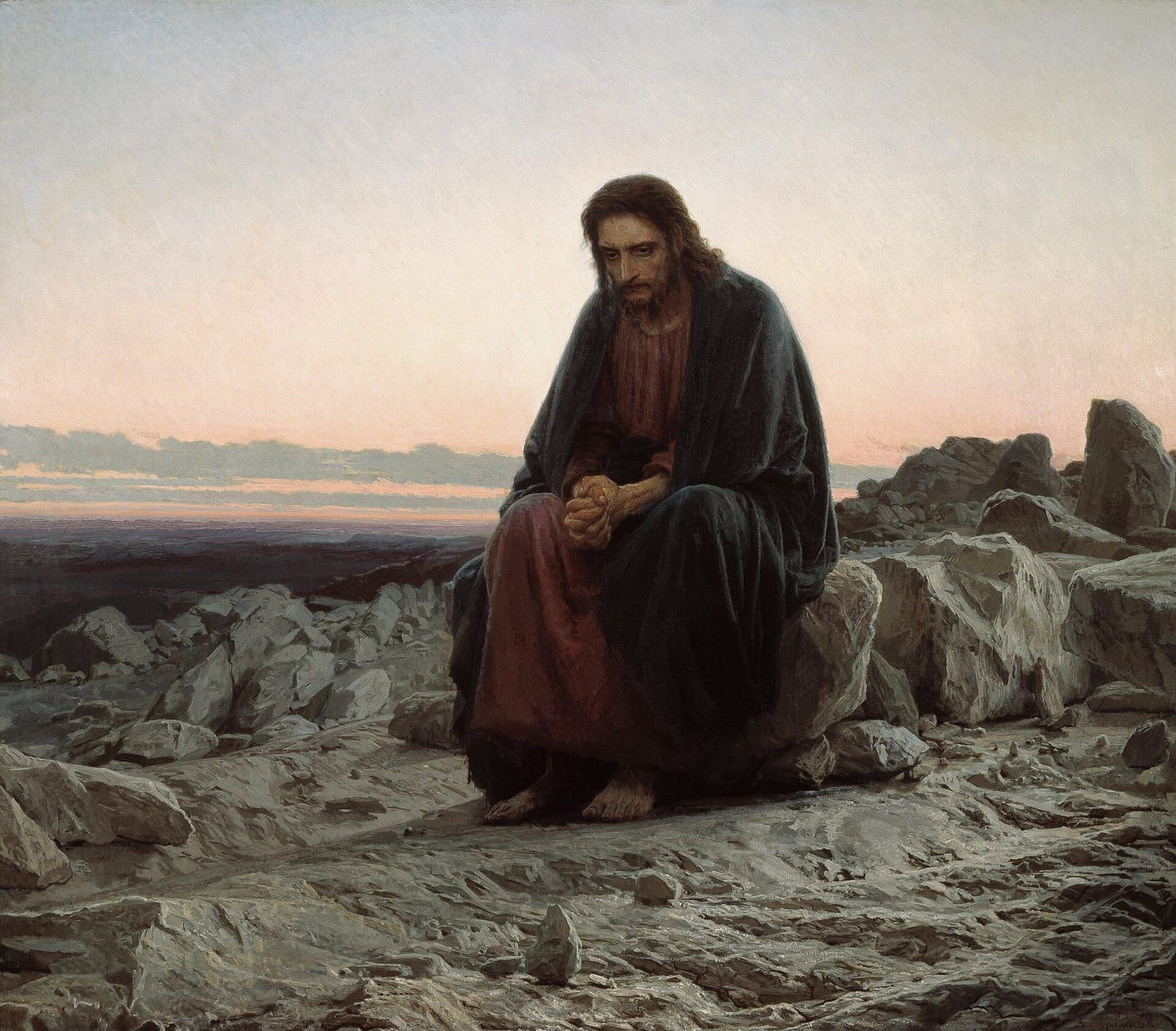
When it is said
The priest reads it aloud near the end of the Presanctified Liturgy, just after he calls out “In peace let us go forth”.
That liturgy is served on weekdays in Lent, when the full Liturgy is not. A layperson may pray it at home through the fast, since it asks for all of us.
Where it comes from
No author known
A liturgy for fasting days
The Council in Trullo, held in Constantinople in AD 692, ordered the Liturgy of the Presanctified Gifts for every fasting day of Lent except Saturday, Sunday and the Annunciation. Its Communion comes from Gifts consecrated at an earlier Liturgy, which is what “Presanctified” means.
The Council in Trullo, canon 52 (New Advent); J. N. W. B. Robertson, The Divine Liturgies (1894)
Credited to a Pope of Rome
In his 1894 edition of the Greek liturgies, the translator J. N. W. B. Robertson describes the Presanctified Liturgy as “commonly attributed to Saint Gregory Dialogos, Pope of Rome”. That is a tradition, and the prayer itself carries no author’s name. Robertson printed the prayer in Greek with his English beside it, under the heading “Prayer behind the Ambon said aloud by the Priest”.
What the words mean
“The unseen dragons”
The picture comes from the psalms. In the Greek Bible the Church read, the psalmist tells God, “Thou didst break to pieces the heads of the dragons in the water” (Psalm 74:13), and the prayer takes up the same Greek words. It asks to crush enemies no one can see, the kind Paul meant when he wrote that our struggle is “not against flesh and blood” (Ephesians 6:12).
Brenton’s English Septuagint (eBible.org); The Greek Septuagint (eBible.org)
The good fight
Three of its requests are Paul’s words near the end of his life: “I have fought the good fight, I have finished the race, I have kept the faith” (2 Timothy 4:7). The prayer asks for the same three things, with the fast as the race.
The Scripture in it
I have fought the good fight, I have finished the race, I have kept the faith.
You divided the sea by Your strength; You smashed the heads of the dragons of the sea …
Moses entered the cloud as he went up on the mountain, and he remained on the mountain forty days and forty nights.
When the LORD had finished speaking with Moses on Mount Sinai, He gave him the two tablets of the Testimony, tablets of stone inscribed by the finger of God.
Bible text: Berean Standard Bible, public domain.
In Greek
Δέσποτα Παντοκράτορ, ὁ πᾶσαν τὴν κτίσιν ἐν σοφίᾳ δημιουργήσας·
ὁ διὰ τὴν ἄφατόν σου πρόνοιαν, καὶ πολλὴν ἀγαθότητα, ἀγαγὼν ἡμᾶς εἰς τὰς πανσέπτους ἡμέρας ταύτας,
πρὸς καθαρισμὸν ψυχῶν καὶ σωμάτων, πρὸς ἐγκράτειαν παθῶν, πρὸς ἐλπίδα ἀναστάσεως·
ὁ διὰ τεσσαράκοντα ἡμερῶν πλάκας χειρίσας, τὰ θεοχάρακτα γράμματα, τῷ θεράποντί σου Μωσεῖ·
παράσχου καὶ ἡμῖν, Ἀγαθέ, τὸν ἀγῶνα τὸν καλὸν ἀγωνίσασθαι, τὸν δρόμον τῆς Νηστείας ἐκτελέσαι,
τὴν Πίστιν ἀδιαίρετον τηρῆσαι, τὰς κεφαλὰς τῶν ἀοράτων δρακόντων συνθλάσαι,
νικητάς τε τῆς ἁμαρτίας ἀναφανῆναι, καὶ ἀκατακρίτως φθάσαι προσκυνῆσαι καὶ τὴν ἁγίαν Ἀνάστασιν.
Ὅτι εὐλόγηται καὶ δεδόξασται τὸ πάντιμον, καὶ μεγαλοπρεπὲς Ὄνομά σου,
τοῦ Πατρός, καὶ τοῦ Υἱοῦ, καὶ τοῦ Ἁγίου Πνεύματος, νῦν, καὶ ἀεί, καὶ εἰς τοὺς αἰῶνας τῶν αἰώνων.