
Mary of Egypt
She ran away to Alexandria at twelve, was stopped at a church door in Jerusalem, and spent 47 years alone in the desert.
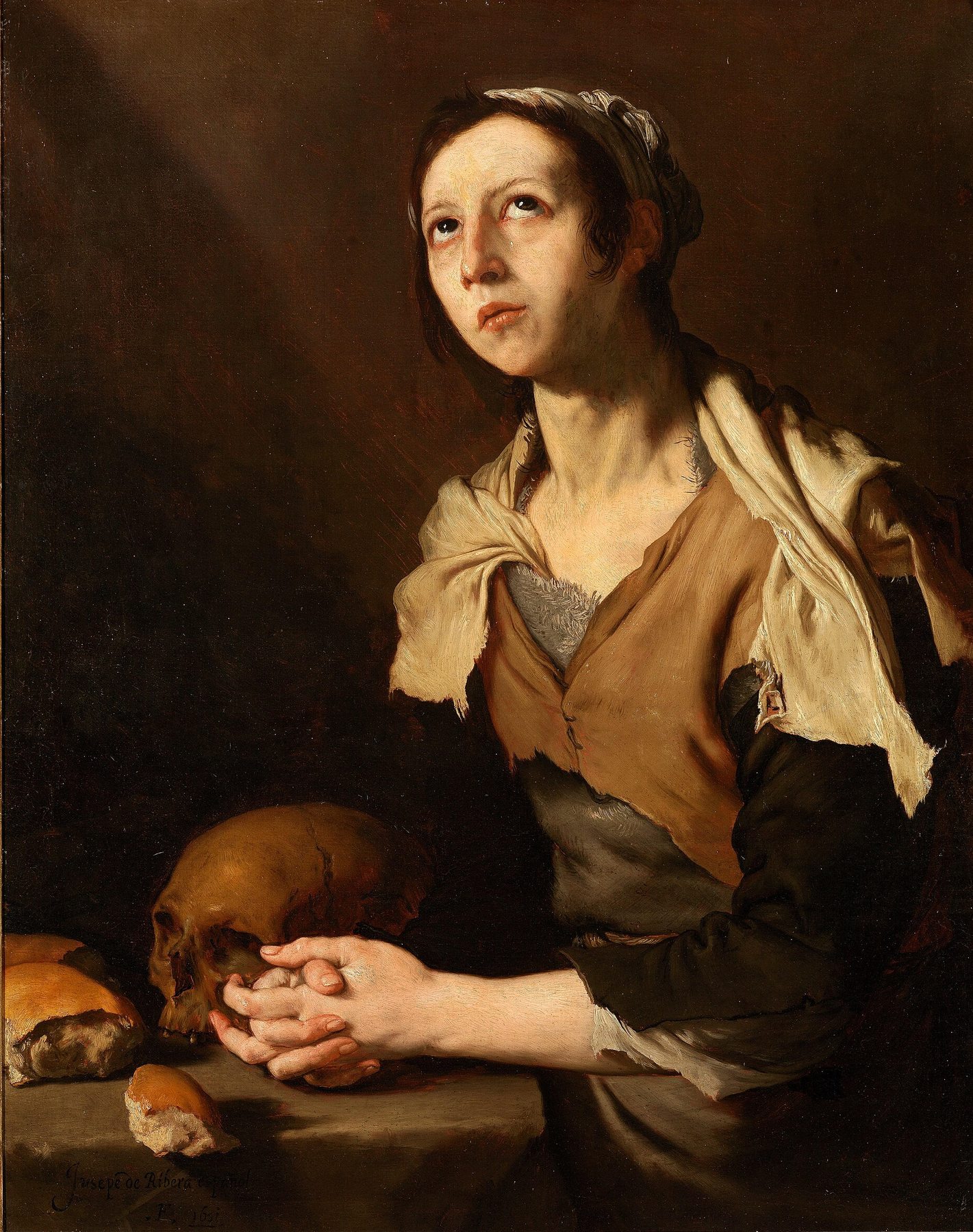
Picture: Saint Mary of Egypt, Jusepe de Ribera, 1651. Museo Civico Gaetano Filangieri, Naples. Public domain.
Who was Mary?
Mary of Egypt is known from one famous biography, her Life, read aloud in Orthodox churches every Lent. She ran away to Alexandria at twelve and lived seventeen years in lust. In Jerusalem an unseen force kept her out of a church. She repented, crossed the Jordan and lived 47 years alone in the desert.
at a glance
Her path, in order
- RunawayLeft home in Egypt at twelve
- SinnerSeventeen years of lust in Alexandria, never for money
- PassengerOn a pilgrim ship, for the wrong reasons
- PenitentRepented at a church door in Jerusalem
- Hermit47 years alone beyond the Jordan
- MotherZosimas, the monk who found her, called her mother
- SaintHer Sunday is the fifth of Lent
in numbers
- Her age when she ran away to Alexandria12
- She stayed seventeen years
- She was about 29 when a church in Jerusalem kept her out
- Years she lived alone beyond the Jordan47
- She saw no human face
- Then the monk Zosimas found her
- Loaves she carried across the Jordan2½
- They soon grew hard as stone
- She ate from them for seventeen years
- Days of walking she covered in an hour20
- The same walk took the monk Zosimas twenty days
- She walked it after her last communion, and died that night
did you know?
-
About a third of the Life written about her is her own story, told to the monk Zosimas in her own voice. Maria Kouli, who translated the Greek Life in 1996, puts it at “perhaps one-third of the whole”.
Maria Kouli, introduction to the Life, in Holy Women of Byzantium (Dumbarton Oaks, 1996) -
In 872 an ancient Roman temple beside the Tiber was made into a church of St Mary of Egypt. It still stands by the Piazza della Bocca della Verità.
Platner and Ashby, A Topographical Dictionary of Ancient Rome (1929) -
The Coptic book of saints gives her whole span: born about 345, died in 421. “All the years of her life were seventy six years.”
Coptic synaxarium, 6 Baramouda -
Her Life is read at a Thursday service in Lent. Russians call it the Standing of St Mary of Egypt. The hymn sung with it, the Great Canon, is long, and heard standing.
OrthoChristian, The Standing of St. Mary of Egypt
- Born
- In Egypt, probably about 344, says the Catholic Encyclopedia. The Life names no town. The Coptic book of saints makes her a child of Christian parents in Alexandria.
- Lived
- In Alexandria from the age of twelve, for seventeen years. Then briefly in Jerusalem, and 47 years in the desert east of the Jordan.
- Died
- Alone in the desert, on the night of her last communion: 1 April, in the Greek Life. The year is uncertain. The Bollandists, Jesuit scholars of the saints, said 421. Many others put it a century later.
- Buried
- Where she died, by the monk Zosimas. A lion dug the grave, the Life says.
- Her Life
- Told by the monk Zosimas to his monks and written down by another hand. The manuscripts name Sophronius, patriarch of Jerusalem, who died in 638. Some scholars doubt it.
- Relics
- Honoured at Rome, Naples, Cremona, Antwerp and other places, says the Catholic Encyclopedia.
- Also called
- Mary the Egyptian, and in Latin Maria Aegyptiaca. The 1916 Roman Martyrology calls her Mary of Egypt, “surnamed the Sinner”.
- Wrote
- Nothing. She told the monk Zosimas she had never learned to read.
- In art
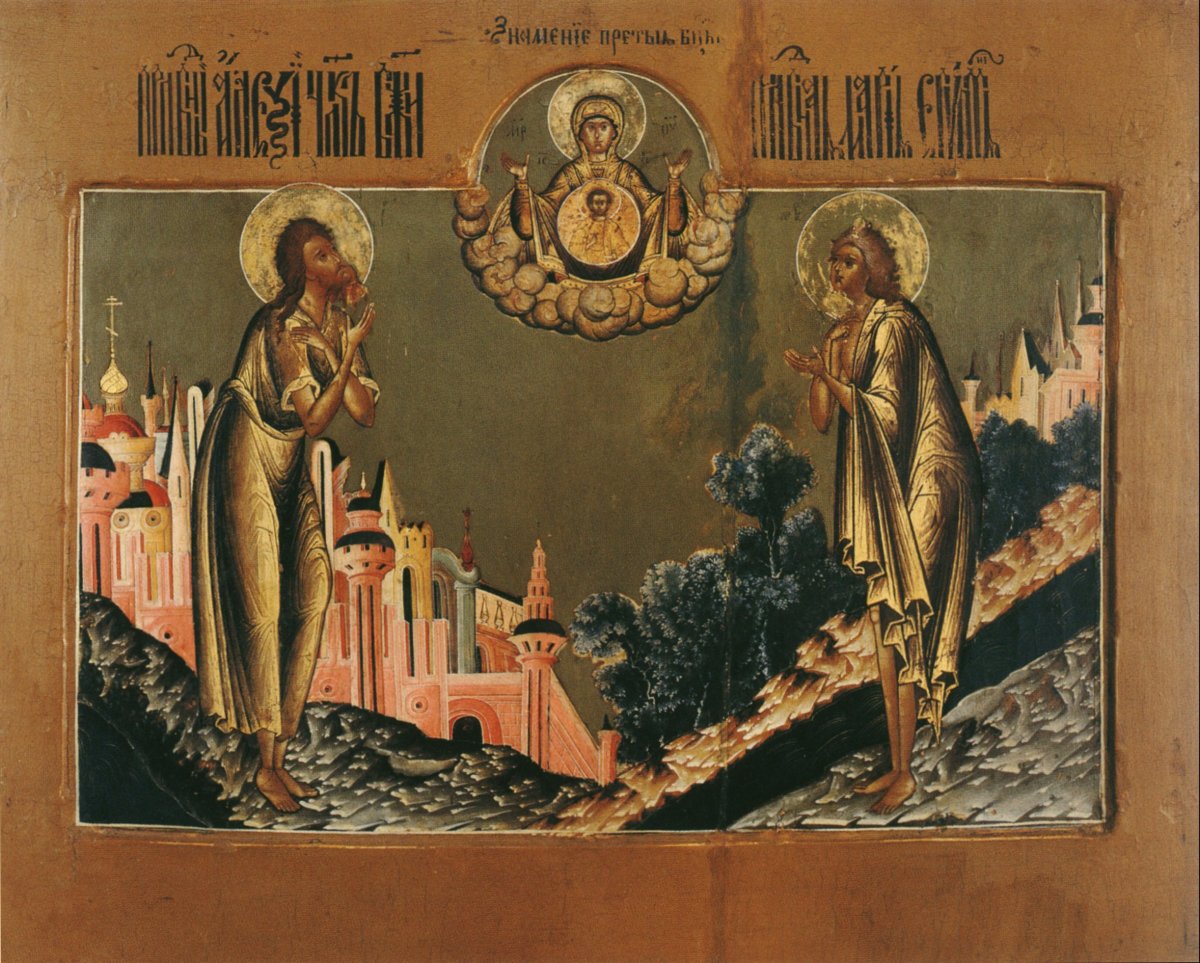
- In icons, a thin, sun-darkened woman in the cloak the monk Zosimas gave her, often taking communion from him. In the West, often with the loaves she lived on in the desert, as Ribera painted her above.
- Her Sunday
- The fifth Sunday of Great Lent, in the Orthodox Church, the last before Palm Sunday. In 2027 it falls on 18 April.
- Status
- A saint to the Orthodox, Catholics and Copts. The Episcopal Church remembers her too.
feast days
East and West, side by side
West
- Apr1
Catholic, in today's Roman Martyrology (2004 edition).
- Apr2
The 1916 Roman Martyrology, and the older Catholic books.
- Apr3
The Episcopal Church, in Lesser Feasts and Fasts. The old Roman calendar also kept her on this day.
East
- Apr1
The OCA and the other Orthodox churches on the new calendar.
- Apr14
The Russian Church and others on the old calendar. Also the Coptic Church, on 6 Baramouda in its own calendar.
Why so many days? The Greek Life says she died on 1 April. The Catholic Encyclopedia thought the Western 2 and 3 April might be the days her relics reached the West. Churches on the old calendar keep 1 April thirteen days later, on 14 April, which is also the Coptic day. The Orthodox give her a Sunday too, the fifth of Great Lent. It moves with Easter: in 2027 it falls on 18 April.
what was she like?
+frank about her past
She did not dress her story up, and she expected the monk Zosimas to run from it: “thou wilt soon flee from me in the manner in which a man may flee from an adder”. She told it anyway: “I will relate all to thee, concealing nothing”. She asked only that he keep praying for her.
The Life, tr. in Skeat's edition of Ælfric's Lives of Saints+all or nothing
She did nothing by halves, in sin or out of it. When she heard of a pilgrim ship to Jerusalem, she threw down her spindle and ran to the sea. When a voice at a church in Jerusalem told her to cross the Jordan, she set off the same day: “I ran continually, still weeping, upon my journey”.
The Life, tr. in Skeat's edition of Ælfric's Lives of Saints+stubborn in the fight
For seventeen years in the desert she longed for her old life. Each time the longing came, she threw herself on the ground and would not get up until the struggle passed. “I then beheld light shining all around me; and soon after a steadfast peace came to me.”
The Life, tr. in Skeat's edition of Ælfric's Lives of Saints+humble before a priest
She had walked on water, and the monk Zosimas tried to kneel to her. She called from the river to stop him: “Know that thou art God's priest, and hast with thee the divine mysteries.” At their first meeting too, she insisted that he bless her, not she him.
The Life, tr. in Skeat's edition of Ælfric's Lives of Saints+taught without books
She quoted the Scriptures so freely that the monk Zosimas asked where she had learned the Psalms. She smiled. “Nor did I ever learn to read, nor ever listened to any of those people who pondered and read. But the word of God is quick and sharp, teaching this human intelligence within me.”
The Life, tr. in Skeat's edition of Ælfric's Lives of Saints+content with almost nothing
The monk Zosimas brought her a basket of figs, dates and soaked lentils. She took three lentils with the tip of her finger, and said that “such a gift sufficed for one who kept her soul steadfast in purity”.
The Life, tr. in Skeat's edition of Ælfric's Lives of Saintswhat others said of her
No one wrote about her in her lifetime. These are the voices that kept her story, from the monk who found her to the scholars of today.
Blessed be God, Who alone worketh manifold wonders; and blessed be Thou, O Lord God, Who hast shewn me the gloriousness that Thou givest to them that dread Thee.
We read in the life of St Mary of Egypt that she prayed before the statue of Our Lady and besought her intercession, and so obtained leave to enter the Church.
By the arm, which, from the portal, warning, thrust me back again; by the forty years' repentance in the lonely desert-land; by the blissful farewell sentence which I wrote upon the sand!
…if such a licentious woman could find forgiveness, surely ordinary sinners could hope for salvation.
…an example of repentance categorized by continual self-emptying, as opposed to a realized state of sanctity.
her life in ten moments
Egypt
At twelveA runaway
She had a home and a brother in Egypt. At twelve she left them for Alexandria, the great port. In her own words: “in the twelfth year of my age, I began to despise their love and betook myself to the city of Alexandria”.
The Life, tr. in Skeat's edition of Ælfric's Lives of SaintsAlexandria
Seventeen yearsNot for money
She is plain about her seventeen years in Alexandria, and firm on one point. She took no payment: “Neither did I lose my virginity for any man's presents, nor would I indeed receive anything from any one who desired to give me somewhat”. She lived poor and spun flax. What drove her was desire, and she called it living: “this I accounted as life”.
The Life, tr. in Skeat's edition of Ælfric's Lives of SaintsThe harbour
At about 29The pilgrim ship
One day she saw crowds running to the sea. They were sailing to Jerusalem for the feast of the Holy Cross. She had no fare. She would pay with her body, she told a young man, and he walked off laughing. So she went down to the shore and talked her way onto a ship full of young men. Of the voyage she said little: “I wonder how the sea could suffer and endure my unrighteous desires”.
The Life, tr. in Skeat's edition of Ælfric's Lives of SaintsJerusalem
The feast of the Cross, 14 SeptemberThe door
On the feast the crowds pushed into the church to see the wood of the Cross. She pushed in with them. At the threshold something held her back, while everyone else went in. She tried three or four times, until she was worn out: “Just as if some strong company of men opposed me to prevent my entrance, so the sudden vengeance of God barred the door to me”.
The Life, tr. in Skeat's edition of Ælfric's Lives of Saints; Kouli (1996), on the date of the feastThe church porch
The same morningThe icon
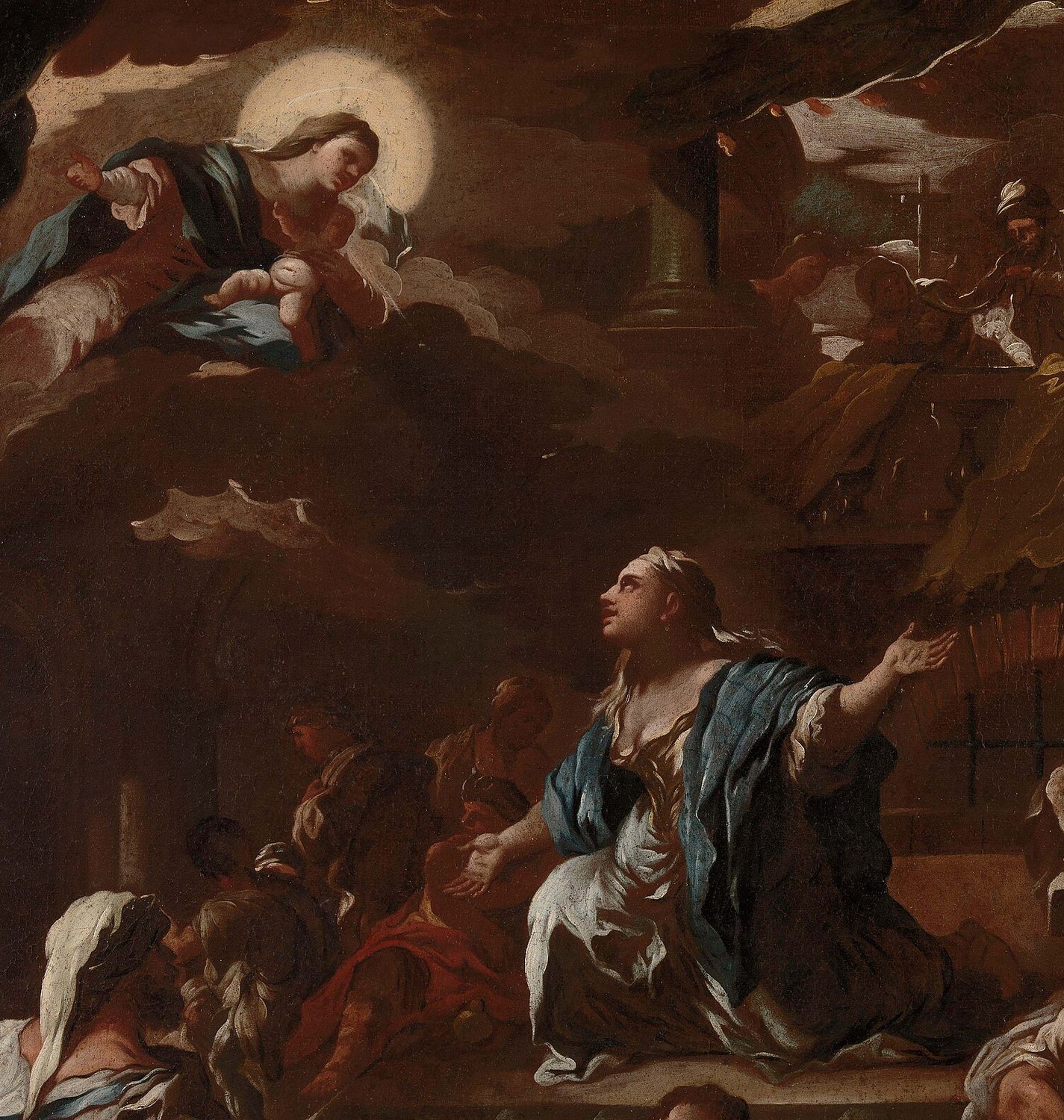
Alone in a corner of the porch, she understood why she could not go in. She wept and beat her breast. Above her she saw an icon of the Mother of God, and asked her help: let her in to see the Cross, and she would give up her old life. John of Damascus quoted her vow from the Greek Life: “When I see the Cross of thy Son, I will at once renounce the world and the things of the world, and forthwith follow wherever thou shalt lead.” This time she walked in freely.
John of Damascus, On Holy Images, tr. Mary H. Allies (1898); the Life, in Skeat's editionTo the Jordan
That dayThree coins, three loaves
Coming out of the church to the icon of the Mother of God, she heard a voice: “If thou wilt pass over the river Jordan, there thou shalt experience and find good rest.” A stranger gave her three coins, and she bought three loaves. By sunset she reached the church of St John the Baptist by the river. She washed her hands and face in the Jordan, received communion, ate half a loaf and slept. Early next morning she crossed over.
The Life, tr. in Skeat's edition of Ælfric's Lives of SaintsThe desert
The first seventeen yearsThe long fight
Her clothes rotted away, and she lived on the loaves she had brought, then on roots. The hardest part was inside her. For seventeen years she longed for the wine, the meat and the songs of Alexandria. Like Israel in the wilderness (Numbers 11:5), she remembered the food of Egypt: “I yearned for the fishes that were in Egypt”. Then, she said, “the holy Mother of God aided me and directed my ways”.
The Life, tr. in Skeat's edition of Ælfric's Lives of SaintsBeyond the Jordan
47 years onFound by Zosimas
Each Lent the monks of a monastery near the Jordan went out into the desert, each man alone. One year the old priest Zosimas saw a figure far off: “she was very swart of body by reason of the sun's heat, and the locks of her head were as white as wool”. It fled, and he ran after it, calling. She stopped across a dry stream bed and called him by name, though they had never met. She asked for his cloak, having no clothes. Then she told him everything.
The Life, tr. in Skeat's edition of Ælfric's Lives of SaintsThe Jordan bank
Holy Thursday, a year laterHer last communion
She made Zosimas promise two things: to tell no one of her while she lived, and to bring her communion at the Jordan on Holy Thursday the next year. He came with the sacrament in a little cup. She crossed the river to him, said the Creed and the Lord's Prayer, received communion, and prayed Simeon's prayer. Then she asked him to come back in a year to the place where they had first met.
The Life, tr. in Skeat's edition of Ælfric's Lives of SaintsThe monastery
After her deathWritten down
When he had buried her, Zosimas went home and told the monks everything. They kept the day of her death: they “magnified the day of her happy departure with awe and love and much faith”. The story passed from monk to monk until it was written down. The Catholic Encyclopedia says it was written “by one who states that he learned the details from the monks of the monastery to which Zosimus had belonged”.
The Life, in Skeat's edition; Catholic Encyclopedia (1910)
her miracles
The Life tells its wonders plainly, as things the monk Zosimas saw and she told. They are given here as the Old English Life tells them, in the English of Skeat's edition, with the doubts at the end. The writer of the Life opens with a promise:
…may it never be that I should falsify the holy narratives or keep silence from speech.
4 wonders Zosimas saw himself
-
The desert
At their first meetingLevitating in prayer
She turned east, lifted her arms and prayed without a sound. Zosimas looked up from the ground and saw her standing on the air.
“he saw her lifted up, as it were the space of a man's ell, above the earth, and began to pray hanging in the air”
Zosimas, who swore to it with God as his witness. The Golden Legend of the 1260s makes the height “well nigh a foot and a half”.
The Life, tr. in Skeat's edition of Ælfric's Lives of Saints -
The Jordan
Holy Thursday, a year laterWalking on water
Zosimas waited on the bank, wondering how she would cross with no boat. By moonlight he saw her make the sign of the cross over the river and step onto it.
“So she went towards him, walking on the soft waves as if on dry land.”
Zosimas alone. She went back over the water the same way.
The Life, tr. in Skeat's edition of Ælfric's Lives of Saints -
Beside her body
A year after thatLetters in the earth
Zosimas found her dead, and did not know even her name. Then he saw writing on the ground by her head. It gave her name, and asked him to bury her. But she had told him she had never learned to read.
“When the old man had read the letters, he first of all looked to see who had written them”
The Life, tr. in Skeat's edition of Ælfric's Lives of Saints -
Beside her body
The same dayThe lion
Zosimas had no spade to dig her grave, and the ground was too hard for the stick he found. Looking up, he saw a huge lion by her body. He made the sign of the cross. The lion came to him gently, and at his word dug the grave with its claws.
“Then began the lion to fawn upon the old man, and greeted him with its moving limbs.”
Zosimas. When the grave was filled, the lion went off into the desert “like the gentlest lamb”.
The Life, tr. in Skeat's edition of Ælfric's Lives of Saints
The door that held her back
Her own account of the church door in Jerusalem. Everyone else went in freely:
“the divine might prevented me from going in, and I was soon thrust out from amid all the people”The Life, tr. in Skeat's edition of Ælfric's Lives of Saints
She knew him
She called Zosimas by name and knew he was a priest, though no one had told her. She also knew the rule of his monastery, and sent its abbot word of what to set right there.
“he manifestly perceived that she was enlightened with divine foreknowledge”The Life, tr. in Skeat's edition of Ælfric's Lives of Saints
Kept at home, as she said
She told Zosimas that next Lent he would not be able to leave his monastery, even if he wanted to. When Lent came he fell ill, and stayed behind.
“he himself was left in the minster, and there remained kept in by a bodily infirmity”The Life, tr. in Skeat's edition of Ælfric's Lives of Saints
Twenty days in an hour
The words written on the ground by her body showed she had died the very night of her communion at the Jordan. So she had crossed, in an hour, the desert it took Zosimas weeks to walk.
“the journey which Zosimus had performed with much toil in twenty days, all that Mary had fulfilled in the course of an hour”The Life, tr. in Skeat's edition of Ælfric's Lives of Saints
story or history?
The Church has read her Life as a true story for thirteen centuries. Scholars are less sure. Here is each side, in its own words.
No dates to hold
The Life gives her age at each stage, and almost nothing else to date her by. So her dates float. The Bollandists, the Jesuit scholars of the saints, put her death in 421. Others put it a century later. Maria Kouli, who translated the Greek Life in 1996, goes further:
“it is impossible to provide a chronology for the life of Mary, or even to establish her historicity”Kouli, Holy Women of Byzantium (1996); Catholic Encyclopedia (1910)
An older, simpler story
In the 500s Cyril of Scythopolis told of a monk named John who found a woman living alone in a cave in the Judean desert. She said she had been a singer at the church of the Resurrection in Jerusalem, and had fled so as not to lead men astray. She lived eighteen years on a jar of water and a basket of beans. When John came back, she was dead, and he buried her. John Moschos told a similar tale. Kouli thinks the longer Life grew from such stories. There were real women hermits in those deserts, she adds, and:
“one of them may well have inspired the edifying tale of Mary of Egypt”Kouli, Holy Women of Byzantium (1996), after Cyril of Scythopolis, Life of Kyriakos
Who wrote it
The manuscripts of her Life name Sophronius, patriarch of Jerusalem from 634 to 638. The medieval writer Zonaras and the scholar Hippolyte Delehaye accepted that. Others, among them François Halkin, doubted it. Kouli thinks it was probably written in the 600s either way, since John of Damascus quoted it in the 700s. The Bollandists thought it older still. In the words of the Catholic Encyclopedia:
“the Bollandists give good reasons for believing that the Life was written before 500”Catholic Encyclopedia (1910); Kouli, Holy Women of Byzantium (1996)
What the churches say
The churches keep her for what the story teaches: that no one is past repentance. The Orthodox read the Life aloud in church in the fifth week of Lent. The Episcopal Church's calendar is frank about the source: most of what is known of her, it says, comes from the Life. Its prayer for her day asks that, like her, we may not leave this life until we understand
“the ways of repentance and the benefits of prayer”Lesser Feasts and Fasts 2022, 3 April
her words
She wrote nothing, and said she could not read. Her words come through the Life, which says the monk Zosimas told them to his monks. They are given here in the English of Skeat's edition of the Old English Life, and once as John of Damascus quoted the Greek.
Asked how she lived with no food or clothes
Verily I am fed to the full with sufficient sustenance, that is to say, with the promise of my salvation; and I am clothed upon with the protecting garment of the word of God
Then she quoted Jesus: man does not live by bread alone, but by every word from the mouth of God.
The Life, tr. in Skeat's edition of Ælfric's Lives of SaintsI am a sinful woman, though endued, nevertheless, with holy baptism; and I am no spirit, but embers and ashes, and all flesh.
Of a truth I blush — pardon me, father abbot — to tell thee the vileness of my deeds
Believe me, I have never seen anyone but thee or wild beasts, nor creature of any kind since I passed over the water of Jordan and arrived hither in this wilderness
Tell also John, the abbot of the minster in which thou art, diligently to take heed to himself and to his flock also, because that there are some customs there for him to set right and to improve.
O loving Queen, thou hast shown me thy goodness; thou didst not despise the petition of my unworthiness.
often misquoted
She was a prostitute.
What the sources sayMany books say so. The Catholic Encyclopedia speaks of “a life of public prostitution”, and the Episcopal Church's calendar calls her “an Alexandrian prostitute”. In her own story she insists on the opposite: she refused money. “Nor do thou suppose that I would receive anything for any world's wealth, but ever lived in poverty”. She did once trade her body, for her fare to Jerusalem. The Golden Legend of the 1260s is blunter than the Life: she “refused no man”.
The Life, in Skeat's edition; Catholic Encyclopedia (1910); Lesser Feasts and Fasts 2022; the Golden LegendThe penitent who lived for decades alone in the desert, lifted up at prayer, was Mary Magdalene.
What the sources sayThat is Mary of Egypt's story. The Gospels give Mary Magdalene no desert. The medieval West gave her one. In the Golden Legend of the 1260s she lives thirty years alone in a wilderness in Provence, is lifted into the air at prayer, and takes a last communion from a bishop before she dies. Read side by side, the two stories are close: the Legend even has Magdalene raised from the ground “the space of two or three cubits”.
The Golden Legend, the Life of S. Mary Magdalene, tr. Caxton, ed. Ellis (1900)friends, family and rivals
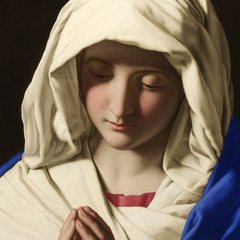 The Mother of God
 Mary of Egypt prayed before an icon of her at a church door in Jerusalem, and chose her as her protector. In the desert, she said, the Mother of God helped her through her hardest years.
The Life, in Skeat's edition; John of Damascus, On Holy Images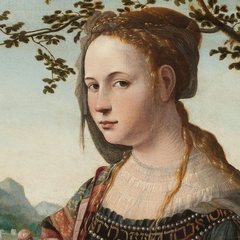 Mary Magdalene
 A different Mary, of the Gospels. The medieval West gave Magdalene a desert life much like Mary of Egypt's.
The Golden LegendA priest and monk of Palestine, in a monastery near the Jordan. He found her in the desert, gave her his cloak, brought her last communion and buried her. The Orthodox keep his day on 4 April.
The Life; OCA, 1 AprilAbbot of Zosimas's monastery. She sent him word that some customs there needed setting right, and he set them right.
The Life, in Skeat's editionPatriarch of Jerusalem from 634 to 638. The manuscripts of her Life name him as its writer. Scholars are divided.
Kouli, Holy Women of Byzantium (1996)Archbishop of Crete from the late 600s, who wrote the Great Canon, a long hymn of repentance. The Orthodox sing it whole on the Thursday of her week in Lent, when her Life is read.
OCA, Saint Andrew of Crete; OrthoChristianhow she died
She died alone in the desert, the night of her last communion. Zosimas found her a year later.
Zosimas went back to the dry stream bed where they had first met. She lay dead, her hands folded, facing east. He washed her feet with his tears and did not dare touch anything else. He still did not know her name.
Then Zosimas saw writing on the ground by her head. It asked him to bury Mary, and said she had died the very night of her communion: on 1 April, in the Greek Life. A lion dug the grave. He buried her with only the torn piece of cloak he had once thrown her, and went home to tell the monks.
At her last communion
Lord, now let Thy handmaid depart in peace, according to Thy word; for mine eyes have seen Thy salvation.
Simeon's prayer when he held the infant Jesus (Luke 2:29 to 30).
Written on the ground by her head
Abbot Zosimus, bury and compassionate the body of Mary; render to the earth that which is the earth's, and dust to dust.
She had told Zosimas she had never learned to read.
is she a saint?
Yes. The Orthodox, Catholic and Coptic churches count her a saint, and the Episcopal Church remembers her.
- OrthodoxSaint1 April, and the fifth Sunday of Lent
- CatholicSaint1 April, in the Roman Martyrology
- CopticSaint6 Baramouda, which is 14 April
- AnglicanRemembered3 April, in the Episcopal Church
No pope or council ever declared her a saint. In the Life, her honour begins with the monks who first heard her story. It grew from there.
In the Orthodox Church she has a Sunday of her own, the fifth of Great Lent, the last before Palm Sunday. On the Thursday before it, the whole Great Canon of Andrew of Crete is sung, and her Life is read aloud in two parts. The Church's hymn for her day sums up why she is kept:
Having been a sinful woman, you became a Bride of Christ through repentance.
In Palestine, Saint Mary of Egypt. A celebrated sinner of Alexandria, she was converted to God in the Holy City, the Blessed Virgin interceding, and led a life of penance alone beyond the Jordan.
what to read first
Death of St. Mary of Egypt
The Old English Life, in W. W. Skeat's edition
The whole Life, from Zosimas's monastery to the lion, in plain English. About forty minutes.
Read it freeVenerable Mary of Egypt
The Orthodox Church in America
The Greek Life retold in modern English, as the Orthodox read it on her day.
Read it freeThe Life of S. Mary of Egypt
Jacobus de Voragine, in Caxton's English
The Golden Legend's short version, as the Middle Ages knew it. About five minutes.
Read it freeSt. Mary of Egypt
Catholic Encyclopedia, 1910
One short page: the story, the dates, and who wrote the Life.
Read it freetake the quizzes
 Quiz Which early Christian thinks like you? And which would argue with you? Start
  Quiz Christian Personality Test Which of eight types are you? Find your own. Start
 sources
Her life, and the stories
- Death of St. Mary of Egypt, in Ælfric's Lives of Saints, vol. 2. The Old English Life, from the Latin of Paul the Deacon of Naples. Ed. W. W. Skeat, tr. Skeat with Miss Gunning and Miss Wilkinson, Early English Text Society.
- John of Damascus, On Holy Images, with the passage from the Life of St Mary of Egypt. Tr. Mary H. Allies, 1898.
- Jacobus de Voragine, The Golden Legend, “The Life of S. Mary of Egypt”, and “The Life of S. Mary Magdalene” (volume 4). Tr. William Caxton (1483), ed. F. S. Ellis (1900).
- Jerome, Life of Paulus the First Hermit. Tr. W. H. Fremantle, 1893.
- Maria Kouli, Life of St. Mary of Egypt, introduction, in Alice-Mary Talbot, ed., Holy Women of Byzantium (Dumbarton Oaks, 1996).
- Goethe, Faust, Part Two, Act 5. Tr. Bayard Taylor, 1871.
- OrthoChristian, The Standing of St. Mary of Egypt
- Platner and Ashby, A Topographical Dictionary of Ancient Rome, “Mater Matuta, Aedes”, 1929.
Reference
- Catholic Encyclopedia, 1910, “St. Mary of Egypt”, by Joseph MacRory
Calendars
- Martyrologium Romanum, 2004 edition, 1 April
- The Roman Martyrology, 1916 edition, 2 April
- The Episcopal Church, Lesser Feasts and Fasts 2022, 3 April
- OCA, Venerable Mary of Egypt, 1 April
- OCA, 5th Sunday of Great Lent: St Mary of Egypt, 18 April 2027
- OCA, Saint Andrew, Archbishop of Crete, on the Great Canon
- CopticChurch.net, the Coptic synaxarium, 6 Baramouda
Pictures
- S. Maria Egiziaca, Jusepe de Ribera, 1651. Museo Civico Gaetano Filangieri, Naples. Public domain.
- The Vision of Saint Mary of Egypt, Luca Giordano. Museum of Fine Arts, Ghent. Public domain.
- Alexius of Rome and Mary of Egypt, icon by Yakov Kazanets, 1648. Public domain.
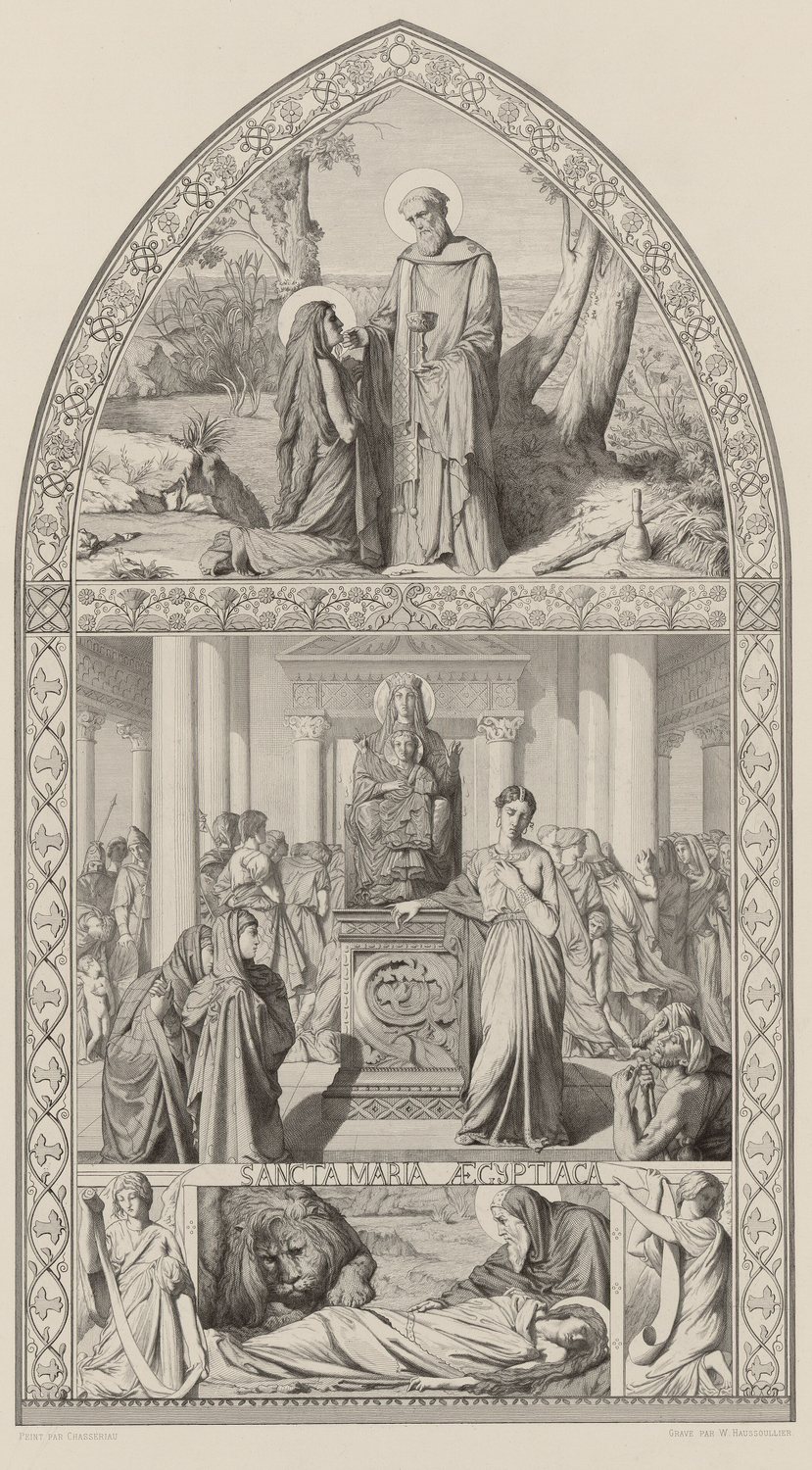
- Eglise St Merry, chapelle Ste Marie l'Egyptienne, engraving by William Haussoullier after Théodore Chassériau. Musée Carnavalet, Paris. CC0.