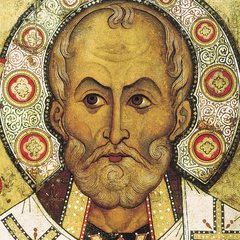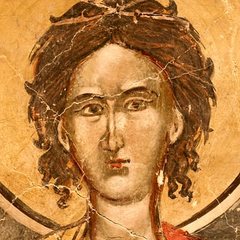

Catholics ask him
St Joseph
Prayer to St Joseph the Worker
Glorious Saint Joseph,model of all who give their lives to work,obtain for me the grace
to work in a spirit of penance, to make up for my many sins;to work conscientiously, putting devotion to duty above my own wishes;to work with thanks and joy,counting it an honour to use and develop by my workthe gifts I have received from God;to work with order, peace, moderation and patience,never drawing back when I am tired or when things are hard;above all, to work with a pure intention and without seeking myself,keeping always before my eyes deathand the account I must give of time lost, talents unused,good left undone, and vain pleasure in success,which does such harm to the work of God.
All for Jesus, all through Mary,all in imitation of you, patriarch Joseph!This will be my motto in life and in death.Amen.
Traditional wording, 1907
Glorious St. Joseph, model of all those who are consecrated to work,obtain for me the grace
of working in a spirit of penance, for the expiation of my numberless sins;of working conscientiously, placing the religion of duty above my inclinations;working with gratitude and joy, regarding it an honor to employ and develop, by labor, the gifts received from God;to work with order, peace, moderation and patience, without ever recoiling on account of weariness and difficulties;to work above all with purity of intention and with detachment from myself,ever having before my eyes death and the account I must renderfor lost time, wasted talents, the good which I have omitted,and vain complacency in success which is so fatal to the work of God.
All for Jesus, all through Mary, all by thy imitation, O Holy Patriarch St. Joseph!Such will be my motto in life and in death.Amen.
Catholics ask him as the patron of workers, because he fed his family by the work of his hands. Pope Pius XII gave him that title in 1955, when he set the feast of St Joseph the Worker on 1 May, and Pope Francis asked his help in 2020 so that “no family should be without work”.
Plain English by Wiser Walk, from the French. How the wording is made. Traditional wording: an unnamed translator, The Homiletic Monthly and Catechist, 1907.