His story
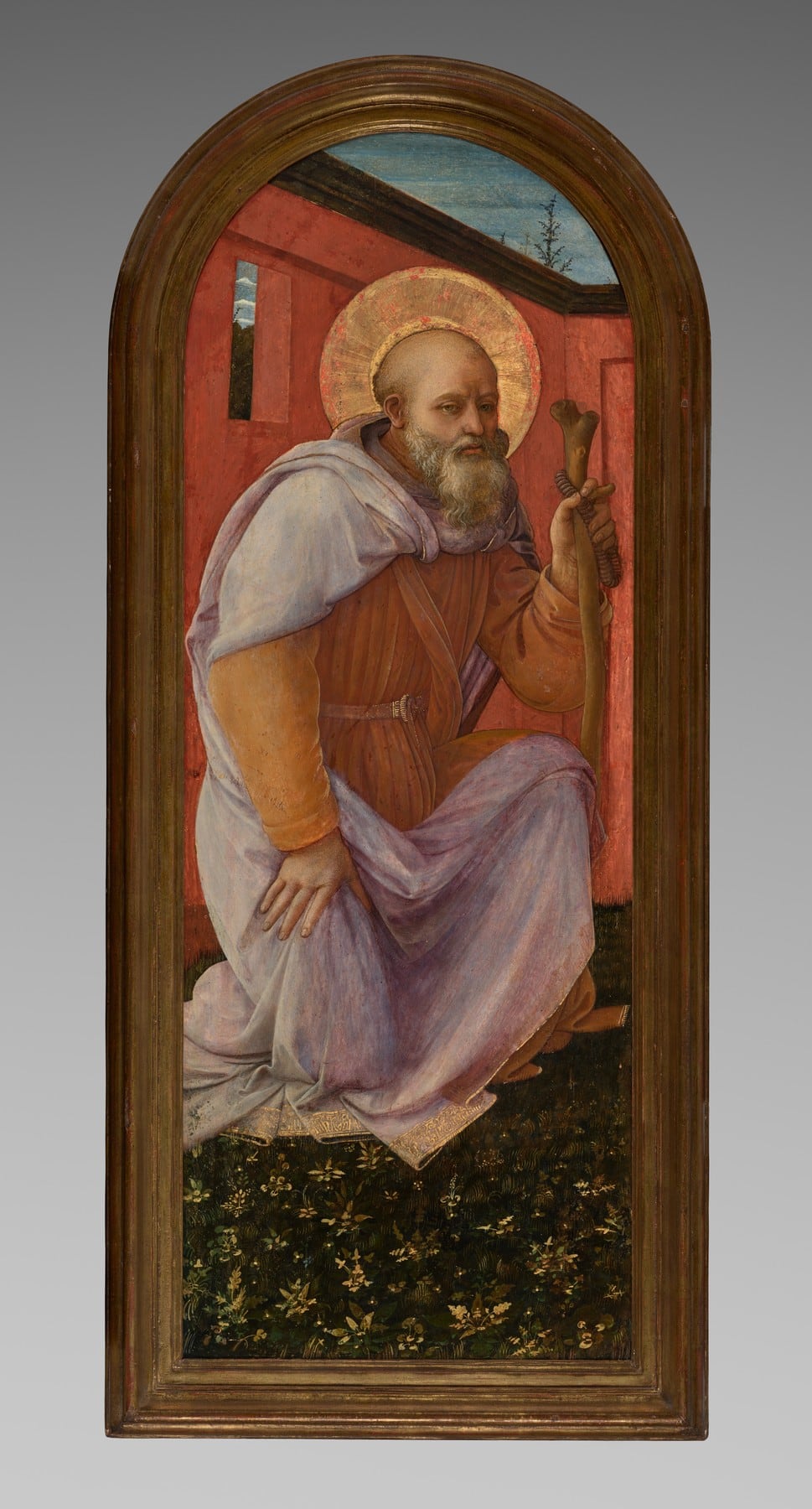
He gave away his family’s land when he was about 20 years old and spent the rest of his long life as a monk, most of it in the Egyptian desert. His friend Athanasius, the bishop of Alexandria, tells that wild animals coming to drink at his spring trampled the little garden he had planted, until he gently took hold of one of them and told them all, in the Lord’s name, to keep away, and they never came near it again.
His feast day
17 January: His feast in the Catholic Church and in the Orthodox churches on the new calendar. Those on the old calendar keep it on 30 January.
The Roman Martyrology, 1916, 17 January; St Anthony the Great, 17 January, in the Orthodox calendar
Why people ask St Anthony the Great
Animals and pets
On his feast, 17 January, many Catholic churches bless animals, with the Roman Ritual’s blessing that asks his prayers for them.
“Roman Ritual: A Blessing for Horses or Other Animals”, Catholic Culture
Where it comes from
Who wrote it
The blessing of horses and other animals in the Roman Ritual, the Catholic book of rites, which priests give on St Anthony’s feast, 17 January. No one knows who wrote it. A prayer book of 1956 put it into English for families to pray at home.
On his feast in Rome
In Rome, animals are blessed beside St Peter’s Square on his feast every year.
“Animals blessed at St. Peter’s for feast of St. Anthony Abbot”, Aleteia, 2020
In Latin
Deus, refugium nostrum, et virtus:adesto piis Ecclesiae tuae precibus,auctor ipse pietatis,et praesta; ut quod fideliter petimus,efficaciter consequamur.Per Christum Dominum nostrum. Amen.
Omnipotens sempiterne Deus,qui gloriosum beatum Antonium,variis tentationibus probatum,inter mundi hujus turbines illaesum abire fecisti:concede famulis tuis;ut et praeclaro ipsius proficiamus exemplo,et a praesentis vitae periculisejus meritis et intercessione liberemur.Per Christum Dominum nostrum. Amen.
Benedictionem tuam, Domine, haec animalia accipiant:qua corpore salventur,et ab omni malo per intercessionem beati Antonii liberentur.Per Christum Dominum nostrum. Amen.
From Rituale Romanum, Regensburg, Pustet, 1903: Benedictio equorum et animalium.