Sign Up My Profile
Patron saints

St Anthony’s Responsory (Si quaeris)

The hymn to St Anthony that Franciscans have sung since the 1200s, which says that through his prayers lost things are found.

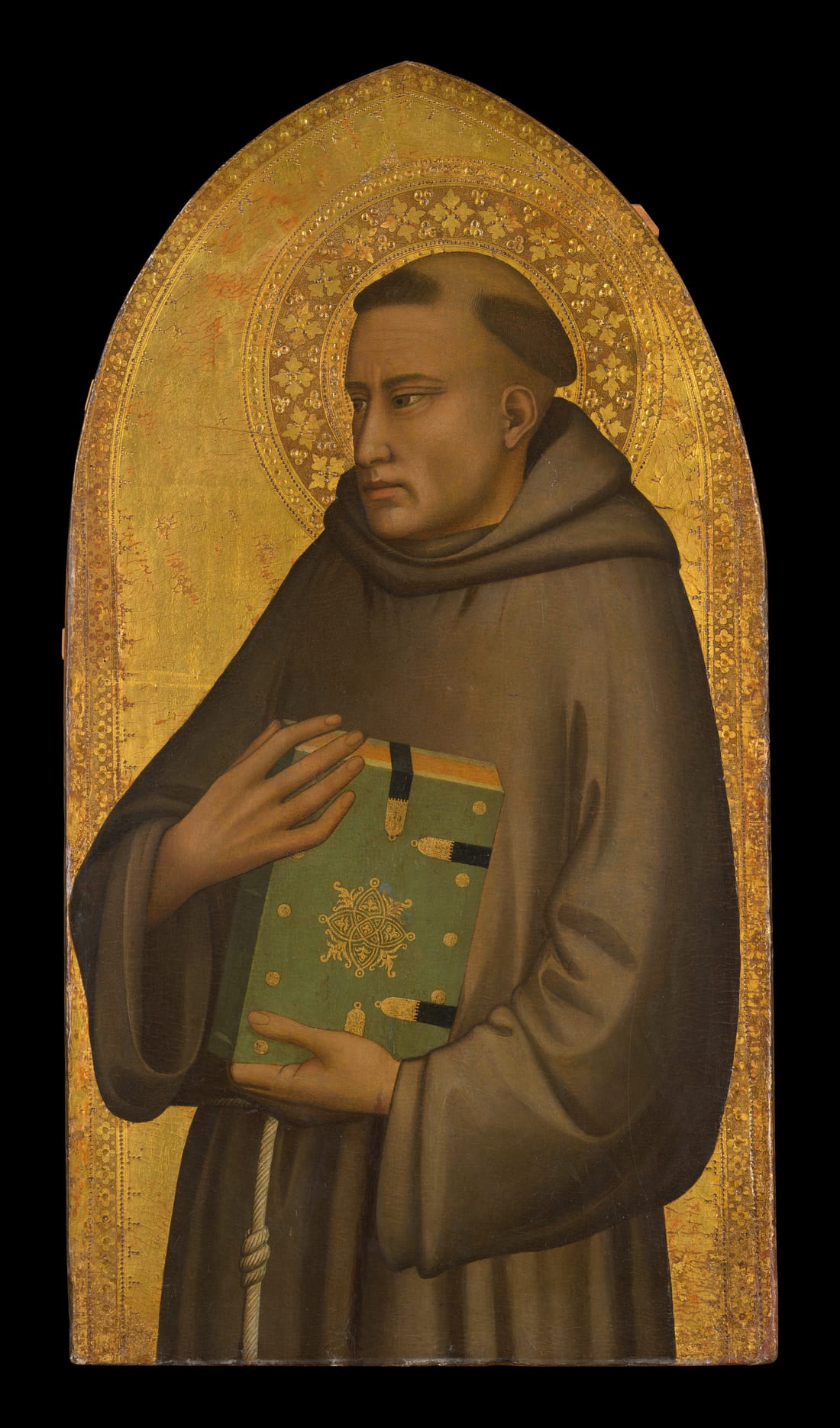
Picture: Maso di Banco, Saint Anthony of Padua, about 1340, The Metropolitan Museum of Art, New York

The words of the prayer

Plain English

If you are looking for miracles:death, error and disaster,demons and leprosy all flee,and the sick rise up healed.

The sea gives way, and chains fall off.Young and old ask for limbs made wholeand for things they have lost, and receive them.

Dangers pass,and need comes to an end.Let those who have known it tell of it;let the people of Padua say so.

The sea gives way, and chains fall off.Young and old ask for limbs made wholeand for things they have lost, and receive them.

Glory to the Father and to the Sonand to the Holy Spirit.

The sea gives way, and chains fall off.Young and old ask for limbs made wholeand for things they have lost, and receive them.

Traditional wording, 1880

If then you ask for miracles,Death, error, all calamities,The leprosy, and demons fly,And health succeeds infirmities.

The sea obeys, and fetters break,And lifeless limbs thou dost restore;Whilst treasures lost are found again,When young or old thine aid implore.

All dangers vanish at thy prayer,And direst need doth quickly flee.Let those who know thy power proclaim—Let Paduans say—These are of thee.

The sea obeys, and fetters break,And lifeless limbs thou dost restore;Whilst treasures lost are found again,When young or old thine aid implore.

To Father, Son, may glory be,And Holy Ghost eternally.

The sea obeys, and fetters break,And lifeless limbs thou dost restore;Whilst treasures lost are found again,When young or old thine aid implore.

Plain English by Wiser Walk, from the Latin. How the wording is made. Traditional wording: Ambrose St John, The Raccolta, 1880.

About St Anthony of Padua

More about St Anthony of PaduaWhy people ask him, his story and his feast days, with his best-known prayer

Where it comes from

Who wrote it

Written by the Franciscan friar Julian of Speyer for the services of St Anthony’s feast, within about 10 years of his death.

Eusèbe Clop, “Le répons miraculeux Si quæris miracula”, Études franciscaines 31 (1914), pages 250 to 279

In Latin

Si quæris miracula,Mors, error, calamitas,Dæmon, lepra fugiunt,Ægri surgunt sani.

Cedunt mare, vincula;Membra resque perditasPetunt et accipiuntJuvenes et cani.

Pereunt pericula,Cessat et necessitas;Narrent hi, qui sentiunt,Dicant Paduani.

Cedunt mare, vincula;Membra resque perditasPetunt et accipiuntJuvenes et cani.

Gloria Patri et Filio,Et Spiritui Sancto.

Cedunt mare, vincula;Membra resque perditasPetunt et accipiuntJuvenes et cani.

From The Raccolta, translated by Ambrose St John, 1880, pages 312 to 314.

Close to this

Every saint’s prayer Saints by need

Suggest a correction

Berean Standard Bible