Sign Up My Profile
Prayers

Orthodox prayers after Holy Communion

The Orthodox prayers of thanksgiving after Holy Communion, and the hymns sung at the Liturgy once everyone has received.

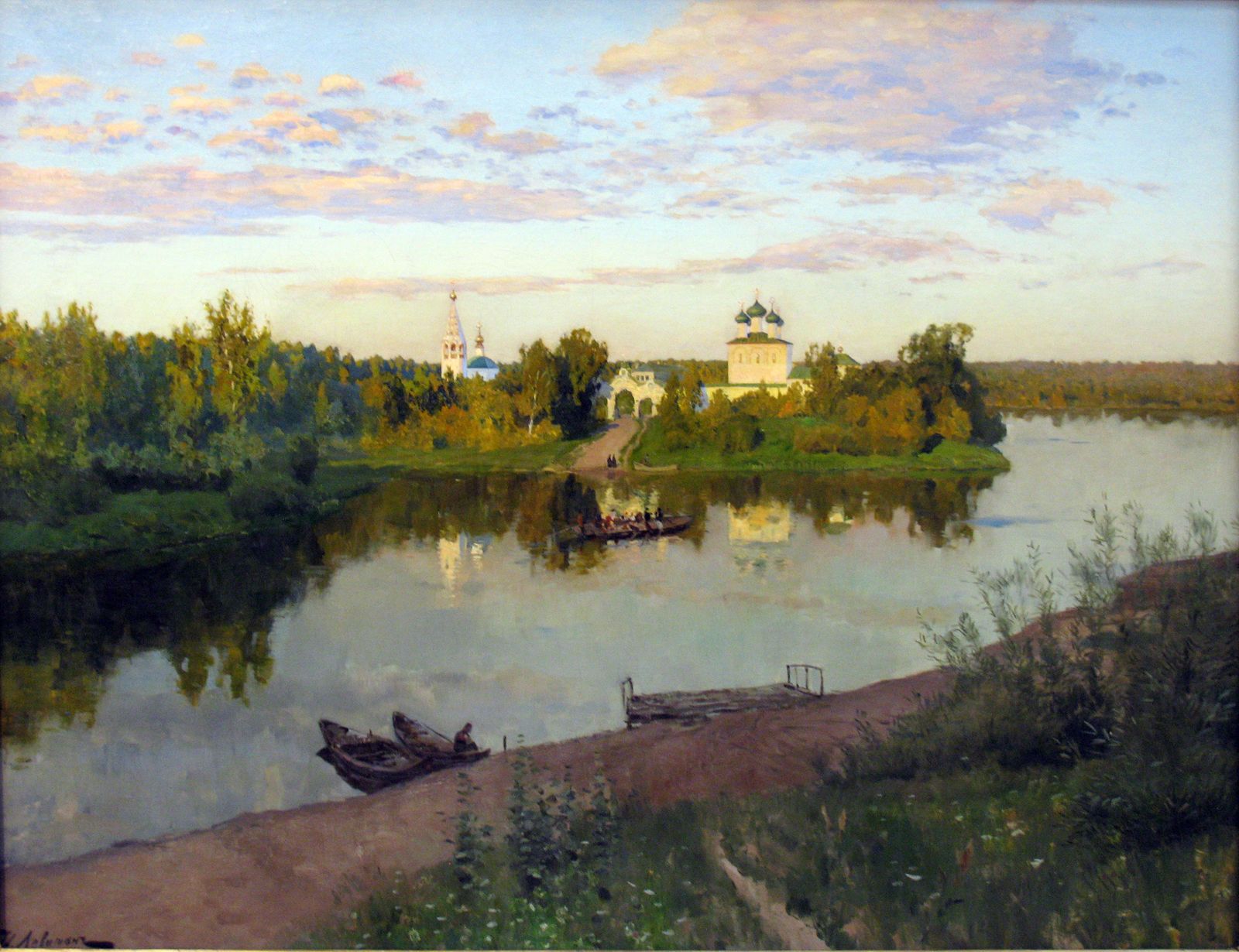
Picture: Isaac Levitan, Evening Bells, 1892

5 prayers

First, give thanks

Thanksgiving after Communion

I thank You, O Lord my God,that You have not rejected me, a sinner,but made me worthyto share in Your holy things.

I thank You that You have let me,though I am unworthy,receive Your pure and heavenly gifts.

O Master, Lover of mankind,You died for our sake and rose again,and gave us these awe-inspiringand life-giving Mysteries of Yoursfor the good and the holinessof our souls and bodies.

Grant that they may be for me toothe healing of soul and body,the driving away of all that is against me,light for the eyes of my heart,peace for the powers of my soul,a faith that is never put to shame,a love without pretence,the fullness of wisdom,the keeping of Your commandments,the growth of Your divine grace,and a home in Your kingdom.

So, kept in Your holiness by these Mysteries,may I always remember Your grace,and live no longer for myself,but for You, our Master and Benefactor.

And so, when I leave this lifein the hope of eternal life,may I come to the rest that has no end,where the sound of those who keep the feastnever ceases,and the joy of those who seethe beauty of Your face, beyond all words,is endless.

For You are the true desireand the joy beyond wordsof those who love You, O Christ our God,and all creation sings Your praisefor ever and ever. Amen.

Traditional wording, 1906

I thank Thee, O Lord my God, that Thou hast not rejected me, a sinner,but hast deemed me worthy to become a partaker of Thy Holy Things.I thank Thee that Thou hast graciously granted unto me, though unworthy,to receive Thy pure and heavenly Gifts.

But, O Master Who lovest mankind, Who for our sake didst die, and didst rise again,and hast graciously bestowed upon us these terrible and life-giving Mysteries,for the blessing and sanctification of our souls and bodies:

Vouchsafe that they may be efficacious for me also unto the healing of my soul and body,unto the averting of everything contrary thereto;unto the enlightenment of the eyes of my heart;unto the peace of my spiritual powers;unto faith invincible; unto love unfeigned;unto the fulfilling of wisdom; unto the keeping of Thy commandments;unto the increase of Thy divine grace and the attainment of Thy kingdom:

that by Thee preserved in Thy holiness I may ever bear in mind Thy grace,and live not unto myself, but unto Thee, our Master and Benefactor.

And so, this life ended in the hope of life everlasting, I may come unto that rest eternal,where the voice of those who keep high festival ceaseth never,and where endless is the sweetness of those who behold the beauty inexpressible of Thy countenance.

For Thou art the true desire and the happiness unutterable of those who love Thee, O Christ our God,and every created being shall laud Thee unto ages of ages. Amen.

The first of the prayers of thanksgiving. It thanks Christ for not turning a sinner away, then asks that Communion bring healing, peace, faith and love, and a life lived for Him.

Plain English by Wiser Walk, from the Greek, with Hapgood’s 1906 translation beside it. How the wording is made. Traditional wording: Isabel F. Hapgood, Service Book of the Holy Orthodox-Catholic Apostolic Church, 1906.

Hapgood’s “terrible” Mysteries is the old sense of the word: they inspire awe.
Where it comes from, and the Greek

To stay close

St Basil’s prayer after Communion

O Master, Christ our God,King of the ages and Creator of all things,I thank You for all the good thingsYou have given me,and for the Communion of Your most pureand life-giving Mysteries.

So I beg You, O Good One, Lover of mankind:keep me under Your shelterand in the shadow of Your wings.

Grant that, with a clean conscience,to my last breath,I may share worthily in Your holy things,for the forgiveness of sinsand for eternal life.

For You are the Bread of life,the Source of holiness,the Giver of good things.To You we give glory,with the Father and the Holy Spirit,now and always, and for ever and ever.Amen.

Traditional wording, 1891

O Lord Christ our God, King of ages, and Creator of the universe,I thank Thee for all the good things Thou hast bestowed on me,but above all, for the participation in Thy pure and life-giving Mysteries.

I therefore pray Thee, good and merciful Lord,keep me under Thy roof and in the shadow of Thy wings,and grant me, in a pure conscience, to my latest breath,worthily to partake of Thy holy Sacrament to the remission of sins and to life eternal.

For Thou art the Bread of life, the Source of sanctification, the Giver of all good;and to Thee we ascribe all glory, with the Father and the Holy Ghost,now and ever, and to ages of ages. Amen.

The second prayer carries the name of St Basil the Great, a bishop of the 300s. This short prayer gives thanks for every good gift and asks to be kept in the shadow of Christ’s wings.

Plain English by Wiser Walk, from the Greek, with Shann’s 1891 translation beside it. How the wording is made. Traditional wording: G. V. Shann, Euchology: A Manual of Prayers of the Holy Orthodox Church, 1891.

Shann follows the Slavonic: “under Thy roof” where the Greek says “under Your shelter”.

Where it comes from, and the Greek

When everyone has received

We have seen the true Light

We have seen the true Light,we have received the heavenly Spirit,we have found the true faith,and we worship the undivided Trinity,for the Trinity has saved us.

Traditional wording, 1891

We have seen the true Light, we have received the heavenly Spirit,we have found the true Faith,and we worship the undivided Trinity, which hath saved us.

Once everyone has received, the priest blesses the people and the choir answers with this hymn of Pentecost. It says what the faithful have just seen, received and found.

Plain English by Wiser Walk, from the Greek, with Shann’s 1891 translation beside it. How the wording is made. Traditional wording: G. V. Shann, Euchology: A Manual of Prayers of the Holy Orthodox Church, 1891.

Where it comes from, and the Greek

For the rest of the day

Let our mouths be filled

Let our mouths be filled with Your praise, O Lord,that we may sing of Your glory,for You have made us worthy to share in Your holy Mysteries.

Keep us in Your holiness,that all day long we may meditate on Your righteousness.Alleluia, alleluia, alleluia.

Traditional wording, 1906

Let our mouths be filled with Thy praise, O Lord, that we may extol Thy glory,for that Thou hast deigned to make us partakers of Thy holy, divine, immortal and life-giving Mysteries.

Establish us in Thy Sanctification, that all the day long we may meditate upon Thy righteousness.Alleluia, alleluia, alleluia.

The choir sings it straight after “We have seen the true Light”. First sung in Constantinople in AD 624, it asks God to keep you in His holiness all day long.

Plain English by Wiser Walk, from the Greek, with Hapgood’s 1906 translation beside it. How the wording is made. Traditional wording: Isabel F. Hapgood, Service Book of the Holy Orthodox-Catholic Apostolic Church, 1906.

Hapgood calls the Mysteries “holy, divine, immortal and life-giving” and writes “establish us”. The Greek sung today, which the plain wording follows, has “Your holy Mysteries” and “keep us”.

Where it comes from, and the Greek

To close

Song of Simeon

Now, Master, You let Your servant go in peace,according to Your word,

for my eyes have seen Your salvation,which You have preparedin the sight of all peoples:

a light for revelation to the nations,and the glory of Your people Israel.

Traditional wording, 1906

Lord, now lettest Thou Thy servant depart in peace, according to Thy word.

For mine eyes have seen Thy salvation, which Thou hast prepared before the face of all people.

To be a light to lighten the Gentiles, and to be the glory of Thy people Israel.

The words of Simeon when he held the infant Jesus: now let Your servant go in peace, for my eyes have seen Your salvation. The prayers after Communion end with them.

Plain English by Wiser Walk, from the Greek, with Hapgood’s 1906 translation beside it. How the wording is made. Traditional wording: Isabel F. Hapgood, Service Book of the Holy Orthodox-Catholic Apostolic Church, 1906.

Where it comes from, and the Greek

Scripture for this

56Whoever eats My flesh and drinks My blood remains in Me, and I in him. 57Just as the living Father sent Me and I live because of the Father, so also the one who feeds on Me will live because of Me.

John 6:56-57 Jesus promises that whoever eats His flesh and drinks His blood remains in Him and He in them.

23For I received from the Lord what I also passed on to you: The Lord Jesus, on the night He was betrayed, took bread, 24and when He had given thanks, He broke it and said, “This is My body, which is for you; do this in remembrance of Me.” 25In the same way, after supper He took the cup, saying, “This cup is the new covenant in My blood; do this, as often as you drink it, in remembrance of Me.” 26For as often as you eat this bread and drink this cup, you proclaim the Lord’s death until He comes.

1 Corinthians 11:23-26 Paul hands on the Lord’s words at the Last Supper. Each Communion proclaims the Lord’s death until He comes.

30While He was reclining at the table with them, He took bread, spoke a blessing and broke it, and gave it to them. 31Then their eyes were opened and they recognized Jesus—and He disappeared from their sight. 32They asked each other, “Were not our hearts burning within us as He spoke with us on the road and opened the Scriptures to us?”

Luke 24:30-32 At Emmaus two disciples knew the risen Jesus as He broke the bread. Their hearts had burned as He spoke with them on the road.

12How can I repay the LORD for all His goodness to me? 13I will lift the cup of salvation and call on the name of the LORD.

Psalm 116:12-13 The psalmist asks how he can repay the Lord for all His goodness, then answers by lifting the cup of salvation.

15Let the peace of Christ rule in your hearts, for to this you were called as members of one body. And be thankful. 16Let the word of Christ richly dwell within you as you teach and admonish one another with all wisdom, and as you sing psalms, hymns, and spiritual songs with gratitude in your hearts to God. 17And whatever you do, in word or deed, do it all in the name of the Lord Jesus, giving thanks to God the Father through Him.

Colossians 3:15-17 Paul’s rule for the whole of life: let the peace of Christ rule in your hearts, and be thankful.

Bible text: Berean Standard Bible, public domain.

A psalm for this

I will bless the LORD at all times; His praise will always be on my lips.

Psalm 34:1

In Isabel Hapgood’s 1906 service book, the church’s reader reads Psalm 34 aloud near the end of the Liturgy, after Communion. It opens with a promise to bless the Lord at all times.

Psalm 34 Read the whole psalm, with St Athanasius’s advice on when to pray it.

Close to this

All prayers

Quiz What prayer do you need right now? A few honest taps about where you are, and a prayer of the Church for exactly that. 8 questions, about 3 minutes. Start

Suggest a correction

Berean Standard Bible