Sign Up My Profile
Prayers

Orthodox prayers before Holy Communion

The prayers Orthodox Christians say before Holy Communion, as they prepare and in the last moments before they receive.

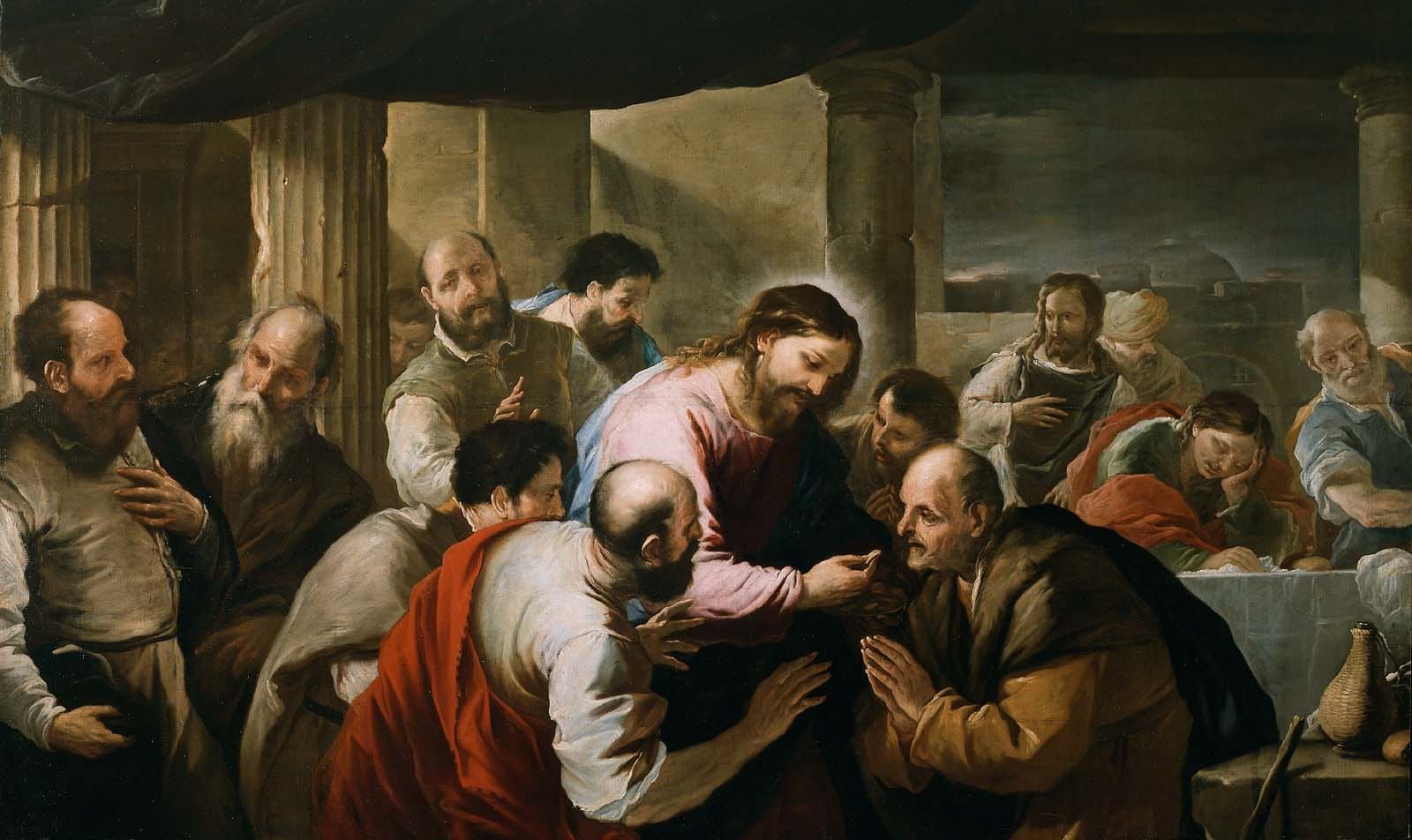
Picture: Luca Giordano, The Communion of the Apostles, before 1705

5 prayers

Just before you receive

I believe, O Lord

I believe, O Lord, and I confessthat You are truly the Christ,the Son of the living God,Who came into the world to save sinners,of whom I am the first.

I also believe that this is Your own most pure Body,and that this is Your own precious Blood.

Therefore I pray You:have mercy on me and forgive my sins,voluntary and involuntary,in word and in deed,knowingly and unknowingly.

And make me worthy to share in Your most pure Mysterieswithout condemnation,for the forgiveness of sinsand for eternal life.Amen.

Traditional wording, 1906

I believe, O Lord, and I confess, that Thou art in very truth the Christ, the Son of the living God,Who didst come into the world to save sinners, of whom I am chief.

And I believe that this is, of a truth, Thine all-pure Body,and that this is Thine own precious Blood.

Wherefore, I beseech Thee, have mercy upon me, and forgive my transgressions,whether voluntary or involuntary; whether of word or of deed; whether committed with knowledge or in ignorance.

And vouchsafe that I may partake without condemnation of Thine all-pure Mysteries,unto the remission of my sins, and unto life eternal. Amen.

Said just before Communion at every Divine Liturgy. In Russian parishes the priest reads it aloud on behalf of everyone who will receive.

Plain English by Wiser Walk, from the Greek, with Hapgood’s 1906 translation beside it. How the wording is made. Traditional wording: Isabel F. Hapgood, Service Book of the Holy Orthodox-Catholic Apostolic Church, 1906.

Where it comes from, and the Greek

On the way to the cup

Of Your mystical supper

Receive me today, O Son of God,as a partaker of Your mystical supper.

For I will not tell Your mystery to Your enemies,nor give You a kiss as Judas did,but like the thief I confess You:

Remember me, O Lord, in Your kingdom.

Traditional wording, 1906

Of Thy Mystical Supper, O Son of God, accept me to-day as a communicant;

for I will not speak of Thy Mystery to Thine enemies,neither like Judas will I give Thee a kiss;

but like the thief will I confess Thee:Remember me, O Lord, in Thy kingdom.

Said straight after “I believe, O Lord”. It asks for a place at Christ’s supper, in the words of the thief on the cross: “Remember me.”

Plain English by Wiser Walk, from the Greek, with Hapgood’s 1906 translation beside it. How the wording is made. Traditional wording: Isabel F. Hapgood, Service Book of the Holy Orthodox-Catholic Apostolic Church, 1906.

Where it comes from, and the Greek

The morning you receive

St Basil’s prayer before Communion

I know, O Lord, that I receive Your most pure Bodyand Your precious Blood unworthily.I am guilty, and I eat and drink judgment on myself,not discerning the Body and Blood of Christ my God.

But I take courage from Your compassionand come to You, Who said:“Whoever eats My flesh and drinks My bloodabides in Me, and I in him.”

So have compassion, O Lord,and do not make an example of me, a sinner,but deal with me according to Your mercy.

Let these holy things be given to mefor healing, cleansing, enlightenment and protection,for salvation and holiness of soul and body,for driving away every evil imagining, every evil deedand every work of the devilat work in my body through my thoughts;

for boldness and love toward You,for a life set right and made firm,for growth in virtue and perfection,for keeping the commandments,for communion with the Holy Spirit,for provision on the way to eternal life,and for an acceptable defence before Your fearful judgment seat:not for judgment or condemnation.

Traditional wording, 1891

I know, O Lord, that I receive unworthily Thy most pure Body and Thy precious Blood,that I am guilty, O Lord, and that I eat and drink to my own condemnation,not discerning the Body and Blood of Christ my God;

but, trusting in Thy mercy, I come unto Thee Who hast said,He that eateth My Flesh and drinketh My Blood shall abide in Me and I in him.

Have compassion upon me therefore, O Lord, and make not an example of me, Thy sinful servant;but do with me according to Thy great mercy,

and grant that these holy things may rather operate in me to the healing, purifying, enlightening, guarding, saving and sanctifying of my soul and body,to the overthrow of every imagination, evil action, or work of the devil,to loving and acknowledging Thee, to the amendment and steadfastness of my life,to the increase of virtue, to the keeping of Thy commandments,to the fellowship of the Holy Spirit, to the hope of eternal life,and to be an acceptable apology before Thine awful judgment seat. Amen.

One of the prayers read on the morning of Communion. It owns up to coming unworthily, then leans on Christ’s own promise.

Plain English by Wiser Walk, from the Greek, with Shann’s 1891 translation beside it. How the wording is made. Traditional wording: G. V. Shann, Euchology: A Manual of Prayers of the Holy Orthodox Church, 1891.

Shann leaves out a few words the Greek has: the devil’s work “at work in my body through my thoughts”, “and perfection”, and the last line, “not for judgment or condemnation”. He ends with “Amen” instead.

Where it comes from, and the Greek

When bad thoughts will not leave you

I stand before the doors of Your temple

I stand before the doors of Your temple,yet I do not put away my evil thoughts.But You, O Christ God,Who justified the tax collector, had mercy on the Canaanite woman,and opened the gates of paradise to the thief,open to me the compassion of Your love for mankind.Receive me as I come to You and touch You,as You received the sinful woman and the woman who had been bleeding.

For one touched the fringe of Your cloak and was easily healed;the other clung to Your pure feet and went away freed from her sins.

But I, poor wretch, dare to receive Your whole Body.Do not let me be burned up,but receive me as You received them,and give light to the senses of my soul,burning away the guilt of my sins,through the prayers of her who gave birth to You without seed,and of the powers of heaven.For You are blessed for ever and ever. Amen.

Traditional wording, 1906

I stand before the doors of Thy temple, yet refrain not from wicked thoughts.But O Christ-God, Who didst justify the publican, and didst show mercy upon the woman of Cana, and didst open the doors of Paradise to the thief, — open Thou unto me also Thy loving-kindness,and accept Thou me, who am come and who touch Thee, as Thou didst accept also the woman who was a sinner, and the woman who had an issue of blood.

One of them, through touching the hem of Thy garment, received perfect healing; and the other, clasping Thine all-pure feet, carried away the forgiveness of her sins.

And let me not be consumed, all-accursed though I be, through daring to receive Thy Body.But accept Thou me, as Thou didst accept them, and illumine my spiritual senses, consuming my sinful offences:through the prayers of Her who bore Thee without seed, and of the heavenly Powers: For blessed art Thou, unto ages of ages. Amen.

The prayer books credit it to the monk and hymn writer St John of Damascus. In it you stand at the church doors and ask Christ to receive you as He received the tax collector, the thief and the sinful woman.

Plain English by Wiser Walk, from the Greek, with Hapgood’s 1906 translation beside it. How the wording is made. Traditional wording: Isabel F. Hapgood, Service Book of the Holy Orthodox-Catholic Apostolic Church, 1906.

Hapgood writes “all-accursed” where the Greek has “wretched”, and “Thy Body” where it has “Your whole Body”. Her “woman of Cana” is the Canaanite woman.

Where it comes from, and the Greek

With longing and joy

You have captivated me with longing

You have captivated me with longing, O Christ,and changed me by Your divine love.But burn away my sins with spiritual fire,and make me worthy to be filled with the delight that is in You,so that I may leap for joy, O Good One,and praise Your two comings.

Traditional wording, 2011

Thou hast sweetened me with Thy love, O Christ, and by Thy Divine zeal hast Thou changed me.But do Thou consume my sins with immaterial fire, and vouchsafe me to be filled with delight in Thee;that, leaping for joy, O Good One, I may magnify Thy two comings.

A short hymn near the end of the prayers to prepare. It asks Christ, Who has drawn you to Him with longing, to burn away your sins so that you can leap for joy.

Plain English by Wiser Walk, from the Greek, with the Jordanville translation beside it. How the wording is made. Traditional wording: Holy Trinity Monastery, Jordanville, Prayer Book, 2011.

The Jordanville English follows the Slavonic, which opens “You have sweetened me with love”. The plain wording follows the Greek, which opens “You have captivated me with longing”.

Where it comes from, and the Greek

Scripture for this

23For I received from the Lord what I also passed on to you: The Lord Jesus, on the night He was betrayed, took bread, 24and when He had given thanks, He broke it and said, “This is My body, which is for you; do this in remembrance of Me.” 25In the same way, after supper He took the cup, saying, “This cup is the new covenant in My blood; do this, as often as you drink it, in remembrance of Me.” 26For as often as you eat this bread and drink this cup, you proclaim the Lord’s death until He comes. 27Therefore, whoever eats the bread or drinks the cup of the Lord in an unworthy manner will be guilty of sinning against the body and blood of the Lord. 28Each one must examine himself before he eats of the bread and drinks of the cup. 29For anyone who eats and drinks without recognizing the body eats and drinks judgment on himself.

1 Corinthians 11:23-29 Paul hands on the Lord’s Supper, then asks each one to examine himself before eating the bread and drinking the cup.

53So Jesus said to them, “Truly, truly, I tell you, unless you eat the flesh and drink the blood of the Son of Man, you have no life in you. 54Whoever eats My flesh and drinks My blood has eternal life, and I will raise him up at the last day. 55For My flesh is real food, and My blood is real drink. 56Whoever eats My flesh and drinks My blood remains in Me, and I in him. 57Just as the living Father sent Me and I live because of the Father, so also the one who feeds on Me will live because of Me. 58This is the bread that came down from heaven. Unlike your fathers, who ate the manna and died, the one who eats this bread will live forever.”

John 6:53-58 Jesus: whoever eats My flesh and drinks My blood has eternal life, and abides in Me.

26While they were eating, Jesus took bread, spoke a blessing and broke it, and gave it to the disciples, saying, “Take and eat; this is My body.” 27Then He took the cup, gave thanks, and gave it to them, saying, “Drink from it, all of you. 28This is My blood of the covenant, which is poured out for many for the forgiveness of sins.”

Matthew 26:26-28 The Last Supper: Jesus gives His disciples the bread and the cup, “for the forgiveness of sins”.

23So if you are offering your gift at the altar and there remember that your brother has something against you, 24leave your gift there before the altar. First go and be reconciled to your brother; then come and offer your gift.

Matthew 5:23-24 Make peace with your brother before you bring your gift. Old verses in the Orthodox prayers before Communion say the same.

5Then I said: “Woe is me, for I am ruined, because I am a man of unclean lips dwelling among a people of unclean lips; for my eyes have seen the King, the LORD of Hosts.” 6Then one of the seraphim flew to me, and in his hand was a glowing coal that he had taken with tongs from the altar. 7And with it he touched my mouth and said: “Now that this has touched your lips, your iniquity is removed and your sin is atoned for.”

Isaiah 6:5-7 A burning coal touches the prophet’s lips and takes away his guilt. The priest says these words after he receives from the cup.

Bible text: Berean Standard Bible, public domain.

A psalm for this

You prepare a table before me in the presence of my enemies. You anoint my head with oil; my cup overflows.

Psalm 23:5

After their opening prayers, the Greek and the Russian prayers before Communion both turn first to this psalm: You prepare a table before me.

Psalm 23 Read the whole psalm, with St Athanasius’s advice on when to pray it.

Close to this

All prayers

Quiz What prayer do you need right now? A few honest taps about where you are, and a prayer of the Church for exactly that. 8 questions, about 3 minutes. Start

Suggest a correction

Berean Standard Bible