
When it is said
Read with the other prayers that prepare a person for Holy Communion.
In both the Greek and the Russian prayer books it comes just before “I believe, O Lord”.
Where it comes from
Author by tradition
Credited to St John of Damascus
The Greek and Russian prayer books both head this prayer with the name of St John of Damascus. He was born in Damascus about AD 680, into a Christian family. He became a monk at the monastery of St Sabbas and spent the rest of his life there, writing books and hymns for the Church.
Azbyka.ru prayer book: the order of prayers before Holy Communion (in Church Slavonic and Russian); Orthodox Church in America, Venerable John of Damascus
Not in the older Russian books
The liturgy scholar Fr Mikhail Zheltov set the prayers before Communion in the old and new prayer books side by side. The older Russian printings had 18 prayers before Communion, but not this one. Today the Greek books place it ninth and the Russian books tenth.
Fr Mikhail Zheltov, The forming of the core of the Order for Holy Communion (in Russian)
What the words mean
Two women who touched Him
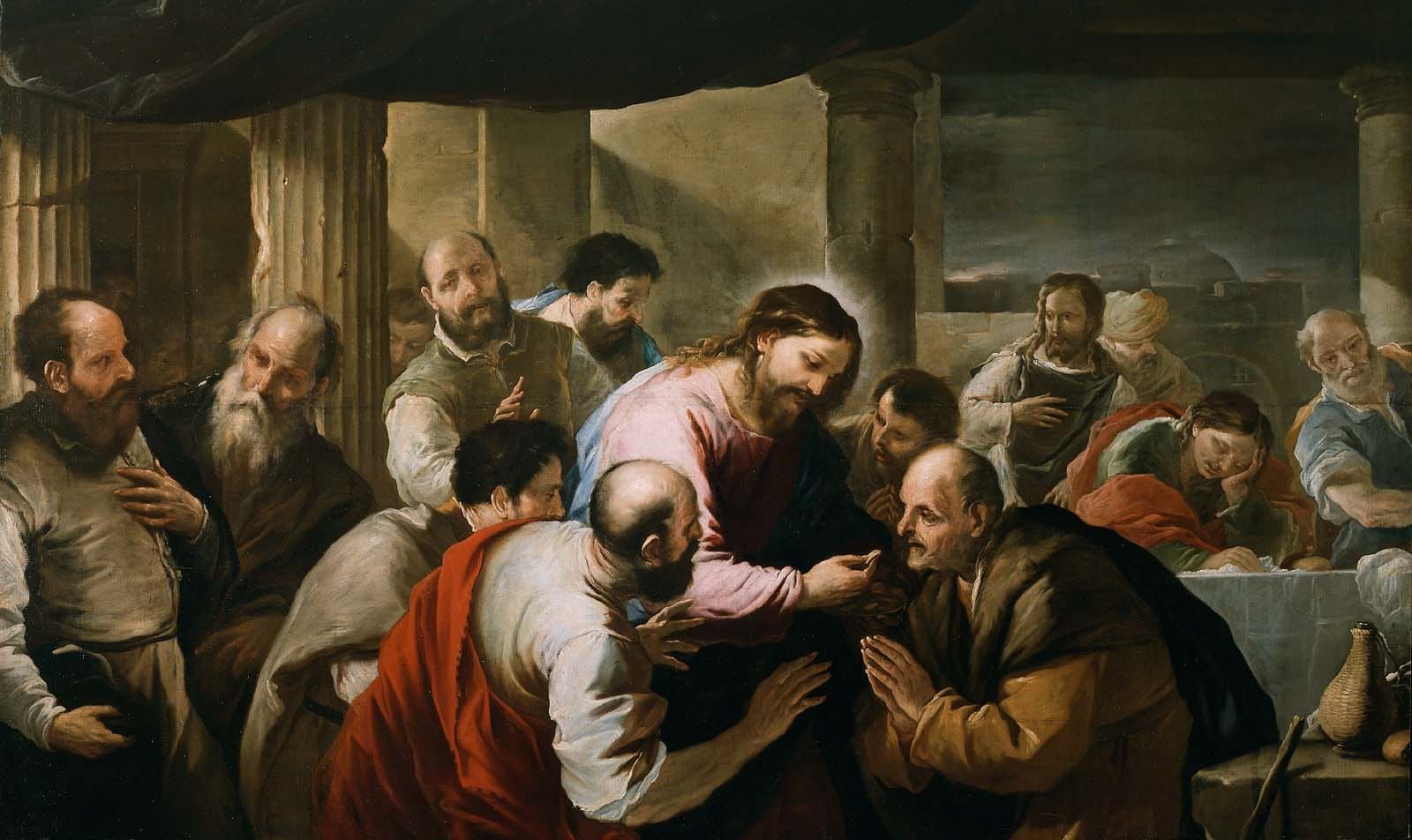
The prayer leans on two women in Luke’s Gospel. One had been bleeding for 12 years and was healed when she touched the fringe of His cloak (Luke 8:43-44). The other wet His feet with her tears, and He told her that her sins were forgiven (Luke 7:37-38, Luke 7:48). They touched only His cloak and His feet, while the one praying is about to receive His whole Body.
The Scripture in it
“But the tax collector stood at a distance, unwilling even to lift up his eyes to heaven. Instead, he beat his breast and said, ‘God, have mercy on me, a sinner!’ I tell you, this man, rather than the Pharisee, went home justified. For everyone who exalts himself will be humbled, but the one who humbles himself will be exalted.”
“O woman,” Jesus answered, “your faith is great! Let it be done for you as you desire.” And her daughter was healed from that very hour.
Then he said, “Jesus, remember me when You come into Your kingdom!” And Jesus said to him, “Truly I tell you, today you will be with Me in Paradise.”
… including a woman who had suffered from bleeding for twelve years. She had spent all her money on physicians, but no one was able to heal her. She came up behind Jesus and touched the fringe of His cloak, and immediately her bleeding stopped.
When a sinful woman from that town learned that Jesus was dining there, she brought an alabaster jar of perfume. As she stood behind Him at His feet weeping, she began to wet His feet with her tears and wipe them with her hair. Then she kissed His feet and anointed them with the perfume.
Then Jesus said to her, “Your sins are forgiven.”
Bible text: Berean Standard Bible, public domain.
In Greek
Πρὸ τῶν θυρῶν τοῦ ναοῦ Σου παρέστηκα καὶ τῶν δεινῶν λογισμῶν οὐκ ἀφίσταμαι,
ἀλλὰ Σύ, Χριστὲ ὁ Θεός, ὁ Τελώνην δικαιώσας καὶ Χαναναίαν ἐλεήσας καὶ τῷ Λῃστῇ παραδείσου πύλας ἀνοίξας,
ἄνοιξόν μοι τὰ σπλάγχνα τῆς φιλανθρωπίας Σου καὶ δέξαι με προσερχόμενον καὶ ἁπτόμενόν Σου, ὡς τὴν Πόρνην καὶ τὴν Αἱμόῤῥουν·
ἡ μὲν γάρ, τοῦ κρασπέδου Σου ἁψαμένη εὐχερῶς τὴν ἴασιν ἔλαβεν, ἡ δέ, τοὺς Σοὺς ἀχράντους πόδας κρατήσασα, τὴν λύσιν τῶν ἁμαρτημάτων ἐκομίσατο.
Ἐγὼ δὲ ὁ ἐλεεινός, ὅλον τὸ Σῶμα τολμῶν δέξασθαι, μὴ καταφλεχθείην·
ἀλλὰ δέξαι με, ὥσπερ ἐκείνας, καὶ φώτισόν μου τὰ τῆς ψυχῆς αἰσθητήρια, καταφλέγων μου τὰ τῆς ἁμαρτίας ἐγκλήματα,
πρεσβείαις τῆς ἀσπόρως τεκούσης Σε καὶ τῶν ἐπουρανίων δυνάμεων.
Ὅτι εὐλογητὸς εἶ εἰς τοὺς αἰῶνας τῶν αἰώνων. Ἀμήν.