Sign Up My Profile
Prayers

The Akathist hymn

A hymn of 24 stanzas greeting the Mother of God. In the Greek use it is sung in four parts on Lent’s first four Fridays, and whole on the fifth.

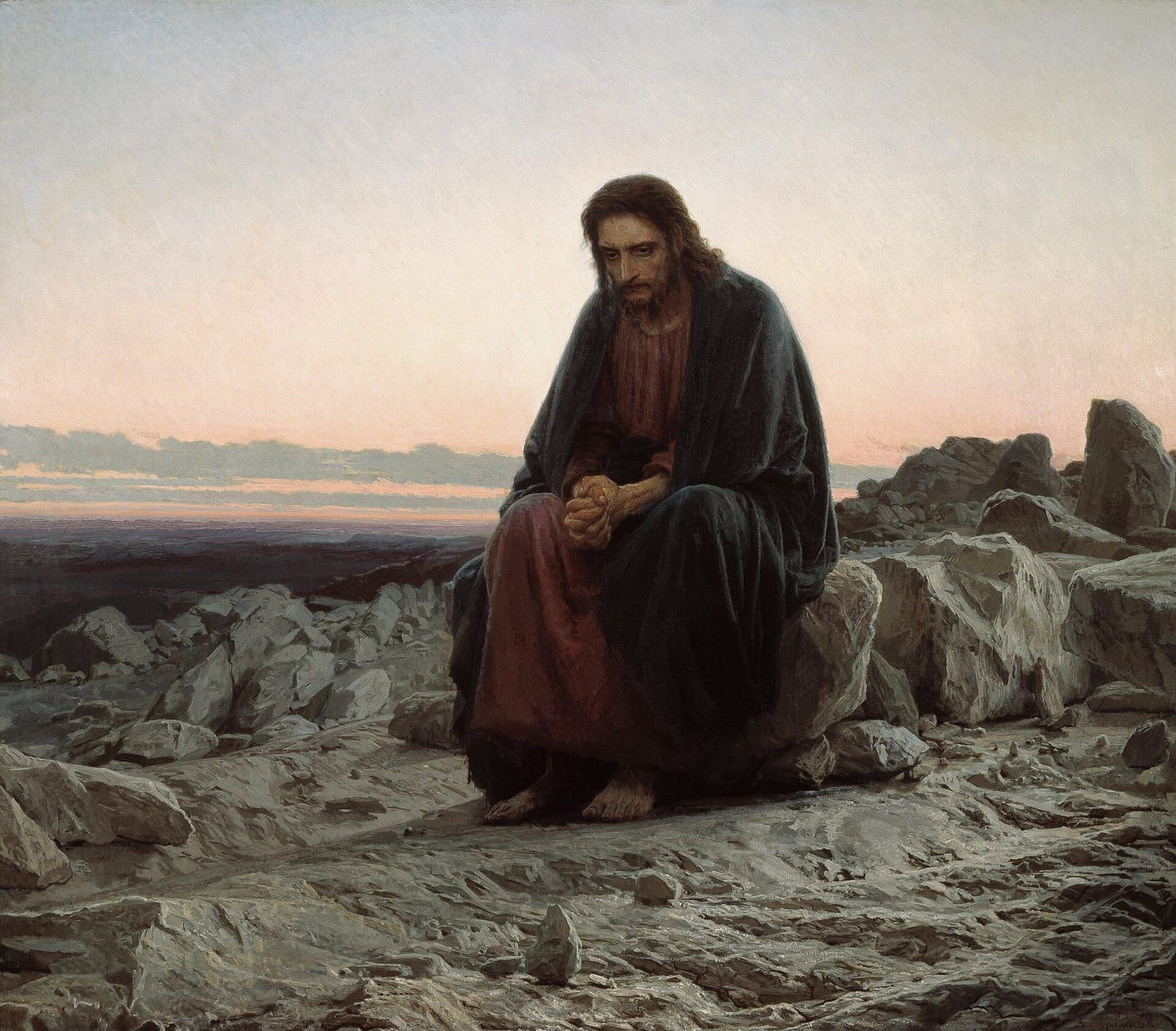
Picture: Ivan Kramskoi, Christ in the Wilderness, 1872

The words of the prayer

Four parts · about 20 minutes

What this is

Plain English

To you, my champion and leader in battle,I, your city, set free from terrors,dedicate songs of victory and of thanks,O Mother of God.But since no one can fight against your might,set me free from every kind of danger,so that I may cry to you:Rejoice, O bride unwedded!

The first partAn angel of the highest rank was sent from heavento say to the Mother of God: “Rejoice!”Three timesAnd as he spoke with his bodiless voice,he saw You, O Lord, taking on a body.He stood there amazed,and he cried out to her these words:Rejoice, you through whom joy will shine out.Rejoice, you through whom the curse will come to an end.Rejoice, you who call fallen Adam back.Rejoice, you who redeem the tears of Eve.Rejoice, height human thought can hardly climb.Rejoice, depth even the eyes of angels can hardly see.Rejoice, for you are the throne of the King.Rejoice, for you carry the One Who carries all things.Rejoice, star that makes the Sun appear.Rejoice, womb in which God took flesh.Rejoice, you through whom creation is made new.Rejoice, you through whom the Creator becomes a baby.Rejoice, O bride unwedded!

Knowing herself to be pure,the holy one spoke boldly to Gabriel:“Your strange words seem hard for my soul to accept.How can you speak of bearing a childfrom a conception without seed,as you cry out: Alleluia?”

The Virgin sought to understandwhat no one can understand,and she cried out to the ministering angel:“How can a Son be born from a pure body?Tell me.”He answered her in fear,and yet he cried out like this:Rejoice, you who were let into a plan too deep for words.Rejoice, the faith of those who pray in silence.Rejoice, the beginning of Christ’s wonders.Rejoice, the sum of His teaching.Rejoice, ladder from heaven, by which God came down.Rejoice, bridge that carries those on earth to heaven.Rejoice, the wonder the angels tell of again and again.Rejoice, the wound the demons wail over again and again.Rejoice, you who gave birth to the Light in a way no words can tell.Rejoice, you who taught no one how it was done.Rejoice, you who rise above the knowledge of the wise.Rejoice, you who fill the minds of the faithful with light.Rejoice, O bride unwedded!

Then the power of the Most High overshadowed her,who had never known marriage,so that she would conceive.It showed her fruitful wombto be a pleasant field for allwho want to reap salvation,as they sing: Alleluia.

With God in her womb,the Virgin hurried to Elizabeth.Elizabeth’s unborn child knew Mary’s greeting at once,and he was glad.Leaping as though he were singing,he cried out to the Mother of God:Rejoice, vine branch of a shoot that never withers.Rejoice, you who hold a fruit that never spoils.Rejoice, you who tend the Farmer Who loves mankind.Rejoice, you who grow the One Who plants our life.Rejoice, field that yields a rich harvest of mercies.Rejoice, table laden with atonement in plenty.Rejoice, for you make the meadow of delight bloom again.Rejoice, for you make ready a harbor for souls.Rejoice, incense of intercession that God accepts.Rejoice, atonement for the whole world.Rejoice, God’s good will toward mortals.Rejoice, the boldness of mortals before God.Rejoice, O bride unwedded!

The chaste Joseph had a storm of doubting thoughts inside him,and he was troubled.He saw that you were unmarried,and he suspected you had been unfaithful, O blameless one.But when he learned that you had conceivedby the Holy Spirit, he said: Alleluia.

The second part, after the kontakion againThe shepherds heard the angelssinging of Christ’s coming in the flesh.They ran to Him as to a shepherd,and they saw Him as a spotless lambWho had been fed in Mary’s womb.Singing her praise, they said:Rejoice, mother of the Lamb and the Shepherd.Rejoice, fold of the spiritual sheep.Rejoice, defense against unseen enemies.Rejoice, you who open the gates of paradise.Rejoice, for the things of heaven rejoice with the earth.Rejoice, for the things of earth dance with the heavens.Rejoice, never-silent voice of the apostles.Rejoice, unbeaten courage of the martyrs.Rejoice, firm foundation of the faith.Rejoice, shining sign of grace.Rejoice, you through whom Hades was stripped bare.Rejoice, you through whom we are clothed in glory.Rejoice, O bride unwedded!

The Magi saw the star that led the way to God,and they followed its light.They held on to it like a lamp,and by it they searched for a mighty King.When they reached the One no one can reach,they rejoiced and cried out to Him: Alleluia.

The sons of the Chaldeans saw in the Virgin’s handsthe One Who made human beings with His hand.They knew Him as the Master,though He had taken the form of a servant.So they hurried to honor Him with gifts,and to cry out to the blessed one:Rejoice, mother of the Star that never sets.Rejoice, first light of the mystical day.Rejoice, you who put out the furnace of deceit.Rejoice, you who give light to those who learn the mystery of the Trinity.Rejoice, you who drove the cruel tyrant from his throne.Rejoice, you who showed us Christ the Lord, Who loves mankind.Rejoice, you who set us free from a savage religion.Rejoice, you who pull us out of the mud of our deeds.Rejoice, you who put an end to the worship of fire.Rejoice, you who free us from the flame of the passions.Rejoice, you who guide the faithful to self-control.Rejoice, joy of all generations.Rejoice, O bride unwedded!

The Magi became heralds who carried God,and they went back to Babylon.They had fulfilled Your prophecyand preached You to all as the Christ,and they left Herod behind as a foolwho did not know how to sing: Alleluia.

In Egypt You shone the light of truthand drove away the darkness of lies.Egypt’s idols could not stand up to Your strength, O Savior,and they fell.The people set free from themcried out to the Mother of God:Rejoice, you who raise up the human race.Rejoice, you who bring down the demons.Rejoice, you who trampled on the error of deceit.Rejoice, you who exposed the trickery of idols.Rejoice, sea that drowned the unseen Pharaoh.Rejoice, rock that gave the thirsty life to drink.Rejoice, pillar of fire that guides those in darkness.Rejoice, shelter of the world, wider than a cloud.Rejoice, food that takes the place of manna.Rejoice, you who serve a holy feast.Rejoice, the promised land.Rejoice, you from whom flow honey and milk.Rejoice, O bride unwedded!

Simeon was about to leavethis present age of deceitwhen You were handed to him as a baby.But he knew You as perfect God as well,and so he was astonished at Your wisdombeyond words, and he cried: Alleluia.

The third part, after the kontakion againThe Creator showed a new creationto us, whom He had made,when He sprang from a womb without seedand kept it whole, as it had been,so that we would see the wonderand praise her, crying out:Rejoice, flower that never decays.Rejoice, crown of self-control.Rejoice, you who shine with the likeness of the resurrection.Rejoice, you who show the life of the angels.Rejoice, tree of bright fruit that feeds the faithful.Rejoice, tree of shady leaves that shelters many.Rejoice, you who carry in your womb the Guide of those who wander.Rejoice, you who give birth to the Redeemer of captives.Rejoice, you who plead with the righteous Judge.Rejoice, forgiveness for many who stumble.Rejoice, robe of confidence for the naked.Rejoice, tender love that overcomes every desire.Rejoice, O bride unwedded!

Now that we have seen this strange birth,let us become strangers to the worldand set our minds on heaven.This is why God on highappeared on earth as a humble man:He wanted to draw up to the heightsthose who cry out to Him: Alleluia.

The Word, Whom nothing can contain,was wholly here below,and yet not absent at all from above.For this was God stooping down,not a move from one place to another.He was born of a virgin filled with God,who heard these words:Rejoice, room for the God no room can hold.Rejoice, door of a holy mystery.Rejoice, news the unbelievers doubt.Rejoice, boast the faithful do not doubt.Rejoice, all-holy chariot of Him Who rides upon the cherubim.Rejoice, finest dwelling of Him Who sits upon the seraphim.Rejoice, you who brought opposites together.Rejoice, you who joined virginity and childbirth.Rejoice, you through whom the transgression was undone.Rejoice, you through whom paradise was opened.Rejoice, key of Christ’s kingdom.Rejoice, hope of good things that last for ever.Rejoice, O bride unwedded!

All the angels were amazedat the great work of Your becoming man.For they saw that the God no one can approachhad become a man whom all could approach.He lived among us,and He heard from all: Alleluia.

Before you, O Mother of God,we see the finest speakersas silent as fish.They are at a loss to explainhow you remain a virginand yet were able to give birth.But we marvel at the mystery,and we cry out in faith:Rejoice, vessel of the wisdom of God.Rejoice, storehouse of His providence.Rejoice, you who show the philosophers to be fools.Rejoice, you who show the masters of argument to be without sense.Rejoice, for the clever debaters have been made foolish.Rejoice, for the makers of myths have withered away.Rejoice, you who tear apart the webs the Athenians wove.Rejoice, you who fill the nets of the fishermen.Rejoice, you who draw us out of the depths of ignorance.Rejoice, you who fill many with the light of knowledge.Rejoice, ship for those who want to be saved.Rejoice, harbor for those who sail through life.Rejoice, O bride unwedded!

Wanting to save the world,the One Who set all things in ordercame to it of His own will.As God He is the Shepherd,yet for our sake He appeared as a man like us.Like calling to like, He called us,and as God He hears: Alleluia.

The fourth part, after the kontakion againO Virgin Mother of God,you are a wall for virginsand for all who run to you for refuge.For the Maker of heaven and earthmade you ready, O spotless one.He lived in your womb,and He taught all to call out to you:Rejoice, pillar of virginity.Rejoice, gate of salvation.Rejoice, you who lead the way to being made new in spirit.Rejoice, you who supply the goodness of God.Rejoice, for you gave new birth to those conceived in shame.Rejoice, for you brought to their senses those robbed of their minds.Rejoice, you who bring to nothing the one who corrupts minds.Rejoice, you who gave birth to the Sower of purity.Rejoice, bridal chamber of a marriage without seed.Rejoice, you who join the faithful to the Lord.Rejoice, good nurse of young virgins.Rejoice, you who make holy souls ready as brides.Rejoice, O bride unwedded!

Every hymn falls shortthat tries to matchthe great number of Your mercies.If we offered You, O holy King,songs as countless as the sand,we would still do nothing worthyof what You have given us,who cry out to You: Alleluia.

We see the holy Virginas a lamp that holds the light,shining for those in darkness.She kindles the light that is not made of matterand leads all to the knowledge of God.She lights up the mind with her brightness,and she is honored with these words:Rejoice, ray of the spiritual Sun.Rejoice, beam of the light that never sets.Rejoice, lightning that lights up souls.Rejoice, you who strike enemies with terror like thunder.Rejoice, for you make the bright light dawn.Rejoice, for you make the river of many streams pour out.Rejoice, you who paint a picture of the baptismal pool.Rejoice, you who take away the filth of sin.Rejoice, basin that washes the conscience clean.Rejoice, bowl in which joy is mixed.Rejoice, scent of the fragrance of Christ.Rejoice, life of the mystical feast.Rejoice, O bride unwedded!

The One Who pays the debts of all peoplewanted to forgive their ancient debts.So He came Himself to live among thosewho had gone away from His grace.He tore up the record of their debt,and He hears from all: Alleluia.

As we sing of the Child you bore,we all praise you, O Mother of God,as a living temple.For the Lord, Who holds all things in His hand,lived in your womb.He made you holy and glorious,and He taught all to cry out to you:Rejoice, tabernacle of God the Word.Rejoice, holy one greater than the saints.Rejoice, ark covered in gold by the Spirit.Rejoice, treasure of life that is never used up.Rejoice, precious crown of godly kings.Rejoice, honored boast of devout priests.Rejoice, tower of the Church that cannot be shaken.Rejoice, wall of the kingdom that cannot be broken down.Rejoice, you through whom victories are won.Rejoice, you through whom enemies fall.Rejoice, healing of my body.Rejoice, salvation of my soul.Rejoice, O bride unwedded!

O mother praised by all,you bore the Word,the holiest of all the holy ones.Three timesAccept the offering we bring you now.Rescue all from every disaster,and deliver from the punishment to comethose who cry to you: Alleluia.

The first stanza is said again, and then the kontakion.

Traditional wording, 1919

To thee, the Champion Leader, do I, thy City, ascribe thank-offerings of victory, for thou, O Mother of God, hast delivered me from terrors; but as thou hast invincible power, do thou free me from every kind of danger, so that to thee I may cry: Hail, thou Bride unwedded.

The first partAn Angel, and the chiefest among them, was sent from Heaven to cry: Hail! to the Mother of God (thrice). And beholding Thee, O Lord, taking bodily form, he stood marvelling, and with his bodiless voice cried aloud to her saying:Hail, thou, through whom joy shall shine forth; hail, thou through whom the curse shall be blotted out.Hail, thou, the Restoration of the fallen Adam; hail, thou, the Redemption of the tears of Eve.Hail, Height, hard to climb, for human minds; hail, Depth, hard to explore, even for the eyes of angels.Hail, thou that art the Throne of a King; hail, thou that sustainest the Sustainer of all.Hail, Star that causest the Sun to appear; hail, Womb of the divine Incarnating.Hail, thou through whom Creation is renewed; hail, thou through whom the Creator becomes a babe.Hail, thou Bride unwedded.

Boldly and without fear the holy maiden spake to Gabriel, knowing her own chastity: To my soul thy strange message is hard to believe; how speakest thou of a virgin and stainless conception? crying aloud: Alleluia.

Craving to know unknown knowledge, the pure Maiden cried to him who ministered unto her: From a virgin body how is it possible for a Son to be born? Tell thou me. Then spake he to her in fear, crying aloud only:Hail, thou initiate of the ineffable counsel; hail, surety of those who beseech thee in silence.Hail, beginner of the miracles of Christ; hail, completer of His ordinances.Hail, heavenly Ladder by which God came down; hail, Bridge leading from earth to heaven.Hail, thou great marvel and wonder of Angels; hail, thou great cause of wailing in demons.Hail, thou who ineffably gavest birth to the Light; hail, thou who withheldest the divine secret from all.Hail, thou who oversoarest the knowledge of the wise; hail, thou who givest light to the understanding of the faithful.Hail, thou Bride unwedded.

Divine power for her conceiving then overshadowed her who knew not wedlock, and showed her fruitful womb as a fertile field to all those who desire to reap their salvation, as they sing: Alleluia.

Enshrining God in her womb, the Virgin hastened to Elizabeth, whose unborn babe at once recognised the Salutation of the Mother of God, and rejoiced and as it were leapt and sung and cried to her:Hail, Branch of unfading growth; hail, Wealth of unmingled fruit.Hail, thou who labourest for Him, Whose labour is love; hail, thou who tendest Him Who tendeth our Life.Hail, Corn-land growing fertility of mercies; hail, Table sustaining abundance of oblations.Hail, thou who revivest the green fields of joy; hail, thou who preparest a haven for souls.Hail, acceptable Incense of intercession; hail, Oblation for all the world.Hail, Favour of God to mortals; hail, Access of mortals to God.Hail, thou Bride unwedded.

Floods of doubtful thoughts troubled the wise Joseph within, when he saw thee, O blameless and unwedded Maiden, and he feared for thee; but when he learnt of thy conception through the Holy Ghost, he cried: Alleluia.

The second part, after the kontakion againGloriously the Angels hymned the incarnate Presence of Christ, and the shepherds heard; and hastening as to a Shepherd, they beheld Him as a Lamb without spot, reposing on Mary’s breast, and her they hymned and they said:Hail, Mother of the Lamb and of the Shepherd; hail, Fold for the sheep of His pasture.Hail, Bulwark from invisible foes; hail, opener of the Gates of Paradise.Hail, for the things of Heaven rejoice with the earth; hail, for the things of earth join chorus with the Heavens.Hail, never-silent Voice of the Apostles; hail, never-conquered courage of the Champions.Hail, firm Support of faith; hail, shining Token of grace.Hail, thou through whom Hades was laid bare; hail, thou through whom we are clothed with glory.Hail, thou Bride unwedded.

High in the heavens the Magi beheld the Godward-pointing Star, and they followed its rays and kept it as a beacon before them; through it they sought a mighty King, and as they approached the Unapproachable they rejoiced and cried to Him: Alleluia.

In the Virgin’s hand the sons of the Chaldees saw Him Who with His Hand had made man; and knowing Him as Master, though He had taken the form of a servant, they hastened with gifts to do homage, and cried to her who is blessed:Hail, Mother of the Star that never sets; hail, Dawn of the mystic Day.Hail, thou who quenchest the furnace of error; hail, thou who enlightenest those who know the Trinity.Hail, thou who castest out the inhuman tyrant of old; hail, thou who showest forth the Lord, the merciful Christ.Hail, thou who redeemest from the creeds of barbarism; hail, thou who releasest from the morass of evil deeds.Hail, thou who madest the worship of fire to cease; hail, thou who madest the flame of suffering to be allayed.Hail, Guide of the wisdom of the faithful; hail, Joy of all generations.Hail, thou Bride unwedded.

King’s messengers, the Wise Men became, when they returned to Babylon; they fulfilled Thy prophecy and to all preached Thee as the Christ, and they left Herod as a trifler, who knew not how to cry: Alleluia.

Lighting in Egypt the lamp of truth, Thou, O Saviour, didst cast out the darkness of falsehood, and their idols endured not Thy strength but fell; and those among them who were saved cried to the Mother of God:Hail, uplifting of men; hail, downfall of demons.Hail, thou who tramplest upon the wanderings of error; hail, thou who refutest the lies of idols.Hail, Sea which drowned Pharaoh and his schemes; hail, Rock which refreshed those athirst for Life.Hail, fiery Pillar, leading those in darkness; hail, Shelter of the world, broader than a cloud.Hail, Sustenance in succession to Manna; hail, messenger of holy joy.Hail, Land of promise; hail, thou from whence flow honey and milk.Hail, thou Bride unwedded.

Marvelling at Thine ineffable wisdom when Thou wast presented to him as a new-born Babe, Simeon, who was nearing his time of departure from this age of error, recognised Thee as perfect God and he cried: Alleluia.

The third part, after the kontakion againNew was the Creation which the Creator shewed to us His creatures, when He appeared born from the womb of a Virgin; and she was guarded, as she was, in perfect purity; so that when we see this marvel, we may praise her and sing:Hail, Flower of incorruption; hail, Crown of chastity.Hail, thou who flashest forth the Type of the Resurrection; hail, thou who showest clearly the life of the Angels.Hail, Plant of goodly Fruit by which the faithful are nourished; hail, Tree of leafy branches by which many are sheltered.Hail, thou who bearest the Guide of wanderers; hail, thou who engenderest the Redeemer of captives.Hail, pleader before the Righteous Judge; hail, forgiveness for many transgressors.Hail, Robe of boldness for the naked; hail, tenderness vanquishing all desire.Hail, thou Bride unwedded.

Our minds are transported to Heaven when we behold this strange birthgiving, so let us now be estranged from the world; it was for this that the Most High God appeared on earth as mortal man, and that He might raise on high those who sing to Him: Alleluia.

Present in all completeness with those below, was the Uncircumscribed Word, yet in no way absent from those above; for this was a divine descent and not a mere change of place; and His birth was from a Virgin, and in her inspiration she heard words like these:Hail, Space for the Uncontained God; hail, Door of solemn Mystery.Hail, doubtful Rumour of the faithless; hail, undoubting Boast of the faithful.Hail, all-holy Chariot of Him Who rideth upon the Cherubim; hail, all-glorious Chair of Him Who sitteth upon the Seraphim.Hail, thou who makest things that differ to agree; hail, thou who yokest together Virginity and Motherhood.Hail, thou by whom transgression is annulled; hail, thou by whom Paradise is opened.Hail, Key of the Kingdom of Christ; hail, Hope of eternal blessedness.Hail, thou Bride unwedded.

Quires of Angels were amazed by Thy great deed of Incarnation; for they saw the inaccessible God as Man accessible to all, dwelling among us and hearing from all: Alleluia.

Rhetoric’s many followers were mute as fish when they saw thee, O Mother of God; for they dared not ask: How canst thou bear a Child, and yet remain a Virgin? But we marvel at this mystery, and with faith cry:Hail, Vessel of the wisdom of God; hail, Treasury of His foreknowledge.Hail, thou that showest philosophers fools; hail, thou that provest logicians illogical.Hail, for the subtle disputants are confounded; hail, for the writers of myths are withered.Hail, thou who didst break the webs of the Athenians; hail, thou who didst fill the nets of the fishermen.Hail, thou who drawest us from the depths of ignorance; hail, thou who enlightenest many with knowledge.Hail, Raft for those who desire to be saved; hail, Haven for those who swim on the waves of the world.Hail, thou Bride unwedded.

Salvation it was that the Architect of all desired to bring to the world, and for this, by His own will, He came; and, though as God He is the Shepherd, for us He appeared to us as a Man, and called the same by the same, still as God He hears: Alleluia.

The fourth part, after the kontakion againThou, O Virgin Mother of God, art as a city wall to virgins and to all who flee to thee; for the Maker of Heaven and earth prepared thee, O pure Maiden, and dwelt in thy womb, and taught all to call upon thee:Hail, Pillar of virginity; hail, Gate of salvation.Hail, beginning of rational restoration; hail, leader of divine righteousness.Hail, for thou didst regenerate our fallen race; hail, for thou didst remind those who were mindless.Hail, thou who didst bring to nought the corruption of hearts; hail, thou who didst give birth to the Sower of chastity.Hail, bridal Chamber of a virgin marriage; hail, thou who dost join the faithful to the Lord.Hail, fair nursing-mother of virgins; hail, bridal Escort of holy souls.Hail, thou Bride unwedded.

Unworthy is every hymn that would encompass the multitude of Thy many mercies; for if we should offer to Thee, O Holy King, hymns of praise numberless as the sands, we should still have done nothing to compare to what Thou hast given to us who sing to Thee: Alleluia.

Verily we behold the Holy Virgin as a shining beacon light appearing to those in darkness: for she kindles the Supernal Light and leads all to divine knowledge; she illumines our minds with radiance and is honoured by these our chants:Hail, Ray of the Living Sun: hail, Flash of fadeless lustre.Hail, Lightning, shining upon our souls; hail, thou, who dost as thunder, strike down the enemy.Hail, for thou didst cause the many-starred Light to dawn; hail, for thou didst cause the ever-flowing River to gush forth.Hail, thou who didst from life trace the image of the font; hail, thou who didst take away the stain of sin.Hail, Laver purifying conscience; hail, Wine-bowl for the mingling of joy.Hail, sweet-scented Fragrance of Christ; hail, life of mystic festival.Hail, thou Bride unwedded.

When He, Who forgives the ancient debts of all men, would grant grace, of His own will He came to dwell among those who had departed from His favour; and when He had rent asunder the handwriting against them, He hears from all: Alleluia.

Yet while we sing to Him Whom thou didst bear, we all praise thee, O Mother of God, as a living temple; for the Lord, Who holds all things in His hand, dwelt in thy womb, and He hallowed and glorified thee, and taught all to cry to thee:Hail, Tabernacle of God and of the Word; hail, holiest of holy saints.Hail, Ark made golden by the Spirit; hail, inexhaustible treasury of Life.Hail, precious Diadem of godly kings; hail, venerable Boast of faithful priests.Hail, immovable Tower of the Church; hail, impregnable Bulwark of the Kingdom.Hail, thou through whom trophies are set up; hail, thou through whom our enemies are cast down.Hail, healing of my flesh; hail, salvation of my soul.Hail, thou Bride unwedded.

Zealously we praise thee, O Mother, who didst bear Him Who was the most holy Word of all the Saints (thrice); and when thou receivest this our offering, deliver us all from every ill, and redeem from future woe those who cry to thee: Alleluia.

The first stanza is said again, and then the kontakion.

Plain English by Wiser Walk, from the Greek of the 1919 London edition, with its English beside it. How the wording is made. Traditional wording: an unnamed translator, The Akathist Hymn and Little Compline, 1919.

The 1919 English has “Hail” for the angel’s greeting. The plain wording has “Rejoice”, as the Jordanville prayer book does. It also renders some lines freely. Where Joseph “feared for thee” in its English, the Greek has him suspect that she had been unfaithful.

When it is said

In the Greek use, one part of six stanzas is sung at Little Compline, an evening service, on each of the first four Fridays of Lent, and the whole hymn is sung on the fifth Friday.

The priest chants each stanza before the icon of the Mother of God, and the choir sings its last line back.

The service books set the four parts at Matins of the first four Saturdays of Lent, and the whole hymn at the vigil of the fifth Saturday, which is named the Saturday of the Akathist after it.

The Jordanville prayer book, printed by a Russian monastery in New York, tells those preparing for Communion to read three canons and one akathist the evening before. The akathist is usually this one or the one to the Savior.

Where it comes from

No author known

Who wrote it?

Nobody knows who wrote it, because the old copies give it to different men. Some name Patriarch Sergius of Constantinople, while others name George of Pisidia, Germanos or even Photios. One copy names Romanos the Melodist beside Sergius. In 1956 the scholar Egon Wellesz argued that the 24 stanzas are the work of Romanos, who lived around AD 500, and that the opening kontakion was added later.

Egon Wellesz, “The ‘Akathistos’: A Study in Byzantine Hymnography”, Dumbarton Oaks Papers 9/10 (1956), pages 145, 151 and 155

The story of the siege

The story comes from the Triodion (the service book of Lent). Constantinople was under siege while the emperor Heraclius was away, so the patriarch Sergius led the defense. A storm drove the enemy fleet onto the shore by the Blachernae quarter, where every ship went down. The people then spent the whole night in the church at Blachernae, singing the hymn standing in thanks to the Mother of God. The opening kontakion speaks as the city itself, thanking the Mother of God for setting it free.

The synaxarion of the Saturday of the Akathist, as Wellesz retells it, Dumbarton Oaks Papers 9/10 (1956), pages 144 to 145 and 152

A hymn from Α to Ω

Its 24 stanzas begin with the letters of the Greek alphabet in order. Every odd stanza ends with 12 greetings and the refrain “Rejoice, O bride unwedded”. Every even stanza ends with “Alleluia”. Each part sung on a Friday holds six stanzas, so the four parts make up the whole hymn.

The Akathist Hymn and Little Compline (London, 1919), the note at the front; Wellesz, Dumbarton Oaks Papers 9/10 (1956), page 149

What the words mean

Why “Rejoice”?

Each greeting in the hymn opens with the word the angel Gabriel says to Mary in Luke 1:28. Older English books print it as “Hail”, while the Jordanville prayer book has “Rejoice”. Scholars call these greetings the Chairetismoi, which is also the name the Greek service book gives the hymn. In English that name is the Salutations.

Wellesz, Dumbarton Oaks Papers 9/10 (1956), page 149; The service of the fifth Friday, Greek Orthodox Archdiocese of America

What people get wrong

Was it written in one night in AD 626?

Scholars doubt it, although many have dated it to AD 626 because its opening kontakion thanks the Mother of God for saving the city. The service books of the 900s to 1200s set the hymn for the feast of the Annunciation on 25 March. Wellesz judged it unthinkable that 24 stanzas and their music could be written and sung in a single day. In his view the kontakion alone might come from a siege.

Wellesz, Dumbarton Oaks Papers 9/10 (1956), pages 143, 144 and 152

The Scripture in it

The angel appeared to her and said, “Greetings, you who are highly favored! The Lord is with you.”

Luke 1:28 Quoted Every greeting of the hymn begins with the angel’s word to Mary here.

“How can this be,” Mary asked the angel, “since I am a virgin?” The angel replied, “The Holy Spirit will come upon you, and the power of the Most High will overshadow you. So the Holy One to be born will be called the Son of God.”

Luke 1:34-35 Quoted The second to fourth stanzas retell Mary’s question and the angel’s answer.

When Elizabeth heard Mary’s greeting, the baby leaped in her womb, and Elizabeth was filled with the Holy Spirit. In a loud voice she exclaimed, “Blessed are you among women, and blessed is the fruit of your womb! And why am I so honored, that the mother of my Lord should come to me? For as soon as the sound of your greeting reached my ears, the baby in my womb leaped for joy.”

Luke 1:41-44 Echoed Elizabeth’s child leaps at Mary’s greeting, as in the fifth stanza.

Because Joseph her husband was a righteous man and was unwilling to disgrace her publicly, he resolved to divorce her quietly. But after he had pondered these things, an angel of the Lord appeared to him in a dream and said, “Joseph, son of David, do not be afraid to embrace Mary as your wife, for the One conceived in her is from the Holy Spirit.”

Matthew 1:19-20 Echoed Joseph doubts until he learns that the child is from the Holy Spirit.

And there were shepherds residing in the fields nearby, keeping watch over their flocks by night. Just then an angel of the Lord stood before them, and the glory of the Lord shone around them, and they were terrified. But the angel said to them, “Do not be afraid! For behold, I bring you good news of great joy that will be for all the people: Today in the city of David a Savior has been born to you. He is Christ the Lord! And this will be a sign to you: You will find a baby wrapped in swaddling cloths and lying in a manger.” And suddenly there appeared with the angel a great multitude of the heavenly host, praising God and saying: “Glory to God in the highest, and on earth peace to men on whom His favor rests!” When the angels had left them and gone into heaven, the shepherds said to one another, “Let us go to Bethlehem and see this thing that has happened, which the Lord has made known to us.” So they hurried off and found Mary and Joseph and the Baby, Who was lying in the manger.

Luke 2:8-16 Echoed The shepherds hear the angels and run to see the child.

After Jesus was born in Bethlehem in Judea, during the time of King Herod, Magi from the east arrived in Jerusalem, asking, “Where is the One Who has been born King of the Jews? We saw His star in the east and have come to worship Him.” When King Herod heard this, he was disturbed, and all Jerusalem with him. And when he had assembled all the chief priests and scribes of the people, he asked them where the Christ was to be born. “In Bethlehem in Judea,” they replied, “for this is what the prophet has written: ‘But you, Bethlehem, in the land of Judah, are by no means least among the rulers of Judah, for out of you will come a ruler Who will be the shepherd of My people Israel.’” Then Herod called the Magi secretly and learned from them the exact time the star had appeared. And sending them to Bethlehem, he said: “Go and search carefully for the Child, and when you find Him, report to me, so that I too may go and worship Him.” After they had heard the king, they went on their way, and the star they had seen in the east went ahead of them until it stood over the place where the Child was. When they saw the star, they rejoiced with great delight. On coming to the house, they saw the Child with His mother Mary, and they fell down and worshiped Him. Then they opened their treasures and presented Him with gifts of gold and frankincense and myrrh. And having been warned in a dream not to return to Herod, they withdrew to their country by another route.

Matthew 2:1-12 Echoed The Magi follow the star, bring their gifts and leave Herod behind.

When the Magi had gone, an angel of the Lord appeared to Joseph in a dream. “Get up!” he said. “Take the Child and His mother and flee to Egypt. Stay there until I tell you, for Herod is going to search for the Child to kill Him.” So he got up, took the Child and His mother by night, and withdrew to Egypt, where he stayed until the death of Herod. This fulfilled what the Lord had spoken through the prophet: “Out of Egypt I called My Son.”

Matthew 2:13-15 Echoed Joseph takes the child into Egypt, the setting of the 11th stanza.

Now there was a man in Jerusalem named Simeon, who was righteous and devout. He was waiting for the consolation of Israel, and the Holy Spirit was upon him. The Holy Spirit had revealed to him that he would not see death before he had seen the Lord’s Christ. Led by the Spirit, he went into the temple courts. And when the parents brought in the child Jesus to do for Him what was customary under the Law, Simeon took Him in his arms and blessed God, saying: “Sovereign Lord, as You have promised, You now dismiss Your servant in peace. For my eyes have seen Your salvation, which You have prepared in the sight of all people, a light for revelation to the Gentiles, and for glory to Your people Israel.” The Child’s father and mother were amazed at what was spoken about Him. Then Simeon blessed them and said to His mother Mary: “Behold, this Child is appointed to cause the rise and fall of many in Israel, and to be a sign that will be spoken against, so that the thoughts of many hearts will be revealed—and a sword will pierce your soul as well.”

Luke 2:25-35 Echoed Simeon takes the child in his arms in the Temple.

And Jacob had a dream about a ladder that rested on the earth with its top reaching up to heaven, and God’s angels were going up and down the ladder.

Genesis 28:12 Echoed Jacob dreams of a ladder reaching to heaven, as in the third stanza’s greetings.

So Moses stretched out his hand over the sea, and at daybreak the sea returned to its normal state. As the Egyptians were retreating, the LORD swept them into the sea. The waters flowed back and covered the chariots and horsemen—the entire army of Pharaoh that had chased the Israelites into the sea. Not one of them survived.

Exodus 14:27-28 Echoed The sea closes over Pharaoh’s army, as in the 11th stanza’s greetings.

“Behold, I will stand there before you by the rock at Horeb. And when you strike the rock, water will come out of it for the people to drink.” So Moses did this in the sight of the elders of Israel.

Exodus 17:6 Echoed Water flows from the rock for the thirsty people, another of the 11th stanza’s greetings.

… but emptied Himself, taking the form of a servant, being made in human likeness.

Philippians 2:7 Quoted Christ takes “the form of a servant”, words the ninth stanza quotes.

… having canceled the debt ascribed to us in the decrees that stood against us. He took it away, nailing it to the cross!

Colossians 2:14 Echoed Christ cancels the record of debt that stood against us.

Where is the wise man? Where is the scribe? Where is the philosopher of this age? Has not God made foolish the wisdom of the world?

1 Corinthians 1:20 Echoed Paul asks where the debater of this age is, since God has made the world’s wisdom foolish.

Bible text: Berean Standard Bible, public domain.

In Greek

Show the Greek text

Τῇ ὑπερμάχῳ στρατηγῷ τὰ νικητήρια, ὡς λυτρωθεῖσα τῶν δεινῶν, εὐχαριστήρια ἀναγράφω σοι ἡ Πόλις σου, Θεοτόκε. Ἀλλ’ ὡς ἔχουσα τὸ κράτος ἀπροσμάχητον, ἐκ παντοίων με κινδύνων ἐλευθέρωσον, ἵνα κράζω σοι, Χαῖρε, Νύμφε ἀνύμφευτε.

Ἄγγελος πρωτοστάτης οὐρανόθεν ἐπέμφθη, εἰπεῖν τῇ Θεοτόκῳ τό, Χαῖρε (τρὶς)· καὶ σὺν τῇ ἀσωμάτῳ φωνῇ, σωματούμενόν Σε θεωρῶν, Κύριε, ἐξίστατο, καὶ ἵστατο κραυγάζων πρὸς αὐτὴν τοιαῦτα·

Χαῖρε, δι’ ἧς ἡ χαρὰ ἐκλάμψει· χαῖρε, δι’ ἧς ἡ ἀρὰ ἐκλείψει.

Χαῖρε, τοῦ πεσόντος Ἀδὰμ ἡ ἀνάκλησις· χαῖρε, τῶν δακρύων τῆς Εὔας ἡ λύτρωσις.

Χαῖρε, ὕψος δυσανάβατον ἀνθρωπίνοις λογισμοῖς· χαῖρε, βάθος δυσθεώρητον καὶ Ἀγγέλων ὀφθαλμοῖς.

Χαῖρε, ὅτι ὑπάρχεις Βασιλέως καθέδρα· χαῖρε, ὅτι βαστάζεις τὸν Βαστάζοντα πάντα.

Χαῖρε, ἀστὴρ ἐμφαίνων τὸν Ἥλιον· χαῖρε, γαστὴρ ἐνθέου σαρκώσεως.

Χαῖρε, δι’ ἧς νεουργεῖται ἡ κτίσις· χαῖρε, δι’ ἧς βρεφουργεῖται ὁ Κτίστης.

Χαῖρε, Νύμφη ἀνύμφευτε.

Βλέπουσα ἡ ἁγία ἑαυτὴν ἐν ἁγνείᾳ, φησὶ τῷ Γαβριὴλ θαρσαλέως· Τὸ παράδοξόν σου τῆς φωνῆς δυσπαράδεκτόν μου τῇ ψυχῇ φαίνεται· ἀσπόρου γὰρ συλλήψεως τὴν κύησιν πῶς λέγεις; κράζων· Ἀλληλούϊα.

Γνῶσιν ἄγνωστον γνῶναι, ἡ Παρθένος ζητοῦσα, ἐβόησε πρὸς τὸν λειτουργοῦντα· Ἐκ λαγόνων ἁγνῶν Υἱὸν πῶς ἐστι τεχθῆναι δυνατόν; λέξον μοι. Πρὸς ἣν ἐκεῖνος ἔφησεν ἐν φόβῳ, πλὴν κραυγάζων οὕτω·

Χαῖρε, βουλῆς ἀποῤῥήτου μύστις· χαῖρε, σιγῇ δεομένων πίστις.

Χαῖρε, τῶν θαυμάτων Χριστοῦ τὸ προοίμιον· χαῖρε, τῶν δογμάτων Αὐτοῦ τὸ κεφάλαιον.

Χαῖρε, κλίμαξ ἐπουράνιε, δι’ ἧς κατέβη ὁ Θεός· χαῖρε, γέφυρα μετάγουσα τοὺς ἐκ γῆς πρὸς οὐρανόν.

Χαῖρε, τὸ τῶν Ἀγγέλων πολυθρύλλητον θαῦμα· χαῖρε, τὸ τῶν δαιμόνων πολυθρήνητον τραῦμα.

Χαῖρε, τὸ φῶς ἀῤῥήτως γεννήσασα· χαῖρε, τὸ πῶς μηδένα διδάξασα.

Χαῖρε, σοφῶν ὑπερβαίνουσα γνῶσιν· χαῖρε, πιστῶν καταυγάζουσα φρένας.

Χαῖρε, Νύμφη ἀνύμφευτε.

Δύναμις τοῦ Ὑψίστου ἐπεσκίασε τότε, πρὸς σύλληψιν τῇ ἀπειρογάμῳ· καὶ τὴν εὔκαρπον ταύτης νηδὺν, ὡς ἀγρὸν ὑπέδειξεν ἡδὺν ἅπασι τοῖς θέλουσι θερίζειν σωτηρίαν, ἐν τῷ ψάλλειν οὕτως· Ἀλληλούϊα.

Ἔχουσα θεοδόχον ἡ Παρθένος τὴν μήτραν, ἀνέδραμε πρὸς τὴν Ἐλισάβετ· τὸ δὲ βρέφος ἐκείνης εὐθὺς ἐπιγνὸν τὸν ταύτης ἀσπασμόν, ἔχαιρε· καὶ ἅλμασιν ὡς ᾄσμασιν ἐβόα πρὸς τὴν Θεοτόκον·

Χαῖρε, βλαστοῦ ἀμαράντου κλῆμα· χαῖρε, καρποῦ ἀκηράτου κτῆμα.

Χαῖρε, γεωργὸν γεωργοῦσα φιλάνθρωπον· χαῖρε, φυτουργὸν τῆς ζωῆς ἡμῶν φύουσα.

Χαῖρε, ἄρουρα βλαστάνουσα εὐφορίαν οἰκτιρμῶν· χαῖρε, τράπεζα βαστάζουσα εὐθηνίαν ἱλασμῶν.

Χαῖρε, ὅτι λειμῶνα τῆς τρυφῆς ἀναθάλλεις· χαῖρε, ὅτι λιμένα τῶν ψυχῶν ἑτοιμάζεις.

Χαῖρε, δεκτὸν πρεσβείας θυμίαμα· χαῖρε, παντὸς τοῦ κόσμου ἐξίλασμα.

Χαῖρε, Θεοῦ πρὸς θνητοὺς εὐδοκία· χαῖρε, θνητῶν πρὸς Θεὸν παῤῥησία.

Χαῖρε, Νύμφη, ἀνύμφευτε.

Ζάλην ἔνδοθεν ἔχων λογισμῶν ἀμφιβόλων, ὁ σώφρων Ἰωσὴφ ἐταράχθη, πρὸς τὴν ἄγαμόν σε θεωρῶν, καὶ κλεψίγαμον ὑπονοῶν, Ἄμεμπτε· μαθὼν δέ σου τὴν σύλληψιν ἐκ Πνεύματος ἁγίου, ἔφη· Ἀλληλούϊα.

Ἤκουσαν οἱ Ποιμένες τῶν Ἀγγέλων ὑμνούντων τὴν ἔνσαρκον Χριστοῦ παρουσίαν· καὶ δραμόντες ὡς πρὸς ποιμένα, θεωροῦσι τοῦτον ὡς ἀμνὸν ἄμωμον, ἐν τῇ γαστρὶ Μαρίας βοσκηθέντα, ἣν ὑμνοῦντες εἶπον·

Χαῖρε, ἀμνοῦ καὶ ποιμένος Μήτηρ· χαῖρε, αὐλὴ λογικῶν προβάτων.

Χαῖρε, ἀοράτων ἐχθρῶν ἀμυντήριον· χαῖρε, Παραδείσου θυρῶν ἀνοικτήριον.

Χαῖρε, ὅτι τὰ οὐράνια συναγάλλεται τῇ γῇ· χαῖρε, ὅτι τὰ ἐπίγεια συγχορεύει οὐρανοῖς.

Χαῖρε, τῶν Ἀποστόλων τὸ ἀσίγητον στόμα· χαῖρε, τῶν ἀθλοφόρων τὸ ἀνίκητον θάρσος.

Χαῖρε, στεῤῥὸν τῆς πίστεως ἔρεισμα· χαῖρε, λαμπρὸν τῆς χάριτος γνώρισμα.

Χαῖρε, δι’ ἧς ἐγυμνώθη ὁ ᾍδης· χαῖρε, δι’ ἧς ἐνεδύθημεν δόξαν.

Χαῖρε, Νύμφη ἀνύμφευτε.

Θεοδρόμον Ἀστέρα θεωρήσαντες Μάγοι, τῇ τούτου ἠκολούθησαν αἴγλῃ· καὶ ὡς λύχνον κρατοῦντες αὐτὸν, δι’ αὐτοῦ ἠρεύνων κραταιὸν Ἄνακτα, καὶ φθάσαντες τὸν ἄφθαστον, ἐχάρησαν Αὐτῷ βοῶντες· Ἀλληλούϊα.

Ἴδον παῖδες Χαλδαίων, ἐν χερσὶ τῆς Παρθένου, τὸν πλάσαντα χειρὶ τοὺς ἀνθρώπους· καὶ Δεσπότην νοοῦντες Αὐτὸν, εἰ καὶ δούλου ἔλαβε μορφὴν, ἔσπευσαν τοῖς δώροις θεραπεῦσαι, καὶ βοῆσαι τῇ εὐλογημένῃ·

Χαῖρε, ἀστέρος ἀδύτου Μήτηρ· χαῖρε, αὐγὴ μυστικῆς ἡμέρας.

Χαῖρε, τῆς ἀπάτης τὴν κάμινον σβέσασα· χαῖρε, τῆς Τριάδος τοὺς μύστας φωτίζουσα.

Χαῖρε, τύραννον ἀπάνθρωπον ἐκβαλοῦσα τῆς ἀρχῆς· χαῖρε, Κύριον φιλάνθρωπον ἐπιδείξασα Χριστόν.

Χαῖρε, ἡ τῆς βαρβάρου λυτρουμένη θρησκείας· χαῖρε, ἡ τοῦ βορβόρου ῥυομένη τῶν ἔργων.

Χαῖρε, πυρὸς προσκύνησιν παύσασα· χαῖρε, φλογὸς παθῶν ἀπαλλάττουσα.

Χαῖρε, πιστῶν ὁδηγὲ σωφροσύνης· χαῖρε, πασῶν γενεῶν εὐφροσύνη.

Χαῖρε, Νύμφη ἀνύμφευτε.

Κήρυκες θεοφόροι γεγονότες οἱ Μάγοι, ὑπέστρεψαν εἰς τὴν Βαβυλῶνα· ἐκτελέσαντές Σου τὸν χρησμὸν, καὶ κηρύξαντές Σε τὸν Χριστὸν ἅπασιν, ἀφέντες τὸν Ἡρώδην ὡς ληρώδη, μὴ εἰδότα ψάλλειν· Ἀλληλούϊα.

Λάμψας ἐν τῇ Αἰγύπτῳ φωτισμὸν ἀληθείας, ἐδίωξας τοῦ ψεύδους τὸ σκότος· τὰ γὰρ εἴδωλα ταύτης Σωτὴρ, μὴ ἐνέγκαντά Σου τὴν ἰσχὺν, πέπτωκεν· οἱ τούτων δὲ ῥυσθέντες ἐβόων πρὸς τὴν Θεοτόκον·

Χαῖρε, ἀνόρθωσις τῶν ἀνθρώπων· χαῖρε, κατάπτωσις τῶν δαιμόνων·

Χαῖρε, τῆς ἀπάτης τὴν πλάνην πατήσασα· χαῖρε, τῶν εἰδώλων τὸν δόλον ἐλέγξασα.

Χαῖρε, θάλασσα ποντίσασα Φαραὼ τὸν νοητόν· χαῖρε, πέτρα ἡ ποτίσασα τοὺς διψῶντας τὴν ζωήν.

Χαῖρε, πύρινε στύλε, ὁδηγῶν τοὺς ἐν σκότει· χαῖρε, σκέπη τοῦ κόσμου, πλατυτέρα νεφέλης.

Χαῖρε, τροφὴ τοῦ Μάννα διάδοχε· χαῖρε, τρυφῆς ἁγίας διάκονε.

Χαῖρε, ἡ γῆ τῆς ἐπαγγελίας· χαῖρε, ἐξ ἧς ῥέει μέλι καὶ γάλα.

Χαῖρε, Νύμφη ἀνύμφευτε.

Μέλλοντος Συμεῶνος τοῦ παρόντος αἰῶνος μεθίστασθαι τοῦ ἀπατεῶνος, ἐπεδόθης ὡς βρέφος αὐτῷ, ἀλλ’ ἐγνώσθης τούτῳ καὶ Θεὸς τέλειος· διόπερ ἐξεπλάγη Σου τὴν ἄῤῥητον σοφίαν κράζων· Ἀλληλούϊα.

Νέαν ἔδειξε κτίσιν, ἐμφανίσας ὁ Κτίστης ἡμῖν τοῖς ὑπ’ Αὐτοῦ γενομένοις· ἐξ ἀσπόρου βλαστήσας γαστρός, καὶ φυλάξας ταύτην, ὥσπερ ἦν, ἄφθορον· ἵνα τὸ θαῦμα βλέποντες, ὑμνήσωμεν αὐτήν, βοῶντες·

Χαῖρε, τὸ ἄνθος τῆς ἀφθαρσίας· χαῖρε, τὸ στέφος τῆς ἐγκρατείας.

Χαῖρε, ἀναστάσεως τύπον ἐκλάμπουσα· χαῖρε, τῶν Ἀγγέλων τὸν βίον ἐμφαίνουσα.

Χαῖρε, δένδρον ἀγλαόκαρπον, ἐξ οὗ τρέφονται πιστοί· χαῖρε, ξύλον εὐσκιόφυλλον, ὑφ’ οὗ σκέπονται πολλοί.

Χαῖρε, κυοφοροῦσα ὁδηγὸν πλανωμένοις· χαῖρε, ἀπογεννῶσα λυτρωτὴν αἰχμαλώτοις.

Χαῖρε, Κριτοῦ δικαίου δυσώπησις· χαῖρε, πολλῶν πταιόντων συγχώρησις.

Χαῖρε, στολὴ τῶν γυμνῶν παῤῥησίας· χαῖρε, στοργὴ πάντα πόθον νικῶσα.

Χαῖρε, Νύμφη ἀνύμφευτε.

Ξένον τόκον ἰδόντες, ξενωθῶμεν τοῦ κόσμου, τὸν νοῦν εἰς οὐρανὸν μετατεθέντες· διὰ τοῦτο γὰρ ὁ ὑψηλὸς Θεὸς ἐπὶ γῆς ἐφάνη ταπεινὸς ἄνθρωπος, βουλόμενος ἑλκύσαι πρὸς τὸ ὕψος τοὺς Αὐτῷ βοῶντας· Ἀλληλούϊα.

Ὅλος ἦν ἐν τοῖς κάτω, καὶ τῶν ἄνω οὐδόλως ἀπῆν, ὁ ἀπερίγραπτος Λόγος· συγκατάβασις γὰρ θεϊκή, οὐ μετάβασις δὲ τοπικὴ γέγονε· καὶ τόκος ἐκ Παρθένου θεολήπτου, ἀκουούσης ταῦτα·

Χαῖρε, Θεοῦ ἀχωρήτου χώρα· χαῖρε, σεπτοῦ μυστηρίου θύρα.

Χαῖρε, τῶν ἀπίστων ἀμφίβολον ἄκουσμα· χαῖρε, τῶν πιστῶν ἀναμφίβολον καύχημα.

Χαῖρε, ὄχημα πανάγιον τοῦ ἐπὶ τῶν Χερουβίμ· χαῖρε, οἴκημα πανάριστον τοῦ ἐπὶ τῶν Σεραφίμ.

Χαῖρε, ἡ τἀναντία εἰς ταὐτὸ ἀγαγοῦσα· χαῖρε, ἡ παρθενίαν καὶ λοχείαν ζευγνῦσα.

Χαῖρε, δι’ ἧς ἐλύθη παράβασις· χαῖρε, δι’ ἧς ἠνοίχθη Παράδεισος.

Χαῖρε, ἡ κλεὶς τῆς Χριστοῦ βασιλείας· χαῖρε, ἐλπὶς ἀγαθῶν αἰωνίων.

Χαῖρε, Νύμφη ἀνύμφευτε.

Πᾶσα φύσις Ἀγγέλων κατεπλάγη τὸ μέγα τῆς Σῆς ἐνανθρωπήσεως ἔργον· τὸν ἀπρόσιτον γὰρ ὡς Θεὸν ἐθεώρει πᾶσι προσιτὸν ἄνθρωπον, ἡμῖν μὲν συνδιάγοντα, ἀκούοντα δὲ παρὰ πάντων οὕτως· Ἀλληλούϊα.

Ῥήτορας πολυφθόγγους, ὡς ἰχθύας ἀφώνους, ὁρῶμεν ἐπὶ σοὶ, Θεοτόκε· ἀποροῦσι γὰρ λέγειν τὸ πῶς καὶ Παρθένος μένεις, καὶ τεκεῖν ἴσχυσας· ἡμεῖς δὲ, τὸ Μυστήριον θαυμάζοντες, πιστῶς βοῶμεν·

Χαῖρε, σοφίας Θεοῦ δοχεῖον· χαῖρε προνοίας Αὐτοῦ ταμεῖον.

Χαῖρε, φιλοσόφους ἀσόφους δεικνύουσα· χαῖρε, τεχνολόγους ἀλόγους ἐλέγχουσα.

Χαῖρε, ὅτι ἐμωράνθησαν οἱ δεινοὶ συζητηταί· χαῖρε, ὅτι ἐμαράνθησαν οἱ τῶν μύθων ποιηταί.

Χαῖρε, τῶν Ἀθηναίων τὰς πλοκὰς διασπῶσα· χαῖρε τῶν ἁλιέων τὰς σαγήνας πληροῦσα.

Χαῖρε, βυθοῦ ἀγνοίας ἐξέλκουσα· χαῖρε, πολλοὺς ἐν γνώσει φωτίζουσα.

Χαῖρε, ὁλκὰς τῶν θελόντων σωθῆναι· χαῖρε, λιμὴν τῶν τοῦ βίου πλωτήρων.

Χαῖρε, Νύμφη ἀνύμφευτε.

Σῶσαι θέλων τὸν κόσμον ὁ τῶν ὅλων κοσμήτωρ, πρὸς τοῦτον αὐτεπάγγελτος ἦλθε· καὶ ποιμὴν ὑπάρχων ὡς Θεός, δι’ ἡμᾶς ἐφάνη καθ’ ἡμᾶς ἄνθρωπος· ὁμοίῳ γὰρ τὸ ὅμοιον καλέσας, ὡς Θεὸς ἀκούει· Ἀλληλούϊα.

Τεῖχος εἶ τῶν Παρθένων, Θεοτόκε Παρθένε, καὶ πάντων τῶν εἰς σὲ προστρεχόντων· ὁ γὰρ τοῦ οὐρανοῦ καὶ τῆς γῆς κατεσκεύασέ σε Ποιητής, Ἄχραντε, οἰκήσας ἐν τῇ μήτρᾳ σου, καὶ πάντας σοι προσφωνεῖν διδάξας·

Χαῖρε, ἡ στήλη τῆς παρθενίας· χαῖρε, ἡ πύλη τῆς σωτηρίας.

Χαῖρε, ἀρχηγὲ νοητῆς ἀναπλάσεως· χαῖρε, χορηγὲ θεϊκῆς ἀγαθότητος.

Χαῖρε, σὺ γὰρ ἀνεγέννησας τοὺς συλληφθέντας αἰσχρῶς· χαῖρε, σὺ γὰρ ἐνουθέτησας τοὺς συληθέντας τὸν νοῦν.

Χαῖρε, ἡ τὸν φθορέα τῶν φρενῶν καταργοῦσα· χαῖρε, ἡ τὸν σπορέα τῆς ἁγνείας τεκοῦσα.

Χαῖρε, παστὰς ἀσπόρου νυμφεύσεως· χαῖρε, πιστοὺς Κυρίῳ ἁρμόζουσα.

Χαῖρε, καλὴ κουροτρόφε παρθένων· χαῖρε, ψυχῶν νυμφοστόλε ἁγίων.

Χαῖρε, Νύμφη ἀνύμφευτε.

Ὕμνος ἅπας ἡττᾶται, συνεκτείνεσθαι σπεύδων, τῷ πλήθει τῶν πολλῶν οἰκτιρμῶν Σου· ἰσαρίθμους γὰρ τῇ ψάμμῳ ᾠδὰς ἂν προσφέρωμέν Σοι, Βασιλεῦ ἅγιε, οὐδὲν τελοῦμεν ἄξιον, ὧν δέδωκας ἡμῖν τοῖς Σοὶ βοῶσιν· Ἀλληλούϊα.

Φωτοδόχον λαμπάδα, τοῖς ἐν σκότει φανεῖσαν, ὁρῶμεν τὴν ἁγίαν Παρθένον· τὸ γὰρ ἄϋλον ἅπτουσα φῶς, ὁδηγεῖ πρὸς γνῶσιν θεϊκὴν ἅπαντας, αὐγῇ τὸν νοῦν φωτίζουσα, κραυγῇ δὲ τιμωμένη ταῦτα·

Χαῖρε, ἀκτὶς νοητοῦ Ἡλίου· χαῖρε, βολὶς τοῦ ἀδύτου φέγγους.

Χαῖρε, ἀστραπὴ τὰς ψυχὰς καταλάμπουσα· χαῖρε, ὡς βροντὴ τοὺς ἐχθροὺς καταπλήττουσα.

Χαῖρε, ὅτι τὸν πολύφωτον ἀνατέλλεις φωτισμόν· χαῖρε, ὅτι τὸν πολύῤῥυτον ἀναβλύζεις ποταμόν.

Χαῖρε, τῆς κολυμβήθρας ζωγραφοῦσα τὸν τύπον· χαῖρε, τῆς ἁμαρτίας ἀναιροῦσα τὸν ῥύπον.

Χαῖρε, λουτὴρ ἐκπλύνων συνείδησιν· χαῖρε, κρατὴρ κιρνῶν ἀγαλλίασιν.

Χαῖρε, ὀσμὴ τῆς Χριστοῦ εὐωδίας· χαῖρε, ζωὴ μυστικῆς εὐωχίας.

Χαῖρε, Νύμφη, ἀνύμφευτε.

Χάριν δοῦναι θελήσας, ὀφλημάτων ἀρχαίων, ὁ πάντων χρεωλύτης ἀνθρώπων, ἐπεδήμησε δι’ Ἑαυτοῦ πρὸς τοὺς ἀποδήμους τῆς Αὐτοῦ χάριτος· καὶ σχίσας τὸ χειρόγραφον, ἀκούει παρὰ πάντων οὕτως· Ἀλληλούϊα.

Ψάλλοντές σου τὸν τόκον, ἀνυμνοῦμέν σε πάντες ὡς ἔμψυχον ναὸν, Θεοτόκε· ἐν τῇ σῇ γὰρ οἰκήσας γαστρὶ ὁ συνέχων πάντα τῇ χειρὶ Κύριος, ἡγίασεν, ἐδόξασεν, ἐδίδαξε βοᾷν σοι πάντας·

Χαῖρε, σκηνὴ τοῦ Θεοῦ καὶ Λόγου· χαῖρε, Ἁγία Ἁγίων μείζων.

Χαῖρε, κιβωτὲ χρυσωθεῖσα τῷ Πνεύματι· χαῖρε, θησαυρὲ τῆς ζωῆς ἀδαπάνητε.

Χαῖρε, τίμιον διάδημα βασιλέων εὐσεβῶν· χαῖρε, καύχημα σεβάσμιον ἱερέων εὐλαβῶν.

Χαῖρε, τῆς Ἐκκλησίας ὁ ἀσάλευτος πύργος· χαῖρε, τῆς βασιλείας τὸ ἀπόρθητον τεῖχος.

Χαῖρε, δι’ ἧς ἐγείρονται τρόπαια· χαῖρε, δι’ ἧς ἐχθροὶ καταπίπτουσι.

Χαῖρε, χρωτὸς τοῦ ἐμοῦ θεραπεία· χαῖρε, ψυχῆς τῆς ἐμῆς σωτηρία.

Χαῖρε, Νύμφη ἀνύμφευτε.

Ὦ πανύμνητε Μῆτερ, ἡ τεκοῦσα τὸν πάντων Ἁγίων ἁγιώτατον Λόγον (τρίς)· δεξαμένη τὴν νῦν προσφοράν, ἀπὸ πάσης ῥῦσαι συμφορᾶς ἅπαντας, καὶ τῆς μελλούσης λύτρωσαι κολάσεως τοὺς σοὶ βοῶντας· Ἀλληλούϊα.

From the Akathist Hymn and Little Compline (London, 1919), copied by hand from the page images.

Close to this

All prayers

Suggest a correction

Berean Standard Bible