Sign Up My Profile
Prayers

Orthodox prayers for laziness

For when you keep putting off work you could do. These prayers ask God to wake us from the heavy sleep of laziness and bless the work of our hands.

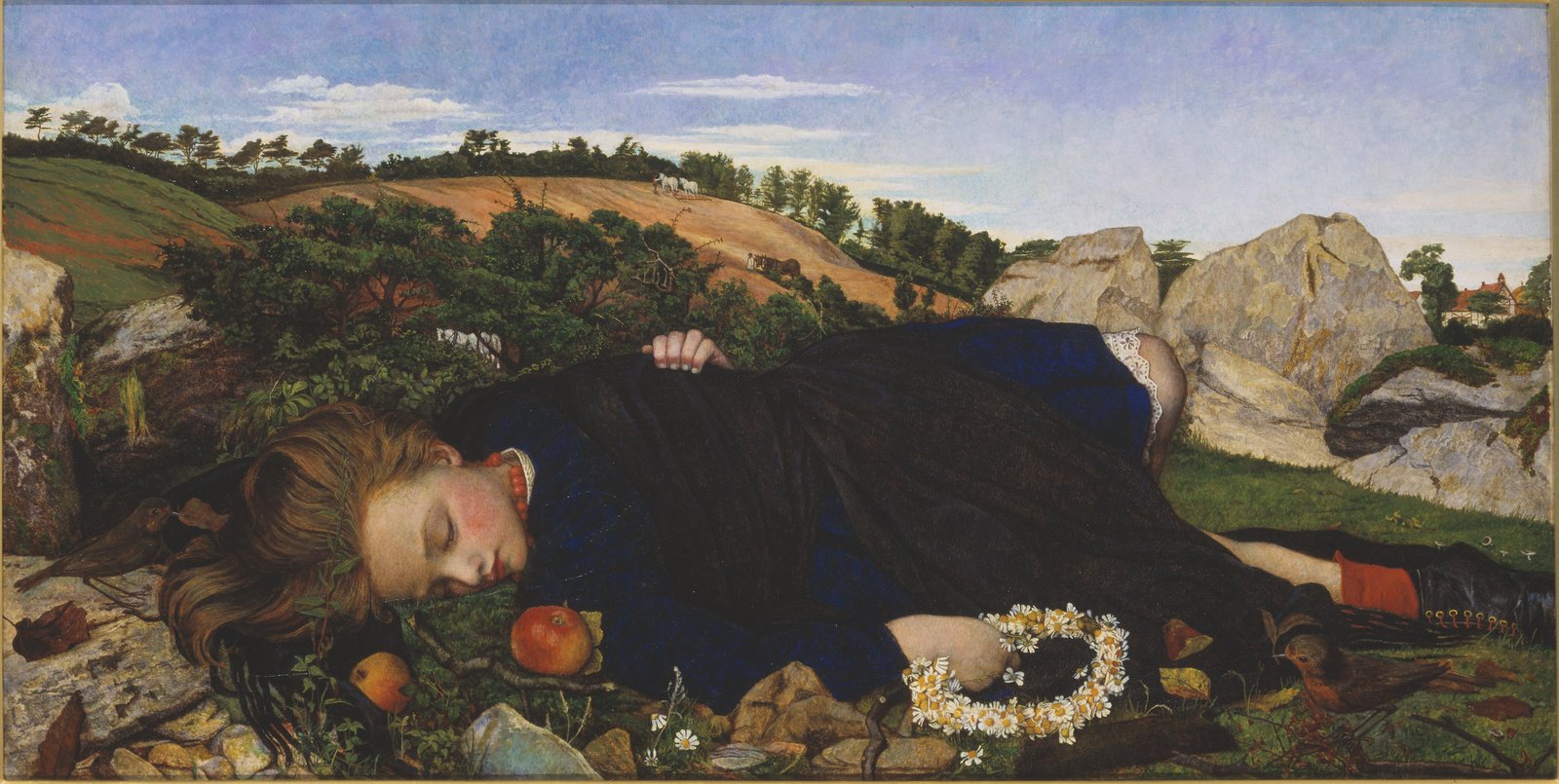
Picture: John Roddam Spencer Stanhope, Robin of Modern Times, 1860

5 prayers

Against a spirit of idleness

Prayer of St Ephrem

O Lord and Master of my life,do not give me a spirit of idleness,despondency, love of power and idle talk.Bow to the ground

But grant me, Your servant,a spirit of chastity, humility,patience and love.Bow to the ground

Yes, O Lord and King,let me see my own sinsand not judge my brother,for You are blessed for ever and ever.Amen.Bow to the ground

Traditional wording, 1891

Lord and Master of my life,give me not the spirit of indolence, despair, ambition and vain speaking.

But rather the spirit of chastity, humble-mindedness, patience and lovedo Thou grant unto me, Thy servant.

Yea, O Lord King, let me see my own faults,and let me not judge my brother;for Thou art blessed to ages of ages. Amen.

Its very first request is to be spared a spirit of idleness. On the weekdays of Great Lent the Church prays it with a bow to the ground after each of its three parts.

Plain English by Wiser Walk, from the Church Slavonic, with Shann’s 1891 translation beside it. How the wording is made. Traditional wording: G. V. Shann, Euchology: A Manual of Prayers of the Holy Orthodox Church, 1891.

Where it comes from, and the Church Slavonic

When the soul is asleep

Behold the Bridegroom

See, the Bridegroom is coming at midnight,and blessed is the servant He will find awake,but unworthy is the one He will find lazy.

So take care, my soul:do not let sleep weigh you down,or you will be handed over to deathand shut out of the kingdom.

Instead, wake up and cry out:Holy, holy, holy are You, O God.Through the Mother of God, have mercy on us.

Traditional wording, 1891

Behold the Bridegroom cometh in the middle of the night,and blessed is that servant whom He shall find watching,but unworthy he whom He shall find careless.

Beware then, my soul,lest thou be weighed down by sleep,lest thou be given over to deathand be shut out from the kingdom;

but awake, crying,Holy, holy, holy art Thou, O God.Through the Mother of God, have mercy upon us.

In this hymn, the servant whom Christ finds awake is blessed, and the one He finds lazy is unworthy. Then the hymn turns to your own soul and tells it to wake up and cry out to God.

Plain English by Wiser Walk, from the Greek of the Midnight Office, with Shann’s 1891 translation beside it. How the wording is made. Traditional wording: G. V. Shann, Euchology: A Manual of Prayers of the Holy Orthodox Church, 1891.

Where it comes from, and the Greek

When you cannot get started

Prayer of St Columbanus

Plain English only: no traditional English wording is given for this prayer

How blessed it is to keep watch for God,the Maker of all things,Who fills all things and goes beyond them all!

If only He would graciously wake me toofrom the sleep of idleness,worthless as I am, yet still His little servant,and set me alight with the fire of divine love,so that the flame of His love,the longing for His great love,would blaze up above the stars,and the divine fire would always burn within me!

If only I had the woodto keep that fire always fed, nourished and alight,and to tend that flame,which would never go out and would keep on growing!

If only I were worthyto have my lamp always burning through the nightin the temple of my Lord,to give light to all who come into the house of my God!

Lord, in the name of Jesus Christ, Your Son, my God,I ask You to give me that love which never fails,so that my lamp may be lit and never go out,may burn for me and give light to others.

This prayer comes from a sermon credited to St Columbanus, an Irish monk who died in AD 615. It asks God to wake you from the sleep of idleness and set you alight with the fire of His love.

Plain English by Wiser Walk, from the Latin, as G. S. M. Walker edited it in 1957. How the wording is made.

Where it comes from, and the Latin

For a sluggish will

Stir up, we beseech Thee

Stir up the wills of Your faithful people,O Lord, we pray,

so that, as they strive more eagerlyto bring Your work to fruit,they may receive greater healingfrom Your loving-kindness.

Through our Lord Jesus Christ.

Traditional wording, 1662

Stir up, we beseech Thee, O Lord,the wills of Thy faithful people;

that they, plenteously bringing forth the fruit of good works,may of Thee be plenteously rewarded;

through Jesus Christ our Lord. Amen.

This short prayer asks God to stir up the wills of His people, so that they strive more eagerly to bring His work to fruit. The Roman Mass book of the late 700s gives it as a prayer for any day.

Plain English by Wiser Walk, from the Latin of the Gregorian Sacramentary (Wilson’s 1915 edition), with the Book of Common Prayer’s English beside it. How the wording is made. Traditional wording: The Church of England, The Book of Common Prayer, 1662.

The Prayer Book’s English speaks of a reward for good works. The Latin asks instead for greater healing from God’s loving-kindness, and the plain wording follows the Latin.

Where it comes from, and the Latin

When your mind drifts

O God, come to my assistance

O God, come to my assistance;O Lord, make haste to help me.Said again and again

Traditional wording, 1894

O God, make speed to save me:O Lord, make haste to help me.

The monk who taught St John Cassian this verse named acedia, the monks’ word for listlessness, among the temptations to answer with these words. They are short enough to say the moment you catch yourself putting something off.

Plain English by Wiser Walk, from the Latin of Cassian’s Conferences, with Gibson’s 1894 translation beside it. How the wording is made. Traditional wording: Edgar C. S. Gibson, Nicene and Post-Nicene Fathers, Second Series, vol. 11, 1894.

Where it comes from, and the Latin

Scripture for this

6Walk in the manner of the ant, O slacker; observe its ways and become wise. 7Without a commander, without an overseer or ruler, 8it prepares its provisions in summer; it gathers its food at harvest.

Proverbs 6:6-8 The ant has no one to drive it, yet it stores its food in summer. The sluggard is sent to learn from it.

The slacker craves yet has nothing, but the soul of the diligent is fully satisfied.

Proverbs 13:4 The lazy person craves and still has nothing, while the diligent are fully satisfied.

Whatever you find to do with your hands, do it with all your might, for in Sheol, where you are going, there is no work or planning or knowledge or wisdom.

Ecclesiastes 9:10 Whatever you find to do, do it with all your might, because there will be no more work in the grave.

Do not let your zeal subside; keep your spiritual fervor, serving the Lord.

Romans 12:11 Paul urges Christians not to let their zeal fade, but to keep their spiritual fervour as they serve the Lord.

7For you yourselves know how you ought to imitate us, because we were not undisciplined among you, 8nor did we eat anyone’s food without paying for it. Instead, in labor and toil, we worked night and day so that we would not be a burden to any of you. 9Not that we lack this right, but we wanted to offer ourselves as an example for you to imitate. 10For even while we were with you, we gave you this command: “If anyone is unwilling to work, he shall not eat.”

2 Thessalonians 3:7-10 Paul was not idle among the Thessalonians. He worked night and day so as not to burden them, and to give them an example.

11We want each of you to show this same diligence to the very end, in order to make your hope sure. 12Then you will not be sluggish, but will imitate those who through faith and patience inherit what has been promised.

Hebrews 6:11-12 The writer wants each reader to stay diligent to the end, so as not to grow sluggish but to imitate those who inherit the promises.

Bible text: Berean Standard Bible, public domain.

Article · 7 min read How to overcome laziness: what the Desert Fathers teach What acedia means, how it became the deadly sin of sloth, and how the Desert Fathers fought laziness by staying put, working and praying. Read

Close to this

All prayers

Quiz What prayer do you need right now? A few honest taps about where you are, and a prayer of the Church for exactly that. 8 questions, about 3 minutes. Start

Suggest a correction

Berean Standard Bible