You’ve cleared the afternoon for the job you keep putting off. An hour later you’ve checked your phone, made tea and tidied a drawer, and you still haven’t started.
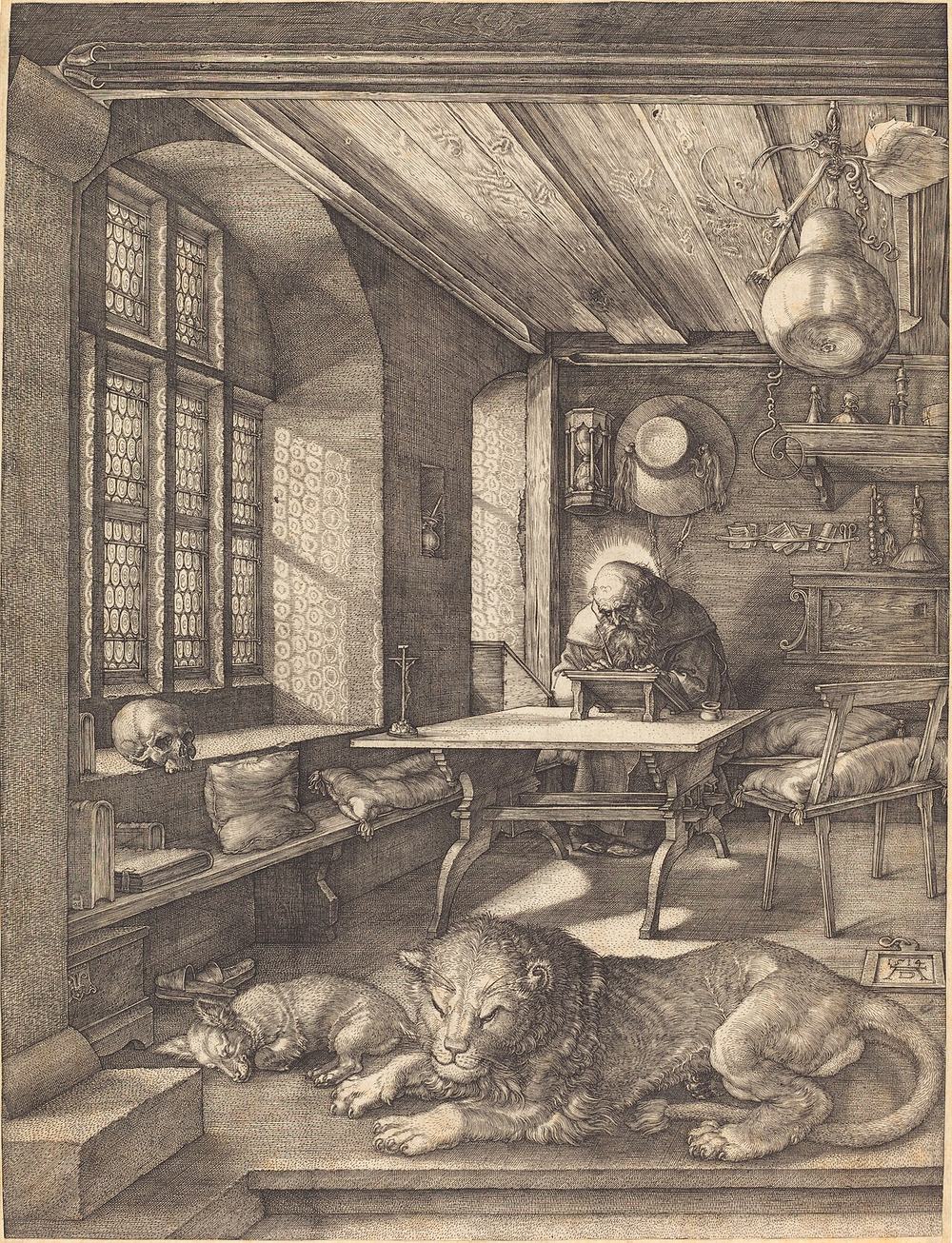
The desert monks of the 300s knew this feeling well. Anthony was one of the first of them. One day he sat in his hut in the Egyptian desert, weary and unable to think straight. “Lord, I long for peace,” he prayed, “and my thoughts won’t let me have it. What can I do?” He got up and went outside, and there he saw a man who looked just like himself, weaving a mat from palm leaves. After a while the man stood up to pray, then sat down to weave again, then stood up to pray again. It was an angel, sent to set Anthony straight, and it told him that if he did the same, he would find peace. Anthony took heart. He began to work and pray by turns, and as he kept at it, he found the peace he’d prayed for.
What is acedia?
The monks called Anthony’s heavy mood acedia, a Greek word for not caring. Evagrius lived as a monk in the Egyptian desert in the late 300s, and his picture of it still rings true. It strikes from mid-morning until early afternoon, so the monks called it the noonday demon. The sun seems to stand still, and the day feels 50 hours long. The monk keeps looking out of the window, steps outside to check how far the sun has moved, and hopes someone will drop by. Then he starts to hate his home, his way of life and the work in his hands, and he dreams of somewhere easier. After all, the thought whispers, you can worship God anywhere.
John Cassian spent years with the desert monks and carried their teaching to southern France. He saw that acedia works in two ways. Sometimes it keeps a monk sitting idle in his hut. Just as often it sends him out of the door with good reasons to go, such as the sick to visit or relatives he should see more often. So acedia doesn’t always look lazy. Sometimes it looks very busy.
Is acedia one of the seven deadly sins?
Yes. It’s the sin we now call sloth.
Evagrius listed eight kinds of bad thought that attack a monk: gluttony, lust, love of money, sadness, anger, acedia, vainglory (a hunger for praise) and pride. Cassian carried the eight to the West. In the late 500s Pope Gregory the Great reshaped them into seven in his Moralia on Job. He set pride apart as the root of all the others, added envy, and counted acedia as a kind of sadness, so it dropped off his list. By the time the theologian Thomas Aquinas wrote in the 1200s, sloth had taken sadness’s place. Later still, vainglory was folded into pride, and the list became the one most people know today: pride, greed, lust, envy, gluttony, wrath and sloth. Our seven deadly sins quiz shows which one you’re weakest to.
Is it a sin to feel lazy?
The old teachers answer a little differently. Evagrius taught that we can’t stop these thoughts from coming, but we can control whether we let them stay and stir us up. Aquinas was stricter. He counted even a passing flicker of sloth as a small sin, though he said holy people feel such flickers too. It becomes a serious sin, he said, when you knowingly give in and let it grow into a real distaste for God and everything to do with Him. For both of them, the battle is won or lost in what you do next.
Stay where you are
When Cassian was new to the desert, acedia hit him hard one day, and he only shook it off by hurrying over to another monk’s hut. The next day he told Moses, the desert elder he admired most. Moses answered, “You have not freed yourself from it, but rather have given yourself up to it as its slave and subject.” Acedia had seen him run, and it would come back harder. Cassian learned that you don’t beat acedia by running from it. You beat it by staying put and resisting.
The urge to get up, check your phone or go and find someone to talk to is the same urge Cassian gave in to. When it comes, treat it as the thing to resist. Stay at your task 10 more minutes, and leave your phone in another room.
Keep your hands busy
Cassian points to the apostle Paul as the doctor for this disease. Paul made tents for a living (Acts 18:3) and “worked night and day so that we would not be a burden to any of you” (2 Thessalonians 3:8). When he heard that some Christians in Thessalonica had stopped working, his cure was plain: “For we hear that some of you are leading undisciplined lives, accomplishing nothing, but being busybodies. We command and urge such people by our Lord Jesus Christ to begin working quietly to earn their own living” (2 Thessalonians 3:11-12).
Cassian also tells of an old monk who took this further still. He lived seven days’ walk from the nearest town, and his date palms and garden gave him all the food he needed. Even so, he gathered palm leaves every day and wove them from morning to night, as if his livelihood depended on it. Carrying his weaving across the desert to market would have cost more than it would sell for. So each year, when a year’s weaving filled his cave, he burned the whole pile and started again. Cassian says he did it to keep his heart pure, his thoughts steady and himself in his hut, and to drive acedia away.
You don’t need to burn anything. But a set amount of work every day, whether anyone’s checking or not, is the same medicine. Proverbs sends the slacker to learn from the ant, which works “without a commander, without an overseer or ruler” (Proverbs 6:6-8).
When laziness looks holy
Some laziness dresses up as devotion. A visitor once came to Silvanus, an old monk who lived with his brothers on Mount Sinai. He found the monks hard at work and told Silvanus they had it wrong. Hadn’t Jesus said, “Do not work for food that perishes” (John 6:27)? And hadn’t He praised Mary, who sat listening at His feet while her sister Martha was busy with the preparations? “Mary has chosen the good portion” (Luke 10:39-42).
Silvanus didn’t argue. He had the visitor shown to an empty room and left him there. Mid-afternoon came, the hour when the monks ate, and the visitor sat by the door waiting to be called. No one came. At last he went to find Silvanus and asked whether the brothers weren’t eating that day. “They’re eating right now,” said Silvanus. “And no one invited me?” Silvanus answered, “You’re a spiritual man and don’t need that kind of food. We’re earthly people. We need to eat, so we work with our hands. But you’ve chosen the good portion. You read all day and need no food.”
The visitor understood. He knelt and asked Silvanus to forgive him. “Mary can’t do without Martha,” said Silvanus. “Without Martha, Mary would never have been praised.”
Pray between tasks
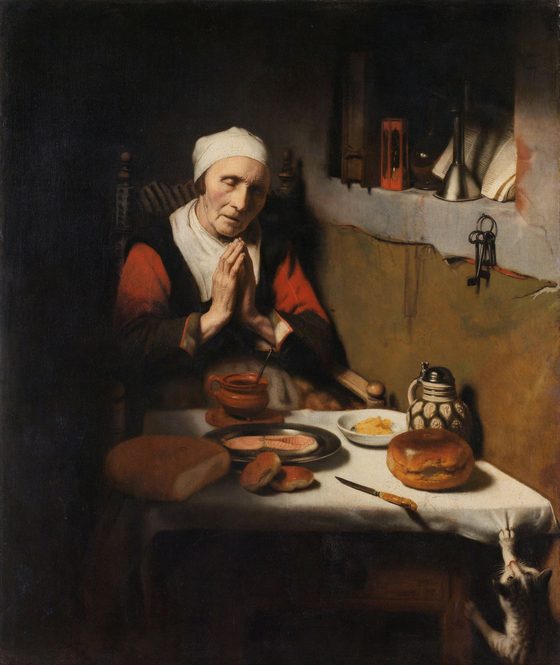
Anthony’s angel didn’t choose between work and prayer. It did both, by turns. In the desert Cassian learned a short prayer for every trouble, acedia included, from the first line of Psalm 70: “Make haste, O God, to deliver me! Hurry, O LORD, to help me!” Pray it under your breath the moment you catch yourself drifting, then go back to the task.
On the heaviest days, Evagrius said to speak to your own soul as the psalm does: “Why are you downcast, O my soul? Why the unease within me? Put your hope in God” (Psalm 42:5). He also promised that when the struggle is over, a deep peace and a joy too great for words follow.
Is it laziness, depression or burnout?
The monks saw acedia as a battle of the will, the pull to drift, put things off or get away, and they fought it with work, prayer and patience. Depression is different. It’s an illness that needs treatment. If a heavy sadness won’t lift for weeks, or you can’t sleep, eat or see a way forward, see a doctor and take the prayers for sadness and depression with you. If you’ve worn yourself out with work or with caring for someone, that’s burnout, and you need rest more than effort, as our article on burnout explains. Bring any question about your own pattern of prayer and work to your priest.