A thought leaps into your head that you would never choose, like a curse against God in the middle of a prayer or a violent picture of someone you love. It horrifies you, and the horror seems to bring it back.
In the Egyptian desert in the 400s, a monk was tormented by blasphemous thoughts against God, and he was too ashamed to tell anyone. Whenever he heard of a wise old monk, he went to him meaning to confess them, and every time his courage failed and he said nothing. One of the old monks he kept going back to was Poemen, who could see that something was wrong and felt sorry for him. One day, as the monk turned to leave without a word yet again, Poemen called after him. He reminded him how often he had come meaning to tell him what was on his mind, and asked how long he would go on suffering like this. At last the monk told him. Poemen’s face broke into a smile. He told him not to be upset, and to answer the thought whenever it came, “I have nothing to do with this thought, and my soul desireth it not.”
Are intrusive thoughts a sin?
Again and again, the old monks of the desert told people troubled like this that a thought they didn’t want wasn’t their sin. John Climacus was abbot of the monks on Mount Sinai in the 600s. In his book The Ladder of Divine Ascent he told anyone troubled by blasphemous thoughts not to think the guilt lay with them. The Lord knows the heart, he wrote, and knows these words come from our enemy and not from us. He noticed that they often strike during the Liturgy at its holiest moment. To him that showed the words were not the soul’s own, since no one can praise God and curse Him in the same breath. They often come to simple, innocent people, he added, and upset them more than others.
Not every elder agreed at first. A monk once asked several of them whether unclean thoughts make you unclean just by coming into your mind. Some said yes. Others said no, because what matters is not doing the evil, even if you think of it. He took the question to an old man more respected than the rest. Even a monk who has to fight a thought he doesn’t want for a long time is without sin, the old man said, as long as he never acts on it.
Another old monk explained the difference between a thought and a sin with a street of cook-shops. A man walking past smells meat roasting. If he wants to, he goes in and eats, and if not, he smells it and walks on. The old monk was speaking of lustful thoughts. Drive away the smell of evil thoughts, he said, and stand up and pray, “O Son of God, help me.” Then he added that the same goes for every other kind of thought, “for we are not the roots of the thoughts, but are those who strive against them.”
The letter to the Hebrews says that Jesus Himself “was tempted in every way that we are, yet was without sin” (Hebrews 4:15). And when your own heart accuses you, “God is greater than our hearts, and He knows all things” (1 John 3:20).
Did I commit the unforgivable sin?
Many people with blasphemous thoughts fear they have committed it. Jesus’ words about it come straight after a promise of mercy: “Truly I tell you, the sons of men will be forgiven all sins and blasphemies, as many as they utter. But whoever blasphemes against the Holy Spirit will never be forgiven; he is guilty of eternal sin” (Mark 3:28-29). Mark gives the reason He said it. The scribes were telling people that Jesus drove out demons by the power of the prince of demons, and that He had “an unclean spirit” (Mark 3:22, 30).
Augustine of Hippo preached a sermon on these words. He taught that the sin Jesus meant isn’t every blasphemy. Blasphemies can be forgiven, as Jesus had just said. The sin that can’t be forgiven is a heart that stays hard against God and never repents, right up to death. So no one can be judged guilty of it while still alive, a point he made twice. A frightened person asking God for mercy is doing the very thing such a heart refuses to do, and Jesus promised, “the one who comes to Me I will never drive away” (John 6:37).
What should I do when the thought comes?
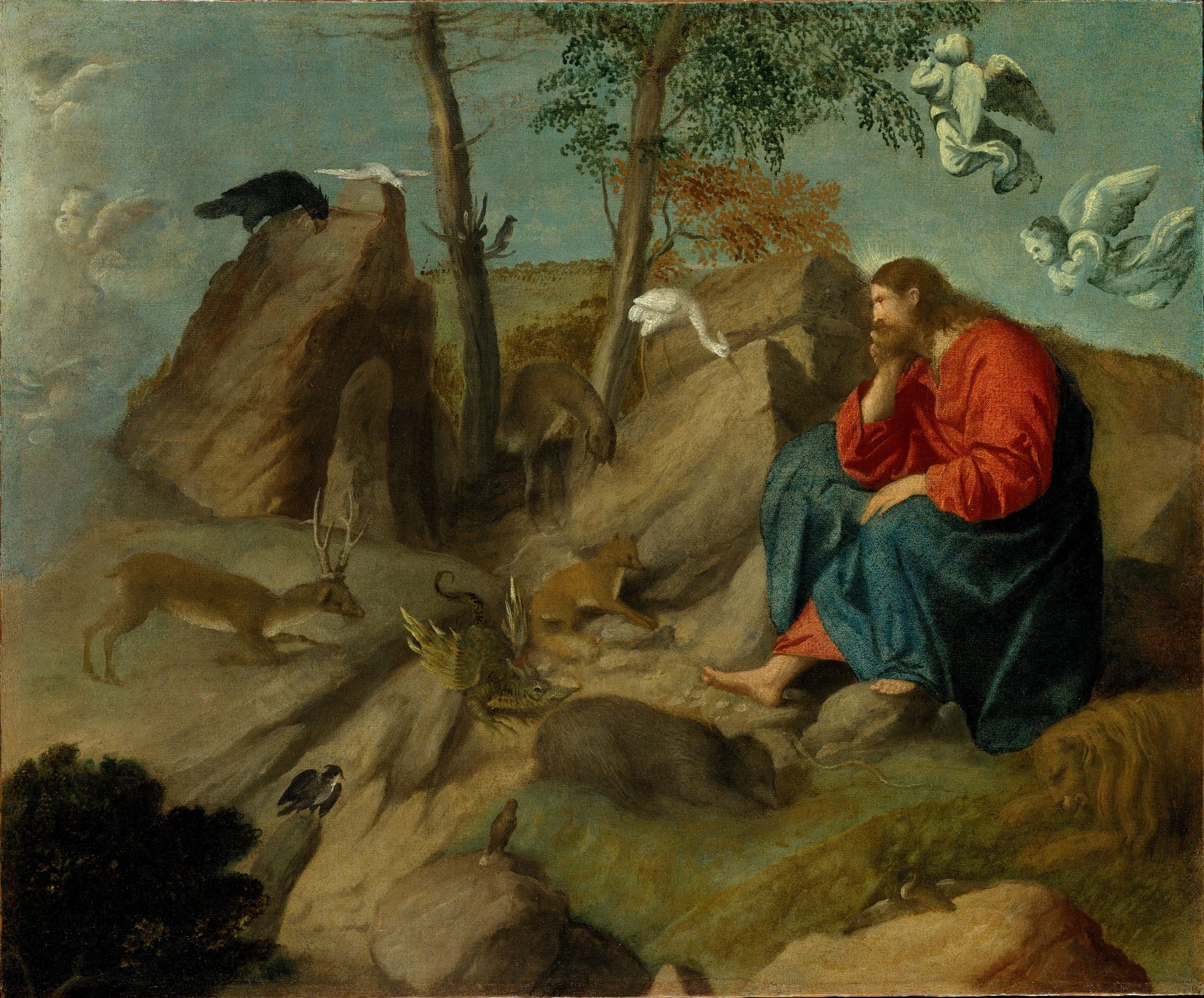
Don’t argue with it. Climacus said that wrestling with these thoughts is like grabbing at lightning, because they burst in like the wind and are gone before you can catch them. He traced them to the same tempter who spoke to Christ in the desert, so he sent his readers to Christ’s answer. “Away from Me, Satan!” Jesus told him, and He answered with Scripture, “Worship the Lord your God and serve Him only” (Matthew 4:10). Say those words once and pay the thought no more attention. Climacus compared the soul to someone inside his house who hears people talking in the street as they pass and doesn’t join in.
If you’d rather pray, the Russian bishop Theophan the Recluse gave a short prayer in the 1800s that tells God, “You see that I do not want these thoughts and take no pleasure in them.” Pray it once and go back to what you were doing.
Tell a priest or someone you trust. Climacus warned that these thoughts are the hardest of all to say in confession, and that hiding them gives them power. A monk told Climacus himself that he had fought them for 20 years with fasting and all-night prayer and felt no better. At last the monk wrote the thoughts on a card, gave it to a holy old man and bowed with his face to the ground, not daring to look up. The old man read it and smiled. He had the monk lay a hand on his neck. Then he said that from then on the whole weight of it would rest on his own neck, not the monk’s, and told him only to ignore it. Before the monk had even left the old man’s hut, the torment was gone.
If the thoughts won’t stop
Almost everyone has unwanted thoughts now and then, even sudden violent or offensive ones. When they come often and frighten you so much that they take over your days, they may be part of obsessive-compulsive disorder, or OCD. OCD is a health condition and nothing to be ashamed of. It can be treated, so see a doctor. Tell the doctor too if a short prayer has turned into words you must say over and over, or if you keep confessing or asking for reassurance to make a thought go away, because those habits can be part of OCD. The Russian Orthodox Church teaches that a priest’s help and a doctor’s do the most good together, so bring this to your priest as well.