
Gregory the Great
A monk made pope against his will, who fed Rome and sent the mission to the English.
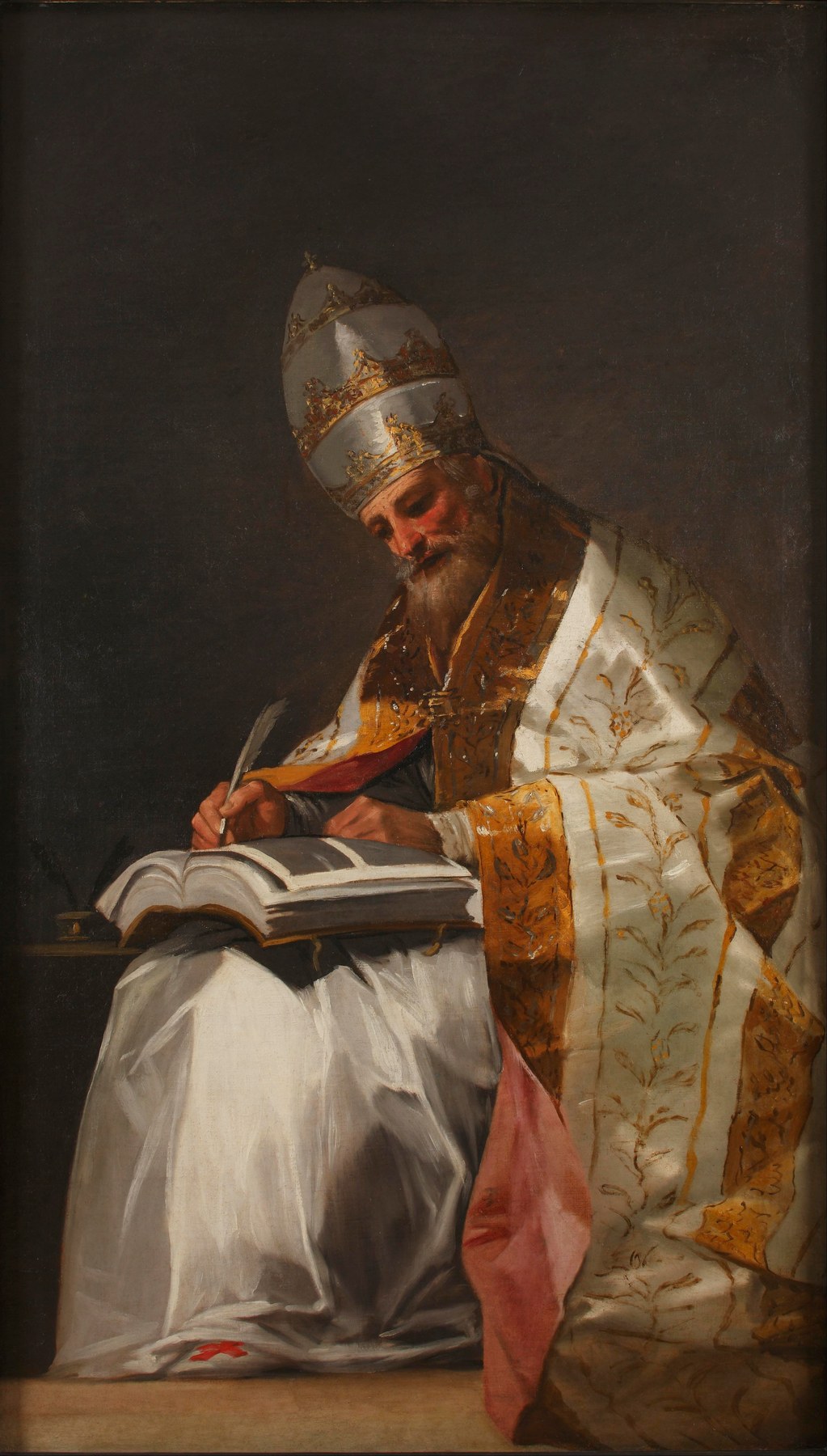
Picture: Saint Gregory the Great, Pope, Francisco de Goya, 1796-1799. Museo del Romanticismo, Madrid. Public domain.
Who was Gregory?
Gregory was a rich Roman who gave up the city's highest civil office to become a monk. In 590, a year of plague, Rome made him pope against his will. He fed the city, bargained with invaders and sent monks to the English. His handbook for pastors was read by bishops for centuries.
at a glance
His path, in order
- PrefectOf Rome, about 573
- MonkIn his family home, about 574
- EnvoyAt the emperor's court, about 579 to 586
- PopeFrom 3 September 590
in numbers
- Years as pope13
- And six months and ten days
- From 590 to 604
- Monasteries he founded7
- Six on his lands in Sicily
- A seventh inside the walls of Rome
- English baptised one Christmas10k
- By Augustine, the monk he sent, in 597
- “More than ten thousand”, he was told
- Nuns on Rome's official list3,000
- He bought them winter bedding
- Rome survived because of them, he believed
did you know?
-
An empress once ordered him to send her “the head of Saint Paul, or some other part of his body”. He said he neither could nor dared. He offered filings from St Peter's chains instead, if the file would take any off.
Letters, Book 4, letter 30 -
King Alfred the Great translated the Pastoral Rule into English himself. He sent a copy to each of his bishops, with a costly reading pointer. The Alfred Jewel in Oxford may be the handle of one.
Alfred's preface; the Ashmolean Museum -
Dante tells a gentle joke about him. Gregory had ranked the nine orders of angels differently from the Greek writer Dionysius. So in the Paradiso, as soon as Gregory opened his eyes in heaven, “he at himself did smile”.
Dante, Paradiso, Canto 28, tr. Longfellow
- Born
- About 540, in Rome, to a rich senatorial family. His father was Gordianus and his mother Silvia.
- Grew up
- In Rome, in a family house on the Caelian Hill, while the Goths and the emperor's armies fought over the city. He was well schooled, but he never mastered Greek.
- Died
- 12 March 604, in Rome, after years of illness, above all gout. He was about 64.
- Buried
- The same day, in the porch of St Peter's. His body now lies under an altar inside the basilica.
- Also called
- Pope Gregory I. Gregory the Dialogist in the Orthodox Church, after his book of Dialogues. The Apostle of the English, as Bede called him. He called himself “servant of the servants of God”, and many of his letters open with it.
- Status
- A saint to Catholics and Orthodox, and one of the four great Doctors of the Latin Church. Anglicans and Lutherans keep his day too.
- Patron of
- Britannica lists teachers, students, singers, musicians, people with epilepsy, and England.
- In art
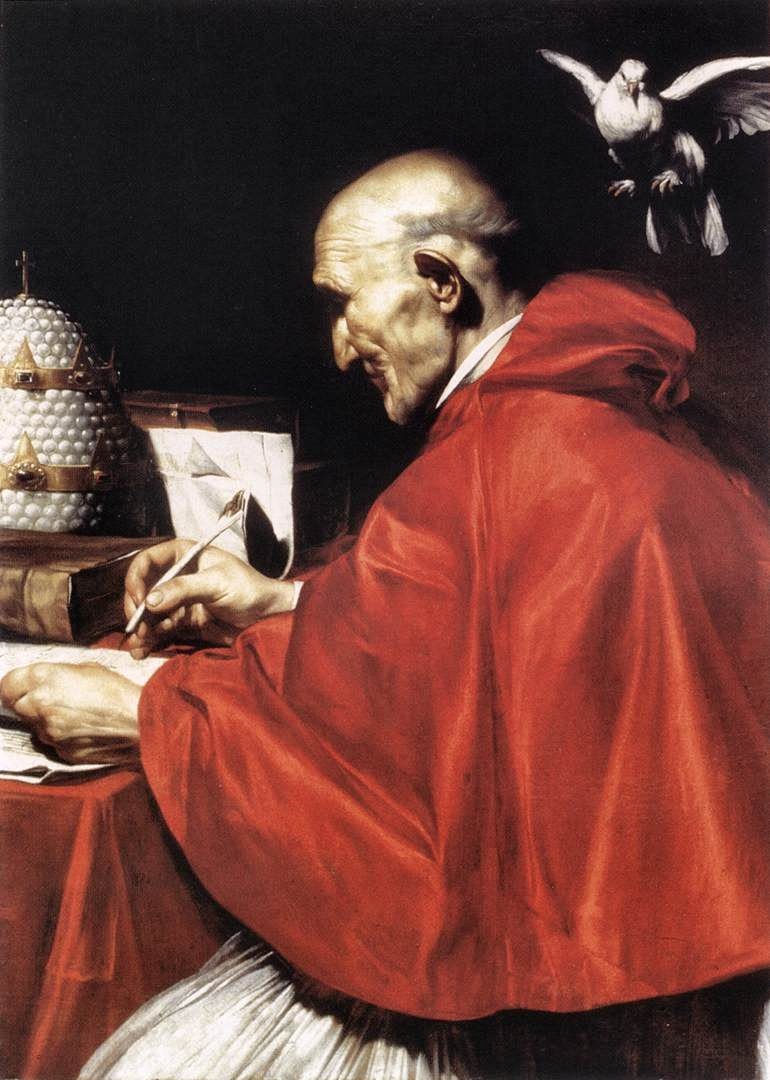
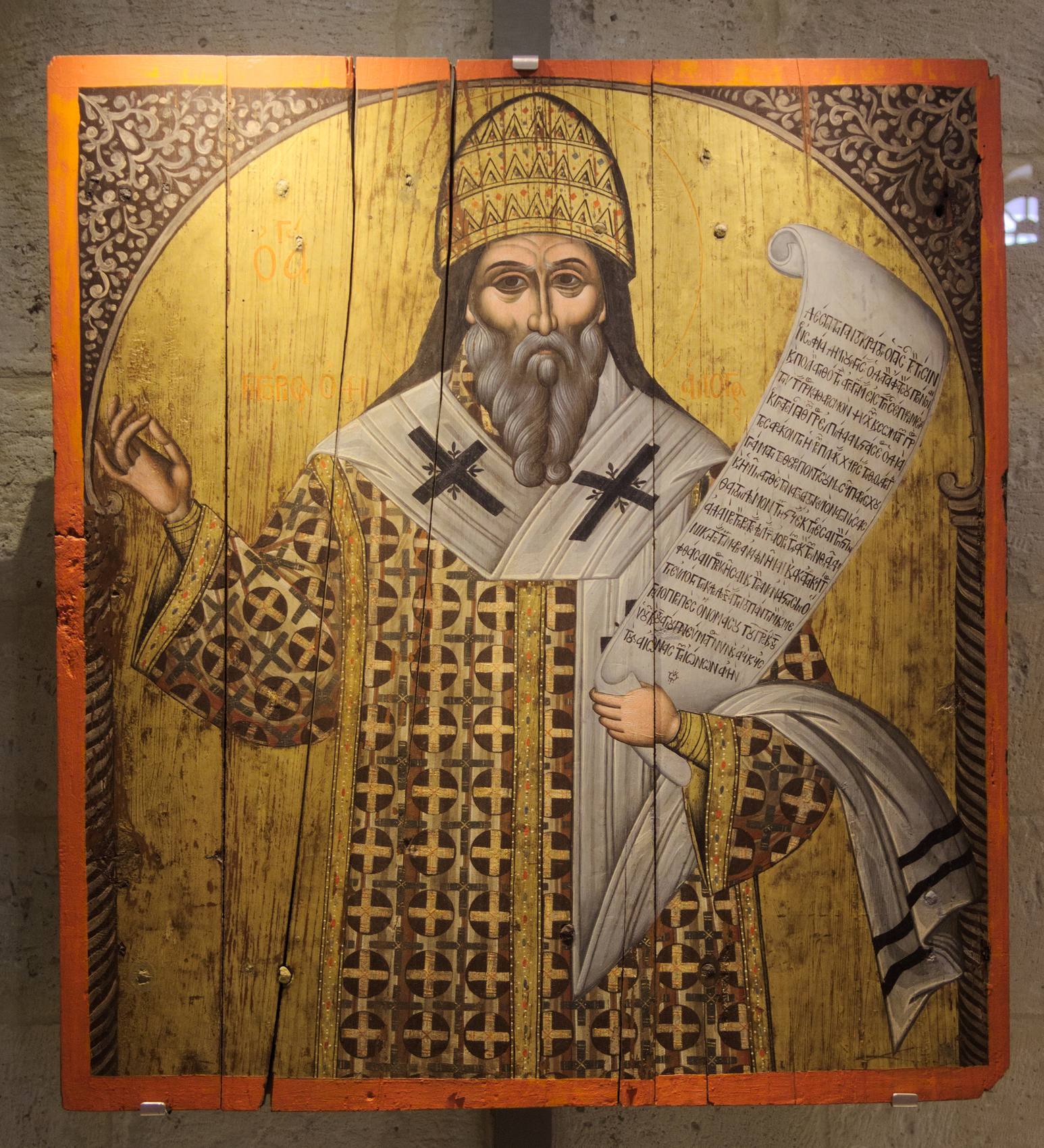
- A pope in a tiara and full vestments, with a double cross. A dove is his special emblem. In Eastern icons he is a bishop, as in the icon on this page.
- Wrote
- The Pastoral Rule, a handbook for pastors. The Moralia, 35 books on Job. Four books of Dialogues on the holy men of Italy, with the only early life of St Benedict. Sermons on the Gospels and on Ezekiel. About 850 letters.
- Pronounced
- GREG-uh-ree, or GREG-ree.
 The Deep Well
 His personality type
Serious by nature, and at his best when life is quiet.
In Gregory the Great's terms
- Serious
- Tranquil mind
Our reading, from the Christian Personality Test. The test itself is built on his Pastoral Rule. His Dialogues open with him alone in a solitary place, which he says suited “a sad and melancholy disposition”.
See The Deep Wellfeast days
East and West, side by side
West
- Mar12
The Episcopal Church, and Lutherans in the ELCA. It was the Catholic feast too until 1969. The 1916 Roman Martyrology names him on this day, the day he died, and again on 3 September, the day he became pope.
- Sep3
Catholic memorial since 1969: the day he became pope, in 590. Also the Church of England, and Lutherans in the Missouri Synod.
East
- Mar12
The OCA, the Greek churches and the Russian Church, as Gregory the Dialogist. The Russian Church keeps it by the old calendar, so it falls on 25 March on today's calendar.
Why two dates? He died and was buried on 12 March, and Rome kept that day from the 8th century. But 12 March always falls in Lent. So in 1969 Rome moved him to 3 September, the day he became bishop of Rome. Churches on the old calendar keep 12 March 13 days later, on 25 March.
what was he like?
+homesick for quiet
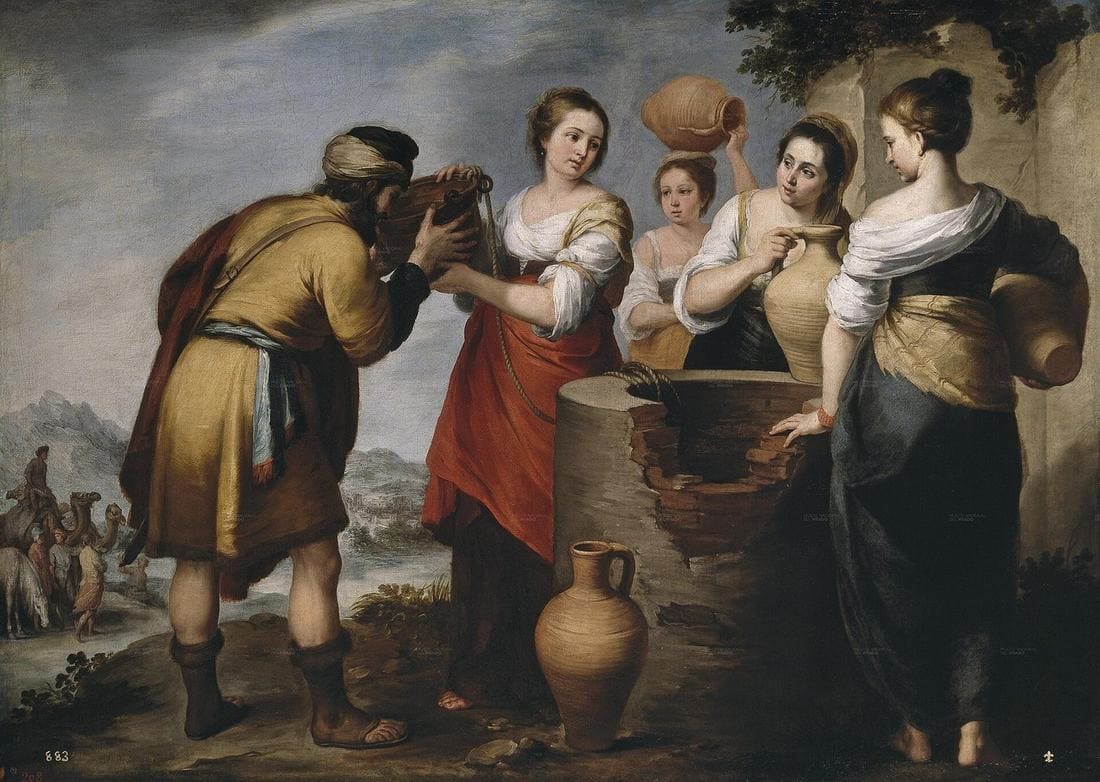
He loved the quiet life, and felt the busy one was forced on him. He compared himself to Jacob, who loved Rachel but was given Leah. “I have loved the beauty of the contemplative life as a Rachel, barren, but keen of sight and fair,” he wrote soon after he became pope.
Letters, Book 1, letter 5, to Theoctista+a dry wit
He could be dry, even with emperors. Made pope against his will, he wrote that the emperor “has ordered an ape to be made a lion”. When the emperor Maurice called him simple, he answered that by that word “they politely call me silly”.
Letters, Book 1, letter 5; Book 5, letter 40+no grand titles
When the patriarch of Alexandria called him Universal Pope, Gregory asked him to stop. “Away with words that inflate vanity and wound charity.” His honour, he said, was the honour of the whole Church and the strength of his brothers.
Letters, Book 8, letter 30, to Eulogius+patient until pushed
He put up with a great deal, and then would not move. A man made bishop against the emperor's orders had Gregory's letters torn up in public. Gregory wrote to his envoy, “I bear long; but if once I have determined not to bear, I go gladly in the face of all dangers.”
Letters, Book 4, letter 47+sick for most of his life
He suffered from his stomach and from slow fevers, and later from gout. Late in life he wrote that for almost two years he had been “confined to my bed, afflicted with such pains of gout that I have hardly been able to rise on feast-days” to say Mass.
Moralia, letter to Leander; Letters, Book 10, letter 35+open-handed
He fed Rome from the Church's farms, paid ransoms for captives, and sent beds and cloaks as far as Mount Sinai. Bede says, “Whatsoever money he had, he took care to distribute diligently and give to the poor.”
Bede, Book 2, chapter 1; Letters, Book 7, letter 26; Book 11, letter 1what others said of him
Gregory of Tours, a bishop in Gaul, wrote in the pope's lifetime. A deacon of Tours was in Rome when Gregory was made pope. The English wrote of him a century later, as the man who sent them the faith.
And such was his abstinence in food, his sleeplessness in prayer, his determination in fasting that his stomach was weakened and he could scarcely stand upright.
For we may rightly, nay, we must, call him our apostle.
Hunger and cold he overcame with food and raiment, and shielded souls from the enemy by his holy teaching.
his life in eight moments
Rome
About 573 to 574The prefect becomes a monk
By about 573 he was prefect of Rome, head of the city's government. Gregory of Tours says he used to wear silk robes and jewels. About a year later he gave it all up. He sold his goods for the poor, founded six monasteries on his lands in Sicily, and made his family house on the Caelian Hill into St Andrew's monastery. He admitted he had been slow to become a monk: “for late and long I declined the grace of conversion”.
Gregory of Tours, History of the Franks, Book 10, chapter 1; Moralia, letter to LeanderConstantinople
About 579 to 586Envoy to the emperor
He was made a deacon, and Pope Pelagius II sent him as his envoy to the emperor's court. Some of his monks went with him, and his talks on Job to them became the Moralia. There he met Leander of Seville, who became a friend. He argued with the patriarch Eutychius, who taught that risen bodies could not be touched. Gregory pointed to the risen Christ, Who said, “Handle Me and see.” The emperor took Gregory's side and had the patriarch's book burned.
Moralia on Job, Book 14; Bede, Book 2, chapter 1Rome
Before 590The Angles in the market
The English told this story about him. Bede says he saw boys for sale in the market in Rome, fair of skin and with beautiful hair. Told they were Angles, he said they had the faces of angels. He asked the pope to let him go to Britain himself. A Life by a monk of Whitby says he set out, and on the third day a locust came to him as he read. He took its Latin name, locusta, as a message: sta in loco, “stay in the place”. Messengers soon caught up with him. The people of Rome had made the pope call him back.
Bede, Ecclesiastical History, Book 2, chapter 1; the Whitby Life, chapters 9 and 10Rome
590Carried to St Peter's
A deacon of Tours, in Gaul, was in Rome that year and brought the news home. The Tiber had flooded Rome, and snakes were swept down the river, among them “a great serpent like a big log”. Then plague came, and it killed Pope Pelagius. Rome chose Gregory. He wrote to the emperor begging him to reject the choice, but the city prefect stopped the letter. He led the people in processions of prayer, and the deacon saw eighty fall dead in one hour. When Gregory was getting ready to hide, “he was seized and brought by force to the church of the blessed apostle Peter”. He was made pope on 3 September 590.
Gregory of Tours, History of the Franks, Book 10, chapter 1Rome
Soon after 590A book for pastors
In his first year as pope he wrote the Pastoral Rule, for John, bishop of Ravenna. It says who should lead, how a leader should live, and how to speak to each kind of person. Bishops used it as their handbook for centuries, and its third part is the base of our personality test. At the end he asks for prayers. He has drawn a good pastor, he says, without being one: “I have been as an ill-favoured painter pourtraying a handsome man”.
Pastoral Rule, Part 4; Catholic EncyclopediaRome
592 to 599Rome's defender
The Lombards took town after town and came up to the walls of Rome, and the emperor's help was slow. So Gregory paid ransoms, fed refugees, named a commander on his own authority and bargained for peace, often against the emperor's wishes. Peace came in 599. Yet when he was accused of having a bishop killed, he answered in a letter that he had refused to have even Lombards killed: “since I fear God, I shrink from having anything to do with the death of any one.” Two centuries later Paul the Deacon quoted the letter, to show “how humble this man was and of how great innocence and holiness”.
Letters, Book 4, letter 47; Paul the Deacon, History of the Lombards, Book 4, chapter 29; Catholic EncyclopediaRome and Kent
596 to 597The mission to the English
He sent Augustine, a monk of his own monastery, to the English with a party of monks. On the way they “were seized with craven terror”, says Bede, and sent Augustine back to ask to come home. Gregory wrote telling them to go on. They landed in Kent in 597. That Christmas, he told a friend, “more than ten thousand Angli are reported to have been baptized”.
Bede, Ecclesiastical History, Book 1, chapters 23 and 25; Letters, Book 8, letter 30Rome
601Steps, not leaps
At first he told King Ethelbert of Kent to pull down the pagan temples. Then he thought again. He sent word to his missionary Augustine through Abbot Mellitus: smash the idols, but keep the temples and make them churches. Let the people keep their feast days in a new form. For one who climbs “must needs rise by steps or paces, and not by leaps”. And when he heard of miracles in England, he warned Augustine not to let them make him proud.
Letters, Book 11, letters 66, 76 and 28
his miracles
Gregory of Tours, writing in the pope's lifetime, tells of his election with no wonders at all. The stories came later. The first are in a Life by a monk of Whitby in England, written early in the 700s. Paul the Deacon and John the Deacon added more. Gregory himself tells of wonders in his own monastery, like the one below. And in a book full of other men's miracles, he said what a life is judged by:
For true judgment of one's life is to be taken from his virtuous conversation, and not from the working of miracles.
30 Masses for a dead monk
-
St Andrew's, Rome
About 590Justus and the three gold coins
Gregory tells this one himself. Justus, a monk of his monastery and a doctor, had nursed him through his illnesses. Dying, Justus admitted he had hidden three gold coins, though the monks there owned nothing of their own. Gregory forbade the monks to comfort him, and had him buried in a dung heap with his coins. He writes: “Thirty days after his departure, I began to take compassion upon him.” He had Mass offered for Justus every day for thirty days. Then Justus appeared to his brother Copiosus.
“Hitherto have I been in bad case, but now I am well; for this day have I received the communion”
Copiosus, “who yet liveth”, says Gregory. The monks counted back, and it was the day of the thirtieth Mass.
Dialogues, Book 4, chapter 55
The bread that bled
A monk of Whitby, writing a Life of Gregory early in the 700s, calls this an old story. A Roman lady had baked the bread for Mass. When Gregory gave it to her as the Body of Christ, she smiled. He held it back and laid it on the altar. After Mass he asked her why she had smiled. She said she had made that bread with her own hands. He had the people pray, and on the altar the bread was found as a bleeding scrap, like a piece of a little finger. She believed. At their next prayer it became bread again, and she received it. Her words, in the Latin of the Life:
“Ego ipsos panes meis feci manibus”Whitby Life, chapter 20, Gasquet's Latin edition
The dove at his lips
A monk of Whitby, who wrote a Life of Gregory, heard that someone of Gregory's household saw a white dove sitting on him while he composed his sermons on Ezekiel. Gregory was angry, and forbade him to tell anyone while he lived. A later version, added to Paul the Deacon's Life, names the witness: Peter, his secretary. A curtain hung between them. When Gregory fell silent for long spells, Peter made a hole in it with his pen. This is why painters give Gregory a dove.
“he beheld a dove, whiter than snow, sitting upon Gregory's head, and holding its beak for a long time to his lips”Whitby Life, chapter 26; Paul the Deacon, Life of Gregory, chapter 28, in Dudden's English
Tears for Trajan
The monk of Whitby who wrote a Life of Gregory is careful with this story: some of his people, he says, heard it from the Romans. Crossing Trajan's Forum, Gregory remembered the pagan emperor Trajan, who once stopped on his way to war to do justice for a widow. Gregory went to St Peter's and wept for Trajan's soul, until he learned that his prayer was heard. He was warned never to ask it again for a pagan. The writer's own words:
“quidam quoque de nostris dicunt narratum a Romanis”Whitby Life, chapter 29, Gasquet's Latin edition
The cloth that bled
Gregory told this story himself, of an earlier pope. Some Greeks doubted that cloths laid on martyrs' tombs were true relics. So Pope Leo cut one with scissors, and blood flowed from the cut. The Life by a monk of Whitby later told a story like it of Gregory himself.
“the aforesaid pontiff took scissors and cut this same cloth (brandeum), and from the very incision blood flowed”Letters, Book 4, letter 30, to the empress Constantina; Whitby Life, chapter 21
his words
His letters are in James Barmby's translation of 1895 to 1898, the Moralia in the Oxford translation of 1844, and the Dialogues in an English version of 1608. Where only his Latin is given, the English beside it is ours.
Of the Bible
It is, as it were, a kind of river, if I may so liken it, which is both shallow and deep, wherein both the lamb may find a footing, and the elephant float at large.
Simple enough for a child, deep enough for the wisest. From the letter that opens his Moralia on Job. In Latin, in quo et agnus ambulet, et elephas natet.
Moralia on Job, the letter to LeanderThe government of souls is the art of arts!
Holy Writ is set before the eyes of the mind like a kind of mirror, that we may see our inward face in it.
For I have lost the deep joys of my quiet, and seem to have risen outwardly while inwardly falling down.
By my exposition I have laid open my gifts, by my confession I discover my wounds.
For to adore a picture is one thing, but to learn through the story of a picture what is to be adored is another.
Love itself is knowledge.
often misquoted
Seeing fair English slave boys in Rome, he quipped Not Angles, but angels, in Latin Non Angli sed angeli.
What the sources sayThe neat line is in neither early source. Bede has him say “for they have an angelic face, and it is meet that such should be co-heirs with the Angels in heaven”, and says the story came down “by the tradition of our ancestors”. The older Life by a monk of Whitby makes the Angles visitors, not slaves, and has him say simply “Angels of God”. Gregory's own writings never tell the story.
Bede, Ecclesiastical History, Book 2, chapter 1; the Whitby Life, chapter 9; Catholic EncyclopediaHe wrote Gregorian chant, or gathered it.
What the sources sayThe chant carries his name, but nothing in his own writings, his epitaph or his first biographies links him to it. The claim first appears in the 8th and 9th centuries. The historian Dudden wrote in 1905 that “the weight of evidence makes against the truth of the tradition”. Britannica still repeats it.
Dudden, Gregory the Great, volume 1; Britannica, Gregorian chantHe drew up the seven deadly sins: pride, greed, lust, envy, gluttony, wrath and sloth.
What the sources sayHis list is different. For him pride is not one of the seven but their root, “the queen of sins”. Her seven generals are “vain glory, envy, anger, melancholy, avarice, gluttony, lust”. Sloth is missing, and melancholy, or sadness, stands in its place. The familiar list came later.
Moralia on Job, Book 31The Gregorian calendar is named after him.
What the sources sayIt is named after a later pope, Gregory XIII, “who issued the papal bull Inter gravissimas in 1582”.
Britannica, Gregorian calendarChosen pope, he escaped from Rome and hid in the woods for three days, until a pillar of light gave him away.
What the sources sayThe story first appears a century later, in a Life by a monk of Whitby. Gregory of Tours, whose own deacon was in Rome, says the new pope was seized while “making ready to go to a hiding place”. The Catholic Encyclopedia says the flight to the forest “seems to be pure invention”.
Gregory of Tours, History of the Franks, Book 10, chapter 1; Catholic EncyclopediaDuring his plague procession, St Michael appeared on Hadrian's tomb, sheathing his sword, and the plague stopped.
What the sources sayThe eyewitness account, from a deacon of Tours, has the procession but no angel. The Catholic Encyclopedia calls it a legend, and Britannica tells it as tradition. The legend gave the tomb its name, Castel Sant'Angelo.
Gregory of Tours, Book 10, chapter 1; Catholic Encyclopedia; Britannicawhere he stood
Each line is Gregory's own, from his books, sermons and letters. TapClick “Show his line” to read it.
Your answers are next to his. From your result on . See your result
“A good hearty laugh is good for the soul.”
Gregory disagrees.
You
Show his line
From gluttony are propagated foolish mirth, scurrility, uncleanness, babbling, dulness of sense in understanding.Moralia on Job, Book 31
“Wisdom is worth learning from anyone, even people who don't share your faith.”
Gregory strongly disagrees.
You
Show his line
The praises of Christ cannot find room in one mouth with the praises of Jupiter.Letters, Book 11, letter 54, to Desiderius of Vienne
“Anger at real wrongdoing can be a good thing.”
Gregory strongly agrees.
You
On record in the Morals on the Book of Job. Not quoted here.
“There's nothing wrong with being rich, as long as you use it well.”
Gregory agrees.
You
On record in the Morals on the Book of Job. Not quoted here.
“If someone you know is doing wrong, it's your job to tell them.”
Gregory strongly agrees.
You
Show his line
For those who take notice of what is evil in their neighbours, and yet refrain their tongue in silence, withdraw, as it were, the aid of medicine from observed sores, and become the causers of death, in that they would not cure the venom which they could have cured.Pastoral Rule, Part 3, chapter 14
“Even if you believe you'll see them again, it's right to weep openly for someone you've lost.”
Gregory agrees.
You
Show his line
He was not altogether unmoved, lest by his very insensibility he should shew a contempt of God; nor was he completely in commotion, lest by excess of grief he should commit sin.Moralia on Job, Book 2
“Lying can be the right thing to do if it protects someone.”
Gregory strongly disagrees.
You
Show his line
This kind of lying also those that are perfect eschew with the greatest care, so that not even the life of any man should by deceit of theirs be defended.Moralia on Job, Book 18
“Giving to the poor isn't generosity. It's paying back what's already theirs.”
Gregory strongly agrees.
You
Show his line
For, when we administer necessaries of any kind to the indigent, we do not bestow our own, but render them what is theirs; we rather pay a debt of justice than accomplish works of mercy.Pastoral Rule, Part 3, chapter 21
“If you believe God is calling you, follow, even if your family begs you not to.”
Gregory strongly agrees.
You
Show his line
We should love those joined to us by kinship of the flesh, whom we know as our neighbours; but those we suffer as adversaries on the way of God we should refuse to know, by hating and fleeing them.Homilies on the Gospels, Homily 37. Our translation
“A Christian can fight in a just war with a clear conscience.”
Gregory strongly agrees.
You
On record in Letter to Gennadius, governor of Africa. Not quoted here.
“Governments should use their laws to promote the Christian faith.”
Gregory strongly agrees.
You
Show his line
Make haste to extend the Christian faith among the peoples under your sway.Letters, Book 11, letter 66, to King Ethelbert of Kent
“In the end, God will save everyone.”
Gregory strongly disagrees.
You
Show his line
Certain it is, and without all doubt most true, that as the good shall have no end of their joys, so the wicked never any release of their torments.Dialogues, Book 4, chapter 44
See where you stand beside him. Take the quiz
the hard parts
Some of what he wrote and did is hard to read today. Here it is plainly, in his own words and in his critics'.
The letter to Phocas
In 602 the soldier Phocas overthrew the emperor Maurice and had him and his sons killed. The next year Gregory wrote Phocas a joyful letter of welcome. The historian Gibbon said it “has sullied, with indelible disgrace, the character of the saint”. Defenders say Gregory may not have known how Phocas came to power, and that he honoured the office, not the man. The Catholic Encyclopedia calls the question “a difficult one”.
“Glory to God in the highest Who, according as it is written, changes times, and transfers kingdoms”Letters, Book 13, letter 31; Gibbon, Decline and Fall, chapter 46; Catholic Encyclopedia
The Jews
He forbade forcing Jews to be baptised, and ordered that synagogues wrongly taken be paid for. Jews should have what the law allowed them, he held, no more and no less. But he also cut the rents of Jewish tenants on church land who became Christians, “to the end that others also, incited by this benefit, may be moved to a like desire”. Britannica sums it up: “His concern with justice for Jews was limited.”
“For, when any one is brought to the font of baptism, not by the sweetness of preaching, but by compulsion, he returns to his former superstition, and dies the worse from having been born again.”Letters, Book 1, letter 47; Book 9, letter 55; Book 2, letter 32; Britannica
Pressure on pagans
Where preaching failed, he used pressure. He told a bishop in Sardinia to load pagan peasants on church land with heavy dues until they gave in. His own translator, James Barmby, wrote in 1895 that his zeal had betrayed him “into a certain human inconsistency”. Britannica adds that he advised Queen Brunhild to use armed force against pagans.
“he must be weighted with so great a burden of payment as to be compelled by the very pain of the exaction to hasten to the right way”Letters, Book 4, letter 26, with Barmby's note; Britannica
Slavery
He freed two slaves of the Church, Montana and Thomas, and wrote that people are born free by nature. He also told his agent in Gaul to spend the Church's money there on clothes for the poor, or on buying English boys of about seventeen or eighteen “who may profit by being given to God in monasteries”. He ran the Church's great estates in an age of slavery, and never called for its end. Britannica says he “did tolerate slavery”.
“it is a salutary deed if men whom nature originally produced free, and whom the law of nations has subjected to the yoke of slavery, be restored by the benefit of manumission to the liberty in which they were born.”Letters, Book 6, letters 12 and 7; Britannica
Mary Magdalene
In a sermon he made three women one. Luke's sinful woman, he said, is Mary of Bethany, Martha's sister, who anoints Jesus in John's Gospel. She is also Mary Magdalene, from whom Mark says seven demons were cast out. He called her a sinner, not a prostitute. In 1969 the Catholic calendar parted them again. Its day for her, 22 July, is for Mary Magdalene alone.
Homilies on the Gospels, Homily 33; Calendarium Romanum, 1969Pagan learning
He scolded Desiderius, bishop of Vienne, for teaching grammar from the pagan poets. A later tale says Gregory burned the Palatine library. Gibbon, no friend of popes, doubted it: “the evidence of his destructive rage is doubtful and recent”.
“we changed what had been said before into groaning and sadness, since the praises of Christ cannot find room in one mouth with the praises of Jupiter.”Letters, Book 11, letter 54; Gibbon, Decline and Fall, chapter 45
Purgatory and hell
In the Dialogues he teaches a cleansing fire after death for small sins, and a hell that never ends. The Reformers rejected purgatory. Calvin called it “a deadly device of Satan”.
“But yet we must believe that before the day of judgment there is a Purgatory fire for certain small sins”Dialogues, Book 4, chapters 39 and 44; Calvin, Institutes, Book 3, chapter 5
friends, family and rivals
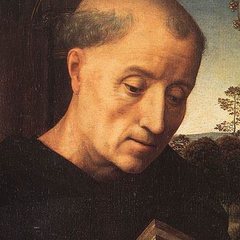 Benedict of Nursia
 Gregory never met him. He wrote the only early life of Benedict, the second book of his Dialogues, from what four of Benedict's monks told him.
Dialogues, Book 2, prefaceHis mother. After her husband died she took religious vows and lived apart in prayer in Rome, near the great church of St Paul. Catholics keep her day on 3 November, and the OCA on 4 November.
Britannica; Dudden, volume 1; Catholic Encyclopedia; OCAHis father's sisters. With a third sister they gave their lives to prayer. Gregory tells how Tarsilla, before she died, saw an ancestor of theirs, Pope Felix, in a vision.
Dialogues, Book 4, chapter 16; Catholic EncyclopediaHis deacon and secretary. Gregory calls him the friend he had “always loved most entirely” since Peter was young. The Dialogues are written as talks between them.
Dialogues, Book 1, prefaceBishop of Seville. They met in Constantinople, and Gregory sent him the Moralia. When Leander wrote of his gout, Gregory answered that he too was “grievously worn down” by it.
Moralia, letter to Leander; Letters, Book 9, letter 121A monk of Gregory's own monastery in Rome. Gregory sent him to the English, and he became their first bishop.
Letters, Book 8, letter 30; Bede, Book 1The Catholic queen of the Lombards, wife of King Agilulf. Gregory sent her his Dialogues, and worked through her for peace.
Paul the Deacon, History of the Lombards, Book 4, chapter 5; Letters, Book 14, letter 12Gregory stood godfather to his son. But they clashed over the Lombards and over church titles, and Gregory's letters to him are blunt.
Gregory of Tours, Book 10, chapter 1; Letters, Book 5, letter 40Patriarch of Constantinople, who took the title Ecumenical Patriarch. Gregory fought the title for years. After John died, he told the emperor that whoever calls himself universal priest “is in his elation the precursor of Antichrist”.
Letters, Book 7, letter 33, to the emperor Mauricehow he died
He died in Rome on 12 March 604, after years of gout, and was buried the same day at St Peter's.
For his last years he was mostly in bed. His letters speak of pain, and of longing for the end: “every day I faint under my sufferings, and sigh in expectation of the relief of death.”
In December 603 he wrote to Queen Theodelinda that gout left him hardly able to rise, “not only for dictating, but even for speaking”. When her envoys left, he said, he was “in the utmost peril and danger of our life”.
No one recorded his last words. The monk of Whitby, writing a century later, admits it: “Of the death of this man, how and of what manner it was, we have not heard.”
is he a saint?
Yes. Catholics, Orthodox and Anglicans count him a saint, and Lutherans remember him too. He was hailed a saint as soon as he died.
- CatholicSaint and DoctorOne of the four great Latin Doctors. Memorial on 3 September
- OrthodoxSaintGregory the Dialogist, 12 March
- AnglicanSaintChurch of England, 3 September. Episcopal Church, 12 March
- LutheranRememberedMissouri Synod, 3 September. ELCA, 12 March
There was no formal canonization. The Catholic Encyclopedia says, “His canonization by popular acclamation followed at once on his death.”
Catholics count him one of the four great Doctors of the Latin Church, with Ambrose, Augustine and Jerome. In 1298 Pope Boniface VIII ordered the feasts of all four kept across the whole Church.
The Orthodox honour him warmly, though he was a pope of Rome. They call him the Dialogist, and credit him with the Liturgy of the Presanctified Gifts, served on weekdays in Lent.
Calvin, the Protestant reformer, both praised and attacked him. He called Gregory “the last Bishop of Rome”, meaning the last true one. He also said Gregory was “most grievously and perniciously in error” in teaching that we can know we are called, but not that we are chosen.
At Rome, the raising to the Sovereign Pontificate of St. Gregory the Great, an incomparable man, who, being forced to take that burden upon himself, sent forth from the more exalted throne brighter rays of sanctity upon the world.
Saint Gregory compiled the Liturgy of the Presanctified Gifts in the Latin language, which before him was known only in the verbal tradition.
a prayer he wrote
Bede says that in the celebration of Mass he added three petitions “of the utmost perfection”. These are his words, as Bede gives them.
And dispose our days in Thy peace, and bid us to be preserved from eternal damnation, and to be numbered in the flock of Thine elect.
what to read first
Pastoral Rule
Gregory the Great
His handbook for pastors: who should lead, how a leader should live, and how to speak to each kind of person. Part 3 is the base of our personality test.
Read it freeDialogues, Book 2: the Life of St Benedict
Gregory the Great
The only early life of Benedict, told as a talk with his deacon Peter. Short, and full of stories.
Read it freeLetters
Gregory the Great
About 850 letters, to emperors, queens, farm managers and missionaries. The best way to meet the man. Start with Book 1, letter 5.
Read them freeEcclesiastical History, Book 2, chapter 1
Bede
Bede's portrait of him, a century on, with his epitaph and the story of the Angles.
Read it freetake the quizzes
 Quiz Which early Christian thinks like you? And which would argue with you? See where you stand beside Gregory. Start
  Quiz Christian Personality Test Gregory reads as The Deep Well. Find your own type. Start
 people like him
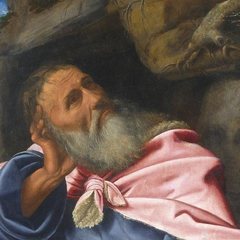 ElijahThe Deep Well
 After his great victory on Carmel he ran into the wilderness and sat under a tree. “I have had enough, LORD,” he said. The desert fathers remembered him as the one who “loved silence”.
1 Kings 19:4; Abba Nastir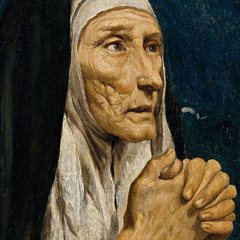 MonicaThe Deep Well
 Augustine's mother. She wept and prayed for her son for years. A bishop told her, “it is not possible that the son of these tears should perish.” Years later the two of them stood alone at a window in Ostia and talked together about God.
St Augustine, Confessionssources
His life, and his words
- Gregory the Great, Letters. Tr. James Barmby, 1895 and 1898, as revised by New Advent.
- The same letters, unrevised. Nicene and Post-Nicene Fathers, second series, volumes 12 and 13.
- Gregory the Great, Pastoral Rule. Tr. James Barmby, 1895.
- Gregory the Great, Moralia on Job. Library of the Fathers, Oxford, 1844 to 1850.
- Gregory the Great, Dialogues. Tr. P.W., 1608, ed. Edmund G. Gardner, 1911.
- Gregory the Great, Homilies on the Gospels, in Latin. Migne, Patrologia Latina, volume 76.
- Bede, Ecclesiastical History of England. Tr. A. M. Sellar, 1907.
- Gregory of Tours, History of the Franks. Tr. Ernest Brehaut, 1916.
- Paul the Deacon, History of the Lombards. Tr. William Dudley Foulke, 1907.
- The Whitby Life of St Gregory, in part. Tr. T. Leo Almond, Downside Review, 1904.
- The Whitby Life, in Latin. Ed. Gasquet, 1904.
Reference
- Catholic Encyclopedia, “Pope St. Gregory I”
- Catholic Encyclopedia, “Doctors of the Church”
- F. Homes Dudden, Gregory the Great, volume 1, 1905
- F. Homes Dudden, Gregory the Great, volume 2, 1905
- Britannica, “St. Gregory the Great”
- Britannica, “Gregorian chant”
- Britannica, “Gregorian calendar”
- Edward Gibbon, The Decline and Fall of the Roman Empire, chapters 45 and 46
- John Calvin, Institutes of the Christian Religion. Tr. Henry Beveridge, 1845.
- King Alfred's West-Saxon Version of Gregory's Pastoral Care. Ed. and tr. Henry Sweet, 1871, for Alfred's preface.
- Ashmolean Museum, “The Alfred Jewel”
- Dante, Paradiso. Tr. Henry Wadsworth Longfellow, 1867.
- Merriam-Webster, “Gregory”, for how to say it
Calendars
- USCCB, Memorial of Saint Gregory the Great
- Calendarium Romanum, Vatican, 1969, on why his day moved
- The Roman Martyrology, 1916 edition
- OCA, Saint Gregory Dialogus, Pope of Rome
- saint.gr, Greek
- azbyka.ru, Russian
- orthodox.net, Menaion for 12 March, with the civil date
- Church of England, Common Worship calendar
- The Episcopal Church, Lesser Feasts and Fasts 2022
- LCMS, Commemorations
- Evangelical Lutheran Worship, ELCA, the church year
Pictures
- Saint Gregory the Great, Pope, Francisco de Goya, 1796-1799. Museo del Romanticismo, Madrid. Public domain.
- Icon of Saint Gregory the Dialogist, Cretan School, second half of the 17th century. Collection of Agia Aikaterini, Heraklion. Photo released CC0.
- Rebecca and Eliezer, Bartolomé Esteban Murillo, about 1660. Public domain.
- Gregory the Great with the Holy Spirit, a miniature by Theodericus in a copy of Gregory's Dialogues, first quarter of the 12th century. British Library, Harley MS 3011. CC0.