
Benedict of Nursia
Hermit, abbot, and author of the Rule that Western monks still follow.
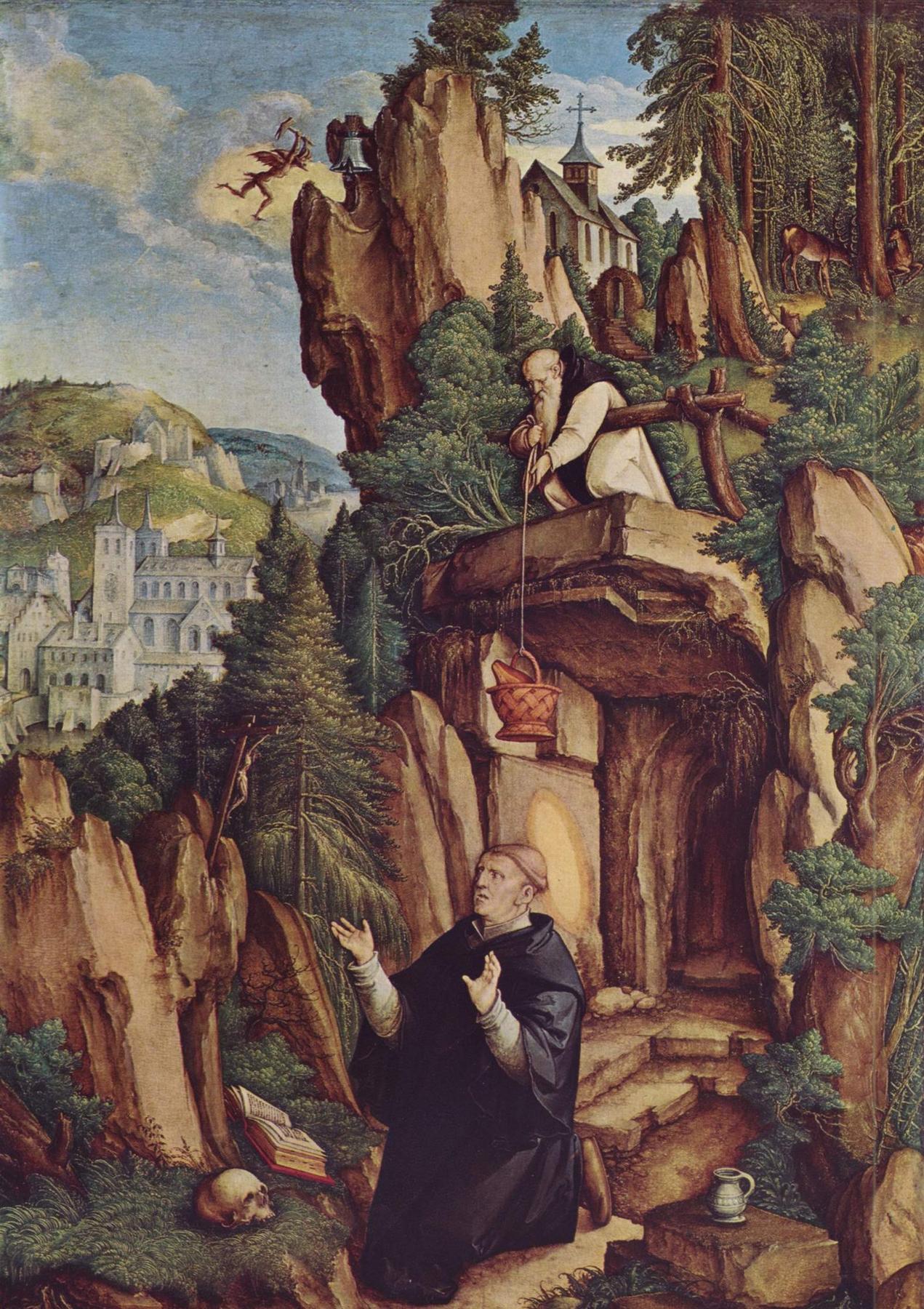
Picture: Saint Benedict at Prayer, Master of Messkirch, about 1530. Staatsgalerie Stuttgart. Public domain.
Who was Benedict?
Benedict was born at Nursia in Italy, about 480, and sent to Rome to study. He left the schools to live alone in a cave at Subiaco. Monks gathered round him, and he later built the monastery of Monte Cassino. There he wrote a short Rule for monks, which Western monks and nuns still follow.
at a glance
His path, in order
- StudentSent to Rome, left the schools
- HermitThree years in a cave
- AbbotTwelve monasteries at Subiaco
- FounderMonte Cassino, about 529
- LawgiverWrote his Rule
in numbers
- Years alone in a cave3
- At Subiaco, fed by the monk Romanus
- Only Romanus knew where he was
- Monasteries he built12
- Around Subiaco, before Monte Cassino
- A head and twelve monks in each
- Psalms sung each week150
- Any order will do, if all are sung
- Monks of old sang them all in a day
did you know?
-
Joseph Ratzinger became Pope in 2005 and took the name Benedict, partly with this Benedict in mind. The monk, he said, stands for Europe's unity and its Christian roots.
Benedict XVI, General Audience, 27 April 2005 -
His monks sleep in their clothes, belted, ready to rise for prayer. But not with their knives on, he adds, in case they are hurt in their dreams.
Rule of St Benedict, chapter 22 -
In Lent each monk gets a book from the library to read straight through. Elders walk round at reading time, to catch anyone idle or chatting instead.
Rule of St Benedict, chapter 48 -
The monk in charge of the stores must treat every pot and possession of the house as if it were a sacred vessel of the altar.
Rule of St Benedict, chapter 31
- Born
- About 480, in the province of Nursia, today Norcia in Umbria, Italy. His family was well born, says Pope Gregory the Great, who wrote his life.
- Grew up
- He was sent to Rome to study. He left the schools as a young man, about 500.
- Died
- At Monte Cassino, of a fever, about 547. Some say 543. Tradition gives the day as 21 March. Gregory gives no date.
- Buried
- At Monte Cassino, in the chapel of St John he built where an altar to Apollo had stood. He lay in the grave he had made for himself, where he had buried his sister Scholastica.
- Also called
- Benedict of Norcia. The Father of Western Monasticism, in the Church of England's calendar. Venerable Benedict of Nursia, in the Orthodox churches.
- Status
- A saint to Catholics, Orthodox and Anglicans. The ELCA, a Lutheran church, remembers him too.
- Patron of
- Europe, named by Pope Paul VI in 1964. Britannica adds students, monks and nuns. It says he is also called on against poisoning and kidney disease.
- In art
- An abbot in a black habit, with a book and a staff. Often a broken cup, and a raven with a loaf: the two times he was poisoned. In an Eastern fresco at Peć, an old monk with a white beard and a scroll.
- Wrote
- One book: his Rule for monks, in a prologue and 73 short chapters.
- Pronounced
- BEN-uh-dikt of NUR-shuh, or NUR-shee-uh.
 The Oak
 His personality type
Sure of himself, and at his best when life is quiet.
In Gregory the Great's terms
- Confident
- Tranquil mind
Our reading, from the Christian Personality Test. Confident here means steady and hard to rattle, never proud. His face also stands for The Shepherd, one of the test's seven roles: the one who keeps a community together.
See The Oakfeast days
East and West, side by side
West
- Mar21
In the 1916 Roman Martyrology, the traditional day of his death. It was the Catholic feast until 1969.
- Jul11
Catholic memorial. Also a Lesser Festival in the Church of England, and kept by the Episcopal Church and Lutherans in the ELCA. Not in the Missouri Synod's calendar.
East
- Mar14
Greek churches and the OCA, as Venerable Benedict of Nursia.
- Mar27
Russian Church, which keeps 14 March on the old calendar.
Why two days in the West? Old martyrologies, Bede's among them, give 21 March as the day of his death. But that day always falls in Lent. So in 1969 Rome moved his memorial to 11 July. Books written in Gaul already kept a July feast for him at the end of the 8th century, though where it came from is not known. The East has kept 14 March since the 10th century. Churches on the old calendar keep it 13 days later, on 27 March.
what was he like?
+hard to rattle
A Goth named Galla killed any monk or priest who came before him. He tortured a farmer to find his money. To stop the pain, the farmer said Benedict was keeping it. So Galla drove him to the abbey with his arms tied, and shouted at Benedict to get up and hand it over. Benedict looked up from his book, and the ropes fell from the farmer's arms. Galla fell at his feet. Yet Benedict “rose not up from his reading”. He had his monks give the Goth something to eat, and told him to stop his cruelty.
Dialogues, Book 2, chapter 31+calm under attack
When his monks tried to poison him, he stood up “with a mild countenance and quiet mind” and asked God to forgive them. When a jealous priest sent him a poisoned loaf, his biographer Gregory says he “was far more sorry for him than grieved for himself”. When that priest died, he wept.
Dialogues, Book 2, chapters 3 and 8+roused to anger
His biographer Gregory does not hide Benedict's anger. In a famine the monk in charge of the stores held back the last glass of oil from a man who asked for it. Benedict, “in an anger”, had it thrown out of the window, “to the end that nothing might remain in the Abbey contrary to obedience”. Once, worn out by a monk who kept asking to leave, he told him in anger to go.
Dialogues, Book 2, chapters 25 and 28+sad, not tearful
His friend Theoprobus once found him weeping bitterly, and waited a long time for him to stop. Weeping was not Benedict's way, says Gregory, “for the man of God used not in his prayers to weep, but rather to be sad”. He was weeping because he foresaw his abbey sacked. He had begged God to spare the monks' lives.
Dialogues, Book 2, chapter 17+gave the credit away
When his young monk Maurus ran over the water of a lake to save the boy Placidus, Benedict put it down to Maurus's obedience, not to his own merits. When a father begged him to raise his dead son, he first protested: “such miracles are not for us to work, but for the blessed Apostles”.
Dialogues, Book 2, chapters 7 and 32+moderate on purpose
He wanted a rule a beginner could keep, and he allowed his monks a little wine. He tells the abbot to arrange everything so “that the strong may still have something to desire and the weak may not draw back”.
Rule of St Benedict, chapters 40, 64 and 73+ran from praise
His first miracle, mending his nurse's broken sieve, made him famous in the village of Enfide. So he slipped away from his nurse and went alone into the wild. He wanted “rather to be wearied with labour for God's sake, than to be exalted with transitory commendation”.
Dialogues, Book 2, chapter 1what others said of him
No one who knew him wrote his life. Gregory the Great wrote it about fifty years after his death, from what four of Benedict's disciples told him.
…from his younger years, carried always the mind of an old man; for his age was inferior to his virtue.
…the holy man could not otherwise teach, than himself lived.
This one man was full of the spirit of all good men.
his life in eleven moments
Rome and Enfide
About 500Walking out of school
He was sent to Rome to study. There he saw many students slide into loose living. So he gave up his books and his father's house, to serve God alone. His nurse would not let him go without her, and they stayed at Enfide, today Affile. His biographer Gregory says he left “instructed with learned ignorance, and furnished with unlearned wisdom”.
Dialogues, Book 2, prologue and chapter 1Subiaco
Three yearsThe bread on a rope
He slipped away from his nurse to a narrow cave at Subiaco, almost forty miles from Rome. On the way he met a monk, Romanus, who gave him a monk's habit and kept his secret. For three years only Romanus knew where he was. Romanus saved loaves from his own rations and let them down over the cliff on a long rope. He tied a little bell to the rope, so Benedict would hear the bread coming. One day the devil threw a stone and broke the bell. Romanus kept coming anyway.
Dialogues, Book 2, chapter 1Subiaco
An Easter SundayHe did not know it was Easter
A priest far away had a feast ready. The Lord told him that His servant was going hungry. The priest searched the hills and found the cave. After they prayed, he said it was time to eat, because it was Easter. Benedict had lost count of the days. He answered, “I know that it is Easter with me and a great feast, having found so much favour at God's hands as this day to enjoy your company”. Soon after, shepherds found him. He was dressed in skins, and at first they took him for an animal.
Dialogues, Book 2, chapter 1Subiaco
In the caveThe nettles
One day the memory of a woman he had once seen came back to him. The temptation grew so strong that he nearly left the wilderness. Instead he threw off his clothes and rolled in a patch of briars and nettles until his skin was torn. Gregory writes, “and so by the wounds of his body, he cured the wounds of his soul”. Benedict later told his disciples he was never tempted that way again.
Dialogues, Book 2, chapter 2Near Subiaco
His first abbeyThe poisoned wine
The monks of a nearby monastery lost their abbot and begged Benedict to take his place. He warned them that their ways and his would never agree, but at last he gave in. When he held them to a strict life, they put poison in his wine. He made the sign of the cross over the glass, and it broke as if hit by a stone. He told them, “Go your ways, and seek ye out some other father suitable to your own conditions”. Then he went back to the wilderness he loved.
Dialogues, Book 2, chapter 3Subiaco
After the caveTwelve houses of twelve
So many came to him that he built twelve monasteries, with a head and twelve monks in each. He kept a few monks with him, to teach them himself. Roman nobles brought him their sons to raise. Among them were Maurus, a young man, and Placidus, still a small boy.
Dialogues, Book 2, chapter 3Subiaco
LeavingThe jealous priest
Florentius, a priest nearby, envied him. He spoke against him and sent him a poisoned loaf. Then he sent seven naked young women to dance in the monks' yard. Benedict feared for his young monks, so he left with a few of them. Gregory says “he gave place to envy”. Soon after, Florentius's room collapsed and killed him, though the rest of the house stood. Benedict wept. His monk Maurus sent him the news gladly, and Benedict gave him a penance for rejoicing.
Dialogues, Book 2, chapter 8Monte Cassino
About 529Apollo's hill
On the mountain above the town of Cassino stood an old temple. Country people still worshipped Apollo there, and offered sacrifice in the woods around it. Benedict smashed the idol, overturned the altar and burned the woods. In the temple he built a chapel of St Martin, and where the altar had stood, a chapel of St John. He preached until the people around became Christians. Then, Gregory says, the devil came to him in plain sight, raging. The devil called him Blessed Benedict and got no answer, so he cried, “Cursed Benedict, and not blessed: what hast thou to do with me?” Here Benedict built the monastery where he lived to the end.
Dialogues, Book 2, chapter 8Monte Cassino
About 542The king in disguise
Totila, king of the Goths, wanted to test whether Benedict was really a prophet. He dressed one of his guards, Riggo, in his own royal robes and sent him with a train of courtiers. As soon as Riggo came near, Benedict called out, “Put off, my good son, put off that apparel, for that which thou hast on, is none of thine.” Riggo fell to the ground. Then Totila came himself. He dared not come near, and threw himself on the ground. Benedict went to him, lifted him up and told him, “Much wickedness do you daily commit, and many great sins have you done: now at length give over your sinful life.” He foretold that Totila would reign nine years and die in the tenth. From then on, says Gregory, the king was less cruel.
Dialogues, Book 2, chapters 14 and 15Near Monte Cassino
Their last meetingHis sister's storm
His sister Scholastica came once a year, and they met on the abbey’s land, just outside its gate. One evening she begged him to stay the night and talk of heaven. He refused, because he could not spend a night outside his abbey. The sky was clear. She laid her head on her hands and prayed, and a storm broke so hard that no one could step outside. “God forgive you, what have you done?” he said. She answered, “I desired you to stay, and you would not hear me, I have desired our good Lord, and He hath vouchsafed to grant my petition”. They talked all night. Gregory's verdict: “of right she did more which loved more”. Three days later Benedict saw her soul rise to heaven like a dove.
Dialogues, Book 2, chapters 33 and 34Monte Cassino
One nightThe whole world in one ray
Praying at his window before dawn, he saw a light brighter than day. As he told it later, “the whole world, gathered as it were together under one beam of the sun, was presented before his eyes”. In the light he saw the soul of Germanus, bishop of Capua, carried to heaven in a ball of fire. He had a man sent to Capua. Germanus had died at that very hour.
Dialogues, Book 2, chapter 35
his miracles
Pope Gregory the Great's book on Benedict is a book of wonders. Almost every one of its 38 short chapters tells a miracle, a prophecy or a vision. At the start he says where his stories came from.
All the notable things and acts of his life I could not learn; but those few, which I mind now to report, I had by the relation of four of his disciples.
2 raised from the dead
-
Monte Cassino
Building a wallThe boy under the wall
The monks were raising a wall. The devil mocked Benedict and told him he was on his way to the monks. Benedict sent a warning, but the wall came down and killed a young boy monk, the son of a town councillor. The monks carried him to Benedict in a sack, his bones broken. Benedict had him laid where he himself used to pray. He sent everyone out and shut the door. Then he prayed harder than he ever had.
“for the very same hour he made him sound, and as lively as ever he was before; and sent him again to his former work”
Benedict sent him straight back to help the monks finish the same wall.
Dialogues, Book 2, chapter 11 -
The gate of Monte Cassino
Back from the fieldsThe farmer's son
A farmer laid his dead son at the abbey gate and ran to find Benedict, crying, “Give me my son, give me my son!” At first Benedict protested that such miracles were for the apostles. The man swore he would not leave. So Benedict knelt and lay on the child's body. Then he rose, held up his hands to heaven and prayed. He took the child by the hand and gave him back to his father alive.
“Behold not, O Lord, my sins, but the faith of this man, that desireth to have his son raised to life, and restore that soul to the body, which Thou hast taken away.”
Everyone there saw the child's body begin “in strange manner to pant and shake”.
Dialogues, Book 2, chapter 32
Gregory tells the second as a miracle won by prayer, not worked by Benedict's own power: “this miracle was not in his own power, for which prostrate upon the ground he prayed so earnestly”. Dialogues, Book 2, chapter 32
The mended sieve
At Enfide his nurse borrowed a sieve, and it broke in two. She wept, because it was not hers. He took the pieces and prayed with tears, and it was whole again. The village hung it over the church door, and it hung there for many years.
“that the place could not be seen where before it was broken”Dialogues, Book 2, chapter 1
Water on the mountain
Three of his monasteries stood high on a rocky hill, and the monks were tired of the steep climb down to the lake for water. They asked to move. One night he went up the rock with the boy Placidus. He prayed there a long time and left three stones as a mark. He told the monks to dig there. Water came.
“doth plentifully, even to this day, spring out and run down from the top to the very bottom of that hill”Dialogues, Book 2, chapter 5
The blade from the lake
A humble Goth who had become a monk was clearing briars by the lake. The iron head of his hook flew off into deep water. Benedict put the handle into the lake. The iron rose from the bottom and slid back onto it. He handed it back with these words.
“Behold here is thy bill again, work on, and be sad no more.”Dialogues, Book 2, chapter 6
Maurus on the water
Young Placidus fell into the lake while fetching water, and the current carried him out. Benedict, in his cell, knew at once and sent his young monk Maurus running. Maurus ran out over the water and pulled the boy back by the hair. Only on the shore did he see what he had done. Benedict said it was Maurus's obedience. Maurus said it was Benedict's command. Placidus settled it: he had seen Benedict's cloak over his head as he was pulled out.
“A strange thing, and since the time of Peter the Apostle never heard of!”Dialogues, Book 2, chapter 7
The raven and the loaf
A raven came from the woods every day at dinner to take bread from his hand. The day a jealous priest, Florentius, sent him a poisoned loaf, Benedict threw it to the bird. The raven hopped and cried, as if it wanted to obey and could not. At last it carried the loaf off, and came back three hours later for its usual bread.
“In the name of Jesus Christ our Lord, take up that loaf, and leave it in some such place where no man may find it.”Dialogues, Book 2, chapter 8
Seeing from afar
Monks came back from an errand and said they had not eaten outside the abbey. He told them whose house they had eaten in, what they ate and how many cups they drank. He warned a lay brother not to drink from the flask of wine he had hidden in a bush, and a snake came out of it. He knew of napkins a monk had tucked into his habit.
“Why do you tell an untruth? For did you not go into such a woman's house?”Dialogues, Book 2, chapters 12, 18 and 19
Flour in a famine
In a famine the abbey was down to five loaves. He told his gloomy monks, “Indeed, today some want there is, but tomorrow you shall have plenty”. The next day flour was found at his door. No one ever found out who sent it.
“two hundred bushels of meal was found in sacks before his cell door”Dialogues, Book 2, chapter 21
The oil that overflowed
In a famine, the monk in charge of the stores would not give the last glass of oil to a man who asked for it. Benedict had it thrown out of the window. It landed on the rocks below unbroken, and not a drop was spilled. He had it given to the man who had asked. Then he prayed with his monks beside an empty barrel. The oil rose until the lid fell off and it ran over the floor.
“the oil within did so increase, that the cover began to be lifted up”Dialogues, Book 2, chapters 28 and 29
Two nuns cut off
Two nuns kept insulting the man who ran their errands. Benedict warned them to mend their tongues or be cut off from communion. They died unchanged, and were buried in the church. Often at Mass their nurse saw them rise from their graves and leave when the deacon sent out those not taking communion. Benedict sent an offering for them, and they were not seen to leave again.
“Amend your tongues, otherwise I do excommunicate you”Dialogues, Book 2, chapter 23
The boy the grave cast out
A boy monk loved his parents more than he should. He went home without Benedict's blessing. He died the same day. Twice his body was found cast out of its grave. Benedict gave the boy's parents the Host to lay on his breast, and after that the body stayed buried.
“Go, and lay with great reverence this our Lord's body upon his breast, and so bury him”Dialogues, Book 2, chapter 24
his words
Benedict wrote one book, his Rule. Lines from it are in Boniface Verheyen's translation. His spoken words come through Gregory the Great, in the English of 1608.
The first words of his Rule
Listen, O my son, to the precepts of thy master, and incline the ear of thy heart.
In Latin, Obsculta, o fili, praecepta magistri, et inclina aurem cordis tui.
Rule of St Benedict, PrologueLet them prefer nothing whatever to Christ, and may He lead us all together to life everlasting.
Never to despair of God's mercy.
Not to desire to be called holy before one is; but to be holy first, that one may be truly so called.
It is not in many words, but in the purity of heart and tears of compunction that we are heard.
Although we read that wine is not at all proper for monks, yet, because monks in our times cannot be persuaded of this, let us agree to this, at least, that we do not drink to satiety, but sparingly.
That God may be glorified in all things.
Sign your heart, brother, for what is it that you say? Sign your heart.
his rule
His one book is short: a prologue and 73 chapters on how monks should live together. Pope Gregory the Great called it “excellent for discretion and also eloquent for the style”. Western monks and nuns still live by it.
A school for beginners
He calls his community a school, and he means it for beginners. He ends by calling his book a “least rule written for a beginning”. For more, he sends readers to older books: “the collations of the Fathers, and their institutes and lives, and the rule of our holy Father, Basil”.
“We are, therefore, about to found a school of the Lord's service, in which we hope to introduce nothing harsh or burdensome.”Rule of St Benedict, Prologue and chapter 73
Prayer, work and reading
The day runs in turns: prayer together, work with the hands, and reading. The monks sing all 150 psalms every week. The monks of old, he sighs, did “in one day what we lukewarm monks should, please God, perform at least in a week”.
“Idleness is the enemy of the soul; and therefore the brethren ought to be employed in manual labor at certain times, at others, in devout reading.”Rule of St Benedict, chapters 18 and 48
Guests
Every guest is met by the superior and the monks “with every mark of charity”. They pray together first. The abbot himself pours water on the guest's hands.
“Let all guests who arrive be received as Christ, because He will say: ‘I was a stranger and you took Me in’.”Rule of St Benedict, chapter 53
Newcomers
A newcomer is not let in easily. He must keep knocking for four or five days. After two months the Rule is read to him, with the words below. It is read again after six more months, and again after four. Only then may he make his promises before everyone: to stay, to change his ways, and to obey.
“Behold the law under which thou desirest to combat. If thou canst keep it, enter; if, however, thou canst not, depart freely.”Rule of St Benedict, chapter 58
The abbot
The abbot is “believed to hold the place of Christ in the monastery”. But before any big decision he must call the whole community together, “because the Lord often revealeth to the younger what is best”. In correcting faults, he must not scrub so hard at the rust that “the vessel be broken”.
“Let him aim to be loved rather than feared.”Rule of St Benedict, chapters 2, 3 and 64
Punishment
The Rule is not soft on the stubborn. The abbot may punish the proud and disobedient “at the very first offense with stripes and other bodily punishments”. A monk at fault may be shut out: he eats alone, and for graver faults he is kept from the common prayer too. Boys who cannot understand that penalty are to fast or be beaten. Yet no one may strike a brother without the abbot's leave. And the abbot is to work like a doctor: words first, then Scripture, then shutting out, then the lash. If all of that fails, he turns to one thing stronger, below. If even that fails, the brother is sent away.
“…what is more potent than all these measures: his own prayer and that of the brethren, that the Lord Who is all-powerful may work a cure in that brother.”Rule of St Benedict, chapters 2, 24, 25, 28, 30 and 70
Where it came from
He did not write it from nothing. He used the Desert Fathers, Augustine and above all John Cassian, says Britannica. Most scholars now think an anonymous older rule, the Rule of the Master, came first. The Episcopal Church's book of saints puts it plainly: “The major problem for historians is the question of how much of the rule is original.”
“If this is accepted, about one-third of Benedict's Rule (if the formal liturgical chapters are excluded) is derived from the Master.”Britannica; Lesser Feasts and Fasts 2022
often misquoted
His motto was ora et labora, pray and work, and it is in his Rule.
What the sources sayThe words are not in his Rule. Terrence Kardong, a monk who studies it, says the phrase “appears nowhere in Benedictine history before the 19th century”. The Rule does balance prayer, work and reading. Pope Paul VI used the phrase of him in 1964.
Terrence Kardong; the Latin Rule; Paul VI, Pacis nuntius“Always we begin again” is one of his sayings.
What the sources sayIt is not in his Rule or in Gregory's Life. It is the title of a modern book by John McQuiston II, who retells the Rule in his own words.
The Rule; Dialogues, Book 2; Church PublishingHe founded the Benedictine Order.
What the sources sayHe founded single monasteries, each standing on its own under its abbot. The Catholic Encyclopedia calls it “his so-called order”. It says a Benedictine joins “a particular household” more than an order.
Catholic Encyclopedia, 1907Scholastica was his twin.
What the sources sayGregory calls her only his sister. The twin story is later. The Catholic Encyclopedia calls it “a tradition, which St. Bede accepts”.
Dialogues, Book 2, chapter 33; Catholic Encyclopedia, 1907The St Benedict medal, with its Vade retro Satana, comes from him.
What the sources sayNeither the medal nor its prayer is in his Rule or in Gregory's Life. “It is doubtful when the Medal of St. Benedict originated,” says the Catholic Encyclopedia. Its letters were found painted on the walls of Metten abbey in 1647. The medal was first approved in 1741 and 1742.
Catholic Encyclopedia, 1912, “Medal of Saint Benedict”The briars he rolled in to fight temptation turned into roses.
What the sources sayGregory says nothing of roses. His editor Gardner says only that the thorns “are piously said to have turned into the roses” still grown at the cave in his day.
Dialogues, Book 2, chapter 2, with Gardner's note11 July is the day his bones were moved to France.
What the sources sayThe Roman calendar of 1969, which moved his memorial to 11 July, says no one knows where the July feast came from. It says only that books from Gaul kept it at the end of the 8th century.
Calendarium Romanum, 1969where he stood
Each line is from his Rule. Three are in older English translations, and one is our own, from the Latin. TapClick “Show his line” to read it.
Your answers are next to his. From your result on . See your result
“A good hearty laugh is good for the soul.”
Benedict strongly disagrees.
You
Show his line
But as for buffoonery or idle words, such as move to laughter, we utterly condemn them in every place, nor do we allow the disciple to open his mouth in such discourse.Rule of St Benedict, chapter 6, tr. Hunter Blair
“Most of the time, it's better to say less.”
Benedict strongly agrees.
You
Show his line
The ninth degree of humility is that a monk restrain his tongue from speaking; and, keeping silence, do not speak until he is spoken to.Rule of St Benedict, chapter 7, tr. Henderson
“Wisdom is worth learning from anyone, even people who don't share your faith.”
Benedict disagrees.
You
On record in the Dialogues. Not quoted here.
“If someone you know is doing wrong, it's your job to tell them.”
Benedict strongly agrees.
You
Show his line
Let him not shut his eyes to the faults of offenders; but as soon as they appear, let him strive with all his might to root them out.Rule of St Benedict, chapter 2, tr. Hunter Blair
“A church should keep out people who openly live in serious wrongdoing.”
Benedict agrees.
You
On record in the Rule of St Benedict. Not quoted here.
“Becoming a better person is mostly down to your own effort.”
Benedict strongly disagrees.
You
Show his line
If he sees some good in himself, let him credit it to God, not to himself. But let him know that evil is always his own doing, and count it as his own.Rule of St Benedict, chapter 4. Our translation
“In the end, God will save everyone.”
Benedict disagrees.
You
On record in the Rule of St Benedict. Not quoted here.
See where you stand beside him. Take the quiz
friends, family and rivals
 Gregory the Great
 He never met Benedict. He wrote the only early Life of him, about fifty years after Benedict died, and he names the four disciples who told him the stories.
Dialogues, Book 2, prologueHis sister, given to God from childhood. She visited him once a year. Three days after their last night of talk, he saw her soul rise to heaven like a dove, and he buried her in the grave he had made for himself.
Dialogues, Book 2, chapters 33 and 34She loved him and would not let him leave Rome without her. It was her borrowed sieve he mended. He slipped away from her to go to Subiaco.
Dialogues, Book 2, chapter 1A monk from a monastery nearby. He gave Benedict the monk's habit, kept his secret, and fed him in the cave for three years.
Dialogues, Book 2, chapter 1Two sons of Roman nobles, given to him to raise. Maurus, the elder, became his helper. Placidus was the small boy Maurus pulled from the lake.
Dialogues, Book 2, chapters 3 and 7They begged him to be their abbot, then hated his strictness and poisoned his wine. Their monastery is said to have been at Vicovaro.
Dialogues, Book 2, chapter 3, with Gardner's noteA priest nearby who envied him. He sent Benedict a poisoned loaf and tried to corrupt his young monks. Benedict left rather than fight, and wept when Florentius died.
Dialogues, Book 2, chapter 8King of the Goths. He tested Benedict with a servant in his robes, then was rebuked to his face. Gregory's editor Gardner warns that Gregory could not see the Goths fairly: “modern historians depict Totila in far more favourable colours”.
Dialogues, Book 2, chapters 14 and 15, with Gardner's noteA deacon and abbot from Campania, and a friend who came often to talk of heaven. He was the one Benedict called to see the light of his vision of the whole world in one ray.
Dialogues, Book 2, chapter 35A nobleman who had turned to God on Benedict's advice, and a close friend. He found Benedict weeping over the coming sack of his abbey. On the night Benedict saw the bishop of Capua's soul carried to heaven, he sent a man to Capua.
Dialogues, Book 2, chapters 17 and 35how he died
He died at Monte Cassino about 547, standing up in prayer between his monks.
He told his monks the day he would die, both those with him and those far away. Six days before, he had his grave opened. Then a fever took hold, and it grew worse every day.
On the sixth day he had himself carried into the chapel. He received the Body and Blood of Christ. Then, held up by his disciples, he stood with his hands raised to heaven, and died praying. His biographer Gregory records no last words.
He was buried beside his sister, in the chapel of St John he had built where Apollo's altar once stood.
His abbey outlived him. The Lombards later sacked it by night, but every monk's life was spared, as he had foretold. Its church was destroyed in 1944, in the Second World War. Pope Paul VI consecrated it again on 24 October 1964.
His death, as Gregory tells it
Having his weak body holden up betwixt the hands of his disciples, he stood with his own lifted up to heaven, and as he was in that manner praying, he gave up the ghost.
What two monks saw
This is the way, by which the beloved servant of God, Benedict, is ascended up to heaven.
The day he died, two monks, one in his own cell and one far away, saw the same vision. A road ran east from Benedict's cell up to heaven, hung with rich cloths and shining with lamps. A man stood at the top and told them this.
is he a saint?
Yes. Catholics, Orthodox and Anglicans count him a saint, and the ELCA, a Lutheran church, remembers him too.
- CatholicSaintA memorial on 11 July. Patron of Europe since 1964
- OrthodoxSaintVenerable Benedict, 14 March
- AnglicanSaintA Lesser Festival in the Church of England, 11 July
- LutheranRememberedELCA, 11 July. Not in the Missouri Synod's calendar
He did not die a martyr. He lived long before East and West split in 1054, and Greek calendars have kept his day since the 10th century.
In 1964 Pope Paul VI named him principal patron of all Europe. His letter opens with three titles: Pacis nuntius, unitatis effector, civilis cultus magister. In our translation: messenger of peace, maker of unity, teacher of civilised life.
…the birthday of the holy abbot Benedict, who restored and wonderfully extended in the West the monastic discipline, which was almost destroyed. His life, brilliant in virtues and miracles, was written by pope St. Gregory.
what to read first
The Rule of St Benedict
Benedict
Short, practical and often warm. One page per chapter, in Boniface Verheyen's translation.
Read it freeDialogues, Book 2
Gregory the Great
Benedict's only early Life: 38 short chapters of stories, in the English of 1608, with Gardner's notes.
Read it freeThe Rule, in Latin and English
Tr. D. Oswald Hunter Blair
A 1906 edition with the Latin and the English on facing pages.
Read it freetake the quizzes
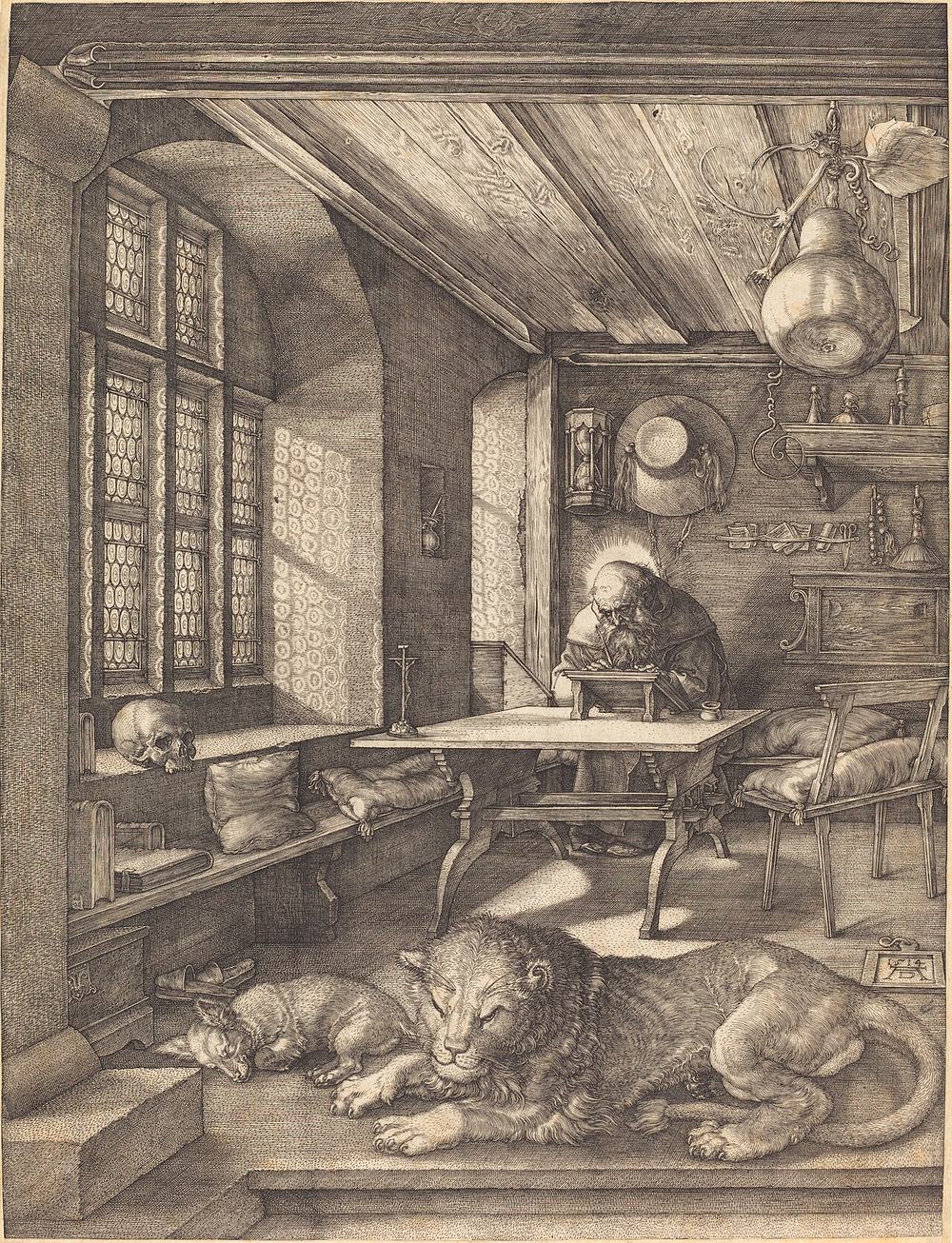 Quiz Which early Christian thinks like you? And which would argue with you? See where you stand beside Benedict. Start
 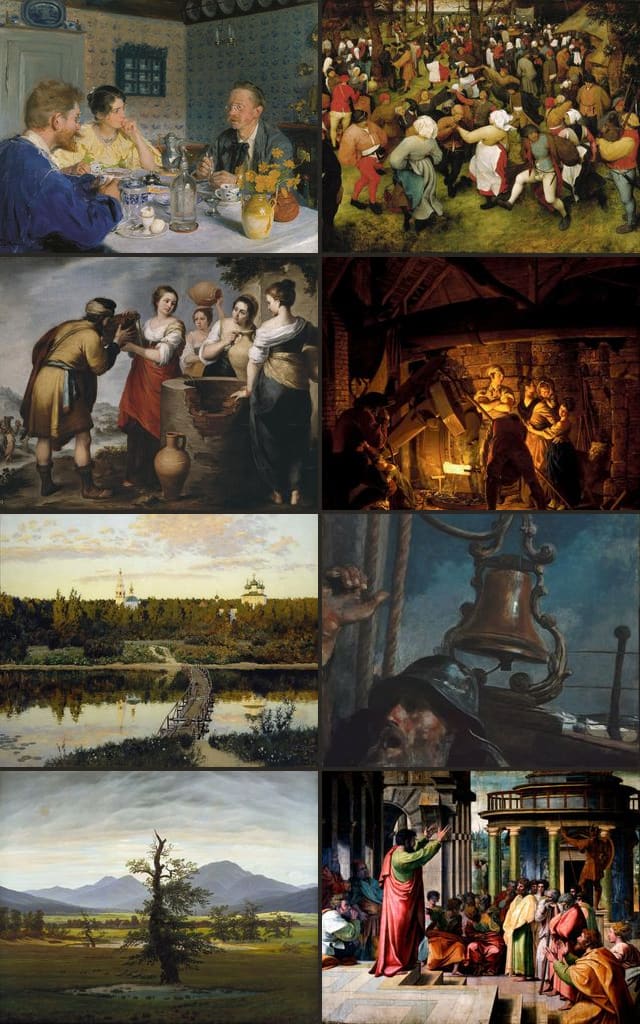 Quiz Christian Personality Test Benedict reads as The Oak. Find your own type. Start
 people like him
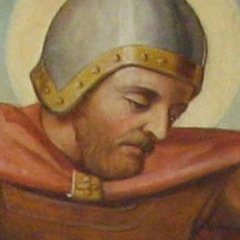 Martin of ToursThe Oak
 At court everyone flattered the emperor, and the bishops gave way. But “in Martin alone, apostolic authority continued to assert itself.” No one ever saw him angry or excited: “he was always one and the same.” When crowds of visitors grew too much for him, he moved to a hidden cell outside the city.
Sulpicius Severus, Life of St Martin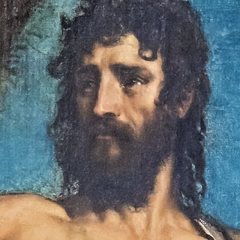 John the BaptistThe Oak
 He lived in the wilderness until the day he began to preach. Jesus asked the crowds if they had gone out to see “a reed swaying in the wind”. St Gregory says a reed bends to praise or blame, but “no variety of circumstance bent him from his uprightness”.
Luke 1:80; Matthew 11:7; St Gregory the Great, Homilies on the Gospels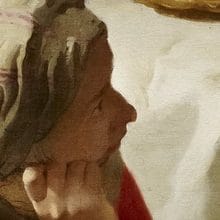 Mary of BethanyThe Oak
 When Jesus came to her home, her sister Martha was busy with all the preparations. Mary sat at His feet and listened. Jesus said she “has chosen the good portion”.
Luke 10:38-42sources
His life, and his words
- Gregory the Great, Dialogues, Book 2. Tr. “P.W.”, 1608, edited by Edmund G. Gardner, 1911.
- The Latin text of the Dialogues, Book 2, Wikisource.
- The Rule of St Benedict. Tr. Boniface Verheyen.
- The Rule of St Benedict, Latin and English. Tr. D. Oswald Hunter Blair, 1906.
- Select Historical Documents of the Middle Ages, the Rule, chapter 7. Tr. Ernest F. Henderson, 1892.
- The Latin text of the Rule, The Latin Library.
Reference
- Catholic Encyclopedia, 1907, “St. Benedict of Nursia”
- Catholic Encyclopedia, 1912, “Medal of Saint Benedict”
- Britannica, “St. Benedict”
- Orthodox Encyclopedia, in Russian
- Pope Paul VI, Pacis nuntius, 24 October 1964, in Latin
- Terrence Kardong, OSB, on “ora et labora”
- Scott DeGregorio, The Medieval Review, reviewing Francis Clark, 2004
- Church Publishing, Always We Begin Again
- Merriam-Webster, “Benedict of Nursia”, for how to say it
Calendars
- USCCB, Memorial of Saint Benedict, Abbot
- Calendarium Romanum, 1969, on why the day moved
- The Roman Martyrology, 1916 edition
- OCA, Venerable Benedict of Nursia
- saint.gr, Greek
- Romfea, Greek
- azbyka.ru, Russian
- Church of England, Common Worship calendar
- The Episcopal Church, Lesser Feasts and Fasts 2022
- Evangelical Lutheran Worship, ELCA, the church year
- Concordia Publishing House, the Missouri Synod's commemorations
Pictures
- Saint Benedict at Prayer, Master of Messkirch, about 1530. Staatsgalerie Stuttgart. Public domain.
- Saint Benedict, fresco. Patriarchate of Peć, Kosovo. Public domain.
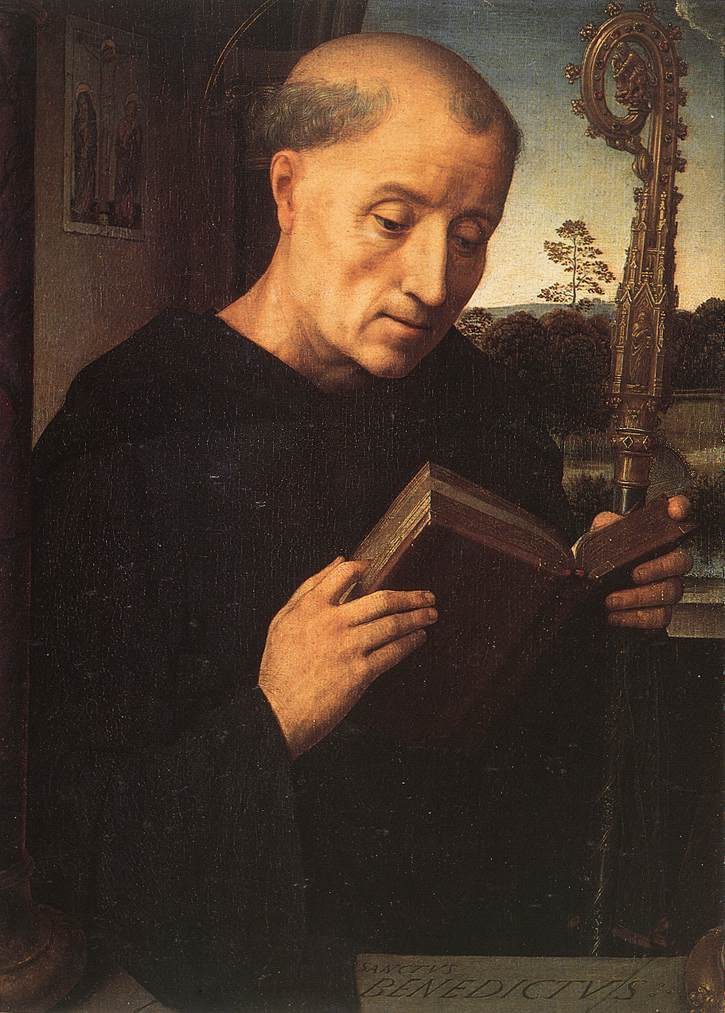
- Saint Benedict, Hans Memling, 1487. Uffizi, Florence. Public domain.
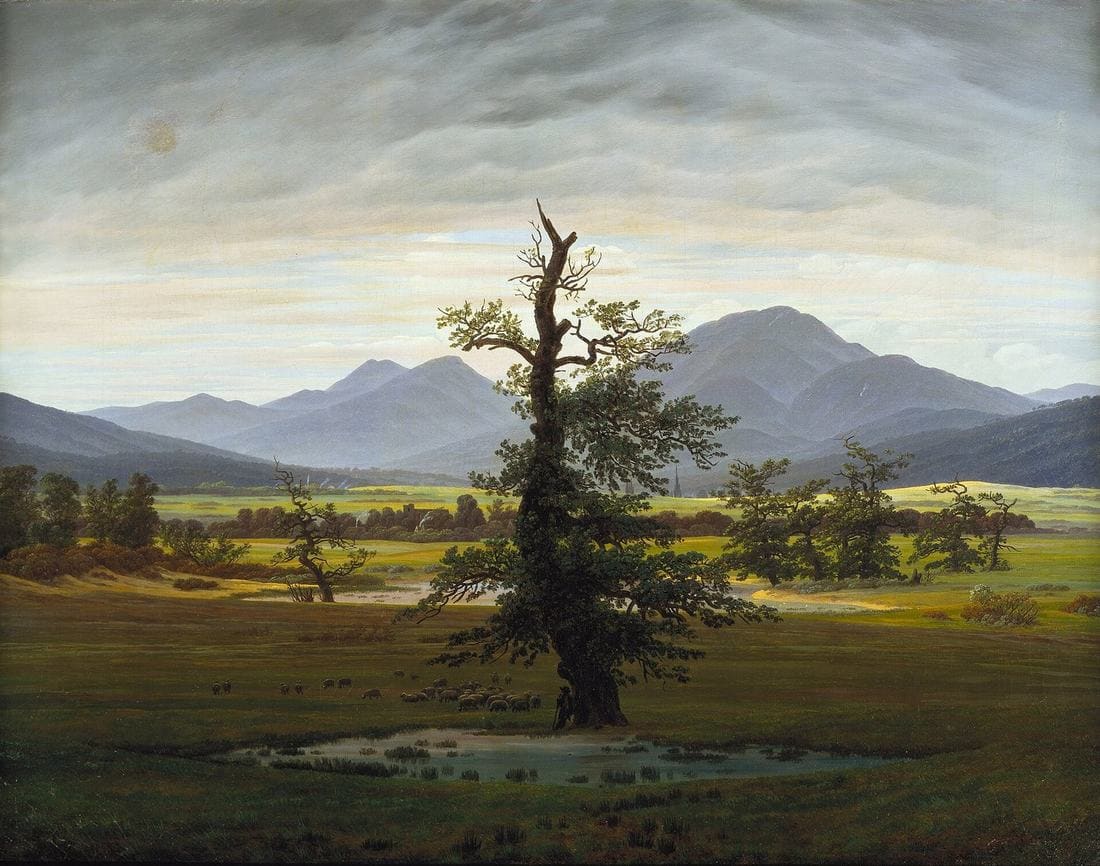
- The Lonely Tree, Caspar David Friedrich, 1822. Public domain.