Burnout is the tiredness a weekend off doesn’t fix. You’ve given more than you had to your work, to someone in your care or to your church. Even prayer now feels like one more task you’re failing at.
A hunter in the Egyptian desert once despised the hermit Anthony the Great for laughing with a group of monks. To show him that monks need to relax sometimes, Anthony told the hunter to draw his bow, then to draw it again, and then further still. The hunter objected that a bow drawn too far will break. Anthony answered that the work of God is no different, because monks pushed too hard will break down. A Christian who never rests is that bow. The cure Anthony showed was to ease off now and then.
Is burnout a sign of laziness?
John Cassian spent years among the monks of the Egyptian desert and wrote down their talks in his Conferences. In one of them, an old monk remembers a night from his boyhood when the elders came to Anthony to ask what keeps a monk safe on the way to God. Some named fasting and nights of prayer, while others named giving everything away, living alone or being kind to others. Anthony answered that he had seen people strict in all of these come to a terrible end. What they lacked was discretion, the judgment that knows how much is enough. It keeps a monk on the “royal road,” away from too much zeal on one side and from slackness on the other.
Is it a sin to rest?
Cassian and his friend Germanus once complained to a monk named Abraham that visitors kept intruding on their fasting and silence. Abraham told them to welcome the visits gladly. He warned that even the most experienced monks often fall into coldness of spirit or into dangerous ill health if the strain on their minds is never eased.
Abraham backed this with a saying of the Gospel writer John, who likened the mind to a bow that is never unstrung: without some rest “the spirit would lose its spring owing to the unbroken strain.” Rest now and then keeps a Christian ready to do what is right when the need comes.
When the apostles came back from preaching, so many people were coming and going that “they did not even have time to eat.” Jesus said to them, “Come with Me privately to a solitary place, and let us rest for a while” (Mark 6:31). Rest that Jesus Himself offered is no sin.
How do you recover?
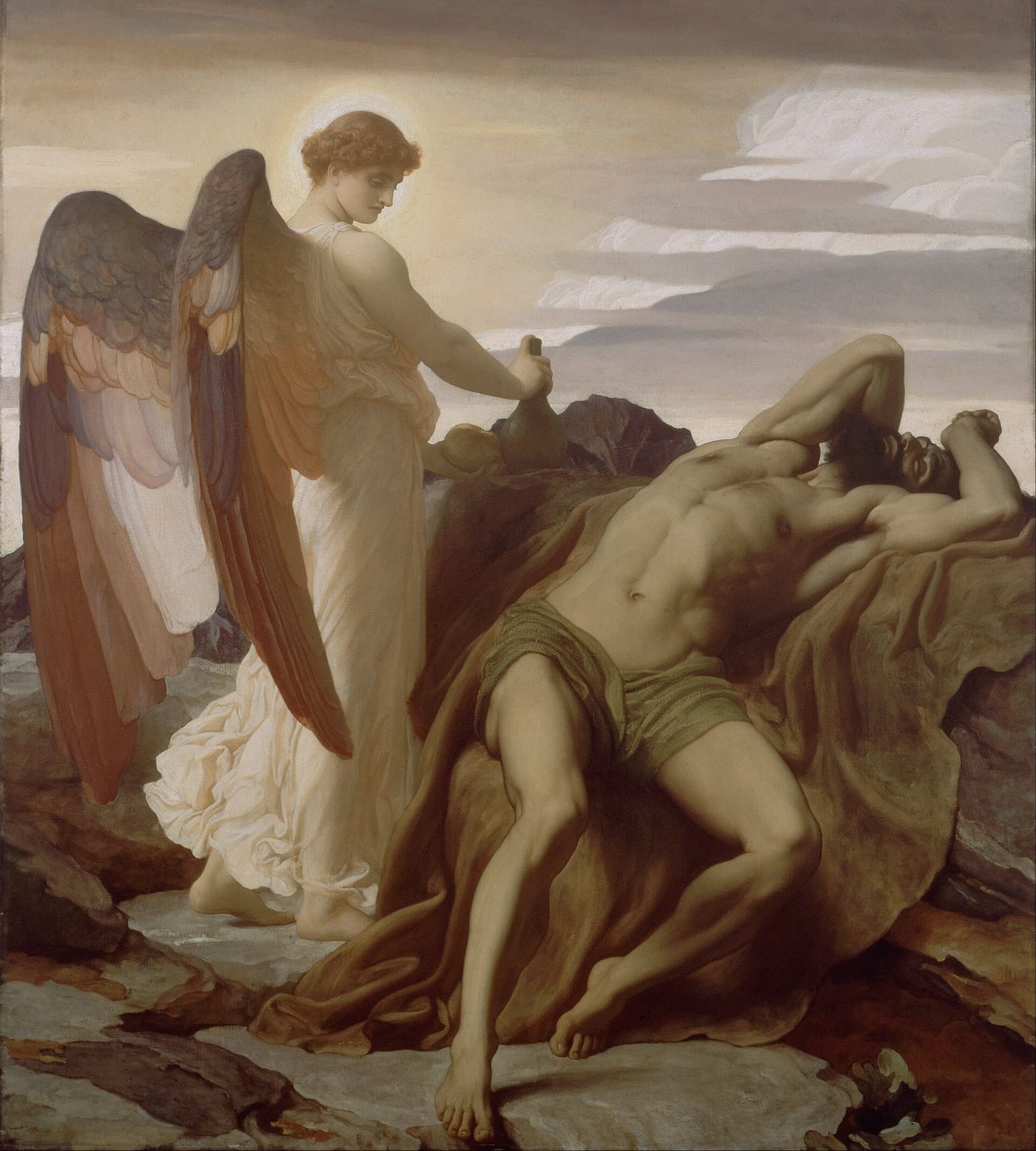
Start with sleep and food, as God did for the prophet Elijah. After his victory on Mount Carmel, Elijah fled from Queen Jezebel into the wilderness, sat down under a broom tree and prayed to die. “I have had enough, LORD,” he said (1 Kings 19:4). An angel touched him and told him to eat, and by his head he found bread and a jar of water. He ate and slept again, until the angel came a second time with the words “Get up and eat, or the journey will be too much for you” (1 Kings 19:7). Only after that did God speak to him at Mount Horeb and send him back to work, with Elisha to follow and serve him. Before God gave Elijah his next task, He let him sleep and fed him. Keep a reasonable bedtime and eat nutritious meals, even when you feel you haven’t earned them.
The old monk who remembered that night with Anthony spoke from experience. He could go two or three days without food and not even think of it. At times he couldn’t sleep for several days and nights, though he begged God for a little sleep. He came to feel that lack of food and sleep put him in more danger than laziness and gluttony did. So he taught that we should eat and sleep at the proper time, “even if we dislike it.” The prayer for peaceful sleep, from the Church’s service before bed, asks Christ for “rest of body and of soul.”
Then share the load, as Jethro taught his son-in-law Moses when he found him judging every dispute alone from morning until evening. “Surely you and these people with you will wear yourselves out, because the task is too heavy for you,” Jethro warned him. “You cannot handle it alone” (Exodus 18:18). He told Moses to hand the small cases to capable men, “so that your load may be lightened as they share it with you,” because then he would be able to endure (Exodus 18:22-23). If you care for a sick parent or child, or carry a job or a ministry alone, ask who could take the small cases. A sibling could take one night a week, or a colleague one meeting.
Pray in a few words when long prayers feel impossible. In the Conferences, an elder named Isaac gives Cassian one verse from the Psalms for every state of mind, the prayer now known as O God, come to my assistance. Among those states he names nights of sleeplessness and a mind too scattered and dry to pray. One line said many times a day keeps a worn-out heart turned toward God. Others for days like these are gathered among the prayers for burnout.
When rest isn’t enough
Some exhaustion has a cause that rest can’t reach, so a doctor should see anyone still drained after weeks of real rest. Tell a doctor and someone close to you today if the tiredness comes with despair, or with thoughts like Elijah’s prayer to die.
Because discretion guards against slackness too, easing a heavy rule is different from dropping prayer altogether. Anthony traced the falls he had seen to monks who never learned discretion from their elders. If your rule of prayer or fasting has grown too heavy, bring this to your priest instead of cutting it alone or forcing yourself through it.